
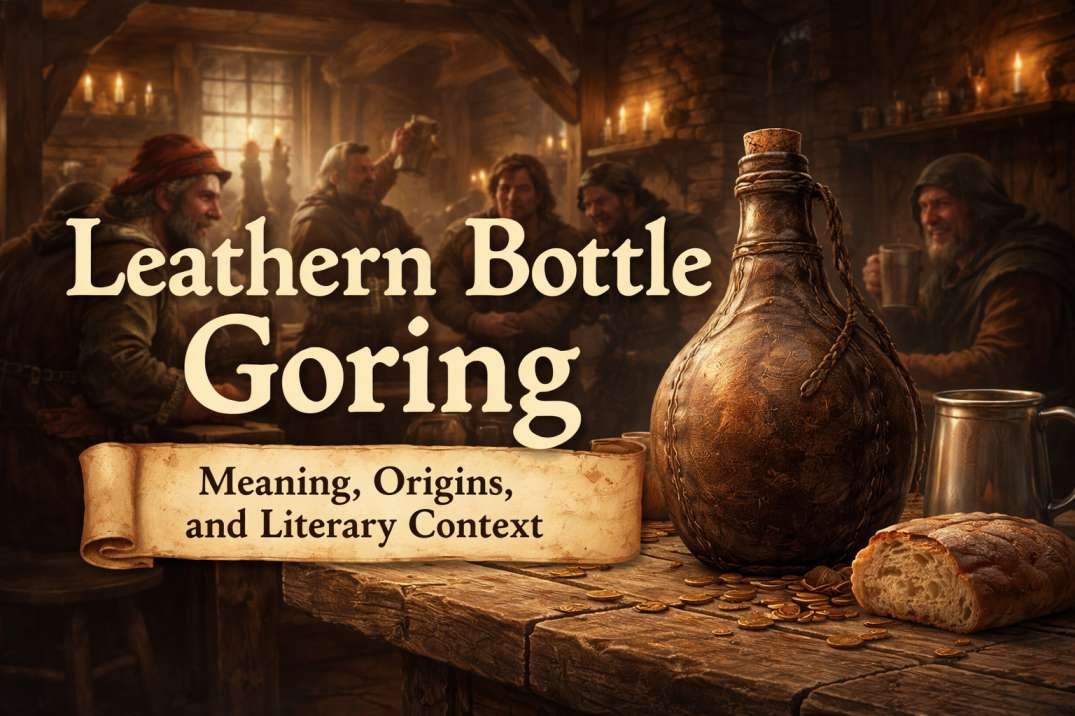

Leathern bottle goring is an archaic English phrase from medieval and early modern England, used to create vivid imagery of chaos, excess, or reckless behaviour. It reflects a time when language relied heavily on physical objects and dramatic actions drawn from everyday life.
The English language contains many forgotten expressions that once felt natural but now seem strange or confusing. Leathern bottle goring is one such phrase. It rarely appears in modern speech and is usually found in older texts. While it may sound unusual today, the phrase is rooted in everyday objects and expressive storytelling. Understanding it helps us see how people in the past used language to describe behaviour, exaggerate situations, and entertain listeners.
What Does “Leathern Bottle Goring” Mean?

Medieval English writing often used vivid and dramatic language.
Image source: pixaby
At its simplest, leathern bottle goring refers to the act of violently piercing or tearing a leather drinking bottle. The phrase combines a common historical object with a forceful action. However, it is rarely meant literally and is more often used as exaggerated imagery to describe chaos, reckless behaviour, or uncontrolled situations.
Writers in older English frequently used dramatic physical metaphors instead of plain descriptions. Instead of saying a place was chaotic, they might use vivid imagery like this phrase to make scenes more expressive and entertaining for readers and listeners.
For additional historical context on old drinking vessels and tavern culture, resources such as The Leathern Bottle historical reference provide insight into traditional pub culture and naming origins.
The Leathern Bottle in Everyday History
Before glass bottles became widespread, leathern bottles were essential household and travel items. Made from treated animal hide, they were durable, flexible, and widely used by travellers, soldiers, and labourers for carrying water, ale, or wine.
Because they were so common, they often appeared in songs, storytelling, and tavern culture. Historic pubs and establishments such as Ye Olde Leathern Bottel (Chef & Brewer) preserve this cultural heritage, reflecting how deeply such objects were embedded in social life.
Similar cultural references can also be found in historical documentation like Thames historical archives, which highlight how everyday objects influenced language and traditions.
Even modern beverage culture still reflects this history, such as in bottle-themed discussions and products like Monster Glass Bottle or Corona Pop Bottles, showing how containers remain culturally symbolic.
The Meaning of “Goring” in Older English

Leathern bottles were commonly used before glass bottles became popular.
Image source: pixaby
The word “goring” historically refers to violent piercing or tearing, often associated with animals using horns. Over time, it came to represent any forceful or destructive action. Linguistic sources such as the Arbuturian historical reference show how such expressive language evolved in cultural storytelling.
When paired with an everyday object like a leather bottle, the word becomes highly visual and dramatic, creating a strong contrast between ordinary life and sudden destruction.
Literal Meaning Versus Figurative Use
Literally, the phrase describes the physical destruction of a leather bottle. Figuratively, however, it is used to describe chaos, reckless behaviour, or uncontrolled situations. It may refer to noisy taverns, wild gatherings, or exaggerated storytelling.
This type of expressive language was very common in medieval and early modern English writing, where vivid imagery was preferred over direct description.
Historical and Linguistic Origins

Taverns were important social places in medieval England
Image source: pixaby
The phrase likely originated in medieval England, a time when storytelling relied heavily on dramatic physical imagery. Taverns, songs, and oral traditions played a major role in spreading such expressions.
Because leathern bottles were widely recognised objects, combining them with a violent verb created a memorable phrase that audiences could easily visualise and understand.
Modern beverage culture still reflects evolving drinking traditions, such as craft drinks and bottled products like Camden Hells Bottles, showing continuity in social drinking culture.
Use in Literature and Popular Writing
Such expressions were often used in descriptions of taverns, feasts, arguments, and chaotic gatherings. Writers relied on dramatic imagery to engage audiences and make storytelling more entertaining.
Even today, cultural storytelling continues through modern food and lifestyle narratives, similar to how historical dining experiences are preserved in pub culture and recipes.
Symbolic Interpretation
Symbolically, the phrase combines nourishment (the bottle) and destruction (goring), creating a metaphor for excess, loss of control, or disorder. It may also reflect criticism of reckless behaviour in social settings.
Why the Phrase Fell Out of Use
The decline of leather bottles and the rise of glass and metal containers led to the phrase becoming obsolete. As objects disappeared from daily life, the language associated with them also faded.
Similarly, lifestyle changes and modern design trends continue to reshape how we describe everyday living spaces and habits.
Modern Expressions With Similar Meaning
Today, simpler phrases like “cause chaos,” “make a mess,” or “get out of control” replace older expressions. Modern lifestyle discussions also focus on practical efficiency, such as drink culture and bottled beverage trends seen in Camden Hells Bottles and similar modern products.
Why People Still Search for the Phrase
The phrase continues to attract curiosity because it appears in historical texts and sounds unusual in modern English. Many readers encounter it while studying older literature or exploring archaic expressions.
Conclusion
Leathern bottle goring is a vivid example of how expressive older English could be. The phrase combines an everyday object with a violent action to create dramatic imagery that represents chaos, excess, or reckless behaviour. While it is rarely used today, it reflects a time when language was closely connected to everyday objects and storytelling traditions.
Understanding phrases like this helps us see how language evolves alongside culture and technology. As objects disappear from daily life, the expressions built around them often disappear as well. Even so, these old phrases remain interesting because they offer insight into how people once spoke, wrote, and described the world around them.
Author Bio
Daily Lifestyle Guide Editorial Team
The Daily Lifestyle Guide Editorial Team creates informative and easy-to-read content for readers across the UK. The team specialises in lifestyle topics, cultural history, food inspiration, and educational articles that explore interesting language and traditions in a simple, engaging way. Their goal is to make learning enjoyable while preserving clarity and accuracy in every article published.
Disclaimer
This article is for informational and educational purposes only. Historical language interpretations may vary, and meanings can change over time. The editorial team may update or correct this content if new information becomes available.
Frequently Asked Questions (FAQs)
1. What does leathern bottle goring mean?
It refers to violently piercing or tearing a leather bottle, usually used as exaggerated imagery to describe chaos, reckless behaviour, or disorder.
2. Is leathern bottle goring a real historical phrase?
Yes, it reflects language patterns from medieval and early modern England where dramatic imagery and everyday objects were used in expressive language.
3. What is a leathern bottle?
A leathern bottle was a container made from treated animal hide used to carry liquids such as water, ale, or wine before glass bottles became common.
4. Is the phrase used in modern English?
No, the phrase is considered obsolete and mainly appears in historical texts or discussions about archaic English expressions.
5. Does the phrase describe real violence?
Usually not. The phrase is mostly figurative and used for dramatic or symbolic effect rather than actual violence.
6. Where might I encounter this phrase today?
You may encounter it in historical literature, academic writing, or articles discussing old English expressions and language history.
7. Why do people still search for leathern bottle goring?
Most people search for the phrase out of curiosity after seeing it in an old text or hearing about unusual English expressions.