
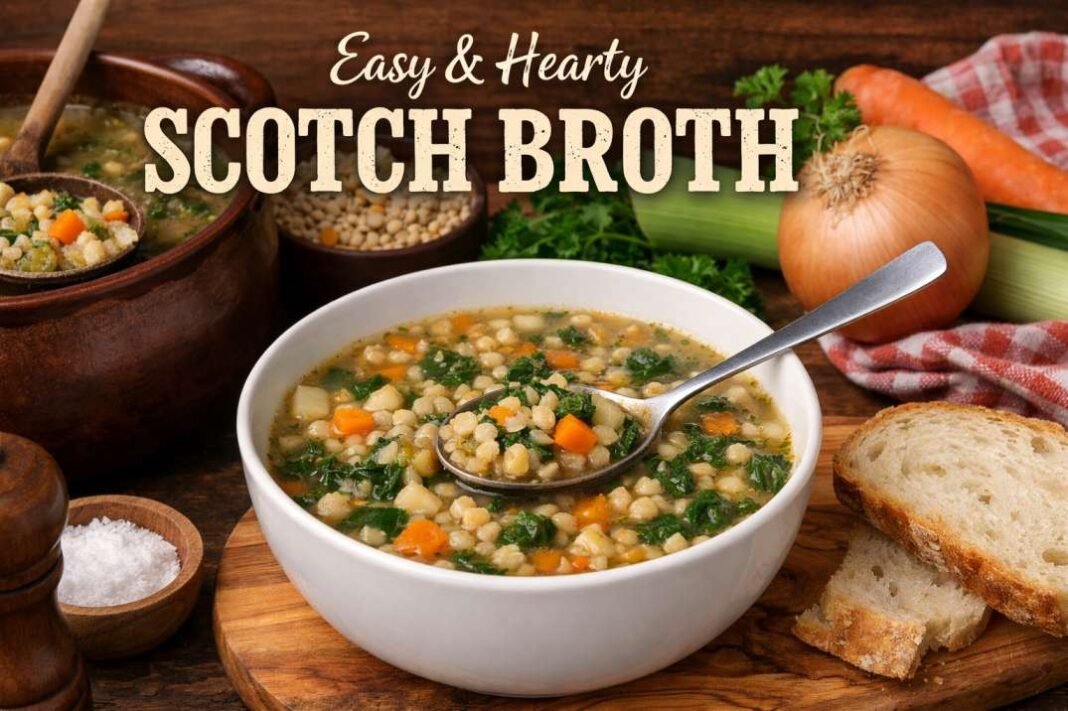

This easy Scotch Broth recipe is a traditional Scottish soup made with barley, dried peas, vegetables, and stock. Hearty, nourishing, and flexible, it can be prepared with or without meat. Ideal for home cooks, it delivers comforting flavour, natural thickness, and excellent nutritional value in every bowl.
Scotch Broth is a classic Scottish comfort food cherished for its rich taste and wholesome ingredients. Made with barley, dried pulses, fresh vegetables, and stock, it has sustained families for generations. This recipe combines traditional methods with modern flexibility, suitable for meat lovers and vegetarians alike. Slow cooking ensures the flavours meld naturally, producing a nourishing, thick, and satisfying soup. As highlighted by Farmersgirl Kitchen, Scotch Broth remains a versatile and reliable dish for home cooking, whether served as a hearty lunch or warming dinner.
What Is Scotch Broth? – Understanding This Hearty Scottish Soup

Scotch Broth
Image source: pixaby
Scotch Broth is a traditional Scottish soup known for its hearty, filling nature. It typically combines pearl barley, dried peas or lentils, fresh vegetables, and stock. Unlike a clear broth, the combination of grains and pulses naturally thickens the liquid, giving it a stew-like consistency. According to Cooking With My Kids, the soup can include either meat or vegetarian ingredients, making it suitable for a wide range of dietary preferences. Its nutritional profile is impressive, providing fibre, plant-based protein, and essential vitamins. This flexibility and richness have helped Scotch Broth remain a staple in Scottish households for generations, especially during colder months.
A Traditional Scottish Staple – History and Cultural Significance
Scotch Broth has been a cornerstone of Scottish home cooking for centuries. Alongside other traditional soups, it provided an economical and filling meal for large families. Recipes were passed down through generations, often evolving based on available ingredients. As noted by Make It Scotch, this dish reflects Scotland’s resourceful culinary heritage, where simple pantry staples were transformed into nourishing meals. Ingredients commonly included root vegetables from home gardens, barley and pulses stored for long periods, and occasionally mutton or lamb. Its lasting popularity comes from its simplicity, affordability, and ability to deliver deep flavour with minimal waste.
Is There One Correct Recipe? – Exploring Variations and Flexibility

Scotch Broth recipe variations
Image source: pixaby
There is no single “correct” Scotch Broth recipe. Traditional versions often used mutton or lamb with barley, dried peas, and root vegetables. Some cooks preferred to serve the meat separately, while others shredded it into the broth for added richness. Modern variations include beef or fully vegetarian options using vegetable stock. Tinned Tomatoes highlights how adaptable the dish is, encouraging cooks to adjust ingredients based on dietary needs and availability. This flexibility is part of its charm, allowing each household to create a unique version while maintaining the essence of the traditional dish.
Ingredients and Broth Mix Explained – Key Components for a Perfect Soup
The heart of Scotch Broth lies in its broth mix, usually a combination of pearl barley, split peas, and lentils. Many ready-made mixes are available, but creating your own blend allows for greater control over flavour and texture. As described by Down to Earth Foods, balancing grains and pulses ensures a satisfying thickness and nutritional richness. This combination is what gives Scotch Broth its signature body and hearty texture.
Vegetables play an equally important role in building flavour. Onions and carrots add natural sweetness, while leeks, celery, turnips, and swede contribute depth and complexity. Leafy greens like kale are often added towards the end of cooking to retain their colour and nutrients. Using seasonal and fresh produce enhances the overall taste and makes the dish even more nutritious and satisfying.
Why Soaking the Broth Mix Matters – Tips for Best Results

soaking Scotch Broth grains
Image source: pixaby
Soaking the broth mix overnight softens the grains and pulses, ensuring even cooking and reducing preparation time. It also improves digestibility and enhances the final texture of the soup. If time is limited, a quick soak using hot water can still be effective. This step helps release starches from the grains, contributing to the broth’s naturally thick and creamy consistency, which is a defining feature of Scotch Broth.
How to Make Easy Scotch Broth – Step-by-Step Cooking Guide
Begin by gently cooking onions, carrots, and celery in a little oil until softened but not browned. Add stock along with the soaked broth mix, then bring everything to a gentle simmer. Allow the soup to cook slowly so the grains and pulses become tender and flavours develop fully. Add greens such as kale towards the end to preserve their nutrients and vibrant colour. If using meat, cook it slowly until tender, shred it, and return it to the pot. Taking time with this process ensures a rich, well-balanced flavour and satisfying texture.
Meat-Based and Vegetarian Versions – Choosing Your Preferred Style
Traditional Scotch Broth often includes lamb or mutton, adding depth and richness to the soup. However, vegetarian versions made with vegetable stock are equally authentic and widely enjoyed. Meat-based broths tend to have a deeper flavour, while vegetarian versions highlight the natural taste of grains and vegetables. Both approaches reflect the dish’s adaptability and make it suitable for a variety of dietary preferences. Internal links to Lincoln sausages and jam roly-poly can complement the meal perfectly.
Nutritional Value of Scotch Broth – Health Benefits and Ingredients
Scotch Broth is packed with nutrients, offering a balanced combination of fibre, protein, vitamins, and minerals. Barley and pulses support digestion and provide sustained energy, while vegetables contribute essential micronutrients. The soup is naturally low in fat and can be adjusted to suit low-sodium diets. Its wholesome ingredients and filling nature make it an excellent choice for those seeking a healthy, satisfying meal that is both economical and easy to prepare.
Storage, Freezing, and Reheating – Keeping Your Broth Fresh
Once cooled, Scotch Broth can be stored in the refrigerator for up to five days. It often tastes even better the next day as the flavours continue to develop. The soup also freezes well for up to six months, making it ideal for batch cooking. When reheating, simply add a little water or stock to adjust the consistency, as the grains will continue to absorb liquid over time. Gentle reheating helps maintain both texture and flavour.
How to Serve Scotch Broth – Pairings and Presentation
Serve Scotch Broth in deep bowls with warm bread such as farmhouse white, soda bread, or sourdough. Its hearty texture makes it suitable as a complete meal on its own. For a more traditional dining experience, pair it with dishes like chicken vol-au-vent or finish with a comforting dessert like jam roly-poly.
Conclusion – A Timeless, Nourishing Dish
Scotch Broth exemplifies traditional cooking at its most practical and comforting. Flexible enough for modern kitchens, it can be made with meat or kept vegetarian, always resulting in a filling, nutritious, and flavourful meal. Its simplicity, wholesome ingredients, and slow-cooked preparation ensure a soup that warms the body and soul, making it a lasting favourite in both Scottish homes and beyond.
Author Bio
Editorial Team at dailylifestyleguide: Our team of food writers and chefs shares traditional recipes, practical cooking tips, and nutrition advice for UK home cooks. We focus on creating simple, reliable recipes that celebrate wholesome ingredients and timeless flavours.
Disclaimer
This article is intended for informational purposes. Ingredients, times, and techniques may vary. The editorial team of dailylifestyleguide can make corrections or updates to improve accuracy and clarity. Always follow food safety guidelines when preparing and storin
Frequently Asked Questions (FAQs)
What is Scotch Broth?
Scotch Broth is a traditional Scottish soup made with barley, dried peas or lentils, vegetables, and stock. It is thick, hearty, and often served as a main meal.
Can Scotch Broth be made vegetarian?
Yes, Scotch Broth can be made with vegetable stock instead of meat. Both meat-based and vegetarian versions are authentic and widely enjoyed.
Do I need to soak the barley and pulses?
Yes, soaking the broth mix overnight softens the grains and pulses, reduces cooking time, and helps create a smoother, more consistent texture.
How long does it take to cook Scotch Broth?
Including soaking time, it takes around 9–10 hours. Active cooking time is usually about 1 hour 15 minutes.
Can I use different vegetables?
Yes, Scotch Broth is flexible. Traditional vegetables include onion, carrot, leek, turnip, celery, and kale, but you can add seasonal or available vegetables.
How should I store Scotch Broth?
Once cooled, store in a sealed container in the fridge for up to five days or freeze for up to six months.
What can I serve with Scotch Broth?
It pairs well with breads such as farmhouse white, soda bread, or sourdough. You can also enjoy it with dishes like chicken vol-au-vent or a dessert like jam roly-poly.
Why does the broth thicken as it cools?
The barley and pulses continue to absorb liquid, releasing starch and thickening the broth. This is normal and easily adjusted when reheating.