
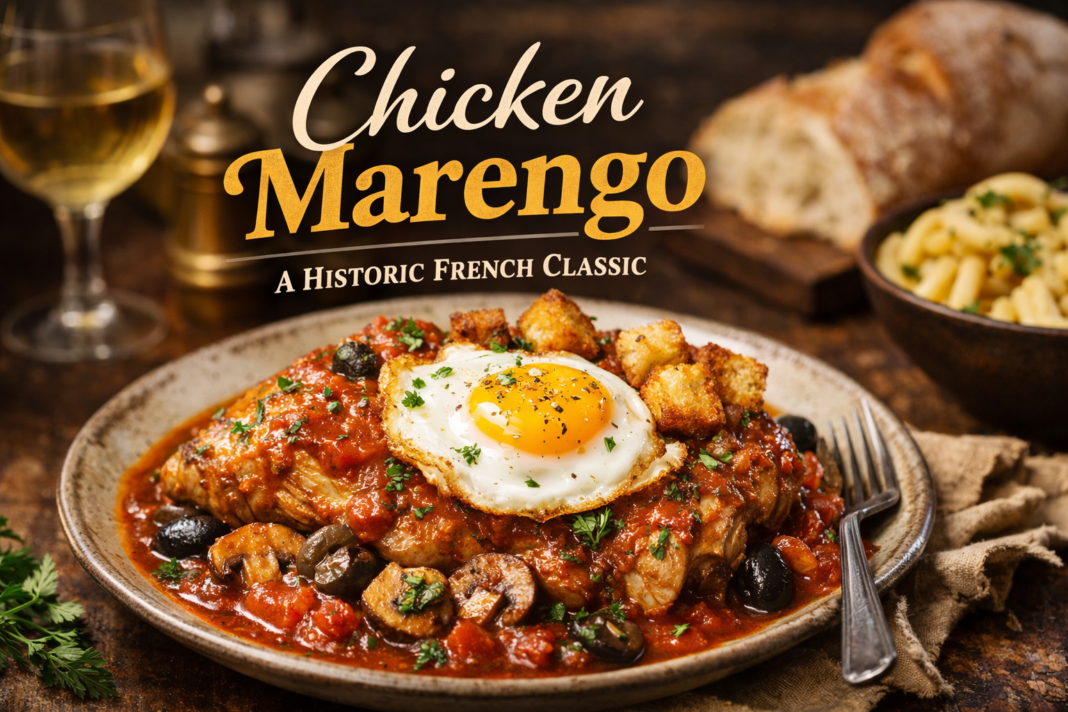

Chicken Marengo is a historic French dish inspired by Napoleon’s era, featuring tender chicken simmered in tomatoes, aromatics, and rich flavors. From its rustic battlefield origins to modern home-kitchen adaptations, this timeless recipe balances tradition, simplicity, and comforting depth in every bite.
Chicken Marengo is more than just a comforting chicken dish—it is a recipe shaped by history, storytelling, and generations of cooks refining it to suit their time. Often linked to Napoleon Bonaparte and his victory at the Battle of Marengo, the dish began as an improvised meal made with limited ingredients and practical techniques. Over the years, it evolved into a French classic that still values simplicity and depth of flavor. Today, Chicken Marengo sits comfortably between tradition and flexibility, making it just as suitable for a relaxed family dinner as it is for an elegant, rustic meal shared with guests.
A Dish Born from History and Legend
The origins of Chicken Marengo are wrapped in both fact and folklore. The most popular story connects the dish to Napoleon Bonaparte’s victory over the Austrian army in 1800 near the village of Marengo in Italy. According to legend, a military cook prepared a meal using whatever ingredients were available immediately after the battle. With supplies scarce, the cook relied on chicken, tomatoes, oil, and strong spirits to create a nourishing dish fit for celebration.
While historians now suggest the story may have been romanticized over time, the association remains strong. What matters more than historical accuracy is the influence this story had on shaping the recipe’s identity. Chicken Marengo became known as a dish of improvisation—resourceful, practical, and deeply satisfying. Its name ensured it would forever be tied to one of Europe’s most famous military victories.
From Battlefield Cooking to French Culinary Tradition
As Chicken Marengo moved beyond legend, it found a lasting place in French home cooking and restaurant kitchens. French cuisine has long valued dishes that transform simple ingredients through careful technique, and Marengo fits that philosophy perfectly. Rather than relying on complex spice blends or elaborate preparation, the dish builds flavor gradually through browning, reduction, and slow simmering.
Early versions of the recipe were more elaborate than many modern ones. Historical accounts mention garnishes such as fried eggs, bread croutons, and even crayfish. Over time, these elements were simplified or omitted, making the dish more accessible to everyday cooks. Mushrooms replaced seafood, and the focus shifted toward a rich tomato-based sauce paired with tender chicken.
Despite these changes, the heart of the dish remained intact. Chicken Marengo continued to represent honest cooking rooted in patience and balance rather than excess.
The Defining Character of Chicken Marengo
Chicken Marengo is best described as a rustic, one-pot braised chicken dish with a tomato-forward sauce. What distinguishes it from other tomato-based chicken recipes is its depth, achieved without heaviness.

Several elements consistently define the dish:
- Bone-in chicken for flavor and structure
- Tomatoes for acidity and body
- Mushrooms for umami richness
- Aromatics such as garlic and herbs
- Slow simmering to allow flavors to concentrate
The result is a sauce that feels bold yet balanced, coating the chicken rather than overwhelming it. Every ingredient has a clear purpose, which is why the dish continues to work even when adapted.
Ingredient Simplicity with Purpose
One of the strengths of Chicken Marengo lies in its restrained ingredient list. Rather than overwhelming the palate, the recipe allows each component to shine.
Chicken thighs or legs are commonly used because they remain tender during longer cooking. Tomatoes bring brightness, while mushrooms deepen the sauce and add a savory note. Garlic and herbs such as thyme or bay leaf round out the flavor profile.
Alcohol plays a supporting but important role. Traditional versions often used cognac, reflecting what might have been available historically. Modern interpretations tend to favor dry white wine, which provides acidity without sweetness. When properly reduced, alcohol enhances flavor without dominating it.
Citrus zest, though not always included, adds a subtle freshness that lifts the dish. This small addition prevents the sauce from tasting flat and highlights the tomatoes’ natural acidity.
Technique Over Complexity
Chicken Marengo is not a technically difficult dish, but success depends on respecting a few key techniques.
Browning the chicken properly is essential. This step creates a foundation of flavor that carries through the entire dish. The browned bits left in the pan are incorporated into the sauce, adding depth without additional seasoning.
Reduction is equally important. Whether using wine or cognac, allowing it to reduce almost completely removes harsh acidity and concentrates flavor. Rushing this step is one of the most common reasons the sauce tastes sharp or unbalanced.
Finally, slow simmering allows the chicken to become tender while the sauce thickens naturally. The goal is a rich, cohesive dish—not a watery stew.
Traditional Garnishes and Lost Details
Earlier versions of Chicken Marengo often included garnishes that are rarely seen today. Fried eggs placed on top of the chicken added richness, while croutons provided texture and absorbed sauce. These elements turned the dish into a composed plate rather than a simple bowl of stew.
Although modern cooking favors convenience, revisiting these garnishes adds historical character and contrast. They are not essential, but they reflect how the dish was once enjoyed and offer an opportunity to experience Marengo in a more traditional way.
Modern Adaptations and Everyday Cooking
As cooking habits changed, Chicken Marengo adapted easily. Many home cooks prefer streamlined versions that reduce preparation time without sacrificing flavor.

Some recipes use passata instead of fresh tomatoes for consistency. Others omit alcohol entirely, replacing it with stock and olives to maintain depth. Kalamata olives, in particular, add a briny richness that complements the tomatoes and mushrooms.
Skin is often removed from the chicken before braising to keep the sauce clean and avoid unwanted texture. This adjustment also reduces grease and makes the dish feel lighter.
These adaptations demonstrate how flexible Chicken Marengo can be while still respecting its core identity.
Tools That Make a Difference
While the recipe itself is simple, the right tools help ensure consistent results. A heavy-bottomed pan or casserole allows even heat distribution and proper browning. Silicone spatulas make it easier to scrape up flavorful bits without damaging cookware.
A kitchen thermometer adds confidence, especially for less experienced cooks, ensuring the chicken is cooked through without drying out. These tools support the dish’s reputation as foolproof and beginner-friendly.
Common Mistakes That Affect the Final Dish
Even straightforward recipes can suffer from small oversights. In Chicken Marengo, the most common mistakes include under-reducing the alcohol, which leaves the sauce overly acidic, and braising chicken with skin on, resulting in an unpleasant texture.
Skipping citrus zest or rushing the simmering stage can also dull the flavor. Paying attention to these details transforms the dish from acceptable to memorable.
Serving Suggestions and Pairings
Chicken Marengo pairs best with simple sides that highlight the sauce. Pasta, rice, or mashed potatoes work well, as they absorb the rich flavors. Green vegetables or a crisp salad provide balance and freshness.
Crusty bread is another classic accompaniment, perfect for soaking up the sauce. Whether served casually or plated with care, the dish remains deeply satisfying.
Related Comforting Chicken Recipes You May Enjoy
Chicken Marengo is a wonderful example of how simple ingredients can be transformed into a deeply comforting meal through careful cooking. If you enjoy this style of rustic, home-cooked chicken dish, you may also appreciate this chicken orzo recipe by Nigella. It offers a different take on comfort food, combining tender chicken with orzo pasta in a rich, satisfying one-pan preparation that works beautifully for relaxed family dinners or busy weeknights.
Storage and Make-Ahead Benefits
One of Chicken Marengo’s practical advantages is how well it keeps. Stored properly, it remains flavorful for several days, and many cooks find the taste improves over time.
This makes it an excellent choice for meal preparation, family dinners, or entertaining. Its ability to be made ahead without losing quality adds to its enduring appeal.
A Living Recipe with Lasting Appeal
Chicken Marengo has never been a rigid recipe. From battlefield improvisation to refined home cooking, it has evolved with the people who prepare it. Each version reflects its time, yet the dish always returns to its roots—simple ingredients, thoughtful technique, and comforting flavor.
That adaptability is why Chicken Marengo continues to endure. It invites experimentation without losing its soul.
Easy Chicken Marengo Recipe – Recipe Card
Prep Time: 20 minutes
Cook Time: 60 minutes
Total Time: 1 hour 20 minutes
Serves: 4
Ingredients
For the Chicken
- 4 chicken legs or 6 bone-in chicken thighs, skin removed
- Salt and freshly ground black pepper, to taste
- 2 tablespoons olive oil
For the Sauce
- 1 yellow onion, finely chopped
- 4 garlic cloves, minced
- 200 g mushrooms, sliced
- 1 cup dry white wine or cognac
- 1 can (400 g) good-quality chopped tomatoes
- 1 cup chicken stock
- 1 bay leaf
- 1 teaspoon fresh thyme leaves
Optional Garnish (Traditional Style)
- 4 slices white bread, crusts removed (for croutons)
- 4 eggs, fried
- Fresh parsley, finely chopped
Instructions
Heat the olive oil in a large heavy-based pan or casserole over medium-high heat. Season the chicken with salt and pepper, then brown on both sides until golden. Remove and set aside.
In the same pan, sauté the onion and mushrooms until softened. Add the garlic and cook briefly until fragrant.
Remove the pan from the heat, add the wine or cognac, then return to the heat and allow it to reduce almost completely. Pour in the chicken stock and let it reduce slightly, then add the tomatoes, bay leaf, and thyme.
Return the chicken to the pan, reduce heat to low, cover, and simmer gently for 40–45 minutes, turning the chicken occasionally, until tender and the sauce is rich and thick.
If using garnishes, fry the bread in olive oil until golden, pan-fry the mushrooms separately if desired, and cook the eggs sunny-side up.
Serve the chicken with sauce, topped with mushrooms, croutons, and a fried egg. Finish with fresh parsley.
Notes
For best flavour, allow the wine or cognac to reduce fully before adding stock. Lemon or orange zest can be added at the end for brightness. Chicken Marengo tastes even better the next day and can be stored refrigerated in an airtight container for up to 3 days.
Conclusion
Chicken Marengo stands as a reminder that great food does not need complexity to be meaningful. Shaped by history and refined through generations, it remains a dish that rewards patience, balance, and respect for ingredients. Whether prepared in a traditional style or adapted for modern convenience, Chicken Marengo offers warmth, depth, and a sense of connection to the past. It is a recipe that tells a story—and continues to invite new chapters with every cook who brings it to the table.
Frequently Asked Questions (FAQS)
Is Chicken Marengo a French or Italian dish?
Chicken Marengo is considered a French dish, although it was created near Marengo in northern Italy. It became part of French cuisine after being associated with Napoleon Bonaparte and has since been refined using classic French cooking techniques.
What does Chicken Marengo taste like?
Chicken Marengo has a rich, savory, and slightly tangy flavor. The tomatoes add brightness, mushrooms bring earthiness, and wine or cognac provides depth. When finished with citrus zest or herbs, the dish feels balanced and comforting rather than heavy.
What cut of chicken is best for Chicken Marengo?
Bone-in chicken thighs or legs are best because they stay juicy and tender during simmering. Chicken breast can be used, but it requires shorter cooking time to avoid drying out.
Can I make Chicken Marengo without wine or alcohol?
Yes, Chicken Marengo can be made without alcohol. Replace the wine or cognac with extra chicken stock and add olives or citrus zest to maintain flavor balance. The result is slightly different but still delicious.
Is Chicken Marengo supposed to have mushrooms?
Modern versions usually include mushrooms, but early versions did not always use them. Mushrooms became popular later as a replacement for ingredients like crayfish and are now considered a standard component.
Why is my Chicken Marengo sauce too acidic?
An overly acidic sauce usually means the wine or tomatoes were not reduced enough. Allow the alcohol to cook down fully and simmer the sauce longer to mellow the acidity and concentrate flavors.
Should I leave the skin on the chicken?
For braising, it’s best to remove the skin. Chicken skin becomes soft and chewy when simmered and can make the sauce greasy. Skinless chicken produces a cleaner, more elegant result.
Did the original Chicken Marengo really include a fried egg?
Yes, some early versions of Chicken Marengo were served with a fried egg and bread croutons. While uncommon today, these garnishes reflect the dish’s historic roots and can still be added for authenticity.
Can Chicken Marengo be made ahead of time?
Absolutely. Chicken Marengo actually tastes better the next day as the flavors deepen. Store it in an airtight container in the refrigerator for up to 3 days.
What should I serve with Chicken Marengo?
Chicken Marengo pairs well with pasta, rice, mashed potatoes, or crusty bread. For balance, serve it with green vegetables or a fresh salad on the side.
Is Chicken Marengo a healthy dish?
Chicken Marengo can be a balanced meal when made with lean cuts, moderate oil, and plenty of vegetables. Removing the skin and serving it with lighter sides keeps it from feeling too rich.