
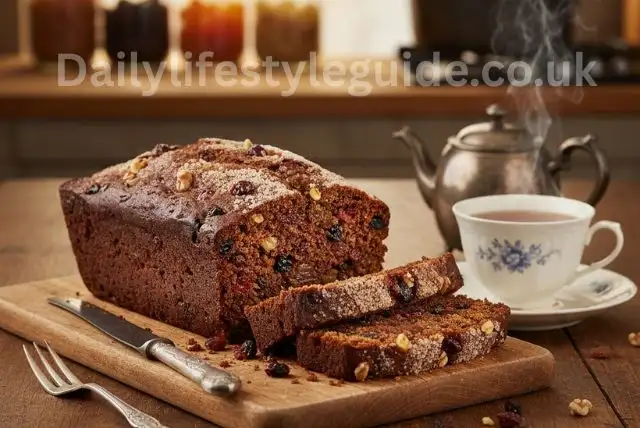

A boiled cake is a traditional British fruit cake made by gently cooking dried fruit, sugar and butter before baking, which helps keep the cake moist, flavourful and long-lasting. This method softens the fruit completely, creates a moist texture, and helps the cake stay fresh for days or even months. Boiled cakes are simple to make, require no electric mixer, and are one of the most reliable fruit cakes in UK home baking.
This boiled cake recipe has been trusted by UK bakers for generations because it is simple, practical and very reliable. Made using a traditional saucepan method, boiled cake involves gently simmering dried fruit with sugar and butter before baking, creating a rich, moist and deeply flavoured fruit cake with very little effort. This technique fully rehydrates the fruit, prevents dryness and produces a cake that keeps beautifully for days. Popular across British households, boiled cake is valued for its reliability, minimal equipment and forgiving nature, making it ideal for both beginners and experienced bakers. Whether baked for everyday tea, shared at gatherings or adapted into a festive version, this easy traditional fruit cake remains a timeless and comforting favourite in UK kitchens.
The Place of Boiled Cake in British Baking

Image source: pinterest.com
Boiled fruit cake has long been part of British food culture because it is practical, long-lasting and comforting. Before electric mixers existed, cakes were mixed by hand, baked slowly and stored carefully. The boiling method solved all of these problems at once.
By cooking the fruit first, bakers ensured moisture and sweetness throughout the cake. These cakes were practical, economical and dependable, making them ideal for family kitchens, school fetes, church sales and community gatherings. They travelled well, sliced neatly and improved with time.
This is why boiled cake is closely linked to tradition and memories, not just flavour, and is part of everyday British life. It is the cake that appeared without fuss, wrapped carefully in paper, ready whenever someone fancied a slice.
What Makes a Boiled Cake Different?

Image source: pinterest.com
What makes a boiled cake different is the way it is made, which sets it apart from most other fruit cakes. Instead of mixing dried fruit directly into raw batter, the fruit is simmered with sugar, fat and liquid before baking.
Dried fruit is very dry and naturally absorbs moisture from cake batter. When boiled first, the fruit becomes fully hydrated, soft and saturated with liquid. This prevents dryness and ensures even distribution throughout the cake.
Boiling helps the sugar melt fully and allows the spices to release flavour before the cake goes into the oven.
Why Boiled Cakes Are So Reliable

Image source: pinterest.com
One reason UK bakers still trust this recipe is that it works well in different kitchens, ovens and skill levels. There is no creaming of butter and sugar, no whisking eggs for volume and no delicate folding techniques.
Instead, structure comes from moisture control and gentle leavening. This makes boiled cakes far less likely to sink, dry out or fail, even if measurements are slightly adjusted or ovens behave differently.
For beginners, this reliability is invaluable. For experienced bakers, it makes boiled cake a dependable option when results matter.
A Recipe Passed Down, Not Reinvented

Image source: pinterest.com
Many traditional boiled cake recipes have remained almost unchanged for decades. Some appear repeatedly in British household diaries and cookbooks, becoming among the most baked fruit cakes in the UK.
These recipes are not celebrated because they are new, but because they work. Bakers often return to them after trying alternatives that disappoint. Over time, this repeated success builds trust, and trust is what keeps a recipe alive.
The Science Behind the Boiled Cake Method

Image source: pinterest.com
Understanding why the boiled cake method works explains why it has remained popular in British baking for generations.
Fruit Rehydration
Simmering dried fruit allows it to absorb liquid fully, preventing it from drawing moisture out of the cake during baking.
Sugar Dissolution
Boiling ensures sugar melts evenly into the liquid, avoiding gritty texture and uneven sweetness.
Why Bicarbonate of Soda Is Essential
Bicarbonate of soda plays a crucial role in boiled cakes. It neutralises acidity from dried fruit, preventing a dense or heavy crumb. When added during boiling, it helps break down the fruit so it softens faster and more evenly.
Baking powder cannot perform these functions in the same way, which is why bicarbonate of soda is essential rather than optional.
Ingredients: Simple, Balanced and Purposeful

Image source: pinterest.com
A traditional boiled cake uses simple ingredients in the right balance, with each one having a clear purpose. Each ingredient has a clear role.
Butter provides richness without heaviness. Brown sugar adds depth and moisture through its molasses content, creating caramel and treacle notes. Mixed dried fruit forms the foundation of the cake, while mixed peel adds brightness and balance.
Eggs bind the mixture and enhance flavour, while self-raising flour provides controlled lift without turning the cake into a sponge.
Water or Milk? Choosing the Right Liquid

Image source: pinterest.com
Most traditional UK boiled cakes use water, which keeps the flavour focused on the fruit and creates a lighter texture.
Some versions use milk, which adds softness and richness. Both approaches are traditional and correct. The choice depends on whether the cake is intended as an everyday tea cake or a more indulgent bake.
The Boiling Stage: Where the Cake Begins

Image source: pinterest.com
The process starts in a saucepan. Butter, sugar, dried fruit, peel, spices, bicarbonate of soda and liquid are gently heated until melted, then brought to a simmer.
Some bakers simmer briefly to preserve fruit texture, while others cook longer to reduce liquid and intensify flavour. Both methods are valid and time-tested.
Once boiled, the mixture must cool until warm before continuing. This prevents eggs from scrambling and ensures a smooth batter.
Mixing the Batter Gently

Image source: pinterest.com
The cooled fruit mixture is combined with flour and beaten eggs. The mixture should be stirred gently. Mixing too much can make the cake dense, especially in loaf tins.
This relaxed approach is another reason boiled cake suits all skill levels.
Choosing the Best Tin

Image source: pinterest.com
Boiled cake adapts well to different tins.
A loaf tin produces neat slices and suits everyday baking.
A round tin takes slightly longer to bake but retains moisture beautifully and works well for sharing or festive occasions.
Both are traditional, and including both options makes the recipe more flexible.
Baking Slowly for the Best Texture

Image source: pinterest.com
Boiled cakes should always be baked at a moderate temperature. Slow baking allows the dense fruit mixture to cook evenly without drying out.
A dark brown colour is normal and expected. It comes from the sugar and fruit, not from overbaking. If the top browns too quickly, covering loosely with foil protects the surface while the centre finishes baking.
Variations That Still Respect Tradition

Image source: pinterest.com
Boiled cake is wonderfully adaptable, and if you enjoy traditional loaf-style bakes, there are plenty of similar recipes worth exploring. For example, our
coconut cherry cake recipe
offers a lighter crumb with gentle coconut flavour and bursts of cherry, while remaining just as easy to prepare, slice and enjoy as this classic boiled fruit cake.
Storage and Keeping Qualities

Image source: pinterest.com
Boiled cake is widely known for its excellent keeping qualities, which is one reason it has remained a staple of British home baking. Wrapped tightly in greaseproof paper and foil, it stays moist for one to two weeks at room temperature.
Refrigerated, it lasts for several months. Frozen, it keeps for up to a year. Many bakers find the flavour improves after a day or two as the fruit continues to mellow.
Is Boiled Cake Beginner-Friendly?

Image source: pinterest.com
Yes. This is one of the most beginner-friendly traditional British cakes. There is no creaming, no whisking for volume and very little that can go wrong when the steps are followed calmly.
This is why boiled cake remains popular with bakers of all ages and experience levels.
Boiled Cake Recipe UK – Easy Traditional Fruit Cake (Recipe Card)
Image source: pinterest.com
Prep Time: 15 minutes
Cook Time: 1 hour 15 minutes
Total Time: 1 hour 30 minutes
Yield: 10–12 slices
Ingredients
Fruit & Boiling Stage
125g unsalted butter, cubed (plus extra for the tin)
175g light brown soft sugar
200g raisins
200g sultanas
100g currants
50g mixed peel
225ml water (or milk for a richer cake)
1½ tsp mixed spice
½ tsp bicarbonate of soda
Dry Ingredients
225g self-raising flour
Pinch of salt
Wet Ingredients
2 medium eggs, beaten
Optional:
2 tbsp demerara sugar for topping
75g glacé cherries or chopped walnuts
Instructions
Preheat the oven to 160°C (140°C fan / Gas Mark 3). Grease and line a 900g loaf tin or 20cm round tin with baking parchment.
Place the butter, sugar, raisins, sultanas, currants, mixed peel, water, mixed spice and bicarbonate of soda into a large saucepan. Heat gently until melted, then bring to a gentle boil and simmer for 10–15 minutes, stirring occasionally, until the fruit is plump and the liquid slightly reduced.
Remove from the heat and allow the mixture to cool until just warm.
Sift the flour and salt into a large bowl. Add the cooled fruit mixture and stir gently, then add the beaten eggs and mix until just combined.
Spoon into the prepared tin and level the surface. Sprinkle with demerara sugar if using.
Bake for 1 hour 10–15 minutes, or until a skewer inserted into the centre comes out clean. Cover loosely with foil if browning too quickly.
Cool in the tin for 10 minutes, then transfer to a wire rack to cool completely.
Conclusion
A well-made boiled cake shows the best of British home baking: it is practical, flavourful and reliable. It is simple without being plain, rich without being heavy and dependable without being dull. This easy traditional fruit cake method produces a cake that slices beautifully, stores exceptionally well and improves with time. Whether baked for everyday tea, shared with friends or adapted for festive occasions, boiled cake remains a timeless and satisfying choice that earns its place in every kitchen.
Frequently Asked Questions (FAQs)
1. What is a boiled cake in the UK?
A boiled cake in the UK is a traditional fruit cake where dried fruit, sugar and butter are simmered in a saucepan before baking. This method rehydrates the fruit and produces a moist, rich cake that keeps well and does not require a mixer.
2. Why do you boil fruit before baking a cake?
Boiling fruit softens and rehydrates it, preventing it from absorbing moisture from the cake batter during baking. This results in a softer crumb, even fruit distribution and a cake that stays moist for longer.
3. Is boiled cake the same as fruit cake?
Boiled cake is a type of fruit cake, but not all fruit cakes are boiled cakes. Traditional boiled cakes use a saucepan method to cook the fruit first, whereas many fruit cakes mix the fruit in raw.
4. Why is bicarbonate of soda used in boiled cake?
Bicarbonate of soda neutralises the acidity of dried fruit, helping the cake rise without becoming heavy. When added during boiling, it also helps break down the fruit’s pectin, making the fruit softer and juicier.
5. Can I use baking powder instead of bicarbonate of soda?
No. Baking powder does not react with fruit acidity in the same way. For authentic boiled cake texture and lift, bicarbonate of soda is essential.
6. Why is my boiled cake dry?
A boiled cake may turn dry if it is overbaked or baked at too high a temperature. Always bake at a low, steady heat and check the cake early to avoid drying it out.
7. How long does boiled cake last?
When stored in an airtight container, boiled cake lasts up to 2 weeks at room temperature, several months in the fridge, and up to 1 year in the freezer.
8. Does boiled cake improve with time?
Yes. Many people find boiled cake tastes better after 24–48 hours, as the fruit flavours mellow and blend into the crumb.
9. Can boiled cake be frozen?
Yes. Boiled cake freezes extremely well. Wrap it tightly in baking parchment and foil, or freeze individual slices for convenience.
10. Why is boiled cake dark brown?
A dark colour is normal and expected. It comes from brown sugar, caramelised fruit sugars and the boiling process, not from burning.
11. Can I make boiled cake without eggs?
Yes. Eggs can be replaced with yoghurt, buttermilk or a commercial egg replacer. The cake will be slightly denser but still moist and flavourful.
12. Can I reduce the sugar in boiled cake?
Yes. Small reductions in sugar usually work well without affecting structure, as the fruit provides natural sweetness.
13. Can I use milk instead of water in boiled cake?
Yes. Milk creates a slightly richer, softer crumb. Both milk and water are traditional options in UK boiled cake recipes.
14. What tin is best for boiled cake?
A 900g loaf tin is ideal for neat slices and everyday baking. A 20cm round tin works well for sharing or festive occasions.
15. Why doesn’t the fruit sink in boiled cake?
Because the fruit is boiled first, it is fully hydrated and stays evenly suspended throughout the batter during baking.
16. Is boiled cake suitable for beginners?
Yes. Boiled cake is one of the most beginner-friendly British cakes. It requires no creaming or whisking and is very forgiving.
17. Can I turn boiled cake into a Christmas cake?
Yes. Adding extra spice, glacé cherries and nuts makes boiled cake a simple and effective Christmas-style fruit cake.
18. Can I bake boiled cake in advance?
Yes. Boiled cake is ideal for baking ahead because it keeps well and improves in flavour over time.