
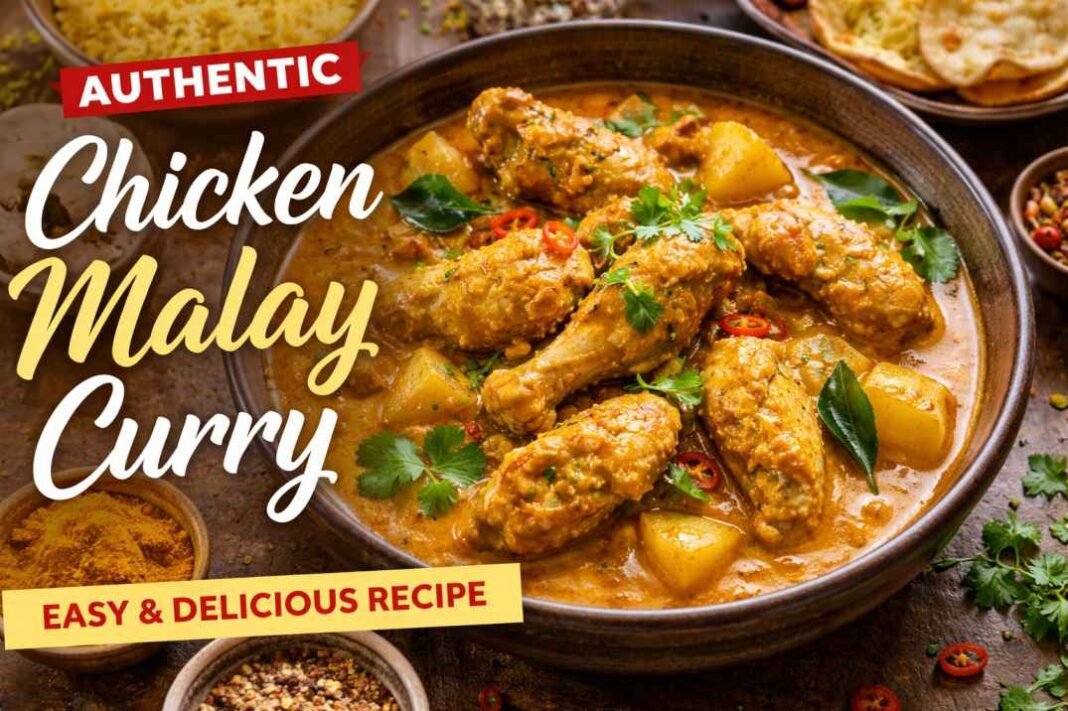

Chicken Malay curry is a fragrant, comforting dish made by simmering chicken in aromatic spices and coconut milk. Rooted in Malaysian Malay cooking and shaped by regional influences, this curry is known for its rich flavour, gentle heat, and smooth, well-balanced gravy that improves with time.
An authentic chicken Malay curry recipe is not about rushing flavours or relying on shortcuts. It is about patience, balance, and understanding how spices, aromatics, and coconut milk work together over time. This dish has been cooked for generations in Malaysian homes, where curries are allowed to simmer slowly until the oil separates and the aroma fills the kitchen. Over the years, regional adaptations such as Cape Malay curry have added new layers to the dish, but the heart of the recipe remains the same. This guide explores the tradition, technique, and practical steps behind a truly satisfying chicken Malay curry that you can confidently prepare at home.
What Makes Chicken Malay Curry Different
Chicken Malay curry, often called Ayam Kari, is a cornerstone of Malay home cooking. While it may appear similar to other chicken curries, its flavour profile is distinct. Instead of sharp heat or heavy spice, Malay curry focuses on warmth and depth. The spices are carefully cooked to remove any raw taste, allowing the dish to develop a smooth, rounded flavour.
Another defining feature is the use of coconut milk. Rather than overpowering the curry, coconut milk softens the spices and adds richness, creating a sauce that is creamy but not heavy. This balance is what makes chicken Malay curry comforting and easy to enjoy, even for those who prefer milder dishes.
A Dish Shaped by History and Region
The roots of chicken Malay curry lie in Malaysia, where Malay cooking evolved through centuries of trade and cultural exchange. Ingredients such as spices, coconut, and aromatics became central to everyday meals. As Malay communities migrated, especially to South Africa, the dish adapted to new environments and available ingredients.
Cape Malay chicken curry, for example, reflects these changes. While it shares a common foundation, it often includes curry powder, tomatoes, or a touch of sweetness from chutney or dried fruit. These variations do not replace the Malaysian version but instead highlight how traditional dishes naturally evolve while retaining their identity.
Understanding these differences helps clarify what kind of curry you are cooking and prevents confusion between Malaysian Malay curry and its regional cousins.
Ingredients That Define the Flavour
At its core, chicken Malay curry relies on simple ingredients treated with care. Bone-in chicken is traditionally used because it adds depth to the sauce as it cooks. The bones release flavour slowly, resulting in a richer curry.
Aromatic ingredients such as onions or shallots, garlic, ginger, and lemongrass form the base of the dish. These are blended into a spice paste along with dried chillies and spices like coriander, cumin, fennel, and turmeric. This fresh paste is essential for achieving the characteristic aroma of Malay curry.
Coconut milk plays a key role, providing creaminess and balance. In many home-style versions, potatoes are added to make the dish more filling and to help naturally thicken the sauce.
The Importance of Cooking the Spice Paste Properly
One of the most important techniques in Malay cooking is cooking the spice paste until the oil separates, a stage known as pecah minyak. This step cannot be rushed. It ensures that the spices lose their raw edge and develop a deep, rounded flavour.
When the paste is cooked correctly, the aroma becomes noticeably richer, and the oil begins to rise to the surface. This is a sign that the curry is on the right path. Skipping or shortening this step often results in a curry that tastes flat or overly sharp.
Cooking the Curry Step by Step
The cooking process begins with blending the spice paste until smooth. A small amount of water may be added to help the blender, but the paste should remain thick.
Oil is heated in a heavy-bottomed pot, and the spice paste is added. It is stirred frequently over medium heat until fragrant and glossy. Whole spices such as cinnamon or star anise may be added at this stage to deepen the aroma.
Once the paste is properly cooked, the chicken is added and stirred to coat it evenly. This allows the meat to absorb the flavour before any liquid is introduced. Water is then added, and the curry is left to simmer gently until the chicken becomes tender. Potatoes, if used, are added during this stage.
Coconut milk is added toward the end of cooking. The heat is kept low to prevent the milk from splitting, and the curry is simmered until thick, smooth, and well combined.
Achieving the Right Texture and Balance
A good chicken Malay curry should have a sauce that clings lightly to the chicken without feeling heavy or greasy. If the curry is too thick, a small amount of water can be added. If it feels thin, allowing it to simmer uncovered for a few extra minutes usually solves the problem.
Spice levels can be adjusted easily. Reducing dried chillies makes the curry milder, while adding fresh chillies or chilli powder increases heat. A small splash of lemon juice or vinegar at the end can brighten the dish and balance the richness of the coconut milk.
Serving the Curry
Chicken Malay curry is most commonly served with steamed rice, which absorbs the flavourful sauce. In some traditions, it is paired with yellow rice cooked with turmeric and warm spices, offering a gentle contrast to the curry.
Flatbreads such as roti are also popular, especially for scooping up the sauce. Simple sides like sliced cucumber, sambal, or a light salad help balance the richness and complete the meal.
Storage and Make-Ahead Tips
One of the reasons chicken Malay curry remains so popular is how well it keeps. Stored in an airtight container, it can be refrigerated for several days and often tastes even better the next day as the flavours deepen.
The curry also freezes well, making it ideal for meal preparation. When reheating, gentle heat is best to preserve the texture and flavour of the coconut-based sauce.
Why This Dish Endures
Chicken Malay curry has remained a staple because it is adaptable, comforting, and deeply satisfying. It works just as well for everyday meals as it does for special occasions. Its ability to bring together simple ingredients through thoughtful cooking is what makes it timeless.
Easy Chicken Malay Curry Recipe – Recipe Card
Prep Time: 20 minutes
Cook Time: 45 minutes
Total Time: 1 hour 5 minutes
Serves: 4–5
Ingredients
For the Chicken
1 kg chicken, bone-in pieces preferred
2 tablespoons cooking oil
2 medium potatoes, peeled and cut into chunks (optional)
Salt to taste
For the Spice Paste (Rempah)
6–8 dried red chillies, soaked and deseeded
5 shallots
4 garlic cloves
1 tablespoon ginger, chopped
1 tablespoon galangal (or extra ginger)
1 stalk lemongrass, white part only
1 teaspoon turmeric powder (or fresh turmeric)
2 teaspoons ground coriander
1 teaspoon ground cumin
1 teaspoon ground fennel
For the Curry
1 cinnamon stick
2 star anise
1½ cups water
1 cup coconut milk
Optional flavour boosters: curry leaves, a spoon of mango chutney, or a squeeze of lime juice
Instructions
Blend all the spice paste ingredients into a smooth paste, adding a little water if needed.
Heat oil in a heavy-bottomed pot over medium heat. Add the spice paste and cook, stirring frequently, until fragrant and the oil begins to separate.
Add the cinnamon stick and star anise, then add the chicken. Stir well to coat and cook for 4–5 minutes.
Pour in the water and add the potatoes if using. Cover and simmer on low heat for 20–25 minutes until the chicken is tender.
Lower the heat and stir in the coconut milk. Simmer gently for 10–15 minutes until the curry thickens. Season with salt to taste.
Rest for a few minutes before serving.
Notes
Cook the spice paste patiently to develop depth of flavour. Avoid boiling after adding coconut milk, as this can cause it to split. This curry tastes even better the next day. Store refrigerated for up to 3 days or freeze for up to 2 months.
Related Comforting Chicken Recipes You’ll Love
If you enjoy rich, comforting chicken dishes like this chicken Malay curry, you may also want to try Nigella’s take on a classic one-pan meal. Her comforting chiken-orzo-recipe-nigella combines tender chicken with orzo pasta for a creamy, satisfying dish that’s perfect for relaxed family dinners. It’s a great option when you’re in the mood for something cosy yet effortless.
Conclusion
An authentic chicken Malay curry recipe is about more than following steps. It is about understanding how flavour develops, respecting traditional techniques, and allowing the dish time to reach its full potential. Whether you prepare it in the classic Malaysian style or take inspiration from regional variations, the result is a curry that feels warm, familiar, and deeply nourishing. With patience and care, this dish becomes more than a recipe—it becomes a tradition worth returning to.
Frequently Asked Questions About Chicken Malay Curry
What is chicken Malay curry?
Chicken Malay curry, also known as Ayam Kari, is a traditional Malaysian dish made by simmering chicken in a fragrant spice paste and coconut milk. It is known for its rich aroma, balanced spices, and creamy texture rather than intense heat.
Is chicken Malay curry spicy?
Chicken Malay curry is moderately spiced but not overly hot. The heat level can be adjusted easily by reducing dried chillies for a milder curry or adding fresh chillies or chilli powder for more spice.
What is the difference between Malay curry and Indian curry?
Malay curry uses coconut milk as its primary base and focuses on aromatic warmth, while Indian curries often rely more heavily on tomatoes and stronger spice intensity. Malay curry is generally smoother and creamier in texture.
What is the difference between Malaysian Malay curry and Cape Malay curry?
Malaysian Malay curry typically uses a fresh spice paste and coconut milk, while Cape Malay curry, from South Africa, often uses curry powder, tomatoes, and sometimes a touch of sweetness. Both share Malay roots but have distinct regional flavours.
Why does oil separate in chicken Malay curry?
Oil separation, known as pecah minyak, indicates that the spice paste has been properly cooked. This step is essential for developing deep flavour and removing any raw spice taste from the curry.
Can I make chicken Malay curry without coconut milk?
Coconut milk is traditional and gives the curry its signature richness. While it can be replaced with evaporated milk or stock in a pinch, the flavour and texture will be noticeably different.
Which cut of chicken is best for chicken Malay curry?
Bone-in chicken pieces such as thighs or drumsticks are best because they add more flavour to the curry and remain tender during simmering. Boneless chicken can be used but produces a lighter sauce.
Can I add potatoes to chicken Malay curry?
Yes, potatoes are commonly added in home-style chicken Malay curry. They absorb the curry flavours and help naturally thicken the sauce.
How long should chicken Malay curry simmer?
Chicken Malay curry should simmer gently for about 30–40 minutes, or until the chicken is tender and the flavours have fully developed. Slow simmering improves taste and texture.
Does chicken Malay curry taste better the next day?
Yes, chicken Malay curry often tastes better the next day as the spices have more time to blend and deepen. This makes it ideal for meal prep.
How long can chicken Malay curry be stored?
Chicken Malay curry can be stored in the refrigerator for up to 3–4 days in an airtight container. It can also be frozen for up to 2 months.
What should I serve with chicken Malay curry?
Chicken Malay curry is best served with steamed rice, yellow rice, or roti. Simple sides like cucumber slices, sambal, or a light salad help balance the rich curry.
Is chicken Malay curry gluten-free?
Yes, traditional chicken Malay curry is naturally gluten-free as it does not require flour or wheat-based ingredients. Always check spice blends to ensure they contain no added gluten.