
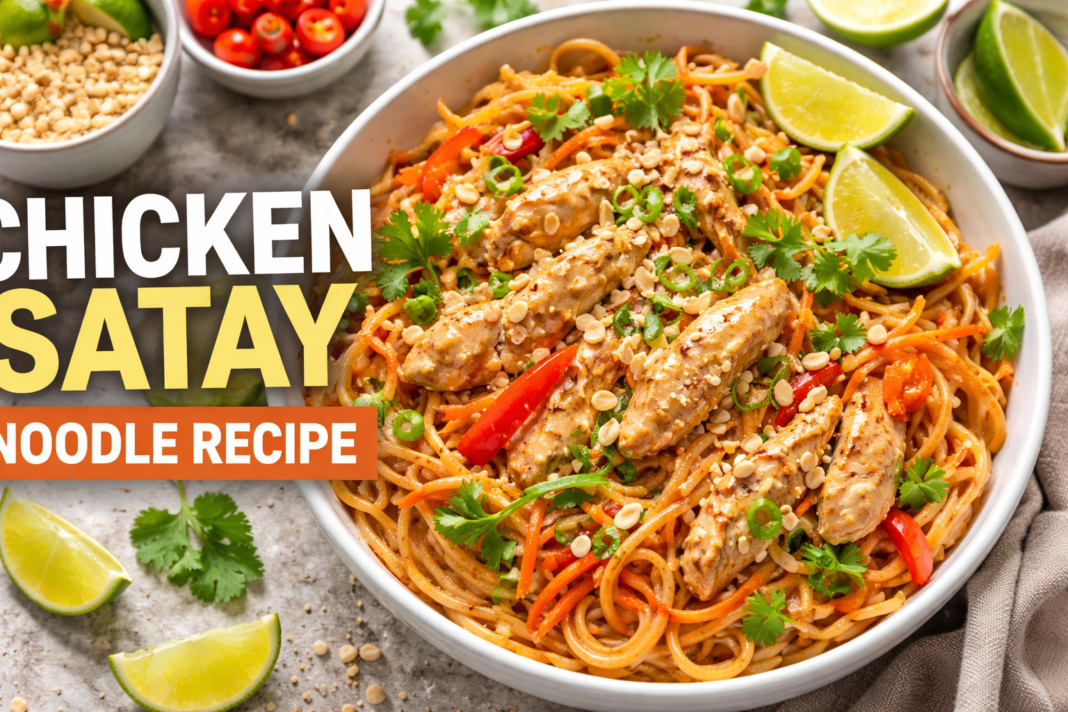

This chicken satay noodle recipe blends tender chicken, soft noodles, and a creamy peanut satay sauce inspired by Southeast Asian flavours. Made with simple ingredients and flexible cooking methods, it delivers restaurant-style taste at home while remaining approachable for intermediate-level home cooks.
Chicken satay noodle recipes are loved because they strike the perfect balance between comfort food and bold flavour. Rich peanut sauce, tender chicken, and slurp-worthy noodles come together in a dish that feels indulgent yet familiar. This version is designed for home cooks who already know the basics but want a recipe that feels polished, reliable, and adaptable. By drawing on several popular cooking techniques and flavour ideas, this chicken satay noodle recipe delivers depth without being complicated. It is suitable for busy weeknights, relaxed weekend cooking, or meal prep, and it can easily be adjusted to suit personal taste.
Understanding Chicken Satay Noodles
Chicken satay noodles are inspired by traditional satay, a dish rooted in Southeast Asian cuisine where grilled, marinated meat is served with a peanut-based sauce. In noodle form, those same flavours are transformed into a comforting bowl meal. Instead of skewers and charcoal grills, the chicken is cooked on the stovetop and combined with noodles that soak up a rich, nutty sauce.
What separates chicken satay noodles from ordinary peanut noodles is the attention to balance. The sauce is creamy but not heavy, savoury without being overpowering, and often lifted with a touch of acidity or gentle heat. The chicken adds substance and protein, while vegetables contribute texture and freshness. Together, these elements create a dish that feels complete rather than one-dimensional.
Why This Recipe Works So Well
This recipe brings together several proven ideas into one cohesive method. The chicken remains tender because it is cooked gently and coated properly. The sauce is smooth and flavourful because it is balanced before it ever touches the noodles. The noodles themselves are cooked separately so they keep their structure and do not become gluey.
Another strength of this recipe is flexibility. You can make it rich and indulgent or lighter and vegetable-forward. You can keep the flavours mild or build heat gradually. This adaptability is what makes chicken satay noodles such a repeat-worthy dish in a home kitchen.
Ingredients and Their Role in the Dish
The ingredient list is straightforward, but each component has a clear purpose. Chicken breast is commonly used because it cooks quickly and stays lean, though thighs work just as well if you prefer a juicier texture. Peanut butter forms the backbone of the sauce, bringing richness and depth. Coconut milk softens the peanut flavour and gives the sauce its signature creaminess.
Soy sauce provides salt and umami, while a small amount of sugar or honey balances the savoury notes. Garlic and ginger add warmth, and lime juice or vinegar brightens the entire dish. Noodles, whether egg noodles, rice noodles, or ramen, act as the vehicle that carries all these flavours. Vegetables are optional but strongly recommended, as they add colour, crunch, and nutritional value.
Preparing the Chicken
There is no single correct way to cook the chicken for satay noodles, which makes this dish forgiving and adaptable. Thinly sliced chicken can be quickly pan-seared to develop light browning and flavour. Another effective approach is to cook the chicken directly in the satay sauce. This method keeps the meat especially tender and allows it to absorb flavour as it cooks.
Some cooks prefer boiling and shredding the chicken before adding it to the sauce. While this method produces a softer texture and less surface browning, it works well for very quick meals and ensures evenly cooked meat. Regardless of the method you choose, cutting the chicken evenly and avoiding overcooking are key to a good result.
Cooking the Noodles Correctly
Noodles may seem simple, but they play a crucial role in the final dish. Overcooked noodles can ruin the texture of even the best sauce. Cooking them separately in well-salted water gives you full control over doneness. Once cooked, briefly rinsing them in cold water stops the cooking process and prevents clumping.
Allowing the noodles to drain properly before adding them to the sauce ensures the satay flavour remains concentrated rather than diluted. When combined at the right moment, the noodles absorb the sauce while still retaining a pleasant bite.
Building a Balanced Satay Sauce
The satay sauce should be prepared with care, as it defines the entire dish. Peanut butter and coconut milk should be combined until smooth before adding salty, sweet, and acidic elements. Soy sauce contributes depth, while sugar or honey rounds out the sharper edges. Garlic and ginger provide aroma, and lime juice adds brightness that cuts through the richness.
The sauce should be slightly thinner than you want it to be at the end, as it will thicken once heated and mixed with noodles. Tasting the sauce before cooking is essential. Adjusting seasoning at this stage prevents last-minute fixes that can throw off the balance.
Bringing Everything Together
Once the chicken, noodles, and sauce are ready, the final assembly happens quickly. The sauce is warmed gently in a pan, allowing the flavours to meld. Chicken is added and coated, followed by vegetables that need only brief cooking. The noodles are added last and tossed carefully to ensure even coverage.
This stage is where restraint matters. High heat can cause the sauce to split, while excessive stirring can break the noodles. Gentle heat and patience produce the best texture and appearance.
The Importance of Vegetables
Vegetables are not just an afterthought in chicken satay noodles. They provide contrast to the creamy sauce and prevent the dish from feeling heavy. Carrots and bell peppers add sweetness and crunch, while greens such as spinach or cabbage soften into the sauce.
Vegetables should be added in stages depending on how quickly they cook. Firmer vegetables benefit from a brief sauté, while leafy greens only need residual heat to wilt. This layered approach ensures that each ingredient retains its best texture.
Adjusting Flavour to Taste
One of the strengths of this dish is how easily it can be adjusted. If the sauce feels too thick, a splash of warm water or coconut milk restores balance. If it tastes flat, a squeeze of lime or a dash of soy sauce usually fixes the problem. Heat can be increased gradually with chilli paste or oil, while sweetness can be fine-tuned with small amounts of sugar or honey.
These small adjustments allow you to tailor the dish without overpowering the core satay flavour.
Variations and Adaptations
Chicken satay noodles adapt well to different diets and preferences. Tofu or mushrooms can replace chicken for a vegetarian version, while shrimp or beef create a heartier dish. Rice noodles make the recipe suitable for gluten-free diets, and plant-based alternatives work well for vegan versions.
The sauce itself can be reused as a base for other meals, making it a versatile addition to your cooking repertoire. This adaptability is one of the reasons chicken satay noodles remain popular across cuisines and households.
Storage, Reheating, and Leftovers
Leftover chicken satay noodles store well in the refrigerator for several days. When reheating, gentle heat is essential to maintain the sauce’s creamy texture. Adding a small amount of liquid prevents dryness and helps revive the dish.
While freezing is possible in some cases, the texture of noodles is usually best when enjoyed fresh or refrigerated rather than frozen.
Why Homemade Chicken Satay Noodles Are Worth It
Making chicken satay noodles at home allows you to control every element of the dish. You can adjust seasoning, reduce oil, increase vegetables, and tailor portions to your needs. The result is often fresher and more satisfying than takeaway, with flavours that feel intentional rather than generic.
Cooking this dish also builds confidence, as it teaches sauce balancing, timing, and texture control — skills that transfer easily to other recipes.
Easy Chicken Satay Noodle Recipe – Recipe Card
Prep Time: 15 minutes
Cook Time: 20 minutes
Total Time: 35 minutes
Serves: 3–4
Ingredients
For the Chicken
400 g boneless chicken breast or thighs, thinly sliced
1 tablespoon soy sauce
1 teaspoon cornflour (optional, for tenderness)
1 teaspoon oil
For the Satay Sauce
½ cup smooth peanut butter
¾ cup coconut milk
2 tablespoons soy sauce (or tamari)
1 tablespoon brown sugar or honey
1 teaspoon sesame oil (optional)
2 garlic cloves, minced
1 teaspoon grated ginger (optional)
1–2 tablespoons lime juice
1–2 teaspoons chilli paste or sriracha (optional)
¼–½ cup warm water, as needed
For the Noodles
250 g egg noodles, rice noodles, or ramen
Optional Vegetables
1 carrot, thinly sliced or ribboned
1 red bell pepper, thinly sliced
1 cup spinach or cabbage
½ cup bean sprouts or green beans
To Garnish
Crushed peanuts or cashews
Spring onions, sliced
Fresh coriander
Lime wedges
Instructions
Cook the noodles in a large pot of salted boiling water according to package instructions. Drain, briefly rinse with cold water to stop cooking, and set aside.
In a bowl, mix the chicken with soy sauce and cornflour until lightly coated. Heat oil in a large pan or wok over medium-high heat. Add the chicken and cook for 4–5 minutes until just cooked through. Remove from the pan and set aside.
In the same pan, lower the heat and add peanut butter, coconut milk, soy sauce, sugar, garlic, ginger, sesame oil, and lime juice. Stir gently until smooth and warmed through. Add warm water gradually to achieve a creamy, pourable sauce.
Return the chicken to the pan along with any vegetables that need cooking. Simmer gently for 2–3 minutes. Add noodles and toss carefully until everything is evenly coated in the satay sauce.
Taste and adjust seasoning with extra lime juice, soy sauce, or chilli if needed. Remove from heat and serve immediately, garnished with peanuts, spring onions, coriander, and lime wedges.
Notes
For extra tender chicken, avoid overcooking and keep the heat moderate once the sauce is added. The sauce will thicken as it cools, so loosen with a splash of warm water or coconut milk when reheating. This dish stores well in the refrigerator for up to 3 days and tastes even better the next day as the flavours develop.
Conclusion
This chicken satay noodle recipe brings together the comfort of noodles, the richness of peanut sauce, and the satisfaction of well-cooked chicken in one cohesive dish. Designed for intermediate-level home cooks, it offers enough technique to feel rewarding without becoming overwhelming. Its flexibility allows it to fit into many lifestyles, whether you are cooking quickly after work or taking your time on a weekend. Once you master the balance of flavours and textures, this recipe becomes a dependable favourite that you can adapt endlessly while still delivering the comforting essence of chicken satay noodles.
Frequently Asked Questions (FAQs)
What is chicken satay noodle recipe made of?
A chicken satay noodle recipe is made with cooked noodles, tender chicken, and a creamy peanut satay sauce prepared using peanut butter, coconut milk, soy sauce, garlic, and lime. Vegetables and garnishes like peanuts and spring onions are often added for texture and flavour.
Are chicken satay noodles spicy?
Chicken satay noodles are usually mild to moderately spiced. The heat level depends on how much chilli paste, sriracha, or fresh chilli is added. You can easily make the dish non-spicy or increase the heat to suit your taste.
What noodles are best for chicken satay noodles?
Egg noodles, rice noodles, ramen, and hokkien noodles all work well for chicken satay noodles. Egg noodles provide a classic texture, while rice noodles are ideal for a gluten-free option.
Can I make chicken satay noodles without coconut milk?
Yes, chicken satay noodles can be made without coconut milk. You can substitute it with water, chicken stock, or light cream, though coconut milk gives the sauce its signature richness and authentic satay flavour.
Can I make chicken satay noodles ahead of time?
Yes, chicken satay noodles are suitable for meal prep. Store them in an airtight container in the refrigerator for up to 3 days. Reheat gently with a splash of water or coconut milk to loosen the sauce.
Is chicken satay noodle recipe healthy?
Chicken satay noodles can be part of a balanced meal. They provide protein from chicken, healthy fats from peanuts, and carbohydrates from noodles. Adding more vegetables and controlling portion size makes the dish even healthier.
Can I use tofu instead of chicken in satay noodles?
Yes, tofu is an excellent substitute for chicken in satay noodles. Use firm tofu, pan-sear it until golden, and then toss it with the satay sauce and noodles for a vegetarian or vegan version.
Why does my satay sauce turn too thick?
Satay sauce thickens as it heats and cools because of the peanut butter. If it becomes too thick, simply add warm water or coconut milk a little at a time until the desired consistency is reached.
Can I freeze chicken satay noodles?
Chicken satay noodles can be frozen, but the texture of the noodles may soften after thawing. For best results, freeze only the sauce and chicken, then cook fresh noodles when ready to serve.
How do I stop noodles from sticking together?
To prevent noodles from sticking, cook them until just tender, rinse briefly with cold water, and toss with a small amount of oil if they are not added to the sauce immediately.