
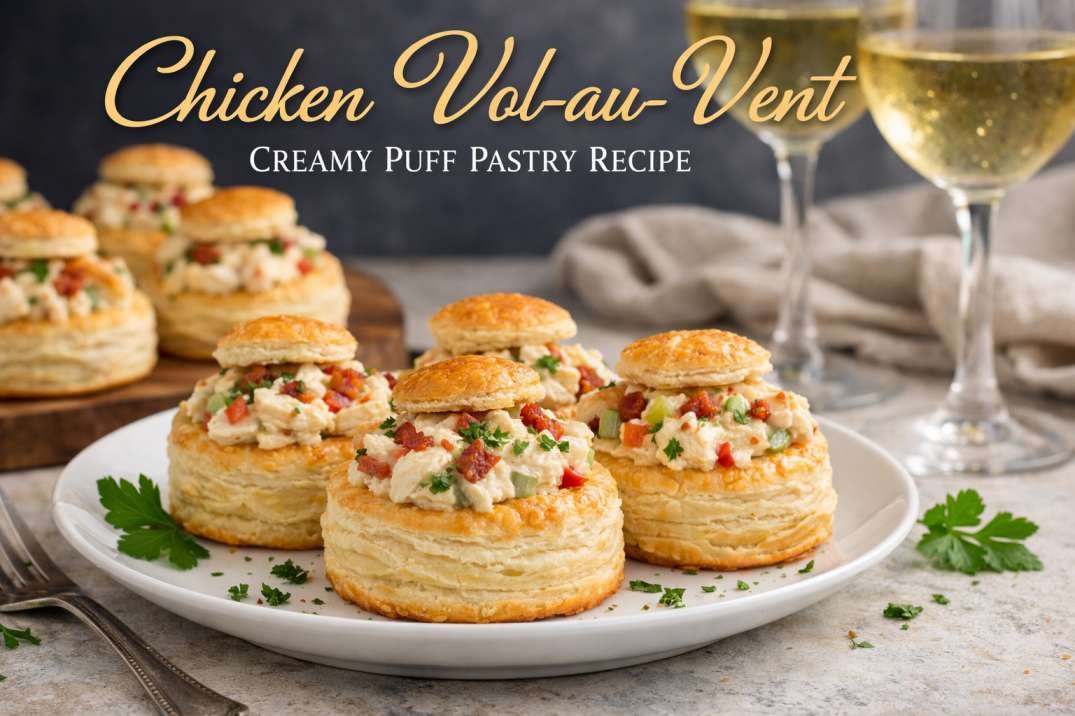

This chicken vol-au-vent recipe combines delicately flaky puff pastry with a smooth, savoury chicken filling, using smart kitchen shortcuts to create a dish that feels restaurant-quality yet remains effortlessly achievable at home.Perfect as an elegant starter or appetiser, it combines classic French inspiration with modern, time-saving techniques for impressive results that are easy to recreate at home.
Chicken vol-au-vent demonstrates that truly elegant food relies more on technique and balance than on complicated preparation. With crisp, flaky puff pastry and a rich, creamy chicken filling, this classic dish looks refined enough for formal entertaining while remaining achievable for everyday home cooks. Traditionally served as a starter or light main, chicken vol-au-vent balances comfort and sophistication beautifully. By using frozen puff pastry and ready-cooked chicken, you can create a dish that feels luxurious without spending hours in the kitchen. Whether for dinner parties, festive gatherings or relaxed lunches, this recipe delivers impressive results with surprisingly little effort.
What Is a Chicken Vol-au-Vent?

Image source: pinterest.com
A vol-au-vent is a classic French pastry preparation made from puff pastry shaped into a hollow case and baked until light, crisp and airy. The name loosely translates to ‘flight in the wind,’ referencing the feather-light layers that expand dramatically as the pastry bakes. Once baked, the centre is filled with a savoury mixture, most commonly bound with a creamy sauce.
Chicken vol-au-vent is one of the most popular versions of this dish. The mild flavour of chicken pairs naturally with rich sauces and subtle aromatics, making it an ideal filling for puff pastry. While seafood and vegetable versions also exist, chicken remains the most widely recognised and frequently prepared option.
Historical Background and Culinary Origins

Image source: pinterest.com
Vol-au-vent emerged from early 19th-century French haute cuisine, a period defined by precision, architectural presentation, and technical mastery. Carême was known for refining pastry techniques and elevating presentation, and vol-au-vent reflects his emphasis on lightness, structure and elegance.
Closely related to dishes such as bouchée à la reine, vol-au-vent differs mainly in size and presentation. Over time, it moved beyond aristocratic dining rooms and became a staple of home cooking, dinner parties and festive menus across Europe and beyond.
Why Chicken Vol-au-Vent Has Stood the Test of Time

Image source: pinterest.com
Chicken vol-au-vent has endured for generations because it satisfies multiple expectations at once. It feels indulgent without being overwhelming, formal without being rigid, and adaptable without losing its identity.
The contrast between crisp pastry and creamy filling is inherently appealing. The dish also allows cooks to adjust flavours and ingredients based on availability, season and occasion. This flexibility has helped chicken vol-au-vent remain relevant despite changing food trends.
Modern Shortcuts That Make the Recipe Accessible

Image source: pinterest.com
One reason some home cooks avoid vol-au-vent is the assumption that puff pastry must be made from scratch. In reality, high-quality frozen puff pastry is widely available and produces consistent, reliable results.
Using frozen pastry removes the most technical part of the recipe. Similarly, rotisserie chicken or leftover roast chicken reduces preparation time without sacrificing flavour. Rather than compromising quality, these modern adaptations reflect how classic recipes evolve to suit contemporary kitchens without losing their character.
Understanding Puff Pastry: Structure and Success

Image source: pinterest.com
Puff pastry relies on layers of butter trapped between sheets of dough. As the pastry bakes, moisture within the butter transforms into steam, forcing the layers upward and creating the signature crisp, golden lift.
For vol-au-vent, it is essential that the pastry remains cold until it goes into the oven. Warm pastry allows the butter to melt prematurely, preventing proper lift. Chilling the shaped pastry before baking helps ensure tall, well-defined shells with a hollow centre.
A common technique involves stacking a hollow ring of pastry on top of a solid base. This creates height and ensures the centre remains open for filling.
The Role of the Creamy Filling

Image source: pinterest.com
The filling ultimately defines the character of a chicken vol-au-vent, determining whether it feels merely pleasant or genuinely memorable. It should be rich but not heavy, smooth but not bland, and well-seasoned without overwhelming the pastry.
Modern versions often use cream cheese as the base instead of a traditional flour-thickened sauce. Cream cheese melts smoothly, provides consistent texture and reduces the risk of lumps. It also reheats well, making it suitable for entertaining.
Supporting ingredients such as leeks, mushrooms or peppers add sweetness and depth, while bacon introduces a savoury note that enhances the overall flavour profile.
Choosing the Right Chicken

Image source: pinterest.com
Chicken vol-au-vent works best with cooked chicken. This can include:
- Rotisserie chicken
- Leftover roast chicken
- Poached or gently cooked chicken breast
- Leftover turkey as an alternative
Using pre-cooked chicken prevents dryness and ensures the filling comes together quickly. The meat should be chopped or shredded into small pieces so it integrates smoothly with the sauce.
Vegetables and Aromatics: Building Flavour

Image source: pinterest.com
Vegetables play an important supporting role in chicken vol-au-vent. Leeks are particularly popular due to their mild, slightly sweet flavour, which complements creamy sauces without overpowering them.
Mushrooms add earthiness, while peppers provide colour and subtle sweetness. The choice of vegetables can be adjusted based on preference or availability, making the recipe highly adaptable.
Cooking vegetables gently before adding dairy ensures they soften properly and release their flavour into the sauce.
Assembly Timing: Why It Matters

Image source: pinterest.com
One of the most important principles of vol-au-vent is timing. Puff pastry absorbs moisture quickly, so filled shells should not sit for extended periods.
The best approach is to prepare the filling and pastry separately, then assemble just before serving. This preserves crispness and ensures the dish looks and tastes as intended.
Presentation and Visual Appeal

Image source: pinterest.com
Few starters create an impression as quickly as chicken vol-au-vent, with its tall, golden pastry shells signalling refinement before the first bite. The tall, golden pastry shells create an immediate sense of occasion, even before the filling is added.
Garnishing with fresh herbs, cracked black pepper or a light sprinkle of parsley adds freshness without clutter. Serving the small pastry cut-outs alongside the filled shells is both practical and visually pleasing.
When and How to Serve Chicken Vol-au-Vent

Image source: pinterest.com
Chicken vol-au-vent works well for a variety of occasions, from elegant dinner parties to relaxed weekend lunches. It pairs beautifully with fresh salads or lightly dressed vegetables that balance the richness of the filling.
If you enjoy comforting yet refined chicken dishes, you may also like this chiken-orzo-recipe-nigella which offers a warm, hearty option ideal for casual family meals and everyday cooking.
Creative Variations to Explore

Image source: pinterest.com
One of the strengths of chicken vol-au-vent is its adaptability. Seafood versions may include shrimp, scallops, crab or flaky white fish. Vegetarian versions can feature mushrooms, roasted vegetables or plant-based proteins.
Herbs such as thyme, dill or tarragon subtly change the flavour direction, while seasonal pastry shapes add festive appeal for special occasions.
Make-Ahead Strategies for Entertaining
Chicken vol-au-vent is well-suited to advance preparation when components are handled correctly. The filling can be made a day or two ahead and stored in the refrigerator.
Pastry shells can be baked in advance and stored airtight at room temperature. Reheating the filling gently and warming the shells briefly in the oven restores texture before assembly.
Storage, Reheating and Freezing

Image source: pinterest.com
Filled vol-au-vents should be eaten immediately. Unfilled components, however, store well.
Creamy fillings should be refrigerated and reheated gently to avoid separation. Puff pastry shells freeze well, but dairy-based fillings should not be frozen, as they may split when thawed.
Common Mistakes and How to Avoid Them
A common issue is pastry that fails to rise, usually due to warmth before baking. Keeping pastry cold solves most problems.
Overfilling is another mistake. The filling should sit neatly within the shell, allowing the pastry to remain crisp and structured.
Why This Recipe Works for Home Cooks and SEO
From a cooking perspective, chicken vol-au-vent works because it respects technique while embracing convenience. From an SEO perspective, it succeeds because it fully satisfies search intent by explaining what the dish is, how it works, and how to make it successfully.
The recipe is practical, informative and adaptable, making it valuable to readers and search engines alike.
Chicken Vol-au-Vent Recipe Card

Image source: pinterest.com
Easy Chicken Vol-au-Vent (Creamy Puff Pastry Starter)
Time & Yield
| Detail | Information |
|---|---|
| Prep Time | 20 minutes |
| Cook Time | 20–25 minutes |
| Total Time | 45 minutes |
| Yield | 6 servings |
Ingredients
For the Puff Pastry Shells
- 1 package frozen puff pastry, thawed
- 1 large egg
- 1 tablespoon water
For the Filling
- 6 bacon strips, cooked and chopped
- 2 medium leeks (white parts only), sliced
- 1 sweet bell pepper, finely diced
- 1 cup cooked or rotisserie chicken, shredded
- 8 oz (225g) cream cheese, softened
- ¼ teaspoon salt
- ¼ teaspoon black pepper
- Fresh parsley, for garnish
Instructions
- Preheat oven to 200°C (400°F). Cut puff pastry into circles. Layer hollow rings over solid bases. Brush with egg wash, chill 15 minutes, then bake until golden and risen. Cool on a wire rack.
- Cook bacon until crisp. Reserve 1 tablespoon fat. Sauté leeks and pepper until tender. Reduce heat and stir in chicken, cream cheese, salt and pepper until smooth.
- Hollow pastry centres, fill with warm chicken mixture, garnish with parsley and pepper, and serve immediately.
Storage & Reheating
- Filling: Refrigerate up to 3 days
- Pastry shells: Airtight at room temperature
- Reheat: Warm filling gently; heat shells at 180°C for 5–7 minutes
- Freezing: Freeze pastry shells only (up to 3 months)
Conclusion
Chicken vol-au-vent endures because it captures the rare balance between elegance and practicality — impressive enough for guests, yet simple enough to prepare with confidence. With flaky puff pastry, a creamy, well-balanced filling and thoughtful preparation, it transforms simple ingredients into something special. Whether served for guests or enjoyed as part of a relaxed meal, this dish proves that refined cooking can still be approachable, reliable and deeply satisfying.Its enduring popularity shows that classic European recipes can adapt beautifully to modern cooking without losing their timeless appeal.
Frequently Asked Questions (FAQs)
What is chicken vol-au-vent made of?
Chicken vol-au-vent is made with light, flaky puff pastry shells filled with a creamy mixture of cooked chicken, dairy (such as cream or cream cheese), and aromatics like leeks, mushrooms or peppers. It is traditionally served as a starter or appetiser.
Is chicken vol-au-vent French or British?
Chicken vol-au-vent originated in France, but it became especially popular in British cuisine, where it is commonly served at parties, afternoon teas and festive meals. Today, it is enjoyed in many countries with regional variations.
Can I make chicken vol-au-vent ahead of time?
Yes, chicken vol-au-vent can be partially made ahead. The filling can be prepared and refrigerated for up to three days, and the pastry shells can be baked in advance. For best results, assemble just before serving to keep the pastry crisp.
Can I use store-bought puff pastry for vol-au-vent?
Yes, store-bought frozen puff pastry works perfectly for vol-au-vent and is widely used by home cooks and professionals. It produces consistent rise and flakiness without the time and complexity of making puff pastry from scratch.
Why did my puff pastry not rise properly?
Puff pastry usually fails to rise if it becomes too warm before baking. The butter must stay cold so it can release steam in the oven. Chilling the shaped pastry before baking helps ensure proper lift and flaky layers.
Can I freeze chicken vol-au-vent?
You should freeze only the puff pastry shells, not the creamy filling. Dairy-based fillings may split or change texture when frozen. Baked pastry shells can be frozen for up to three months and reheated in the oven.
What can I serve with chicken vol-au-vent?
Chicken vol-au-vent pairs well with light sides such as green salad, steamed vegetables or roasted asparagus. It also works as part of a larger appetiser spread alongside quiches, savoury pastries or charcuterie.
Can I make chicken vol-au-vent without bacon?
Yes, bacon is optional. You can omit it entirely or replace it with mushrooms, extra vegetables or herbs for a lighter or vegetarian-friendly flavour profile while keeping the creamy texture.
Can I use leftover chicken or turkey?
Yes, leftover roast chicken or turkey works very well in chicken vol-au-vent. It is an excellent way to reuse leftovers while creating a dish that feels fresh and elegant.
How do I stop vol-au-vents from going soggy?
To prevent sogginess, avoid overfilling the pastry and always assemble just before serving. Keep the filling warm and the pastry dry, then combine them at the last moment.