
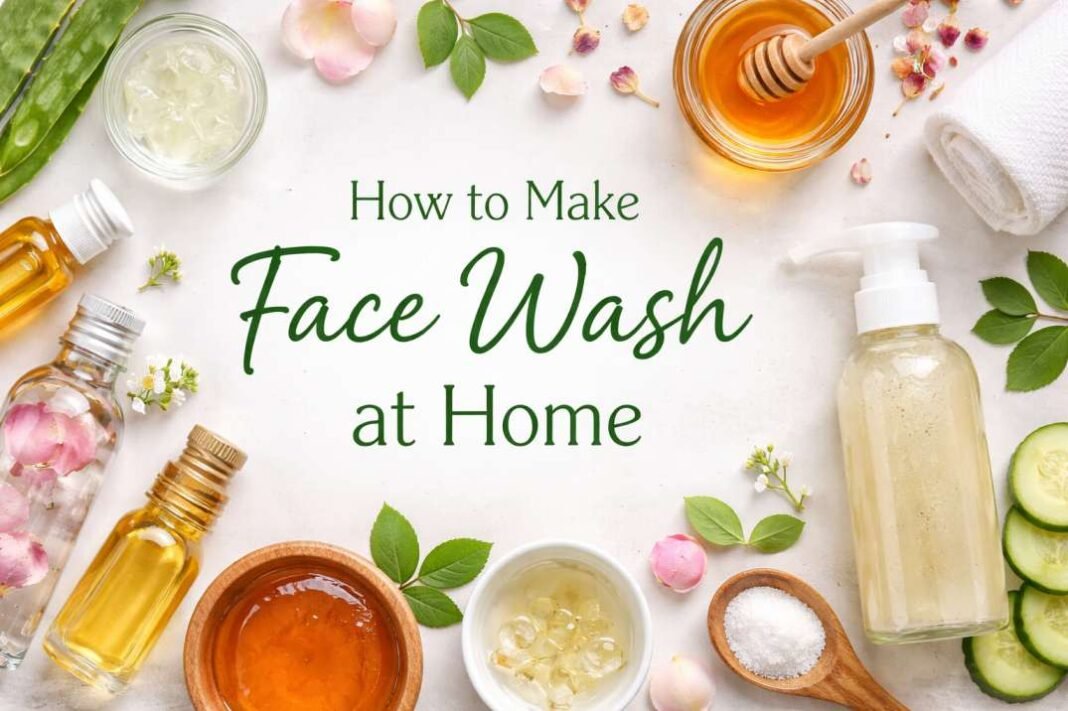

Making face wash at home is a gentle and natural way to cleanse your skin using simple ingredients like aloe vera, honey, rose water, and mild cleansers. Homemade face wash recipes allow you to customise your routine based on skin type while avoiding harsh chemicals found in many commercial products.
Face wash is one of the most frequently used skincare products, yet it is often chosen without much thought. Many commercial cleansers contain strong detergents, artificial fragrances, and preservatives that may not suit every skin type. As people become more ingredient-conscious, interest in homemade skincare has grown steadily. Learning how to make face wash at home is not about following trends, but about understanding what your skin needs and choosing gentler alternatives. When prepared thoughtfully, homemade face wash can cleanse effectively while helping maintain the skin’s natural balance, comfort, and overall health.
What Is a Face Wash and Why Is It Important?
A face wash is designed to remove everyday impurities such as dirt, sweat, excess oil, sunscreen, and environmental pollutants that accumulate on the skin. Unlike regular soap, a proper face wash should cleanse without stripping the skin of its natural protective oils. When this balance is disrupted, skin may feel tight, dry, irritated, or more prone to breakouts.
Homemade face wash focuses on gentle cleansing rather than aggressive oil removal. The goal is to keep the skin clean while supporting its natural barrier, which is essential for maintaining healthy-looking skin over time.
Why Many People Prefer Homemade Face Wash
One of the main reasons people turn to homemade face wash is transparency. When you make your own cleanser, you know exactly what goes into it. This can be reassuring for those who prefer to avoid unnecessary additives or who have sensitive or reactive skin.
Homemade face wash also offers flexibility. Skin changes with age, climate, stress, and lifestyle. A cleanser that works well during winter may feel too heavy in summer. Making your own face wash allows you to adjust ingredients without replacing your entire skincare routine. It can also be more economical and environmentally friendly when ingredients are used across multiple batches.
Understanding Your Skin Before Making Face Wash
A key principle of natural skincare is recognising that no single recipe works for everyone. Skin type plays an important role in how ingredients are tolerated.
Some people naturally produce more oil and may experience congestion if oils are used incorrectly. Others have dry or mature skin that benefits from richer ingredients. Sensitive skin may react even to gentle substances. This is why understanding your own skin is more important than following any recipe exactly.
Paying attention to how your skin feels after cleansing can be helpful. Tightness may indicate dryness, while excess shine or frequent breakouts may suggest that your cleanser is not well suited to your skin.
Common Ingredients Used in Homemade Face Wash
Most homemade face wash recipes rely on a small group of gentle, widely used ingredients. Aloe vera gel is valued for its soothing and hydrating qualities and is suitable for most skin types. Raw honey is often used for its gentle cleansing properties and ability to help the skin feel soft and comfortable after washing.
Rose water adds a calming and refreshing element and is generally well tolerated, even by sensitive skin. Castile soap is sometimes included in small amounts to provide mild cleansing without harsh detergents. Vegetable glycerin helps attract moisture to the skin, while alcohol-free witch hazel is often chosen for oily or combination skin due to its toning effect.
Homemade Face Wash for Oily Skin
Oily skin usually benefits from lightweight, non-greasy cleansing. A simple blend of aloe vera gel and raw honey can cleanse effectively while maintaining hydration. Some people choose to include a small amount of alcohol-free witch hazel to help manage excess oil without causing dryness.
This type of homemade face wash is often suitable for daily use, particularly in warm or humid climates. Gentle cleansing helps prevent the skin from overproducing oil in response to harsh products.
Homemade Face Wash for Dry Skin
Dry skin requires a cleanser that removes impurities without leaving the skin feeling tight or uncomfortable. Honey and aloe vera form a gentle base that cleanses while supporting moisture retention. A small amount of a light oil, such as almond or jojoba oil, may help prevent dryness and discomfort.
Rinsing thoroughly is important to avoid residue on the skin. Following cleansing with a suitable moisturiser can help maintain softness throughout the day.
Homemade Face Wash for Acne-Prone Skin
Acne-prone skin often responds better to gentle, non-stripping cleansers. Aloe vera and honey may help cleanse the skin while supporting a calmer appearance. Some people add a very small amount of properly diluted tea tree essential oil, which is commonly used in skincare for its cleansing properties.
Essential oils should always be diluted carefully, as concentrated oils can irritate the skin if used incorrectly. Consistency and simplicity are generally more helpful than strong formulations.
Homemade Face Wash for Sensitive Skin
Sensitive skin usually benefits from simple, minimal formulas. A combination of aloe vera, rose water, and vegetable glycerin can create a mild cleanser that cleanses without overwhelming the skin. Strong fragrances and exfoliating ingredients are best avoided.
Using lukewarm water and gentle massage further supports sensitive skin during cleansing.
Oil Cleansing: Is It Suitable for Everyone?
Oil cleansing is often promoted as suitable for all skin types, but this is not always the case. While oil cleansing can work well for dry or mature skin, some people with oily or acne-prone skin may find it too heavy.
If oil cleansing is used, proper removal is essential. A warm, damp cloth can help remove oil gently. Leaving residue on the skin may contribute to congestion, particularly around the nose and eyes. As with all skincare methods, personal experience should guide continued use.
Ingredient Quality Matters
The quality of ingredients used in homemade face wash can influence results. Raw, natural honey is preferable to heavily processed varieties. Alcohol-free witch hazel should be chosen over scented or additive-heavy versions. Pure aloe vera gel without dyes or artificial fragrances is generally better tolerated.
Reading labels carefully remains important, even when choosing natural ingredients.
How to Use Homemade Face Wash Correctly
Homemade face wash should be applied to damp skin using gentle circular motions. Cleansing for about thirty to sixty seconds is usually sufficient. Hot water may strip the skin, while very cold water may not remove residue effectively, so lukewarm water is ideal.
After cleansing, applying a suitable moisturiser can help maintain skin balance regardless of skin type.
Storage and Shelf Life of Homemade Face Wash
Because homemade face wash does not contain strong preservatives, it should be made in small batches. Clean containers and utensils are essential. Storing the face wash in a cool place or refrigerator can help extend freshness.
Most homemade face washes are best used within one to three weeks. Any change in smell, texture, or appearance is a sign that the product should be discarded.
When Homemade Face Wash May Not Be Enough
Homemade face wash can be a supportive part of a skincare routine, but it may not address underlying medical skin conditions. Persistent acne, eczema, rosacea, or severe irritation should be evaluated by a qualified professional. Natural skincare works best as part of an overall approach that includes proper hydration, nutrition, and healthy daily habits.
Conclusion
Learning how to make face wash at home encourages a more mindful and personalised approach to skincare. By understanding your skin type, choosing gentle ingredients, and keeping formulas simple, homemade face wash can support clean, comfortable skin without unnecessary additives. While results vary from person to person, consistency and careful observation often lead to the best outcomes. Homemade face wash is not about perfection, but about creating a routine that works in harmony with your skin.
Disclaimer
The information provided in this article is for general informational purposes only. Homemade face wash recipes and natural skincare suggestions may not be suitable for everyone, as individual skin types and sensitivities vary. Always perform a patch test before using any new skincare product. This content does not replace professional medical or dermatological advice. If you have a skin condition, allergy, or ongoing concern, consult a qualified healthcare or skincare professional before trying new products.
Frequently Asked Questions (FAQs)
Is homemade face wash good for daily use?
Homemade face wash can be used daily if it is made with gentle ingredients and suits your skin type. Cleansers based on aloe vera, honey, rose water, or mild soap bases are generally suitable for regular use. It is important to avoid harsh ingredients and to stop using the product if irritation or dryness occurs.
Which homemade face wash is best for oily skin?
For oily skin, lightweight and oil-free homemade face wash recipes tend to work best. Ingredients such as aloe vera, raw honey, and alcohol-free witch hazel are commonly used because they cleanse the skin without adding heaviness. Over-cleansing should be avoided, as it may cause the skin to produce more oil.
Can homemade face wash help with acne?
Homemade face wash may help support acne-prone skin by gently cleansing without stripping natural moisture. Ingredients like aloe vera and honey are often chosen for their soothing and cleansing properties. Results vary depending on skin type and consistency, and severe or persistent acne should be assessed by a skincare professional.
How long does homemade face wash last?
Most homemade face wash recipes last between one and three weeks when stored properly. Because they do not contain strong preservatives, they should be kept in clean containers and stored in a cool place or refrigerator. Any change in smell, texture, or appearance is a sign that the product should no longer be used.
Can homemade face wash remove makeup?
Some homemade face washes can remove light makeup, but they may not be effective for heavy or waterproof products. Oil cleansing or a separate makeup remover is often more suitable for removing makeup thoroughly. Care should be taken around the eye area, as natural cleansers may cause stinging if they enter the eyes.
Is homemade face wash better than store-bought face wash?
Homemade face wash is not necessarily better for everyone, but it offers more control over ingredients. Some people prefer homemade options to reduce exposure to certain additives, while others find well-formulated commercial products more convenient. The best choice depends on individual skin needs and preferences.
Can I customise homemade face wash recipes?
Yes, homemade face wash recipes can be adjusted to suit different skin types and seasonal changes. Ingredient ratios can be modified gradually, and it is best to make small batches when experimenting. Patch testing is recommended whenever a new ingredient is introduced.
Is homemade face wash safe for sensitive skin?
Homemade face wash can be suitable for sensitive skin when simple, fragrance-free ingredients are used. Aloe vera, rose water, and glycerin are often well tolerated. However, sensitive skin can still react to natural ingredients, so patch testing and minimal formulations are important.
Do I need to moisturise after using homemade face wash?
Yes, moisturising after cleansing is important for all skin types, including oily skin. Cleansing removes impurities but does not replace hydration. Using a suitable moisturiser helps maintain the skin’s natural barrier and comfort.
Can children or teenagers use homemade face wash?
Mild homemade face wash made with gentle ingredients may be suitable for teenagers, especially those with sensitive or acne-prone skin. Strong essential oils or active ingredients should be avoided. For younger children or ongoing skin concerns, professional advice is recommended.