
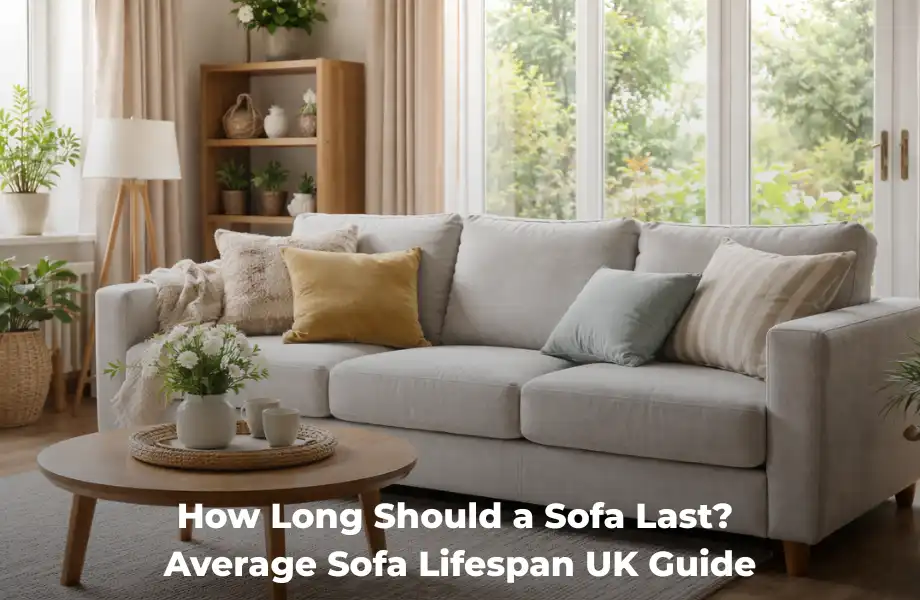

A sofa is not a small purchase. In most UK homes, it’s the single biggest piece of furniture in the living room. It’s where we watch box sets, host guests, recover from long workdays, and survive gloomy winter evenings. So when it starts creaking, sagging or looking tired after a few years, it’s natural to ask: how long should a sofa last?
The honest answer depends on several factors. It’s not just about price. Materials, construction, daily use, and even room conditions all affect how long your sofa will stay comfortable and supportive. A busy family home will naturally put more strain on furniture than a quiet flat, so lifespan can vary quite a bit.
If you want your sofa to last longer, it helps to understand what really affects durability. That way, you can spot problems early and make smarter buying or maintenance decisions.
The Average Sofa Lifespan UK Homeowners Can Expect

A comparison of average sofa lifespans in UK homes
Image source: pixaby
Most UK households can expect a sofa to last between 5 and 10 years, depending on quality and usage. Budget sofas typically last around 3–5 years, while mid-range options can stretch to 8 years. Premium sofas, especially those made with hardwood frames and high-density cushions, can last well over a decade.
According to Plumbs, a well-maintained sofa can remain comfortable for 10–15 years. Similarly, insights from Sofa Club highlight how build quality plays a bigger role than price alone.
If you’re planning your living room, combining durability with aesthetics matters. Pairing your sofa with elements like small living room wall decor ideas UK or small living room lighting ideas UK helps create a balanced and long-lasting space.
What Determines How Long a Sofa Should Last?
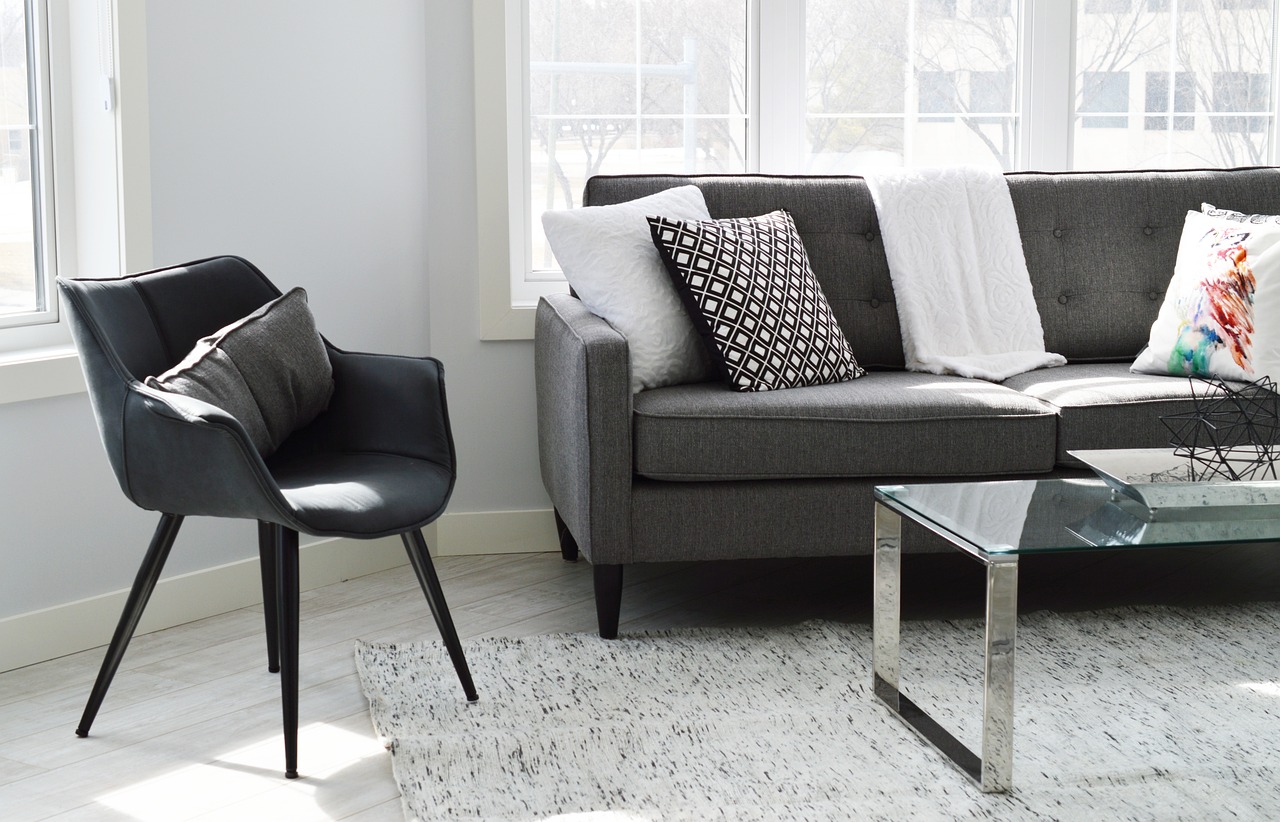
Key elements that determine how long a sofa lasts
Image source: pixaby
Several key factors decide whether your sofa lasts 3 years or 15. Understanding these helps you choose better and maintain your furniture properly over time.
1. Frame Construction
The frame is the backbone of any sofa. A strong frame ensures long-term durability and stability. Hardwood frames such as oak, ash, or beech are far more reliable than softwood or particleboard, which tend to weaken over time.
According to Business Insider, high-quality sofas often feature kiln-dried hardwood frames and reinforced joints. These prevent warping and extend lifespan significantly.
If your sofa starts creaking, shifting, or feeling unstable, the frame may already be compromised, and replacement might be the only long-term solution.
2. Suspension System
The suspension system supports weight and absorbs daily pressure. It sits beneath the cushions and determines how comfortable your sofa feels over time.
Modern sofas commonly use sinuous springs, while premium models may include coil spring systems. Cheaper sofas often use webbing, which tends to wear out faster.
A strong suspension system prevents sagging and maintains support. Weak suspension leads to discomfort even if the sofa looks fine externally.
3. Cushion Filling and Foam Density
Cushion quality has a direct impact on both comfort and longevity. Low-density foam compresses quickly and loses shape, while high-density foam maintains support for longer periods.
Replacing cushion fillings can often extend a sofa’s life without needing a full replacement, making it a cost-effective solution.
4. Upholstery Material
The outer material also plays a major role in durability. Leather tends to last longer if maintained properly, while certain fabrics may wear faster depending on usage.
According to Which?, tightly woven fabrics and performance materials offer better resistance to wear and tear in busy households.
For a deeper comparison, see our durable sofa materials guide UK.
How to Check Sofa Quality Before Buying

Tips for testing sofa quality before purchase
Image source: pixaby
Before buying a sofa, it’s important to assess its build quality. Small checks can reveal whether it will last for years or wear out quickly.
Lift one corner to test weight—heavier sofas often indicate stronger frames. Press cushions to check how quickly they return to shape. Inspect stitching and seams for durability.
According to Fingerlakes1, durability often comes down to internal construction rather than external appearance.
Signs It’s Time to Replace a Sofa
Even the best sofas eventually wear out. Recognising early warning signs helps you avoid discomfort and poor posture.
- Persistent sagging
- Frame creaking or instability
- Springs poking through
- Torn or worn upholstery
- Lingering odours
According to The Spruce, structural damage and discomfort are the clearest indicators that replacement is necessary.
When Repair Is Better Than Replacement

Repairing cushions or reupholstering can extend sofa life
Image source: pixaby
In many cases, repairing a sofa is more cost-effective than replacing it. If the frame is still strong, you can extend its life by replacing cushions or reupholstering.
This approach is especially useful if your sofa fits your space perfectly or matches your décor.
When Repair Is NOT Worth It
Some issues are too severe to fix economically.
- Broken or warped frame
- Severe spring damage
- Multiple structural failures
In such cases, replacing the sofa is usually the better long-term option.
Budget vs Premium: Is Expensive Always Better?
Higher-priced sofas often use better materials and last longer, but price alone does not guarantee durability.
The key is value over time. A mid-range sofa with strong construction may outperform a poorly built expensive model.
Your choice should depend on lifestyle, usage, and how often you plan to replace furniture.
Can You Extend the Life of a Sofa?
Yes, simple habits can significantly increase lifespan.
- Rotate cushions weekly
- Clean spills immediately
- Vacuum regularly
- Avoid direct heat and sunlight
These small actions reduce wear and maintain comfort for longer periods.
How UK Climate Impacts Sofa Lifespan
The UK climate plays a major role in furniture durability. Damp conditions can lead to fabric issues, while dry indoor heating can damage leather and foam.
Proper ventilation, occasional airing, and consistent cleaning help reduce these effects and protect your sofa.
Sustainability: What to Do With an Old Sofa

Eco-friendly ways to dispose or reuse old sofas
Image source: pixaby
When replacing a sofa, consider eco-friendly options such as donating, recycling, or reupholstering. This reduces waste and supports sustainability.
Conclusion
A sofa is a long-term investment, and understanding how long it should last helps you make smarter decisions. While most sofas last between 5–10 years, quality materials and proper care can extend that significantly.
By focusing on frame strength, cushion quality, and material durability, you can choose a sofa that meets your needs and stands the test of time. Regular maintenance and smart usage habits also play a crucial role in preserving comfort and appearance.
Ultimately, the best sofa is one that balances comfort, durability, and practicality. With the right approach, your sofa can remain a reliable and stylish centrepiece in your home for many years.
Author Bio
The Editorial Team at dailylifestyleguide provides practical advice for UK homeowners. Our focus is on helping readers create comfortable, stylish, and functional living spaces through simple and effective solutions.
Disclaimer
This article is for general informational purposes only. Sofa lifespan may vary depending on materials, usage, and environmental conditions. Always follow manufacturer guidelines and consult professionals for specific concerns.
We are not responsible for decisions made based on this content. Information may be updated as new insights become available.
FAQs
1. What is the average sofa lifespan in the UK?
Most sofas last between 5–10 years, with premium options lasting 12–15 years or more.
2. How do I know when to replace my sofa?
Signs include sagging, creaking, broken springs, and discomfort.
3. Can a sofa last 20 years?
Yes, but only with high-quality materials and excellent maintenance.
4. Does leather last longer than fabric?
Generally yes, but proper care is essential.
5. Is it worth repairing an old sofa?
If the frame is strong, repairs can extend lifespan significantly.
6. How can I make my sofa last longer?
Regular cleaning, cushion rotation, and avoiding heat exposure help.
7. Does UK climate affect sofa lifespan?
Yes, dampness and heating can impact durability over time.