
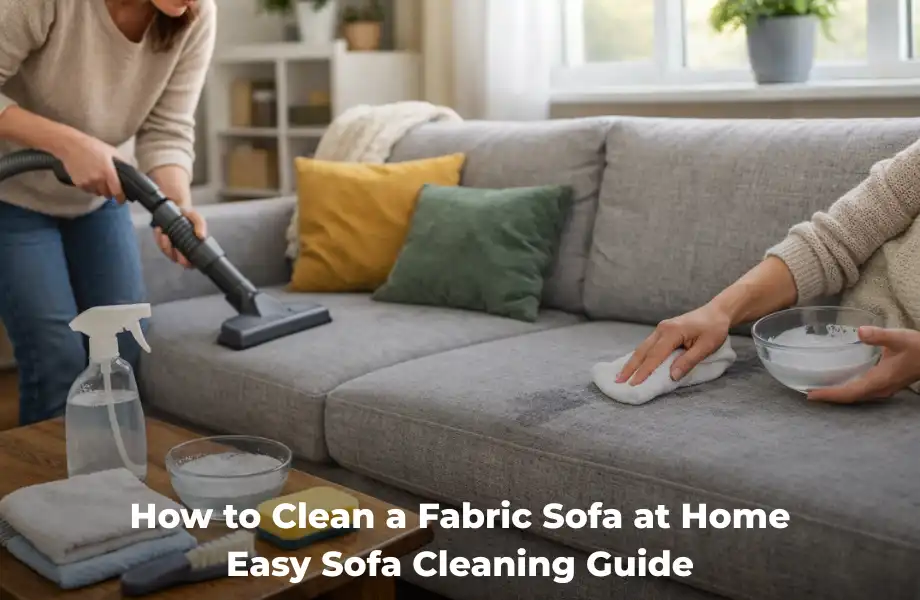

Spilled tea during your favourite programme? Muddy paw prints after a rainy walk? In busy UK homes, sofas take a proper beating. Wondering how to clean fabric sofa at home without causing damage or hiring professionals? This guide walks you through practical, UK-focused steps that really work.
Whether you live in a compact rented flat, a Victorian terrace, or a semi-detached family home, keeping your sofa clean not only improves comfort and hygiene but also extends its lifespan. A well-maintained sofa feels fresher, looks better, and saves you money in the long run by avoiding early replacement. Follow these detailed steps for a cleaner, healthier, and longer-lasting sofa.
Check Your Sofa Label First

Always check sofa labels before cleaning
Image source: pixaby
Before attempting any cleaning, always locate your sofa’s manufacturer care label. This small tag provides essential information about the safest cleaning methods for your upholstery. Labels typically include codes such as W (water-based cleaners safe), S (solvent cleaners only), WS (both safe), or X (vacuum only).
Ignoring these instructions can lead to permanent damage such as colour fading, shrinkage, or fabric distortion. According to Good Housekeeping UK, checking the label first is the most important step in preventing costly cleaning mistakes.
If your label is missing, always test any cleaning method on a hidden area before applying it to visible sections.
Vacuum Thoroughly Before Cleaning

Vacuum all sofa areas before cleaning
Image source: pixaby
Vacuuming is a crucial first step before any wet cleaning. It removes loose dirt, crumbs, dust, and pet hair that can otherwise sink deeper into the fabric during cleaning.
Use a vacuum cleaner with an upholstery attachment and go over every part of the sofa carefully. This includes seat cushions, back cushions, armrests, underneath removable cushions, and especially the seams where dirt builds up the most.
In UK homes, dust can accumulate quickly due to central heating and limited ventilation during colder months. As explained by Duroflex, consistent vacuuming improves both hygiene and fabric longevity.
For better home layout and maintenance, you can also explore our small living room furniture ideas UK guide.
Spot Cleaning Stains Effectively
Spills and stains are unavoidable in everyday life, especially in family homes. The key to successful stain removal is acting quickly and using the correct technique.
Always blot stains gently using a clean microfiber cloth rather than scrubbing. Scrubbing can push the stain deeper into the fabric and damage the fibres.
For common stains like tea, coffee, or food, a mixture of mild detergent and warm water works well. For odours or tougher stains, a vinegar and water solution can help break down residue and neutralise smells.
According to The Sleep Company, gentle blotting combined with the right cleaning solution is far more effective than aggressive cleaning methods.
For additional comfort-focused furniture tips, see our how to choose a sofa UK guide.
Choosing the Best Fabric Sofa Cleaner

Selecting the right cleaner based on fabric and lifestyle
Image source: pixaby
Choosing the right cleaner depends on your sofa fabric and household needs. Mild soap solutions are ideal for light cleaning, while foam-based cleaners are better for deeper cleaning without soaking the fabric.
For larger homes or heavy use, upholstery cleaning machines can provide a more thorough clean. However, they must be used carefully to avoid over-wetting the fabric.
As highlighted by Seventh Heaven, selecting the correct cleaner ensures both effectiveness and fabric safety.
Deep Cleaning for UK Homes
Deep cleaning is essential for maintaining hygiene and extending the life of your sofa. This process removes embedded dirt, bacteria, and odours that regular cleaning cannot reach.
Work in small sections using a fabric-safe cleaner and a soft brush. Avoid soaking the fabric, as excess moisture can lead to damp smells or mould growth, especially in humid UK conditions.
Good ventilation is key. Open windows where possible or use a fan to speed up drying. Deep cleaning once or twice a year is usually enough for most households.
Preventing Future Stains
Preventive care is just as important as cleaning. Taking simple steps can reduce the need for frequent deep cleaning and keep your sofa looking new for longer.
Use washable throws in high-use areas, rotate cushions regularly, and avoid placing food or drinks directly on the sofa. Applying a fabric protector spray can also help resist stains.
For styling and functionality ideas, explore our small living room coffee table ideas UK.
Dealing with Musty Smells and Flat Cushions
Musty smells are common in UK homes due to damp weather and limited airflow. Sprinkle baking soda over the sofa, leave it for 30 minutes, and vacuum thoroughly to remove odours.
Flat cushions can be revived by fluffing and rotating them regularly. This helps maintain shape and comfort.
When to Hire Professional Cleaners
Some situations require professional help, such as deep stains, delicate fabrics, or strong odours. Professional cleaners use specialised equipment and safe cleaning solutions.
Costs in the UK typically range from £60 to £150 depending on sofa size and condition.
Budget vs Premium Cleaning Approaches
A budget cleaning approach involves regular vacuuming, DIY cleaning, and simple maintenance. A premium approach includes specialised products and professional cleaning services.
Both methods can be effective if used consistently. The key is regular care rather than expensive products.
Mistakes to Avoid
Avoid common mistakes such as over-wetting, scrubbing too hard, ignoring care labels, and using harsh chemicals. These can damage fabric and reduce lifespan.
Making Sofa Cleaning Part of Your Routine
Incorporating sofa cleaning into your regular home routine ensures long-term cleanliness and comfort. Pair it with other cleaning tasks for a more organised home environment.
Conclusion
Cleaning a fabric sofa at home does not have to be complicated. With the right approach, simple tools, and consistent care, you can maintain a clean, comfortable, and long-lasting sofa.
From checking labels to deep cleaning and preventing stains, each step plays an important role in maintaining your furniture. A clean sofa not only improves hygiene but also enhances the overall feel of your living space.
By following these steps, UK homeowners can enjoy a fresher, more comfortable home environment year-round.
Author Bio
The Editorial Team at Daily Lifestyle Guide UK provides practical, easy-to-follow advice for modern British homes. We focus on simple solutions that improve comfort, cleanliness, and everyday living.
Disclaimer
This article is for general informational purposes only. Always check manufacturer instructions before cleaning your sofa. Results may vary depending on fabric type and condition.
We are not responsible for any damage caused by incorrect cleaning methods. Test all solutions before full use.
FAQs
1. How often should I clean my fabric sofa?
Vacuum weekly and deep clean every 6–12 months.
2. Can I use water?
Yes, if the label allows water-based cleaning.
3. What is the best cleaner?
Mild detergent or fabric-safe cleaner.
4. How do I remove stains?
Blot gently and avoid scrubbing.
5. Why does my sofa smell?
Due to moisture or trapped dirt.
6. Is professional cleaning worth it?
Yes, for deep stains or delicate fabrics.
7. Can cleaning extend sofa life?
Yes, proper care significantly extends lifespan.