
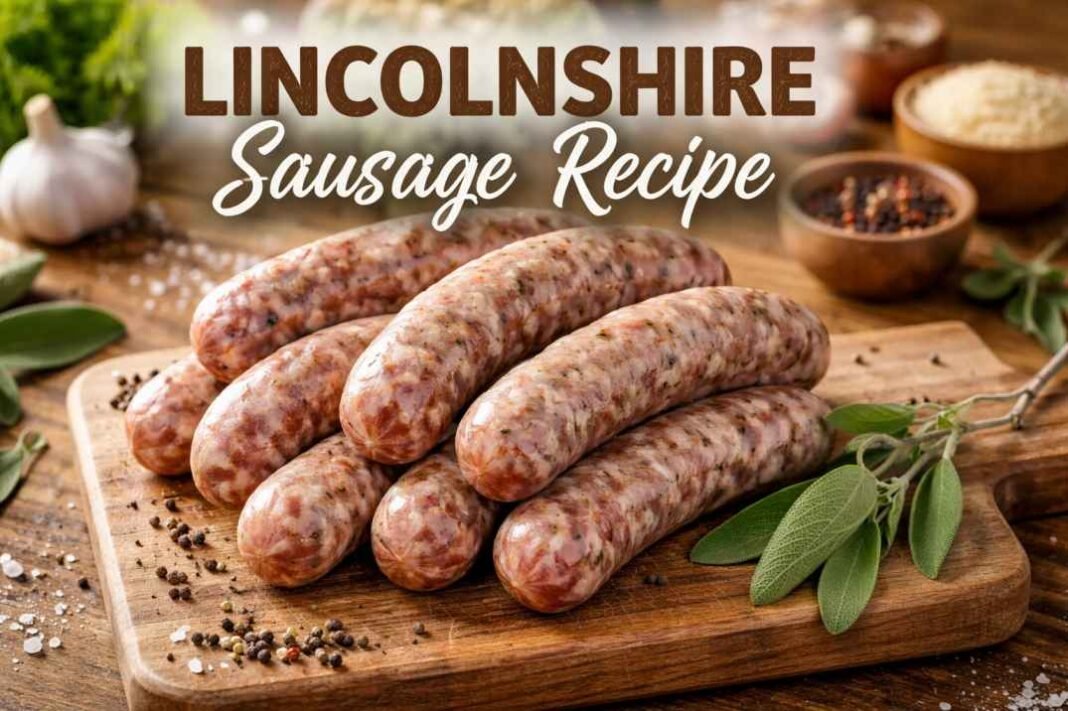

Lincolnshire sausage is a classic British pork sausage made with coarsely minced pork, sage, and simple seasoning. Known for its chunky texture and clean herbal flavour, it is traditionally slow cooked to remain juicy. This guide explains its history, technique, and authentic method for making Lincoln sausage at home.
Lincolnshire sausage holds a special place in English food culture. It is not flashy or heavily spiced, yet its flavour is instantly recognisable. Built on good pork, a generous hand with sage, and a coarse, rustic texture, this sausage reflects the practical, farm-led cooking of Lincolnshire itself. Making it at home takes time and attention, but the reward is a sausage that tastes honest and deeply satisfying. When prepared properly, Lincolnshire sausage delivers a clear pork flavour lifted gently by herbs, making it equally at home on a breakfast plate, beside buttery mash, or slowly cooked with onions for a comforting supper.
Understanding Lincolnshire Sausage
A Lincolnshire sausage is a fresh pork sausage made using coarsely minced meat, natural casings, and restrained seasoning. Sage plays a central role, but it is not meant to overpower the pork. Instead, it provides a clean herbal note that defines the sausage without dominating it. Unlike finely textured sausages that are blended until smooth, Lincolnshire sausage keeps its structure. Visible pieces of pork remain, giving the sausage a meaty bite and allowing it to cook gently without drying out.
This sausage is traditionally sold as individual links or as long coils. Because it is fresh rather than cured, it must always be cooked before eating. Slow heat is essential, as the coarse mince and natural casing respond poorly to aggressive cooking.
Flavour and Texture: What Makes It Distinct
The defining character of Lincolnshire sausage lies in its balance. Pork is always the first flavour you notice, followed by the warmth of sage and a mild seasoning of salt and pepper. This clarity sets it apart from other British sausages that rely on spice blends or heavy pepper notes. The seasoning is deliberately modest, allowing the quality of the meat to remain central.
Texture is just as important as flavour. Coarse mincing creates a sausage that feels substantial and juicy rather than soft or pasty. As the fat melts slowly during cooking, it bastes the meat from within. This structure is the reason Lincolnshire sausages perform so well when cooked gently in the oven or pan.
A Sausage Shaped by Place and History
Lincolnshire’s agricultural roots strongly influenced its sausage. The county’s farms produced excellent pork, while kitchen gardens supplied herbs that grew reliably in the region’s climate. Sage thrived in particular, and over time it became inseparable from the local sausage style. Long before recipes were written down, butchers and home cooks passed their methods by practice rather than paper.
By the nineteenth century, printed recipes began to appear, though variations existed from town to town. Travel and seaside holidays helped spread the popularity of Lincolnshire sausage beyond the county, and debates over formal protection later highlighted just how strongly people felt about its identity. Despite this, the sausage remains grounded in everyday cooking rather than regulation.
Choosing and Preparing the Meat
Pork shoulder is the traditional cut used for Lincolnshire sausage. It offers the right balance of lean meat and fat, ensuring flavour without greasiness. Using meat that is too lean results in a dry sausage, while excessive fat leads to poor texture. The meat should be well chilled before mincing, as cold fat maintains its structure and binds better during mixing.
Some cooks use ready-minced pork, while others prefer to mince whole cuts themselves. Both approaches work, provided the grind remains coarse. When whole cuts are used, mincing the fat along with the meat helps achieve an even distribution throughout the sausage.
Why Temperature Control Matters
Temperature plays a critical role in sausage making. Keeping equipment, meat, and water cold prevents the fat from smearing and ensures a clean, well-bound mixture. Even chilling grinder parts and mixing bowls can noticeably improve the final texture. Warm equipment causes fat to soften too early, leading to a greasy mixture and uneven sausages.
Breadcrumbs, Moisture, and Binding
Breadcrumbs or rusk are a traditional component of Lincolnshire sausage. Their role is not filler, but structure. When properly hydrated, they absorb moisture and help the sausage stay tender during cooking. Soaking breadcrumbs in cold water before mixing ensures even hydration and prevents dry patches.
As the mixture rests, the breadcrumbs continue to absorb liquid, improving cohesion. This resting period is particularly important when the mixture initially feels loose.
Mixing and Seasoning with Care
When combining the meat, breadcrumbs, herbs, and seasoning, the mixture should be worked just enough to become cohesive. Overmixing leads to a dense, heavy sausage, while undermixing causes poor binding. Adding water gradually helps the fat and meat bind, producing a slightly sticky texture that holds together during stuffing.
Testing the seasoning before stuffing is essential. Cooking a small piece allows adjustments while there is still time to correct the balance.
Stuffing and Forming the Sausages
Stuffing sausages requires patience rather than strength. Natural casings should be soaked and flushed thoroughly to remove salt and straighten them. As the mixture is fed into the casing, gentle hand control helps maintain an even diameter. Trapped air should be released early to prevent weak spots.
Coiling the sausage as it is filled keeps the casing from stretching. Once filled, links are formed by twisting at regular intervals, alternating the direction of each twist to keep the links secure.
Drying, Resting, and Why It Matters
After forming, sausages benefit from a short drying period. Hanging or resting them uncovered firms the casing and improves texture. This step is separate from flavour development, which occurs during refrigeration. Resting the sausages in the fridge allows the herbs to perfume the meat and the structure to settle before cooking.
Cooking Lincolnshire Sausages Properly
Lincolnshire sausages should always be cooked gently. Slow oven cooking produces even browning and helps retain moisture. Pan frying also works well when done over moderate heat with frequent turning. High heat causes the casing to burst and the filling to dry out.
Once cooked, resting the sausages briefly before serving helps keep juices inside and improves presentation.
Serving and Enjoying Lincolnshire Sausages
One of the strengths of Lincolnshire sausage is its versatility. It works just as well with mash and onion gravy as it does in a breakfast spread or tucked into a soft roll. Its clean flavour allows it to support other ingredients rather than compete with them, making it suitable for stews, casseroles, and simple suppers alike.
Explore Global Comfort Foods
Traditional dishes often reflect the culture and climate they come from. While Lincolnshire sausage highlights British farmhouse cooking through pork, sage, and gentle seasoning, other cuisines achieve comfort in very different ways. For example, Korean mayak eggs recipes use soy sauce, garlic, and aromatics to transform simple eggs into a deeply savoury, addictive dish. Exploring recipes like these shows how thoughtful techniques and balanced flavours create comfort food across cultures.
Explore Global Comfort Foods
Traditional dishes often reflect the culture and climate they come from. While Lincolnshire sausage highlights British farmhouse cooking through pork, sage, and gentle seasoning, other cuisines achieve comfort in very different ways. For example, Korean mayak eggs recipes use soy sauce, garlic, and aromatics to transform simple eggs into a deeply savoury, addictive dish. Exploring recipes like these shows how thoughtful techniques and balanced flavours create comfort food across cultures.
Conclusion
Lincolnshire sausage succeeds because it respects simplicity. Good pork, sage used with restraint, careful preparation, and gentle cooking combine to create a sausage that feels both rustic and refined. Making it at home takes time, but each step plays a role in the final result. When approached with patience and care, Lincolnshire sausage delivers a flavour that has endured for generations, proving that thoughtful technique matters as much as tradition.
Frequently Asked Questions (FAQs)
What makes Lincolnshire sausage different from other British sausages?
Lincolnshire sausage is defined by its generous use of sage and its coarse texture. Unlike many British sausages that rely on pepper or mixed spices, it keeps seasoning simple so the pork flavour comes first. The coarse mince also gives it a meatier bite and helps it stay juicy when cooked slowly.
Is Lincoln sausage the same as Lincolnshire sausage?
Yes. “Lincoln sausage” is a shortened name commonly used to refer to traditional Lincolnshire sausage. Both terms describe the same regional pork sausage made with sage, breadcrumbs or rusk, and simple seasoning.
What cut of pork is best for Lincolnshire sausage?
Pork shoulder is considered the best cut because it contains enough natural fat to keep the sausage moist while cooking. Using meat that is too lean can result in a dry sausage, while shoulder provides both flavour and structure.
Why is sage so important in Lincolnshire sausage?
Sage gives Lincolnshire sausage its distinctive character. Historically, sage grew well in the region and was used to flavour and help preserve pork. In traditional recipes, it adds a clean herbal note without overpowering the meat.
Can I make Lincolnshire sausages without casings?
Yes. If you do not have sausage casings or a stuffer, the mixture can be shaped into patties. While you will lose the traditional snap of the casing, the flavour and texture of the sausage meat remain authentic.
Should Lincolnshire sausages be cooked slowly?
Yes. Lincolnshire sausages are best cooked over gentle heat. Slow oven cooking or steady pan frying allows the fat to melt gradually, keeping the sausage juicy and preventing the casing from splitting.
Why do Lincolnshire sausages have a coarse texture?
The coarse texture comes from using a larger grinder plate and avoiding overmixing. This keeps visible pieces of pork in the sausage, giving it a meatier bite and helping it retain moisture during cooking.
Can I freeze homemade Lincolnshire sausages?
Yes. Lincolnshire sausages freeze well. They can be frozen raw or cooked, as long as they are well wrapped. For best quality, freeze them as soon as possible after making and use within two to three months.
How long should homemade Lincolnshire sausages rest before cooking?
Resting the sausages for several hours, or overnight, allows the flavours to develop and the structure to firm up. This improves both taste and texture when cooked.
Are Lincolnshire sausages spicy?
No. Traditional Lincolnshire sausages are not spicy. They are mildly seasoned, with sage providing the main flavour rather than heat. Any warmth comes gently from black or white pepper, if used.