
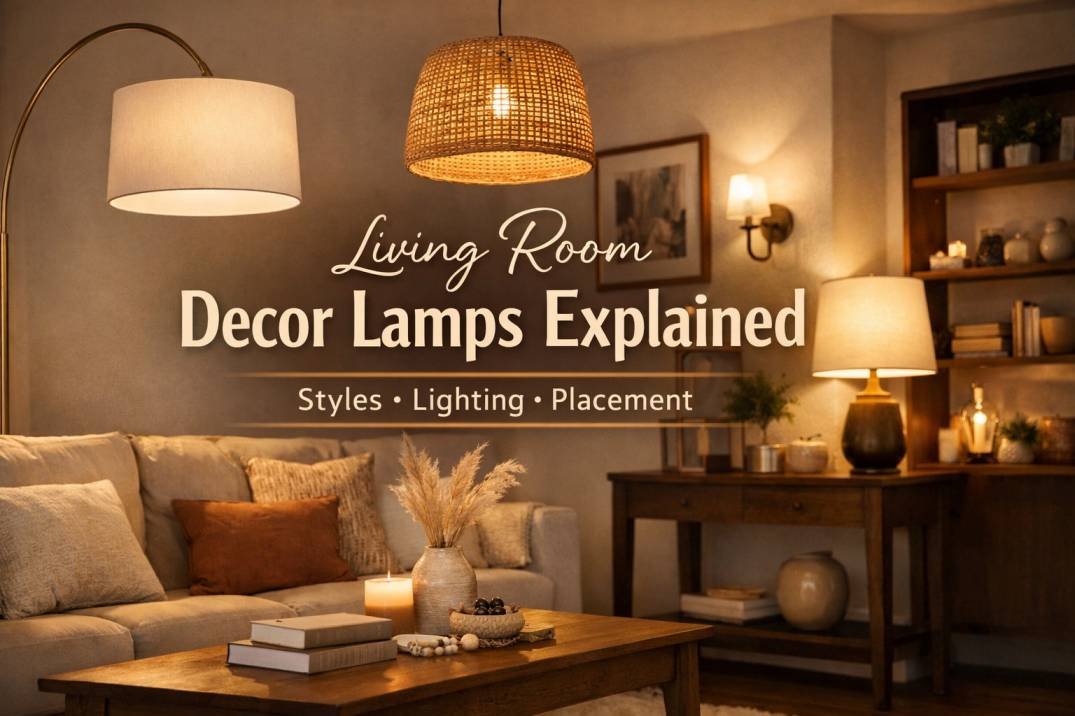

Living room decor lamps help create the right mood, comfort, and visual balance in a space. When you understand lamp styles, lighting layers, and proper placement, you can design a living room that feels warm, practical, and visually balanced at all times of day.
Lighting has a powerful influence on how a living room looks, feels, and functions. Even a well-decorated living room can look dull or uncomfortable if the lighting is not right. Living room decor lamps do more than provide illumination; they shape ambience, define zones, and enhance everyday comfort. From creating cosy corners to balancing light across the room, well-chosen lamps support both style and practicality. This guide explores different lamp styles, lighting layers, and placement ideas to help you design a living room that feels welcoming, functional, and visually harmonious at all times of day.
Why Living Room Decor Lamps Are Important

Image source: pinterest.com
A living room serves multiple purposes, from relaxing in the evening to hosting guests or enjoying quiet moments with a book. Overhead lighting alone rarely supports all these activities comfortably. Decor lamps provide softer, adjustable lighting that suits different moods and activities.
Beyond practicality, lamps add structure to a living room. They create visual balance, break up empty corners, and guide the eye through the space. A well-placed lamp can make a seating area feel complete or highlight features that might otherwise go unnoticed. Good lighting improves the room quietly without drawing too much attention to itself.
Understanding Lighting Layers in the Living Room

Image source: pinterest.com
Good living room lighting works best when you use several light sources instead of just one. Each layer contributes differently to comfort and usability.
Ambient lighting provides the overall level of illumination and sets the tone of the room. This often comes from ceiling lights but can also be supported by large floor lamps or softly diffused table lamps. Task lighting focuses on specific activities such as reading, writing, or hobbies, usually delivered through adjustable lamps placed close to seating areas. Accent lighting adds depth and interest by highlighting artwork, shelves, or architectural details.
When these lighting layers work together, the living room feels more comfortable and evenly lit.
Types of Living Room Decor Lamps
Floor Lamps

Image source: pinterest.com
Floor lamps are one of the most versatile lighting options for living rooms. They add height, brighten empty corners, and offer soft or focused light depending on their design. Arched floor lamps work well over sofas, while slim, upright designs suit smaller spaces. They are especially useful in homes where ceiling lighting is limited or fixed.
Table Lamps

Image source: pinterest.com
Table lamps bring warmth and intimacy to living rooms. Positioned on side tables, consoles, or shelves, They make seating areas feel warmer and reduce harsh light in the evening. Using two matching table lamps can create symmetry, while a single decorative lamp can act as a subtle focal point.
Wall Lamps and Sconces

Image source: pinterest.com
Wall-mounted lamps are ideal when floor or surface space is limited. They add light at eye level, which feels comfortable and balanced. Wall lamps work particularly well beside sofas, in reading corners, or along feature walls, helping keep the room uncluttered.
Decorative Ceiling and Pendant Lamps

Image source: pinterest.com
Decorative ceiling lamps or pendants can add personality to a living room, especially in open-plan layouts. When chosen carefully, they act as design features without overwhelming the space. Soft, diffused designs help prevent glare and support layered lighting schemes.
Choosing the Right Decor Lamps for Your Living Room

Image source: pinterest.com
Choosing the right lamps means finding a balance between looks and function. Room size and ceiling height affect scale, as larger rooms can support taller or bolder lamps, while smaller spaces benefit from compact designs. Natural light is also important, because darker rooms need more lamps to feel welcoming.
Light temperature is another key consideration. Warm white lighting creates a relaxed atmosphere suited to living spaces, while cooler light can feel harsh. Dimmable lamps offer flexibility, allowing the room to adapt easily from daytime activity to evening relaxation. Lampshades should diffuse light gently and complement the room’s colour palette.
Living Room Decor Lamps for Small Spaces

Image source: pinterest.com
Small living rooms require thoughtful lighting to avoid visual clutter. The right decor lamps can make small living rooms feel more open and spacious.
Slim floor lamps fit neatly into corners or beside sofas without dominating the room. Wall-mounted lamps free up tables and surfaces while still providing warm, eye-level light. Light-coloured shades help reflect light around the room, reducing shadows that can make a space feel enclosed.
In small rooms, a few well-placed lamps work better than many lamps placed randomly.
Living Room Decor Lamps by Style

Image source: pinterest.com
Lamp style should complement the overall interior design of the living room.
Modern decor lamps feature clean lines, simple shapes, and understated finishes. They blend seamlessly into contemporary interiors without overpowering other elements. Minimalist lamps focus on function and subtlety, using neutral tones and slim profiles to maintain visual calm.
Statement or luxury lamps introduce drama through bold shapes, oversized proportions, or distinctive materials. These lamps work best when allowed to stand out rather than competing with other decorative features. Traditional and classic lamps offer warmth and familiarity, often featuring ceramic bases, fabric shades, and timeless silhouettes.
Decor Lamps in Open-Plan Living Rooms

Image source: pinterest.com
In open-plan spaces, lighting plays a crucial role in defining different zones. Decor lamps help separate the living area from dining or kitchen spaces without using walls.
Using similar finishes or styles across zones creates continuity, while variations in height and placement subtly signal different functions. Floor lamps can anchor seating areas, while table lamps soften transitions between spaces. Balanced lighting makes sure no part of the room feels too dark or too bright.
Lamp Placement Ideas for Living Rooms

Image source: pinterest.com
Where you place lamps strongly affects how comfortable the lighting feels. Lamps positioned beside sofas or armchairs create inviting seating areas for reading or conversation. Placing lamps slightly behind seating reduces glare while maintaining sufficient illumination.
Reading corners benefit from adjustable or directional lamps that focus light where it is needed most. Accent lamps placed near shelves, artwork, or textured walls add depth and interest. Placing lamps evenly around the room prevents dark spots and visual imbalance.”
Lamp Height and Proportion

Image source: pinterest.com
Scale and proportion are often overlooked but significantly impact both comfort and appearance. A lamp that is too tall or too short can feel awkward and cause discomfort.
Table lamps should typically sit at a height where the bottom of the shade aligns with seated eye level. Floor lamps should direct light downward rather than straight into the eyes. Lampshades should feel proportional to the base and surrounding furniture, helping the lamp integrate naturally into the space.
Materials and Finishes
Lamp materials influence both durability and atmosphere. Metal lamps create a sleek or industrial feel, while wood adds warmth and texture. Ceramic and glass lamps offer versatility and suit a wide range of interior styles.
Choosing finishes that echo other elements in the room, such as furniture legs or hardware, helps create a cohesive look. Mixing materials can work beautifully when done with intention and balance.
Energy Efficiency and Practical Details
Modern decor lamps should balance aesthetics with efficiency. LED bulbs consume less energy, last longer, and produce less heat, making them ideal for living rooms. Lamps with replaceable bulbs offer flexibility, allowing light output to be adjusted over time.
Details like cord length, switch position, and lamp stability are more important than many people realise. A lamp that is awkward to use quickly becomes frustrating, regardless of how good it looks.
Smart Lamps and Modern Features
Smart lighting has become increasingly popular in living rooms. Smart decor lamps allow brightness and colour temperature to be adjusted through apps or voice control.
Dimmable smart bulbs make it easy to shift from bright daytime lighting to softer evening ambience. Some systems also support scheduled lighting changes, helping the room adapt naturally throughout the day. While not essential, smart features add flexibility and convenience.
Budget-Friendly Ways to Refresh Living Room Lighting
Improving lighting does not always require new lamps. Simple updates can make a noticeable difference. Changing lampshades, switching to warmer bulbs, or repositioning existing lamps can instantly refresh the space.
Using pairs of affordable table lamps creates balance, while reflective or lighter shades increase brightness without additional fixtures. Thoughtful styling often delivers more impact than expensive purchases.
Common Mistakes to Avoid
One common mistake is relying on a single light source, which creates flat and uncomfortable lighting. Choosing lamps that are out of proportion with the room or furniture can also disrupt balance. Ignoring light temperature often results in a space that feels harsh rather than relaxing.
Avoid overcrowding the living room with too many lamps, and ensure each light source has a clear purpose.
How Decor Lamps Influence Mood and Comfort
Lighting has a strong psychological effect. Soft, warm lamps promote relaxation, while focused task lighting supports concentration. By adjusting lighting throughout the day, the living room can shift from an active social space to a calm retreat.
Thoughtful lighting design improves everyday comfort and makes the living room a place people naturally enjoy spending time in.
Conclusion
Living room decor lamps play a vital role in creating a space that feels balanced, comfortable, and inviting. By understanding lighting layers, choosing suitable lamp styles, and placing them thoughtfully, you can transform the atmosphere of your living room without major changes. The right lighting enhances mood, supports daily activities, and brings cohesion to your interior design. Whether your space is large or small, modern or traditional, Carefully chosen lamps help keep your living room flexible, warm, and visually attractive. making it a place where people naturally feel relaxed and at home.
Frequently Asked Questions (FAQs)
What type of lamp is best for living room decor?
The best lamp for living room decor depends on your needs. Floor lamps work well for ambient and reading light, table lamps add warmth and balance, and wall lamps save space while creating a cosy atmosphere. A combination of lamp types usually gives the best result.
How many lamps should a living room have?
Most living rooms work best with at least three light sources, excluding ceiling lights. This could include a floor lamp, one or two table lamps, or wall lighting. Multiple lamps create layered lighting, which feels more comfortable and visually balanced.
Are floor lamps good for small living rooms?
Yes, floor lamps can work very well in small living rooms when chosen carefully. Slim or corner floor lamps provide light without taking up much space and help reduce reliance on overhead lighting, making the room feel softer and more open.
What colour light is best for a living room?
Warm white light is best for living rooms as it creates a relaxed and welcoming atmosphere. It is more comfortable for evenings and social spaces than cool white light, which can feel harsh and better suited to work areas.
Where should lamps be placed in a living room?
Lamps are best placed beside sofas, armchairs, or in corners where they can provide balanced light without glare. Reading areas benefit from focused lamps, while accent lamps work well near shelves, artwork, or feature walls to add depth.
Can decor lamps replace ceiling lights?
In many living rooms, especially cosy or rented spaces, decor lamps can provide enough light without ceiling fixtures. Using multiple lamps placed around the room creates even lighting and a more relaxed atmosphere than a single overhead light.
What height should a table lamp be in a living room?
A table lamp should be tall enough that the bottom of the lampshade sits roughly at seated eye level. This prevents glare and ensures the light feels comfortable when sitting on a sofa or chair.
Are LED bulbs suitable for living room lamps?
Yes, LED bulbs are ideal for living room lamps. They are energy-efficient, long-lasting, and available in warm light tones that suit living spaces. Many LED bulbs are also dimmable, offering greater flexibility.
How do I choose lamps that match my living room style?
Choose lamps that reflect your room’s overall design. Modern rooms suit clean lines and simple finishes, traditional spaces work well with classic shapes and fabric shades, and minimalist interiors benefit from subtle, understated lamp designs.
Do living room decor lamps really affect mood?
Yes, lighting has a strong impact on mood. Soft, warm lighting helps people relax, while harsh or overly bright light can feel uncomfortable. Decor lamps allow you to adjust the atmosphere easily, making the living room feel calm and inviting.