
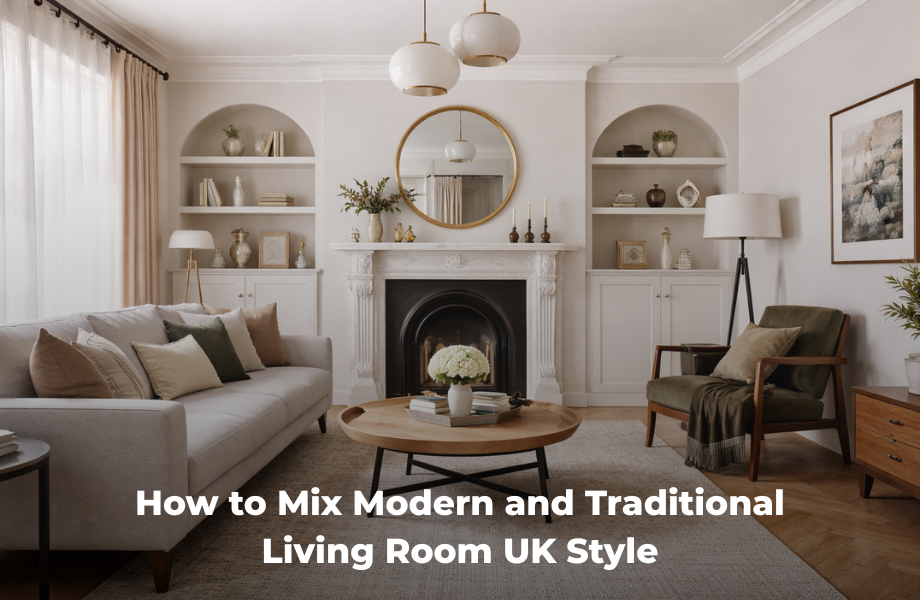

Imagine stepping into a living room where a sleek, modern sofa sits comfortably beside a grand Victorian fireplace, and every detail feels just right. You might think these styles clash, but in reality, when done thoughtfully, they create a space that tells a story of both heritage and contemporary life. Perhaps you’ve inherited a century-old Edwardian home but recently bought a minimalist sofa, or you’ve moved into a modern flat and can’t resist an antique sideboard. Transitional living room design in the UK isn’t just about combining furniture—it’s about creating harmony, reflecting personality, and honoring the history of your home. In this guide, we’ll explore how to mix modern and traditional living room UK style effortlessly, giving your lounge a timeless and welcoming feel that friends and family will admire every time they visit.
Why Transitional Style Feels Natural in UK Homes

A UK living room showcasing a harmonious mix of modern and traditional design elements
Image source: pixaby
Walking through streets lined with period terraces next to contemporary builds, it’s easy to see why the UK has a natural love for mixed interiors. Homes evolve over time, and few remain strictly traditional or fully modern. This is why transitional living room ideas resonate so well: they embrace contrast while feeling intentional. Picture a cozy Victorian lounge with its intricate cornicing, paired with a low-profile, modern sofa. The mix tells a story, reflecting both the heritage of the property and the personality of its residents. According to House & Garden, blending old and new creates spaces that feel lived-in, stylish, and entirely personal. By combining clean modern lines, classic detailing, neutral tones, and layered textures, you achieve a room that is timeless yet current.
Choosing a Dominant Direction for Balance

Choosing a dominant style helps create balance when mixing modern and traditional furniture.
Image source: pixaby
One of the first challenges in mixing styles is deciding which direction leads. Think of it like telling a story: every good narrative needs a main character. Do you want modern elements to shine with traditional accents, or a classic foundation highlighted with contemporary touches? Imagine a home where a sleek Scandinavian sofa anchors the room, while antique mirrors and side tables tell tales of the past. As reported by JB Kind, maintaining a dominant style prevents spaces from feeling chaotic. Once you have a lead style, all other choices—colour, furniture, accessories—become easier to align, creating a sense of calm and cohesion.
Colour Palette: The Secret Ingredient
Colour is the glue that holds a mixed-style living room together. Think of it as the soundtrack to your home story—consistent and soothing. Imagine soft greige walls providing a canvas for a deep navy armchair and a modern walnut coffee table; each piece tells its own story, but together they harmonize. Using a unified palette makes modern and traditional elements feel intentional rather than clashing. According to The Living House, neutral foundations allow bold or vintage pieces to stand out without overwhelming the space. For more guidance on neutral tones in UK homes, check our cream living room ideas UK guide.
Mixing Furniture Shapes with Flair

A cohesive colour scheme allows modern and traditional elements to sit comfortably together
Image source: pixaby
Combining old and new furniture is like pairing wine with food: done thoughtfully, it elevates everything. Picture a contemporary sofa meeting a traditional wooden coffee table, or a vintage armchair paired with a minimalist rug. Scale matters; oversized pieces can dominate, while too-small items feel lost. In one London terrace, a homeowner paired a sleek sectional with a restored Edwardian fireplace, and the result was strikingly balanced. As noted by OM Furniture, starting with one key statement piece per zone helps achieve harmony. For smaller spaces, our small living room layout ideas guide offers practical advice on proportion and flow.
Lighting: Modern Touches in Classic Rooms
Lighting is a subtle way to tell a modern-classic story. Imagine replacing a heavy crystal chandelier with a sleek pendant light, or adding slim floor lamps that illuminate the beauty of an antique mantel. Warm white bulbs make the space feel inviting, especially during long UK winters. Modern lighting can refresh a room without erasing its charm, creating a soft interplay of past and present. According to OM Furniture, layering different types of light ensures both functionality and atmosphere. For more ideas, explore our living room lighting ideas UK.
Texture: Bringing Depth and Warmth
Texture is where old meets new in a tactile conversation. Imagine velvet cushions on a modern sofa or wool rugs under sleek coffee tables—each touch adds warmth and depth. Linen curtains flutter alongside vintage furniture, creating subtle contrasts. Overly glossy finishes can feel cold; matte textures are softer, more inviting. According to House & Garden, layering textures enhances cohesion and makes spaces feel alive. Thoughtful textures help blend eras naturally, making every element tell a story without competing for attention.
Layout: Creating Harmony Through Stories
How you arrange furniture affects the narrative of your room. Traditional spaces often rely on symmetry, while modern interiors embrace flexibility. One family in Birmingham anchored their room around a restored fireplace, arranging seating to encourage conversation while leaving clear pathways. Rugs and furniture zones define areas without walls, balancing formality with casual comfort. Symmetry can coexist with modern asymmetry to give the room rhythm. If storage is tight, our small living room storage ideas guide shows how to keep spaces tidy while mixing styles.
Budget vs Premium: Smart Investments
Mixing styles doesn’t mean spending a fortune. Sometimes, updating lighting or cushions transforms a room; other times, investing in a quality sofa or custom cabinetry elevates everything. Think of your living room as a storybook—anchor pieces are the main chapters. According to JB Kind, focusing on key furniture first ensures smaller details enhance rather than compete. Our luxury living room ideas UK guide explores ways to make materials feel premium without overspending.
Balancing Period Features with Contemporary Pieces
Victorian or Edwardian homes often have fireplaces, cornicing, or wooden floors that demand attention. One homeowner placed a sleek sectional in front of an original mantelpiece, hanging modern artwork above it. The result was a room where heritage and contemporary style felt deliberately curated. As reported by The Living House, combining styles thoughtfully brings elegance without confusion. For a deeper dive into classic styling, check our traditional living room ideas UK guide.
Final Thoughts
Mixing modern and traditional living room UK style isn’t about following strict rules—it’s about storytelling through space. By choosing a dominant style, layering textures, balancing colours, and carefully placing furniture, you can create a living room that feels personal, timeless, and alive. Every piece, from a sleek sofa to a vintage side table, contributes to a narrative of your home. Take inspiration from your heritage, embrace contemporary touches, and watch your lounge become a space that is uniquely yours, where every visit feels like a journey through design and memory.
Author Bio
The Editorial Team at Daily Lifestyle Guide loves turning UK homes into stories of style and comfort. With years of experience in interior design trends, they share practical advice, real-life examples, and inspirational ideas to help readers create living spaces that feel personal, timeless, and welcoming.
Disclaimer
This article is intended for general guidance and inspiration. Styles, trends, and product availability may change over time. Readers are encouraged to adapt suggestions to their own homes and tastes. The editorial team welcomes feedback and updates to ensure advice stays current and useful.
FAQs
What is a transitional living room?
A transitional living room blends modern and traditional elements to create a space that feels timeless and balanced. It often combines clean lines, classic detailing, and neutral colours to ensure both styles coexist harmoniously.
How do I mix old and new furniture successfully?
Start with a dominant style, then introduce contrasting elements thoughtfully. Use cohesive colours, layered textures, and well-proportioned furniture to prevent the space from feeling cluttered or mismatched.
Can modern lighting work in a traditional room?
Yes. Sleek, minimal lighting fixtures can refresh a classic room without removing its charm. Mixing ambient and task lighting adds depth while highlighting both heritage and modern features.
Is mixing styles expensive?
Not necessarily. Small updates like cushions, rugs, and lighting can make a big difference. Prioritise anchor pieces like sofas and coffee tables for the greatest impact.
Why does texture matter in transitional interiors?
Texture helps bridge the gap between old and new, adding warmth and depth. Layering velvet, linen, wool, and matte finishes makes a space feel cohesive and inviting.
How can I make a small living room balanced with mixed styles?
Focus on proportion, use a unified colour palette, and create zones with furniture or rugs. Our small living room layout ideas UK guide provides practical tips for maximizing style in compact spaces.