
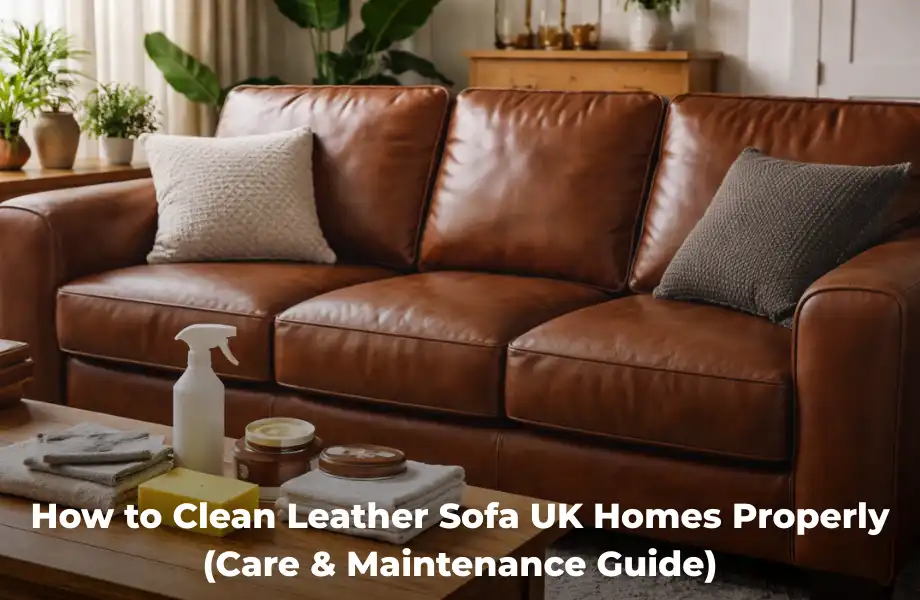

A leather sofa brings elegance to any UK living room, whether it’s a modern flat in Manchester or a cosy semi-detached lounge in Kent. Leather’s timeless appeal adds warmth, character, and a premium feel that instantly upgrades your space. However, without proper care, leather can quickly lose its charm. It may start to look dull, feel sticky, or even develop cracks, which can make the entire room feel worn and outdated.
This detailed guide explains how to clean, maintain, and protect your leather sofa in UK homes using simple, safe, and effective methods. With the right care routine, your sofa can stay soft, comfortable, and stylish for many years.
1. Identifying Your Leather Type
Before you begin cleaning your leather sofa, it is essential to identify the type of leather you have. Not all leather is the same, and using the wrong cleaning method can cause permanent damage such as discolouration, dryness, or cracking.
In UK homes, most sofas are made from one of three main leather types. Aniline leather is the most natural and softest option, but it is also the most delicate and prone to staining. Semi-aniline leather has a light protective coating, making it slightly more durable while still maintaining a natural look. Pigmented leather is the most common type in UK households because it is fully coated, highly durable, and much easier to clean.

Understanding your UK leather sofa type helps with proper cleaning and maintenance
Image source: pixaby
According to The Sofa Shop, identifying your leather type helps you choose the right cleaning method and avoid costly mistakes. Always check the manufacturer’s label or care instructions before using any product.
2. Weekly Cleaning and Dusting
Regular cleaning is the foundation of leather care. Dust, crumbs, and everyday dirt can settle into the seams and creases of your sofa, especially in UK homes where windows are often closed during colder months.
If this dirt is not removed, it can slowly damage the surface of the leather and make it look dull over time. Weekly cleaning prevents buildup and keeps your sofa looking fresh.

Weekly cleaning keeps your leather sofa looking fresh and prevents grime buildup
Image source: pixaby
Use a vacuum with a soft brush attachment to gently clean the sofa without scratching the surface. Focus on key areas such as seat cushions, armrests, and seams. After vacuuming, wipe the surface with a dry microfibre cloth to remove any remaining dust.
As noted by Designersofas4u, regular dusting not only improves appearance but also helps extend the life of the leather by preventing dirt from embedding into the material.
3. Deep Cleaning and Stain Removal
Even with weekly cleaning, your leather sofa will need occasional deep cleaning to remove oils, stains, and hidden grime. This is especially important in busy households with children or pets.
Start by wiping the sofa with a slightly damp cloth. Make sure the cloth is not too wet, as excess moisture can damage leather. Always dry the surface immediately after cleaning.
- Blot spills immediately to prevent absorption
- Use a damp cloth for light dirt
- Apply baking soda for grease stains
- Use rubbing alcohol carefully for ink stains
Never use harsh chemicals like bleach or ammonia. These can strip the protective coating and cause long-term damage.
According to Furniture Clinic, using gentle, leather-safe products is the best way to clean without damaging the surface.
4. Conditioning and Protecting Leather
Leather is a natural material that loses moisture over time. In UK homes, central heating can speed up this process, causing leather to dry out and crack if not properly maintained.
Conditioning helps restore lost oils and keeps the leather soft and flexible. It also adds a protective layer that reduces wear and fading.

Regular conditioning protects your leather sofa from dryness and cracking
Image source: pixaby
Apply a leather conditioner every 3–6 months depending on usage. For older sofas, more frequent conditioning may be needed.
Proper conditioning not only improves appearance but also significantly extends the lifespan of your sofa.
5. Everyday Care and Maintenance
Daily habits play a major role in keeping your leather sofa in good condition. Small actions can prevent damage and reduce the need for heavy cleaning later.
- Avoid direct sunlight to prevent fading
- Keep away from radiators to prevent drying
- Clean spills immediately
- Rotate cushions regularly
- Trim pets’ claws to avoid scratches
For more durability insights, see our durable sofa materials guide UK and pet friendly sofa UK.
6. Dealing with Scratches and Fading
Scratches are a common issue, especially in homes with pets or frequent use. Minor scratches can often be improved by gently rubbing the area to redistribute natural oils, followed by applying conditioner.
Fading usually occurs due to sunlight exposure. Using protective curtains or blinds can help reduce this effect.
For deeper damage, professional repair may be required to restore the leather properly.
7. Professional Cleaning and Repairs
Professional cleaning is recommended when dealing with deep stains, strong odours, or visible damage. Experts use specialised tools and products designed specifically for leather care.
In the UK, professional cleaning services typically cost between £80 and £180 depending on the size of the sofa and the level of cleaning required.
This can be a worthwhile investment for extending the life of your furniture.
8. Budget vs Premium Maintenance Approaches
Maintaining a leather sofa does not have to be expensive. A basic routine of regular dusting, occasional cleaning, and conditioning can keep your sofa in good condition.
Premium maintenance may include specialised products and professional cleaning services, but the key factor is consistency rather than cost.
For layout ideas, explore our modular sofa vs sectional sofa guide.
Conclusion
Taking care of a leather sofa in the UK is all about consistency, awareness, and using the right methods. From identifying your leather type to following a simple cleaning routine, each step plays a crucial role in preserving both comfort and appearance.
The UK climate, with its cold winters and dry indoor heating, can be challenging for leather furniture. Without proper care, leather can dry out, crack, or fade. However, regular maintenance, including cleaning and conditioning, helps prevent these issues.
A well-maintained leather sofa not only looks better but also lasts longer, making it a valuable investment for any home. By following the steps in this guide, you can keep your sofa looking stylish and feeling comfortable for many years.
Author Bio
The Editorial Team at Daily Lifestyle Guide provides practical and easy-to-follow advice for UK homeowners. We focus on helping readers maintain stylish, functional, and comfortable living spaces through simple and effective solutions.
Disclaimer
This article is for general informational purposes only. Always follow manufacturer guidelines when cleaning leather furniture. Results may vary depending on material type and usage conditions.
External references are provided for additional information. Daily Lifestyle Guide is not responsible for decisions made based on this content.
FAQs
1. How often should I clean my leather sofa?
Weekly dusting and deep cleaning every 3–6 months is ideal.
2. Can I use water?
Yes, but only a slightly damp cloth should be used.
3. What conditioner should I use?
Use a furniture-specific leather conditioner.
4. How do I remove stains?
Blot immediately and clean gently.
5. Why is my sofa cracking?
Usually due to dryness and lack of conditioning.
6. Can scratches be fixed?
Minor scratches can be improved with conditioning.
7. Does UK weather affect leather?
Yes, temperature changes and dry air can affect leather condition.