
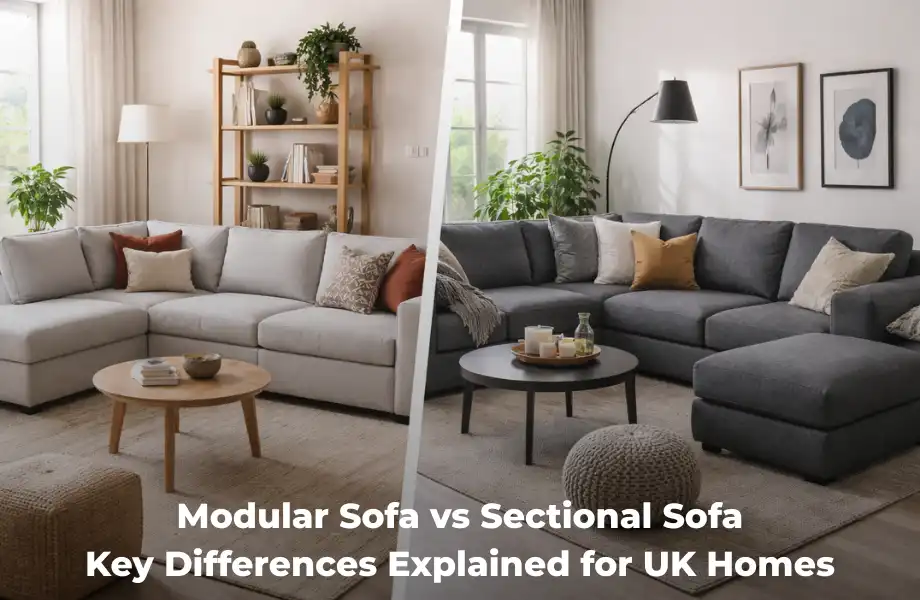

Last winter, a friend in London called me in frustration. She had just bought a beautiful L-shaped sofa that looked perfect in the showroom—but once it arrived, it didn’t quite fit her narrow living room. The corner blocked the radiator, the chaise felt too long, and suddenly her cosy space felt cramped. “I wish I knew the difference between a modular sofa vs sectional sofa before buying,” she said. That moment stuck with me. Because the truth is, most of us don’t think about how our sofa will live with us—we just think about how it looks. In UK homes, where layouts can be tricky and space is often limited, that choice matters even more. So if you’re standing at that same crossroads, wondering which one will truly work for your life—not just your living room—this guide will walk you through it in a simple, human way.
What Is a Sectional Sofa?

A typical sectional sofa layout in a modern home
Image source: pixaby
Imagine walking into a furniture showroom and seeing a perfectly arranged L-shaped sofa that feels complete—like it belongs exactly where it is. That’s the essence of a sectional sofa. It’s designed as one unified piece, even though it’s made from multiple sections. Once it’s placed in your living room, it tends to stay that way. My cousin bought one for her open-plan flat, and it worked beautifully because her layout never changed. Sectionals are great when your space is predictable and you want a clean, structured look. According to Castlery, sectional sofas are designed for stability and a cohesive feel, which makes them ideal for larger rooms. But here’s the catch—if your lifestyle or layout changes, the sofa doesn’t adapt easily. It’s a commitment, not just a purchase. So before choosing one, you have to ask yourself: will your space stay the same for years?
What Is a Modular Sofa?

Modular sofas can be rearranged to fit different spaces
Image source: pixaby
Now picture a sofa that moves with your life. One weekend it’s an L-shape for movie night, the next it’s split into separate seats when guests come over. That’s what a modular sofa feels like. A friend of mine who moves frequently across UK rental flats swears by hers. Each piece can be rearranged, added, or removed depending on the space. It’s not just furniture—it’s flexibility. As reported by Swyft Home, modular sofas have become increasingly popular because they adapt easily to modern living needs. And in a country where moving homes or redesigning spaces is common, that matters. The beauty of modular sofas is that they grow with you. Whether your living room shrinks, expands, or changes shape, your sofa doesn’t become a problem—it becomes part of the solution.
Key Structural Differences That Actually Matter
At first glance, both sofas may look almost identical, and that’s where many people get confused. But the real difference becomes clear the moment you try to move or adjust them. A sectional sofa feels like one solid piece, while a modular sofa feels like a set of building blocks. I remember helping a friend rearrange her living room—we spent hours trying to reposition her sectional, only to realise it simply wouldn’t work. With modular sofas, that same situation would have taken minutes. According to Unika Living, modular systems are designed for adaptability, while sectionals prioritise structure. That difference might seem small when shopping, but in real life, it can completely change how your space functions. It’s not just about design—it’s about how easily your home can evolve.
Pros and Cons You’ll Notice in Everyday Life
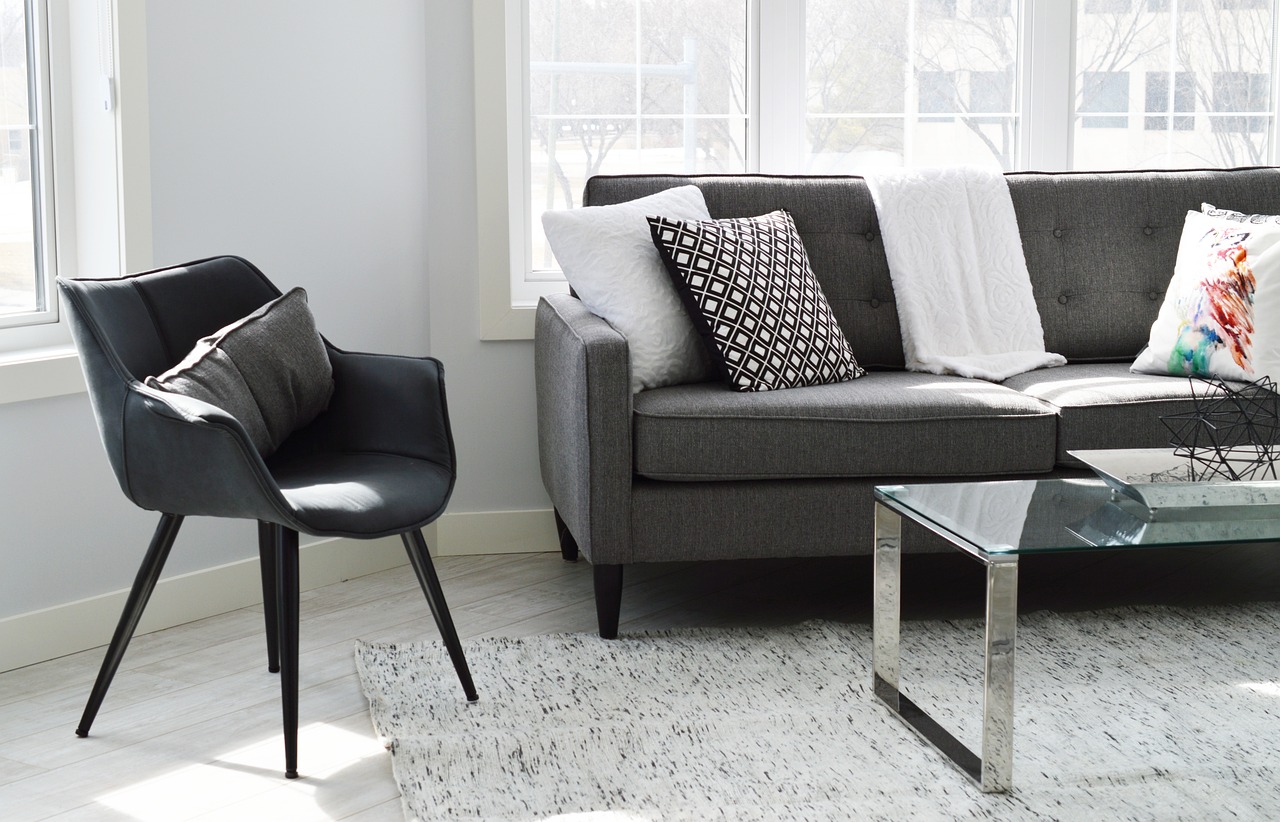
Everyday advantages of modular and sectional sofas
Image source: pixaby
Let’s be honest—no sofa is perfect. It all depends on how you live. A modular sofa feels like freedom. You can move pieces around, adjust layouts, and even take it apart when moving. But sometimes, that flexibility comes with small gaps between sections or slight movement if connectors aren’t strong. On the other hand, sectional sofas feel solid and secure. They don’t shift, and they give your room a polished look. However, once they’re in place, they stay there. According to Hernest, modular sofas suit dynamic households, while sectionals are better for stable layouts. So the real question isn’t which is better—it’s which one matches your daily habits. Do you like change, or do you prefer consistency?
How UK Living Rooms Change the Decision

Space limitations affect sofa choices in UK homes
Image source: pixaby
Living in the UK adds another layer to this decision. Our homes often come with quirks—narrow doorways, awkward corners, and radiators placed exactly where you don’t want them. I’ve seen people struggle to fit large sectionals into terraced houses, only to realise too late that delivery itself is a challenge. Modular sofas, on the other hand, arrive in smaller pieces and can be adjusted to fit tricky layouts. If you’re unsure how to plan your space properly, this sofa buying guide UK explains sizing and layout in detail. The truth is, what works in a showroom doesn’t always work in a British living room. And that’s why flexibility often becomes more than a luxury—it becomes a necessity.
Durability and Real-Life Wear Over Time
When you live with a sofa every day, durability becomes just as important as design. Sectional sofas often feel sturdier because they’re fixed together, which means fewer moving parts. Modular sofas rely on connectors, and over time, cheaper models may loosen or shift. I once visited a home where the modular pieces kept sliding slightly apart—it wasn’t a deal-breaker, but it was noticeable. That said, high-quality modular sofas are built to avoid this. If you want something that lasts, it’s worth understanding materials and construction. This durable sofa materials guide UK explains what to look for. Because at the end of the day, a sofa isn’t just about today—it’s about how it holds up after years of use.
Which Sofa Fits Your Lifestyle Best?
This is where things become personal. Think about your life—not just your living room. Do you move often? Do you like rearranging furniture? Do you host guests regularly? A modular sofa fits a lifestyle that changes. A sectional fits a lifestyle that stays consistent. I’ve seen families with growing kids benefit from modular setups because they can adjust seating as needs change. Meanwhile, homeowners who have settled long-term often prefer the stability of a sectional. There’s no right or wrong answer here. It’s about choosing something that supports your routine instead of working against it. And if you’re unsure about long-term comfort and build, this quality sofa guide can help you make a more confident decision.
Final Thoughts
Choosing between a modular sofa vs sectional sofa isn’t just about furniture—it’s about how you live. One offers structure and simplicity, the other offers freedom and flexibility. If your life feels stable and your space won’t change much, a sectional might feel just right. But if your home is always evolving, a modular sofa can grow with you. The best choice is the one that fits your story, not just your room. So take a moment, picture your daily life, and choose the sofa that makes it easier, not harder. Because the right sofa doesn’t just fill a space—it supports the way you live in it.
Author Bio
The Editorial Team at Daily Lifestyle Guide UK shares practical home décor advice tailored for British homes, helping readers choose sofas that balance comfort, durability and flexibility.
Disclaimer
This article is for general guidance. Sofa suitability depends on room size, layout and personal preference. Our editorial team may update this content as new information becomes available.
FAQs
What is the main difference between modular and sectional sofas?
The main difference is flexibility. Modular sofas can be rearranged into different layouts, while sectional sofas are fixed in one shape. This makes modular sofas more adaptable for changing spaces.
Are modular sofas worth the higher price?
Yes, if you value flexibility. Modular sofas often cost more upfront, but their ability to adapt to different layouts can make them a better long-term investment.
Which sofa is better for small UK living rooms?
Modular sofas are usually better for small or awkward spaces because they can be adjusted to fit the room layout more easily.
Do modular sofas move apart easily?
Good-quality modular sofas include connectors that keep sections in place. Cheaper models may shift slightly over time.
Are sectional sofas more durable?
Sectional sofas can feel more solid because of their fixed structure, but durability depends more on materials and build quality than the type itself.