
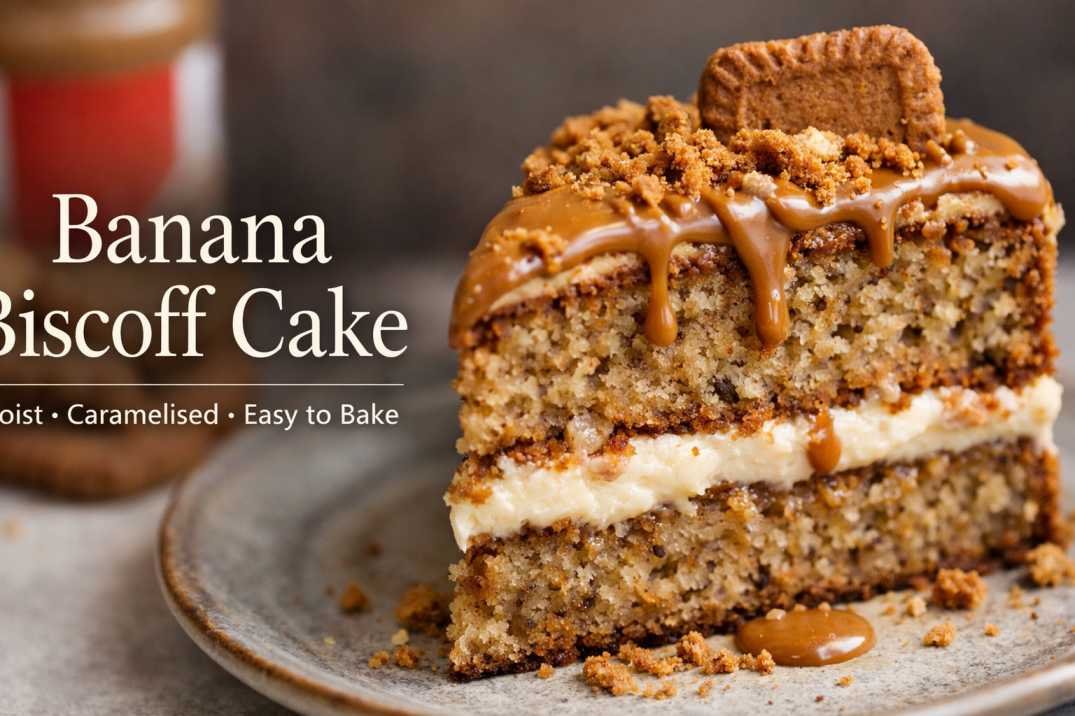

Banana Biscoff cake brings together the comforting sweetness of ripe bananas and the caramelised, spiced warmth of Lotus Biscoff spread to create a bake that feels indulgent yet familiar. The cake is soft, moist, and full of flavour, and it works just as well as a simple loaf as it does as a layered celebration cake topped with buttercream or cream cheese icing.
Banana Biscoff cake is the kind of bake that instantly feels familiar yet indulgent. By pairing ripe bananas with the warm, caramelised flavour of Lotus Biscoff, this cake delivers comfort, richness, and balance in every bite. The bananas bring moisture and natural sweetness, while Biscoff adds depth, spice, and a distinctive biscuit-like warmth. Whether baked as a simple loaf or layered with buttercream or cream cheese icing, this cake works beautifully for everyday treats, celebrations, and special occasions alike. With the right techniques and thoughtful ingredient choices, banana Biscoff cake becomes more than a trend — it becomes a reliable, go-to recipe.
What Is Banana Biscoff Cake?

Image source: pinterest.com
Banana Biscoff cake is a modern twist on classic banana cake, made richer with Lotus Biscoff spread, a caramelised biscuit butter that adds warmth, spice, and depth of flavour. The result is a cake that is moist, soft, and rich without being heavy.
Unlike traditional banana bread, which is usually dense and simply finished, banana Biscoff cake has a lighter texture and can be decorated in many different ways. It can be baked in loaf tins, square trays, or round layer tins, then finished with buttercream, cream cheese icing, or a simple Biscoff drizzle.
Why Banana and Biscoff Are Such a Good Match

Image source: pinterest.com
Banana Biscoff cake works so well because the flavours naturally balance each other, combining gentle sweetness with warm spice without one overpowering the other. Bananas are naturally sweet, mellow, and slightly fruity, especially when overripe. Biscoff spread, on the other hand, delivers caramel notes, gentle spice, and biscuit warmth.
Together, they create a balanced flavour profile where:
- Banana provides moisture and softness
- Biscoff adds richness and complexity
- Cinnamon and ginger (when used) act as bridge spices
Because neither flavour is too strong, the cake often appeals even to people who do not usually enjoy banana desserts.
The Role of Ripe Bananas in Texture and Structure

Image source: pinterest.com
Ripe bananas are essential for banana Biscoff cake because they affect both flavour and texture. Ideally, they should be heavily speckled or mostly brown. At this stage, bananas perform three critical functions:
First, they provide sweetness, reducing the need for excessive added sugar. Second, they contribute moisture, keeping the cake soft for days. Third, they help bind the batter, acting similarly to eggs in structure.
Using underripe bananas leads to bland flavour and drier texture, while ripe bananas enhance both taste and crumb quality.
Butter-Based vs Oil-Based Banana Biscoff Cakes

Image source: pinterest.com
One major difference between banana Biscoff cake recipes is the type of fat used, which affects flavour, texture, and how long the cake stays fresh.
Butter-based cakes deliver richness and classic flavour. They are ideal for celebration cakes and buttercream pairings. Oil-based cakes, on the other hand, stay moist for longer, slice cleanly even when cold, and are excellent for make-ahead baking or warm climates.
Both work well with Biscoff. The key difference is that oil makes the cake moister, while butter adds richer flavour.
Sugar Choices and Why They Matter

Image source: pinterest.com
Using the right sugar combination plays a crucial role in shaping the flavour, colour, and moisture of banana Biscoff cake. Brown sugar, particularly soft brown or demerara, adds caramel depth that complements Biscoff perfectly. Caster or white sugar lightens the crumb and balances sweetness.
Many successful recipes use a dual-sugar approach, combining brown sugar for flavour and moisture with lighter sugar for structure. This helps keep the cake balanced instead of too heavy or too sweet.
Spices That Elevate Banana Biscoff Cake

Image source: pinterest.com
While cinnamon is the most commonly used spice, a small amount of ground ginger adds depth and a bakery-style warmth that enhances the caramel notes of Biscoff. Ginger echoes the spice notes already present in Biscoff biscuits and enhances warmth without overpowering the banana.
When used in small amounts, spices stay in the background and make the cake taste richer and more balanced.
How Biscoff Is Best Used in the Cake

Image source: pinterest.com
One of the most important techniques in banana Biscoff cake is controlling how and where the Biscoff is used within the recipe.
Mixing small amounts into the banana mash ensures even flavour distribution. Dolloping and swirling Biscoff on top of the batter creates visual appeal without weighing down the sponge. Reserving larger quantities for frosting or filling keeps the cake balanced rather than greasy.
This approach allows the banana flavour to stand out in the sponge while the Biscoff adds richness through fillings and toppings.
Buttercream vs Cream Cheese Icing

Image source: pinterest.com
Banana Biscoff cake pairs beautifully with two main icing styles.
Biscoff buttercream is rich, smooth, and indulgent. It highlights the caramelised biscuit flavour and works well for piped decorations and drip cakes.
Biscoff cream cheese icing introduces a gentle tang that balances sweetness. It feels lighter on the palate and suits cakes intended as desserts rather than formal celebration bakes.
Both are excellent choices, and the decision comes down to personal preference and occasion.
How to Achieve a Perfect Layer Cake

Image source: pinterest.com
When making a layered banana Biscoff cake, technique is just as important as ingredients, especially if you want neat layers and a stable finish.
Using slightly lower oven temperatures helps cakes bake flat, making stacking easier. A crumb coat seals loose crumbs and creates a smooth surface. Chilling between frosting layers is essential, especially if adding a caramel or Biscoff drip.
Adding crushed Biscoff biscuits between the layers adds texture without drying out the cake, giving a nice contrast between soft sponge and light crunch.
Caramel and Biscoff Drips: What Actually Works

Image source: pinterest.com
Creating a clean Biscoff or caramel drip requires patience, precise temperature control, and a properly chilled cake base. The cake must be chilled, the frosting set, and the drip warm but not hot.
Using small amounts and letting the drip fall naturally helps avoid mess and uneven lines. Biscoff and caramel drips should always be tested before application to avoid sinking or sliding.
Baking Temperature and Timing Explained

Image source: pinterest.com
Oil-based banana Biscoff cakes benefit from longer, slightly cooler bakes, while butter-based versions prefer moderate heat. Rushing the bake risks a greasy centre or collapsed crumb.
Testing doneness with a skewer and allowing the cake to cool gradually ensures structure sets properly.
Storage, Shelf Life, and Freezing

Image source: pinterest.com
Banana Biscoff cake stores exceptionally well, making it an excellent option for advance baking and special occasions. At room temperature, it stays fresh for up to three days when sealed. Refrigeration is best used only to set frosting rather than for long-term storage.
The cake freezes well, even fully decorated. Freezing the cake uncovered until firm before wrapping helps protect decorations and prevents moisture damage when thawing.
Common Myths About Banana Biscoff Cake
One common myth is that adding more Biscoff always improves flavour. In reality, too much Biscoff can overwhelm banana and create an oily texture.
Another misconception is that drip cakes should be decorated warm. Proper chilling is essential for clean results.
Understanding these myths helps bakers achieve consistent success.
When to Serve Banana Biscoff Cake

Image source: pinterest.com
Banana Biscoff cake is a versatile bake that suits a wide range of occasions. It works particularly well for birthdays, family celebrations, and small gatherings where you want something comforting yet indulgent. If you enjoy caramel-style flavours and are planning a dessert table, this cake pairs beautifully with other party favourites such as a crunchie birthday cake, which offers a lighter honeycomb crunch and a different texture for guests to enjoy.
Why Banana Biscoff Cake Continues to Trend
The continued popularity of Lotus Biscoff, combined with the timeless comfort of banana cake, explains why banana Biscoff cake consistently performs well online and remains a highly searched bake. It photographs beautifully, stores well, and adapts to multiple formats.
Most importantly, it delivers consistent flavour and texture, which is why people bake it again and again rather than just once.
Conclusion
Banana Biscoff cake succeeds because it blends comfort and indulgence in a way that feels both nostalgic and modern, making it a bake people return to again and again. Ripe bananas provide softness and natural sweetness, while Biscoff adds warmth, spice, and depth. By using simple but thoughtful techniques, such as choosing the right sugar, balancing spices, and using Biscoff carefully, this cake becomes both reliable and impressive. Whether baked as a simple loaf or crafted into a layered centrepiece, banana Biscoff cake offers versatility, flavour, and crowd-pleasing appeal, making it a recipe worth keeping and sharing.
Frequently Asked Questions (FAQs)
1. What is banana Biscoff cake?
Banana Biscoff cake is a moist banana-based cake flavoured with Lotus Biscoff spread, which adds caramelised, spiced biscuit notes. The cake is typically finished with Biscoff buttercream, cream cheese icing, or a Biscoff drizzle for added richness.
2. Can I use overripe bananas for banana Biscoff cake?
Yes, overripe bananas are ideal for banana Biscoff cake. They are sweeter, mash more easily, and help create a softer, moister texture. Bananas with brown spots or fully brown skins work best for baking.
3. Can I make banana Biscoff cake without eggs?
Yes, banana Biscoff cake can be made eggless. Mashed bananas already help with binding, and eggs can be replaced with yoghurt, buttermilk, or a flaxseed mixture. The texture may be slightly denser but still moist and flavourful.
4. Can I make banana Biscoff cake without an oven?
Yes, banana Biscoff cake can be made without an oven using a heavy-bottomed pan or pressure cooker on low heat. The cake should be cooked slowly with a lid on, and baking time may vary depending on the method used.
5. What icing goes best with banana Biscoff cake?
Both Biscoff buttercream and Biscoff cream cheese icing work well. Buttercream gives a rich, indulgent finish, while cream cheese icing adds a light tang that balances the sweetness of the cake.
6. Can I reduce the sugar in banana Biscoff cake?
Yes, sugar can be reduced slightly because ripe bananas and Biscoff spread already add sweetness. However, reducing sugar too much may affect the cake’s texture and moisture.
7. Why is my banana Biscoff cake dense or heavy?
A dense cake can result from overmixing the batter, using underripe bananas, or incorrect oven temperature. Mixing until just combined and using ripe bananas helps achieve a lighter texture.
8. Can I use plain flour instead of self-raising flour?
Yes, plain or all-purpose flour can be used, but you must add baking powder. A general rule is to add about 2 teaspoons of baking powder per 200g of plain flour to achieve proper rise.
9. How do I stop Biscoff from sinking in the cake?
To prevent Biscoff from sinking, gently swirl small spoonfuls on top of the batter rather than mixing large amounts directly into it. This keeps the cake balanced and avoids oily patches.
10. How long does banana Biscoff cake last?
Banana Biscoff cake stays fresh for up to 3 days when stored in an airtight container at room temperature. If refrigerated, it can last up to 5 days but should be brought to room temperature before serving.
11. Can banana Biscoff cake be frozen?
Yes, banana Biscoff cake freezes well. You can freeze the sponge alone or fully decorated. Wrap it tightly once frozen solid and thaw at room temperature for best results.
12. Is Lotus Biscoff spread vegan?
Yes, Lotus Biscoff spread is naturally vegan, as it is made from plant-based ingredients. However, the overall cake may not be vegan unless eggs, butter, and dairy are replaced.
13. Can I make banana Biscoff cake as a loaf instead of a layer cake?
Yes, the same batter can be baked as a loaf cake. Baking time will be longer, usually 45–60 minutes, depending on oven temperature and tin size.
14. Why did my banana Biscoff cake sink in the middle?
This usually happens if the cake is underbaked, the oven door is opened too early, or too much moisture is added. Always check doneness with a skewer before removing the cake from the oven.
15. Can I add chocolate or nuts to banana Biscoff cake?
Yes, chopped walnuts, pecans, or dark chocolate chips pair well with banana and Biscoff flavours. Add them gently at the end of mixing to avoid overworking the batter.