
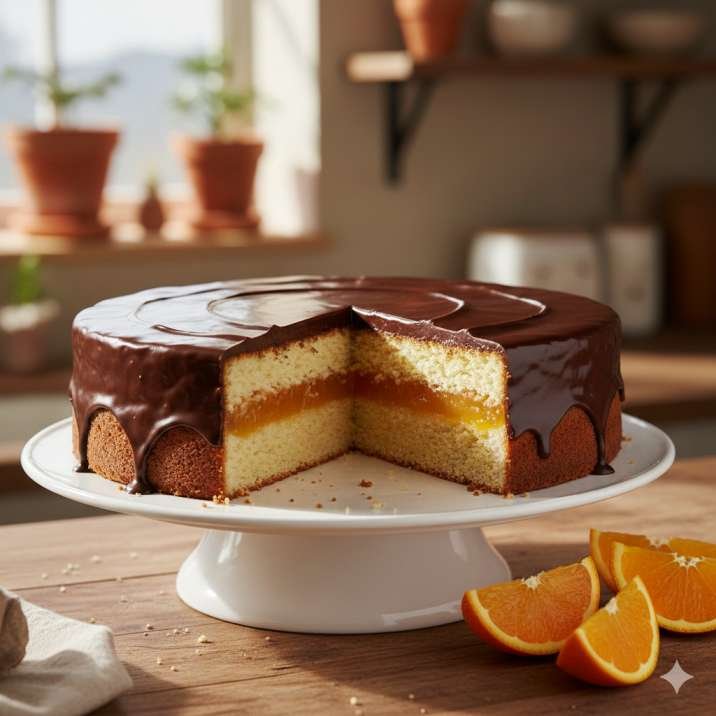

A big Jaffa cake is a large, shareable version of the classic chocolate orange treat, made with a soft sponge base, a firm orange jelly layer and a smooth chocolate topping that slices neatly. This detailed recipe combines reliable techniques to achieve clean layers, balanced flavour and a striking finish suitable for slicing and sharing.
Making a full-sized Jaffa cake is less about complicated ingredients and more about careful timing and accuracy. The challenge lies not in the ingredients, but in structure, timing and balance. A successful big Jaffa cake should have the same soft sponge, tangy orange jelly and smooth chocolate as the original, while staying neat and stable when sliced. This guide brings together proven methods for jelly setting, sponge preparation and chocolate finishing, offering a dependable approach to making a giant chocolate orange cake that looks impressive and tastes instantly recognisable.
The Importance of Structure and Proportion

Image source: pinterest.com
A big Jaffa cake works best when each layer is planned carefully and balanced with the others. The sponge must be light but stable, capable of supporting the jelly without collapsing. The jelly needs to be firm enough to lift, move and slice, yet soft enough to complement the sponge. The chocolate topping must set smoothly without cracking or becoming too thick.
Making a larger Jaffa cake is not just about using more ingredients. Larger formats introduce handling challenges, especially when working with jelly. Because of this, how the cake is set and assembled is just as important as the ingredients you use.
Ingredients and Layer Balance

Image source: pinterest.com
The ingredients for a big Jaffa cake are familiar, but the quantities and preparation are slightly different from a regular sponge cake.
The sponge relies on well-whisked eggs for lift and structure, creating a light crumb that stays springy even after chilling. Self-raising flour provides additional support, while caster sugar keeps the texture fine and even. Butter is used sparingly or omitted entirely depending on the sponge style chosen, as excessive fat can weigh the cake down.
For the jelly layer, orange jelly forms the base, but flavour depth is improved by incorporating shredless orange or golden marmalade. This enhances colour and citrus intensity without introducing texture that would interfere with clean slicing. Using slightly less liquid helps the jelly set more firmly, which is important when making a large cake.
The chocolate layer can be finished either as a thin pour-over topping or a soft ganache. Both approaches work, provided the chocolate is tempered by cooling slightly before application and softened with a small amount of fat or cream to prevent cracking.
Preparing the Jelly Layer in Advance

Image source: pinterest.com
One of the best ways to manage a large jelly layer is to make it separately from the sponge, preferably the day before. Setting the jelly the day before assembly ensures it is fully firm and easy to handle.
A smaller tin or bowl lined carefully with cling film works particularly well. The lining should be smoothed as much as possible, as any creases will appear on the surface of the jelly. Lightly oiling the bowl before lining helps the cling film adhere neatly and reduces wrinkles.
Once the jelly is dissolved in boiling water, marmalade is stirred through until completely smooth. Allowing the mixture to cool before chilling prevents condensation and improves clarity. The jelly should be refrigerated until fully set, ideally overnight.
Setting the jelly separately makes it easier to lift and place neatly on the cake, reducing the chance of it breaking or losing shape.
Preparing the Sponge Base

Image source: pinterest.com
The sponge is baked in a larger tin than the jelly layer, creating a subtle size contrast once assembled. This allows the chocolate to flow naturally over the edges and enhances the visual impact of the finished cake.
Eggs and sugar are whisked until pale and voluminous, a step that introduces air and ensures a light texture. Flour is folded in gently to preserve this aeration. Overmixing at this stage leads to a denser sponge that lacks the soft, airy texture expected from a Jaffa Cake.
Once baked, the sponge must cool completely in the tin. Because it is relatively shallow, removing it while warm increases the risk of cracking. After cooling, the top edge can be gently rounded with a sharp knife to echo the curved profile of a traditional Jaffa Cake when assembled.
Inverted Assembly for Clean Layering

Image source: pinterest.com
One of the easiest ways to assemble a big Jaffa cake is by flipping the layers during assembly. This method ensures the jelly sits neatly beneath the sponge without being compressed or dragged.
The set jelly is lifted from its mould using the cling film and placed on a board or plate lined with baking paper. The jelly is kept in its original orientation so that any natural dome remains intact. The sponge is then placed flat-side down on top of the jelly, with its domed surface facing upward.
A serving plate is positioned on top of the sponge, and the entire structure is carefully flipped in one controlled movement. This places the jelly at the base, the sponge above it, and the serving plate underneath, producing a stable, evenly layered cake ready for finishing.
This method reduces how much the jelly is handled and lowers the risk of damaging it.
Chocolate Finishing Techniques

Image source: pinterest.com
The chocolate layer can be finished in two main ways, depending on the look and texture you want to achieve.
A pour-over finish involves melting dark chocolate gently and pouring it directly over the top of the cake, allowing it to drip down the sides. This creates a softer, more informal look and works particularly well when the jelly layer is smaller than the sponge.
Alternatively, a soft ganache made with a combination of chocolate and cream produces a more controlled finish. The ganache must cool to room temperature before application so it spreads smoothly without running or pulling at the jelly beneath.
In both methods, start applying the chocolate around the edges and work your way toward the centre. This helps maintain clean edges and prevents chocolate from pooling unevenly. Before the chocolate sets, you can gently add lines with a spoon handle or knife to copy the classic Jaffa Cake pattern.
Setting, Chilling and Timing

Image source: pinterest.com
Once the chocolate has been applied, the cake should be left to set undisturbed. Refrigeration can speed this process, but the cake should be returned to room temperature before serving to ensure the sponge remains soft and the chocolate is easy to cut.
Making the cake in stages over two days consistently produces the best results. Preparing the jelly the day before and assembling the cake on the day of serving allows each layer to perform as intended, improving both appearance and texture.
Slicing and Presentation

Image source: pinterest.com
Clean slicing is essential to showcase the layered structure of a big Jaffa cake. Using a sharp knife warmed in hot water and wiped dry between cuts prevents the chocolate from cracking and ensures neat edges.
When sliced correctly, the cake reveals a clear contrast between sponge, jelly and chocolate. This visual clarity is a hallmark of a well-made big Jaffa cake and contributes significantly to its appeal as a centrepiece dessert.
Texture and Flavour Balance

Image source: pinterest.com
The key to a good big Jaffa cake is balance, not heavy or overpowering layers. The sponge should be light rather than rich, the jelly bright but not overpowering, and the chocolate smooth without excessive thickness.
Fresh orange flavour from juice, zest or marmalade prevents the jelly from tasting artificial, while dark chocolate balances sweetness and enhances depth. When these layers are balanced well, the cake delivers the familiar Jaffa Cake taste in a size made for sharing.
Storage and Make-Ahead Guidance
A big Jaffa cake keeps well in the fridge for three to four days when loosely covered to prevent condensation. Condensation can form if the cake is tightly wrapped, so light covering is preferable.
Freezing is possible, though the jelly may soften slightly after defrosting. For best results, the cake should be enjoyed fresh or within a day of assembly.
Variations Without Compromising Structure
Small adaptations can be made without affecting reliability. Blood orange or mandarin marmalade can replace standard orange for a deeper citrus note. Milk chocolate can be used for a sweeter finish, though it will soften more quickly at room temperature.
The cake can also be made in a rectangular format and sliced into portions, which works well for parties while preserving the same layered effect.
While the classic chocolate and orange combination remains the most recognisable version of a big Jaffa cake, exploring different flavour profiles can add variety to a home baking repertoire. Cakes built around richer, caramel-led flavours offer a contrasting experience for those who prefer something less citrus-forward. For example, this banana-biscoff-cake combines soft banana sponge with the spiced sweetness of Biscoff, making it a useful alternative for celebrations where a deeper, indulgent flavour is preferred. Including contrasting cake styles like this allows readers to discover new options without detracting from the structure or identity of the original recipe.
Common Issues and Practical Solutions
Jelly that fails to set is almost always caused by excess liquid or insufficient chilling time. Chocolate cracking typically occurs when it is applied too hot or without added fat. A dense sponge usually indicates under-whisked eggs or overmixed batter.
Attention to temperature, timing and gentle handling prevents most issues before they arise.
Conclusion
A big Jaffa cake turns out best when each layer is handled gently and given enough time to set properly. By combining a light sponge, a well-flavoured orange jelly and a smooth chocolate finish, it is possible to recreate a familiar classic in an impressive, sliceable form. Whether made for a celebration or shared as a centrepiece dessert, this giant chocolate orange cake rewards patience with clean structure, balanced flavour and unmistakable nostalgia.
Frequently Asked Question (FAQs)
Can I make a big Jaffa cake the day before?
Yes. Making a big Jaffa cake a day in advance is recommended. Allowing the jelly and chocolate layers to fully set overnight improves structure and makes the cake much easier to slice cleanly.
Why won’t my orange jelly set properly?
Orange jelly usually fails to set if too much liquid is used or if it is poured while still hot. Always reduce the liquid slightly for large cakes and let the jelly cool to room temperature before chilling.
Should the jelly be set directly on the sponge?
For best results, the jelly should be set separately and then assembled later. This prevents the sponge from absorbing liquid and helps maintain clean, defined layers.
What size tin is best for a big Jaffa cake?
A large sponge tin (around 22–23cm) works well, paired with a smaller tin or bowl for setting the jelly. This creates a balanced shape and allows the chocolate to flow neatly over the sides.
Can I use orange juice instead of jelly cubes?
Orange juice alone will not set firmly enough. Jelly cubes or gelatine are necessary to achieve the correct texture and stability for slicing.
What chocolate works best for a giant Jaffa cake?
Dark chocolate with around 50–60% cocoa provides the best balance. It prevents the cake from becoming overly sweet and contrasts well with the orange jelly.
How do I stop the chocolate layer from cracking?
Let the melted chocolate cool slightly before pouring and add a small amount of butter, oil, or cream. This keeps the chocolate flexible once set.
Can I freeze a big Jaffa cake?
Yes, but freezing may slightly soften the jelly texture when defrosted. For best quality, freeze the cake whole and defrost slowly in the fridge.
How long does a big Jaffa cake keep?
Stored loosely covered in the fridge, a big Jaffa cake keeps well for three to four days. Avoid airtight containers, as they can cause condensation on the chocolate.
Why is my sponge dense instead of light?
A dense sponge is usually caused by under-whisked eggs or over-mixing once the flour is added. The batter should be folded gently to preserve air.
Can I make this as a traybake instead?
Yes. The same method works in a rectangular tin and can be sliced into squares, making it ideal for parties while keeping the same flavour and layers.
Is a big Jaffa cake a cake or a biscuit?
In baking terms, a big Jaffa cake is considered a cake due to its sponge base, sliceable format, and layered construction.