
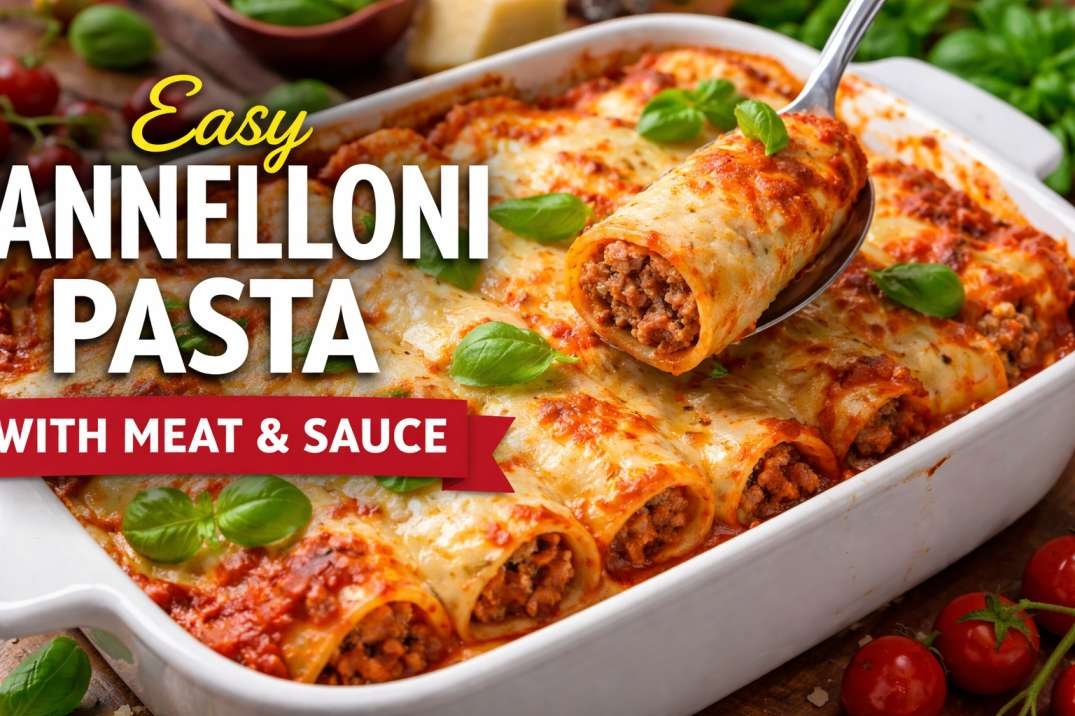

This cannelloni pasta recipe with meat combines traditional Italian methods with easy home cooking. It uses a rich beef filling, well-balanced sauces, and oven baking to create tender pasta with deep flavour and consistent results. Ideal for family meals, gatherings, or make-ahead comfort food done properly.
Cannelloni is one of the most comforting dishes in Italian cooking, known for its generous fillings, slow-baked sauces, and satisfying structure. This cannelloni pasta recipe with meat brings together classic Italian cooking ideas and modern home kitchen methods to create reliable, flavourful results. Whether you use a tomato-based beef ragù or a creamier white ragù inspired by central Italy, careful preparation helps produce tender pasta, a juicy filling, and well-balanced sauces. When done correctly, the pasta cooks evenly in the oven, absorbs flavour without drying out, and slices cleanly for serving. This guide explains every element clearly so you can make meat cannelloni confidently every time.
What Is Cannelloni Pasta?
Cannelloni is a large cylindrical pasta shape designed specifically for stuffing and baking. Unlike most pasta dishes, cannelloni is not cooked in boiling water first. Instead, the dry tubes are filled, layered with sauce, and cooked entirely in the oven. As the dish bakes, the pasta absorbs moisture from the sauces, becoming soft while still holding its shape.
Traditionally, cannelloni was made by rolling fresh pasta sheets into tube shapes. Today, dried cannelloni tubes are widely used because they are easier to fill and produce reliable results when baked properly.
Regional Italian Influence: Cannelloni alla Umbra
While many international versions rely heavily on tomato sauce, some traditional Italian recipes do not. In Umbria, cannelloni is often prepared with a tomato-free white beef ragù, enriched with béchamel and Parmigiano. This version, known as cannelloni alla Umbra, highlights meat, herbs, and dairy rather than acidity from tomatoes.
The filling is softer and creamier, and the flavour profile is gentler but deeply savoury. This regional version shows that authentic cannelloni can vary depending on location and local cooking traditions.
Choosing the Best Meat for Cannelloni
Minced beef is the most common and reliable choice for cannelloni. Meat with a slightly higher fat content gives better flavour and helps prevent the filling from drying out during baking. Lean beef can be used, but it benefits from added sauce or béchamel to maintain moisture.
Some cooks combine beef with pork for richness, while chicken or turkey mince works well for lighter versions, especially when paired with white sauces. No matter which meat you use, it should always be cooked before filling the pasta to ensure even texture and flavour.
Why Browning the Meat Properly Matters
A key technique for excellent cannelloni filling is dry-frying the minced beef first. Cooking the meat on its own helps excess moisture evaporate, allowing it to brown properly instead of steaming. This step improves flavour and helps keep the filling firm instead of soft and mushy.
Once browned, the meat can be removed from the pan so vegetables cook gently without burning.
The Role of Soffritto in Meat Cannelloni
Soffritto — finely chopped onion, carrot, and celery — forms the aromatic base of many Italian meat dishes. Slowly cooking these vegetables releases natural sweetness, which balances the savoury richness of beef and prevents the filling from tasting heavy.
Because the filling is sealed inside the pasta, it is important that the seasoning is balanced throughout the mixture. Soffritto ensures flavour in every bite, not just on the surface.
Tomato-Based vs White Ragù: Choosing Your Style
Tomato-Based Cannelloni
This version uses passata or crushed tomatoes simmered with beef. A small pinch of sugar may be added to balance acidity, not to sweeten the dish. Tomato-based cannelloni is bold, familiar, and pairs beautifully with mozzarella and Parmesan.
White Ragù Cannelloni
Inspired by central Italy, white ragù uses white wine and stock instead of tomatoes. The flavour is more delicate, allowing herbs, beef, and cheese to shine. This style relies heavily on béchamel for moisture during baking.
Both versions are authentic, and choosing between them depends on personal taste rather than strict rules.
Why White Wine Is Used in White Ragù
White wine adds acidity and depth without darkening the sauce. Red wine would overpower both colour and flavour when paired with béchamel. The alcohol evaporates during cooking, leaving balance rather than sharpness.
Herbs and Seasoning: Regional Logic
Herbs such as rosemary, thyme, and marjoram are commonly used in central Italian cooking and suit meat-based cannelloni particularly well. Parsley offers freshness, while dried herbs can be used sparingly if fresh are unavailable.
Although many Italian guidelines discourage using onion and garlic together, regional recipes often ignore this rule when flavour balance requires it. Italian cooking is guided by tradition, not strict rules.
Béchamel Sauce: Essential for Moisture
In cannelloni, béchamel is more than just a topping — it also helps cook the pasta. The sauce should be slightly thinner than standard béchamel so the pasta can hydrate properly during baking.
In Umbrian-style cannelloni, béchamel is also mixed directly into the meat filling. This method softens the texture, prevents dryness, and allows the filling to expand without breaking the pasta.
Covering resting béchamel with cling film directly on the surface prevents a skin from forming and keeps the sauce smooth.
Filling Cannelloni the Right Way
Dried cannelloni tubes are sturdier and easier to fill than fresh or pre-cooked pasta. A teaspoon or piping bag allows controlled filling without cracking the tubes.
Overfilling should be avoided. The filling expands slightly during baking, and excess pressure can cause splitting.
Assembly Tips That Prevent Dry Cannelloni
Always spread sauce on the base of the baking dish before adding the filled pasta. This prevents sticking and ensures hydration from below. The cannelloni should be fully covered with sauce before baking.
Any pasta left uncovered will dry out, so it is important to cover everything well with sauce. Cheese is added last to create a protective, golden top.
Baking for Perfect Texture
Cannelloni should be baked covered for the first part of cooking to trap steam. This allows the pasta to soften evenly. The foil is removed near the end so the top can brown without drying out the interior.
Let the dish rest for at least five minutes before serving. Resting helps the dish set properly and makes it easier to slice and serve neatly.
Storage, Reheating, and Freezing
Tomato-based cannelloni freezes well when cooled properly. Cream-heavy versions are best eaten fresh or kept in the fridge for a short time, as béchamel-based pasta absorbs sauce and can dry out when reheated.
Leftovers should always be reheated covered to preserve moisture.
Common Cannelloni Myths
Many people believe cannelloni must be pre-boiled. In fact, dried cannelloni is designed to cook in the oven when enough sauce is present.
Another misconception is that thicker sauce is better. For baked pasta dishes, a slightly thinner sauce helps the pasta cook properly and stay tender.
Finally, not all Italian cannelloni contains tomatoes — regional traditions vary widely.
How Cannelloni Is Traditionally Served
In Italy, cannelloni is often served as a primo course during Sunday or holiday meals. Outside Italy, it is commonly enjoyed as a main dish. When served as a full meal, it pairs well with a simple green salad and crusty bread.
Easy Cannelloni Pasta Recipe with Meat – Recipe Card
Prep Time: 20 minutes
Cook Time: 45 minutes
Total Time: 1 hour 5 minutes
Serves: 4–6
Ingredients
- 400g dried cannelloni tubes
- 1 kg minced beef
- 2 tablespoons olive oil
- 1 large onion, finely chopped
- 2–3 garlic cloves, minced
- 2 × 660g jars tomato passata
- Large pinch caster sugar
- Salt and freshly ground black pepper
For the Béchamel Sauce
- 50g butter
- 50g plain flour
- 600ml whole milk
- 100g grated Parmesan cheese
- Optional: nutmeg
Instructions
- Brown the minced beef in a dry pan over medium-high heat until well coloured. Remove and set aside.
- Add olive oil to the pan and cook the onion until soft. Add garlic and cook briefly.
- Return the beef to the pan, add passata and sugar, season, and simmer for 20 minutes.
- Melt butter in a saucepan, stir in flour, then gradually whisk in milk to form a smooth béchamel. Season lightly.
- Spread sauce over the base of a baking dish. Fill cannelloni with the meat mixture and arrange in the dish.
- Pour béchamel over the top and sprinkle with Parmesan.
- Cover and bake at 180°C (350°F) for 30 minutes. Uncover and bake for a further 15 minutes until golden.
- Rest for 5–10 minutes before serving.
Related Comfort Food Recipes
If you enjoy rich, slow-cooked comfort dishes, exploring similar meals from other cuisines can be just as rewarding. Alongside Italian favourites like baked cannelloni, hearty soups and stews built around slow-simmered beef offer the same depth and warmth. One great example is this galbi soup recipe, a traditional Korean beef soup known for its deeply developed flavour, nourishing broth, and comforting appeal.
Conclusion
A good cannelloni pasta recipe with meat depends on balance rather than complicated techniques. Properly browned beef, thoughtful seasoning, sufficient sauce, and careful baking transform simple ingredients into a deeply satisfying dish. Whether you choose a tomato-rich classic or a creamy Umbrian-style version, cannelloni rewards patience with flavour, structure, and comfort. When prepared with attention to moisture and timing, it becomes a reliable centrepiece for both everyday family meals and special occasions.
Frequently Asked Questions (FAQs)
Can I make cannelloni pasta recipe with meat ahead of time?
Yes. You can fully assemble meat cannelloni up to 24 hours in advance and store it covered in the refrigerator. Before baking, allow it to sit at room temperature for 15–20 minutes and add a small splash of sauce if needed to prevent dryness.
Do I need to boil cannelloni tubes before baking?
No. Dried cannelloni tubes are designed to cook in the oven. As long as the pasta is fully covered with sauce and baked covered for the first stage, the tubes will soften perfectly without pre-boiling.
What is the best meat for cannelloni filling?
Minced beef is the most commonly used and reliable option. A slightly higher fat content gives better flavour and prevents dryness. You can also use a beef and pork mix, or chicken or turkey mince for a lighter version.
Why is my cannelloni dry after baking?
Cannelloni usually turns dry when there is not enough sauce or when it is baked uncovered for too long. Always ensure the pasta is fully covered with sauce and keep the dish covered with foil for at least the first half of baking.
Can I freeze cannelloni pasta recipe with meat?
Tomato-based meat cannelloni freezes well if cooled completely before freezing. However, versions with a high amount of béchamel are best eaten fresh or refrigerated, as cream-based sauces can dry out after freezing and reheating.
What sauce is best for meat cannelloni?
Both tomato sauce and béchamel-based sauces work well. Tomato sauce creates a richer, more robust flavour, while béchamel produces a creamier, milder dish. Some regional Italian recipes combine both for balance.
How long should cannelloni rest before serving?
Allow cannelloni to rest for 5–10 minutes after baking. This helps the filling set, improves texture, and makes the dish easier to slice and serve without falling apart.
Can I use manicotti instead of cannelloni?
Yes. Manicotti tubes can be used as a substitute for cannelloni. While the name “manicotti” is more common outside Italy, the pasta shape works the same way and can be filled and baked using the same method.
How do I know when cannelloni is fully cooked?
Cannelloni is cooked when a knife or fork can easily pierce the pasta without resistance. The sauce should be bubbling and the top lightly golden, but the interior should remain moist.
Is cannelloni traditionally a main dish or a starter?
In Italy, cannelloni is traditionally served as a primo (starter course), especially for Sunday or holiday meals. Outside Italy, it is commonly enjoyed as a main dish with salad or bread.