
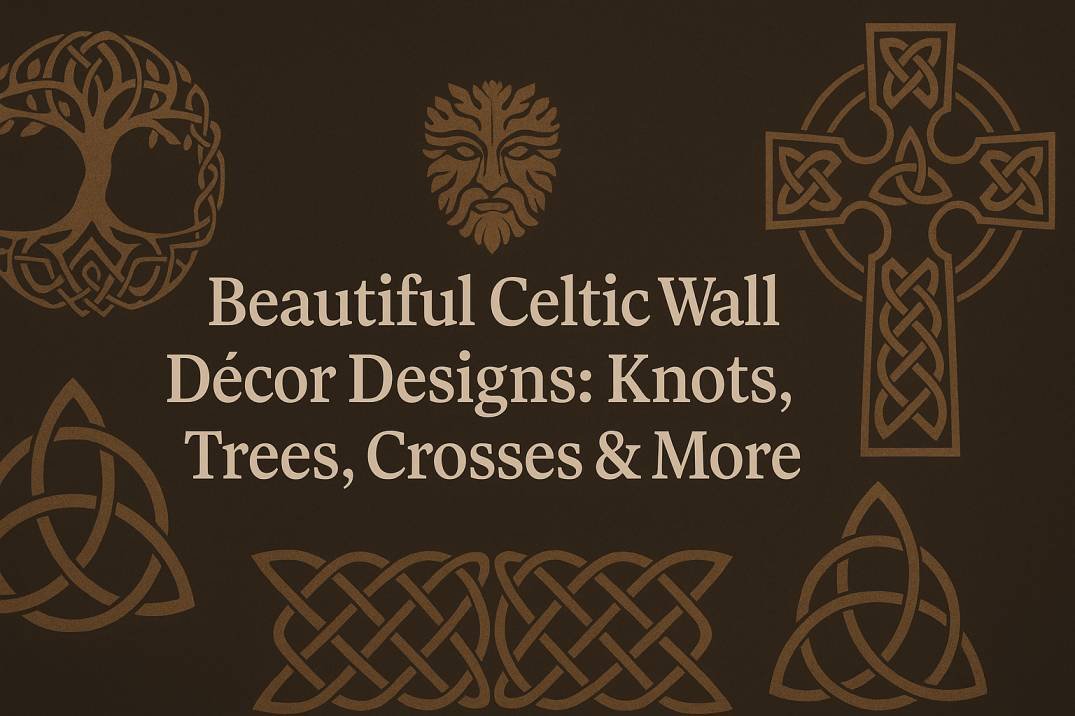

Celtic wall décor combines ancient symbols with modern design, using knots, crosses, spirals, and the Tree of Life to add meaning and character to a space. These designs bring a sense of heritage and balance to modern interiors, making plain walls feel more personal and meaningful.
Celtic wall décor brings a timeless blend of symbolism, mythology, and craftsmanship into contemporary homes. Inspired by the traditions of Ireland and Scotland, designs like the Tree of Life, knotwork, and Celtic crosses represent unity, renewal, and protection. These symbols feel emotionally meaningful, and their simple shapes work well in modern homes. Whether carved in wood, cast in metal, or printed on canvas, Celtic wall art adds narrative depth and a sense of intention to any room. It turns walls into thoughtful design features that reflect tradition and style.
Celtic Wall Décor: Where Heritage Meets Modern Style

Image source: pinterest.com
Celtic wall décor feels timeless because its symbols and stories remain meaningful over time. These symbols were created to represent life, nature, spirituality, and human connection.Today, homeowners value artwork that tells a story rather than simply filling space. Celtic décor aligns perfectly with this shift toward meaningful interiors.
Though the designs are ancient, their structure is timeless. The fluid curves, balanced forms, and geometric harmony of Celtic symbols allow them to blend seamlessly into modern, minimalist, rustic, and eclectic homes. One carefully chosen piece can give a room both style and meaning.
Celtic Knots: Endless Lines With Endless Meaning

Image source: pinterest.com
Celtic knotwork is easy to recognize because its lines loop endlessly without a clear beginning or end. These patterns represent the Celtic belief that all life is connected and continues in endless cycles. Historically carved into stone monuments and manuscripts, knots conveyed beliefs about eternity and the interconnected spirit of all things.
As wall décor, Celtic knots are remarkably versatile. Metal knot panels look bold and contemporary, especially against neutral walls. Wooden knot carvings offer warmth and organic texture, making them ideal for nature-inspired or rustic designs. Minimalist knot prints in black and white suit modern and Scandinavian interiors.
Different knot styles also carry specific meanings. The Trinity Knot represents unity among three forces, often interpreted spiritually or personally. The Eternity Knot symbolizes unbroken connection, while the Shield Knot was traditionally used for protection. Whether simple or detailed, knot designs add beauty and meaning to a space.
The Celtic Tree of Life: A Symbol of Renewal and Balance

Image source: pinterest.com
The Tree of Life, or Crann Bethadh, is one of the most beloved symbols in Celtic art. Its branches and roots symbolize balance between earth and sky, nature and spirit. It is a reminder that all life is connected.
In interior décor, the Tree of Life instantly becomes a natural focal feature, grounding the room with its balanced form and calming visual presence. Metal versions add a dramatic edge, while carved wooden designs bring warmth and grounding. Tapestries introduce softness and texture, ideal for meditation rooms or bedrooms. Its balanced shape helps create a calm and peaceful feeling in the room.
The Celtic Cross: Spiritual Depth With Artistic Presence

Image source: pinterest.com
The Celtic Cross blends Christian symbolism with ancient Celtic interpretations of the sun and eternity. Its distinctive ring represents unity or spiritual totality. These crosses, originally carved into stone centuries ago, remain iconic expressions of Celtic identity.
As wall décor, the Celtic Cross adds history and spiritual meaning to a space. Stone-inspired pieces give an ancient, architectural feel, while metal or wooden versions shift toward a more contemporary look. It works especially well in entryways, reading nooks, and personal sanctuary spaces. Whether subtle or bold, the Celtic Cross enriches interiors with history and meaning.
The Triskelion: Motion, Change, and Life Cycles

Image source: pinterest.com
The Triskelion, or Triple Spiral, is among the oldest Celtic motifs. Its three spiraling arms symbolize ongoing movement, personal evolution, and the cycles of life. This design feels energetic and works well in areas that represent movement or change.
Wooden Triskelion panels offer an earthy tone, while metal versions provide striking sharpness. Placed in a hallway, entryway, or home office, the Triskelion subtly reinforces themes of growth and momentum. It balances motion and structure, making it both visually appealing and meaningful.
The Green Man: The Spirit of Nature in Art

Image source: pinterest.com
The Green Man is a powerful and ancient symbol representing the life force of nature, renewal, and seasonal rebirth. His face, composed of leaves and vines, appears across Celtic and European art traditions.
As wall art, the Green Man adds a strong connection to nature. Stone or resin pieces evoke ancient ruins or forest guardians, while wooden versions add warmth and natural harmony. Ideal locations include garden-facing rooms, sunrooms, rustic living spaces, and homes that prioritize nature-driven design. The Green Man adds natural energy to the room without feeling too bold.
Celtic Mythology in Wall Art: Animals and Goddesses

Image source: pinterest.com
Celtic mythology is filled with symbolic animals and divine beings, each with its own story. Wolves represent intuition, loyalty, and guardianship. Dragons symbolize wisdom and protection. These designs add storytelling and cultural depth to your home.
Celtic goddesses also carry powerful meaning. Brigid represents creativity and healing; Danu symbolizes motherhood and abundance; the Morrigan embodies transformation and sovereignty. Artwork featuring these figures adds emotion, depth, and a sense of personal empowerment, particularly in bedrooms, studios, or reading corners.
Sun and Moon Motifs: A Harmony of Opposites

Image source: pinterest.com
Celtic interpretations of the sun and moon reflect themes of balance and duality. These motifs explore the relationship between day and night, strength and calm, masculine and feminine energies. Their contrasts create soothing, reflective spaces.
Used in metal sculptures, mixed-media wall pieces, or stylized prints, sun and moon designs fit beautifully in bedrooms and meditation areas. Their presence encourages stillness and balance without overpowering the room.
Blending Celtic Designs With Modern Interiors

Image source: pinterest.com
The appeal of Celtic décor in contemporary design is rooted in its geometry and symbolism. Even in minimalist interiors, a single Celtic piece can make a strong statement when chosen with intention. Metal silhouettes pair well with concrete, glass, and clean lines. Wooden carvings harmonize with natural materials and earthy palettes. Mixed-media pieces feel at home in modern bohemian or artistic environments.
Celtic décor looks best when used thoughtfully, so each symbol can stand out clearly. Rather than layering several motifs in one space, choosing a single focal point allows the symbolism to breathe and the design to shine.
Choosing the Right Material for Celtic Décor

Image source: pinterest.com
The material you choose changes how your Celtic décor feels, from warm and natural to bold and modern. Wood brings warmth and organic comfort. Metal offers crisp precision and a contemporary edge. Stone adds weight and historical presence. Glass reflects light and sophistication. Textiles introduce softness and artistic flow.
Combining materials often creates the most compelling statement. A metal Tree of Life mounted on wood, or a stone knot set against a softly lit wall, blends ancient design with modern craftsmanship in a cohesive way.
Placement Matters: Enhancing Symbolic Impact
Where you place Celtic wall décor can heighten its meaning. Placing a Shield Knot near the door reinforces its traditional purpose as a symbol of protection and safe passage. A Tree of Life in the living room expresses unity and grounding. Goddess art belongs in personal spaces where creativity or healing is desired. The Awen or Triskelion works well in an office, encouraging inspiration and progress.
Even bathrooms can benefit from subtle Celtic touches, such as spiral tile inlays or delicate knotwork prints. Large, uninterrupted walls are ideal for murals, oversized metal panels, or dramatic sculptural pieces.
Authenticity and Craftsmanship
As Celtic décor grows in popularity, mass-produced items have become widespread. Although cheaper, these pieces often lack the detail and cultural value of authentic designs. Art created by makers who understand Celtic symbolism—especially artisans from Ireland and Scotland—carries emotional and cultural value. Commissioned work, such as family crests or personalized knot designs, can become meaningful heirlooms and focal points.
Well-crafted, authentic Celtic art adds cultural integrity and emotional depth that mass-produced décor simply cannot replicate.
Conclusion
Celtic wall décor continues to resonate because it brings meaning, beauty, and cultural depth into the modern home. These symbols—knots, trees, crosses, spirals, goddesses, animals, suns, and moons—carry stories that transcend time. They offer not only visual appeal but also a sense of connection to tradition, nature, and personal identity. When chosen carefully, Celtic art becomes more than decoration—it becomes a meaningful part of your home. It becomes part of the home’s narrative, grounding a space with harmony and symbolic significance. Whether a bold centerpiece or a subtle accent, Celtic décor brings a timeless, expressive presence to any interior.
Frequently Asked Questions
1. What does Celtic wall décor symbolize?
Celtic wall décor represents themes like eternity, unity, spiritual balance, protection, and the cycles of life. Symbols such as knots, crosses, spirals, and the Tree of Life carry deep cultural meanings rooted in ancient Celtic beliefs.
2. Is Celtic wall décor only for people with Irish or Scottish heritage?
No. Celtic designs are appreciated worldwide because of their universal themes—growth, protection, connection, and harmony. Anyone drawn to symbolic or nature-inspired art can decorate with Celtic pieces.
3. What are the most popular Celtic symbols for wall art?
Searchers commonly look for the Tree of Life, Trinity Knot, Celtic Cross, Triskelion (Triple Spiral), Green Man, and Celtic animal motifs like wolves and dragons. These appear most often in wall hangings, metal art, and wooden panels.
4. How can I decorate with Celtic wall art in a modern home?
Use clean-lined metal knots, minimalist Tree of Life designs, or monochrome Celtic prints. Pair them with neutral walls, natural textures, and simple layouts. One well-placed Celtic piece works better than many small ones.
5. What materials work best for Celtic wall décor?
Wood, metal, stone, and woven fabrics are the most searched. Metal suits modern interiors, wood fits rustic or boho styles, and stone creates an ancient, architectural look.
6. Where should I place Celtic wall art for the best effect?
Popular placements include living room focal walls, bedroom headboard areas, entryways, meditation rooms, and offices. Searchers often look for ideas like “Tree of Life above sofa” or “Celtic cross for entryway.”
The Tree of Life symbolizes harmony, family roots, connection with nature, and spiritual growth. Many users search specifically for Tree of Life décor because it makes a calming centerpiece.
8. Is Celtic knot art good for minimalist interiors?
Yes. Minimalist-style Celtic knots—especially black-and-white or metal line art—blend beautifully with simple, modern spaces. Searchers often look for “modern Celtic knot wall art” and “minimal Celtic décor.”
Check the artist’s background, the origin of the design, and the craftsmanship. Authentic pieces often come from Irish or Scottish artisans or from shops that specialize in Celtic heritage.
10. Can Celtic wall décor bring meaning to a spiritual or meditation space?
Yes. Many spiritual decor searches include terms like “Celtic symbols for protection” and “Celtic wall art for meditation.” Designs such as the Awen, Spiral, and Tree of Life are especially popular for calming, reflective rooms.
11. What Celtic décor looks best in bedrooms?
The most searched bedroom symbols include the Love Knot, moon-and-sun Celtic art, goddess designs, and soft Tree of Life tapestries. These bring tranquility and emotional connection to the space.
12. Are there DIY Celtic wall décor ideas?
Yes. Users frequently search “DIY Celtic knot wall art” and “Celtic stencil designs.” DIY options include wood-burned knots, painted spirals, stenciled patterns, and handmade woven pieces.
13. What Celtic symbols are used for protection in the home?
The most searched protection symbols include the Shield Knot, the Celtic Cross, and certain animal motifs like wolves and dragons. These are often placed near entryways or main living areas.
14. Why is Celtic wall décor trending again?
Search data shows a rise in people seeking meaningful, symbolic art. Celtic designs combine history, nature, spirituality, and modern aesthetics—making them ideal for today’s interiors.
15. Is metal or wood better for Celtic designs?
It depends on the look you want. Searches show metal is preferred for modern spaces, while wood is favored for rustic, nature-inspired, and bohemian rooms. Both materials highlight Celtic patterns beautifully.