
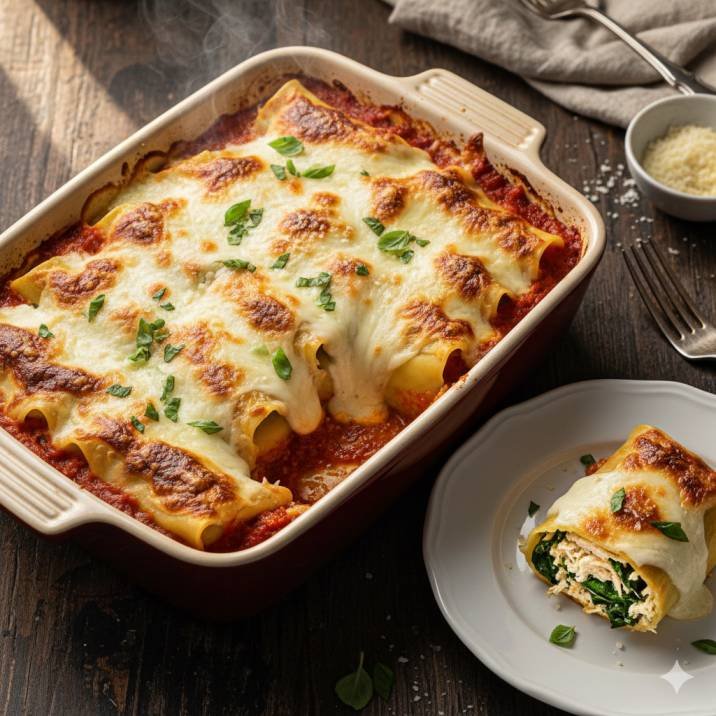

Chicken cannelloni is a comforting baked pasta made with tender chicken, creamy ricotta, and spinach, wrapped in pasta sheets and baked with marinara sauce and melted mozzarella. This recipe has rich flavor, a soft texture, and a beautiful finish, making it perfect for family dinners, gatherings, or special meals.
Chicken cannelloni has a way of turning an ordinary evening into something warm and inviting. With silky pasta wrapped around creamy chicken and ricotta, layered with marinara and finished with bubbling mozzarella, it offers a balanced combination of richness and comfort. Even though it looks fancy, this recipe is easy to make if you follow the steps slowly. Whether you’re preparing a special dinner for guests or treating your family to a cozy meal, chicken cannelloni always leaves an impression. This guide explains each step clearly so you can make a restaurant-style dish at home.
What Makes Chicken Cannelloni Special

Image source: pinterest.com
Chicken cannelloni is special because it balances soft pasta, creamy filling, and rich flavors perfectly. The pasta becomes tender but not mushy, the filling turns creamy without losing structure, and the topping of melted cheese adds richness without overwhelming the dish. This balance is what makes chicken cannelloni so enjoyable to eat. Unlike many pasta bakes that feel too heavy, cannelloni has balanced layers of pasta, filling, and sauce. The ricotta brings smoothness, the chicken provides substance and the marinara cuts through the richness with just enough acidity.
The dish is also versatile. You can keep it classic with a ricotta-spinach filling, elevate it with mushrooms and a wine-infused sauce or create a homestyle version with vegetables and simple seasonings. Each approach delivers something slightly different, allowing you to choose according to your mood or occasion.
Understanding Cannelloni vs. Similar Dishes

Image source: pinterest.com
Cannelloni is often mentioned alongside manicotti, lasagna and even stuffed shells, which can make the distinctions confusing. Cannelloni is made by rolling flat pasta sheets around a flavorful filling. The rolls are then nestled into a baking dish, covered with sauce and baked. Manicotti, in some Italian regions, uses crepe-like wrappers instead of pasta and features lighter fillings like ricotta and spinach. In the United States, however, manicotti often refers to large dried pasta tubes filled and baked in a similar manner.
Lasagna is layered, but cannelloni is rolled individually, making each piece feel complete on its own. Each roll feels like a complete bite full of flavor. Stuffed shells, on the other hand, use concave pasta to hold the filling, but the texture and structure differ. Cannelloni provides a tighter, neater roll with more even baking throughout.
Why Homemade Pasta Makes a Difference

Image source: pinterest.com
Although dried cannelloni tubes work well, fresh pasta sheets—especially homemade ones—take this dish to another level. Fresh pasta is softer, easier to roll, and absorbs sauce and filling more easily. When made with simple ingredients like flour, salt and eggs, the dough becomes silky and tender once rolled through a pasta machine. The biggest advantage of homemade pasta is its texture. It bakes evenly, remains delicate and blends seamlessly with the filling.
Resting the dough is a crucial step. Resting the dough helps it relax, so it rolls easily without breaking. When rolled thin, the pasta sheets become flexible and easy to wrap around the filling. If you’re preparing this dish for a special occasion, taking the extra time to make homemade pasta is well worth it.
The Importance of a Well-Balanced Filling

Image source: pinterest.com
The filling is the heart of the dish. This recipe uses shredded chicken breast, which provides a mild and tender base. Rotisserie chicken is a good option because it saves time and adds extra flavor. Ricotta brings softness and moisture, making each bite smooth and creamy. Whole-milk ricotta works best because low-fat ricotta can turn grainy when baked.
Spinach contributes color, nutrients and a gentle earthy note. When wilted and squeezed dry, it blends seamlessly into the filling without watering it down. Parmesan adds sharpness that balances the creamy ricotta, while nutmeg enhances the overall warmth of the flavor profile. The egg helps bind the filling so it stays together while baking.
Choosing the Right Sauces

Image source: pinterest.com
Marinara sauce is the classic companion to chicken cannelloni. Its slight acidity balances the rich filling and keeps the dish from feeling heavy. A light, fresh marinara works best, but you can use a robust, slow-cooked sauce if you prefer deeper tomato flavor. For an even creamier version, you can use béchamel, a velvet-smooth white sauce made from butter, flour and milk. Some people mix tomato sauce and béchamel to add more flavor.
Fresh mozzarella melts cleanly on top, creating a delicate, stretchy layer that enhances the overall texture. Finishing with grated parmesan after removing the foil helps achieve a lovely golden crust that contrasts beautifully with the soft interior.
Preparing the Filling Correctly

Image source: pinterest.com
The filling should be mixed gently and thoroughly. When spinach is added to the skillet to wilt, it releases moisture that must be squeezed out. Mixing wet spinach directly into the ricotta can compromise the texture, so removing excess liquid is important. The filling should be creamy but firm enough to hold its shape. If the mixture feels too loose, adding a small amount of parmesan can help bind it.
Rolling and Stuffing the Cannelloni

Image source: pinterest.com
Filling cannelloni takes some care, but it becomes easy with practice. When using pasta sheets, Spreading the filling evenly and rolling tightly helps create neat, even cannelloni. If working with tubes, holding them upright makes filling easier and avoids breakage. Overfilling should be avoided; leaving a small margin at each end keeps the rolls neat.
Assembling With Care

Image source: pinterest.com
Sauce on the bottom of the baking dish ensures the rolls do not stick and begin to cook gently from underneath. Once the rolls are aligned, the remaining marinara is poured over the top, coating them fully. Covering the pasta with sauce prevents it from drying out while baking. Covering the dish with foil keeps the pasta moist and helps the flavors come together.
Final Bake and Broil

Image source: pinterest.com
After baking covered, the dish is ready for the final step. Removing the foil helps the mozzarella melt evenly. Returning the dish to the oven without foil helps evaporate excess moisture and encourages browning. A brief broil intensifies the color, giving the top a golden finish that complements the creamy interior.
Serving Suggestions

Image source: pinterest.com
Chicken cannelloni pairs beautifully with lighter sides that contrast its richness. A crisp green salad, steamed vegetables or roasted zucchini completes the meal without making it heavy. Garlic bread or focaccia is excellent for soaking up extra sauce. A glass of white wine such as Pinot Grigio or Chardonnay complements the creamy filling, while a light red like Chianti pairs well with the tomato sauce.
If you enjoy creamy, comforting dishes like this, you may also like my chiken-orzo-recipe-nigella. It offers the same warmth and flavor but cooks much faster, making it perfect for busy weeknights.
Make-Ahead, Storage and Reheating

Image source: pinterest.com
This dish is convenient because it can be assembled ahead of time. Making it a day in advance allows the flavors to develop even more. Store the assembled dish covered in the refrigerator and add a few extra minutes to the bake time. Cooked cannelloni keeps well for several days and reheats nicely in the oven. Freezing is also an option; unbaked cannelloni frozen in a well-sealed dish can be baked from frozen with slightly increased baking time.
Common Mistakes and How to Avoid Them
Using too much filling can cause rolls to crack. Skipping the sauce coverage can leave the pasta dry. Not draining spinach properly results in watery filling. Overbaking can toughen the pasta, while underbaking leaves it chewy. Following the method precisely helps prevent these issues, especially if you’re making cannelloni for the first time.
Chicken Cannelloni – Easy Recipe Card
Prep Time: 1 hour 20 minutes
Cook Time: 45 minutes
Rest Time (Dough): 30 minutes
Total Time: 2 hours 35 minutes
Yield: 12 cannelloni
Ingredients
Pasta Dough
2 ¾ cups all-purpose flour
½ teaspoon kosher salt
4 large eggs
2 tablespoons water, if needed
The Filling
5 oz baby spinach
2 ½ cups shredded chicken breast (rotisserie recommended)
1 cup whole-milk ricotta cheese
¼ cup grated parmesan cheese
½ teaspoon kosher salt
¼ teaspoon ground nutmeg
⅛ teaspoon freshly cracked black pepper
1 large egg
Remaining Ingredients
24 oz marinara
8 oz fresh mozzarella, cut into small pieces
¼ cup grated parmesan cheese
Equipment
Pasta maker
Mixing bowl
Casserole dish
Instructions
- Place flour and salt in a food processor, pulse briefly, then pour in whisked eggs while pulsing until dough forms a ball. Add water only if needed.
- Run the processor for 2–3 minutes to knead. Remove dough, dust lightly with flour, knead 3–4 minutes by hand, then rest for 30 minutes.
- Wilt spinach in a skillet, cool completely, squeeze out excess moisture and combine with chicken, ricotta, parmesan, salt, nutmeg, pepper and egg.
- Preheat oven to 375°F (190°C). Divide dough into four pieces, roll lightly and run through the pasta maker from widest to second-thinnest setting.
- Cut the pasta into 12 rectangles and spread marinara in a greased 9×12 dish.
- Add filling to each pasta sheet, roll tightly and place seam-side down.
- Add remaining marinara, cover with foil and bake 40 minutes.
- Remove foil, top with mozzarella and parmesan and bake until melted. Rest briefly before serving.
Conclusion
Chicken cannelloni is a dish that brings comfort, elegance and warmth to any table. Its creamy filling, tender pasta and golden cheese topping create a satisfying meal suitable for both everyday dinners and special occasions. Once you learn the steps, the recipe becomes easy and enjoyable to make. The recipe is flexible, so you can adjust ingredients and sauces while keeping the dish comforting and satisfying. Whether baked fresh or assembled in advance, chicken cannelloni has a way of gathering people together and making any meal feel a little more memorable.
Frequently Asked Questions (FAQs)
1. What is chicken cannelloni made of?
Chicken cannelloni is typically made with cooked shredded chicken, ricotta cheese, spinach, parmesan, egg, herbs, and seasonings. The filling is wrapped in pasta sheets or cannelloni tubes, covered with marinara or béchamel sauce, topped with cheese, and baked until tender and bubbly.
2. Do I need fresh pasta to make cannelloni?
No. Fresh pasta sheets give the softest texture, but you can use dried cannelloni tubes or dried lasagna sheets. If using dried sheets, parboil them briefly until flexible enough to roll without cracking.
3. Can I make chicken cannelloni ahead of time?
Yes. Assemble the cannelloni, cover the dish tightly and refrigerate for up to 24 hours. Add 10–15 extra minutes to the baking time if placing it in the oven straight from the fridge.
4. Can I freeze chicken cannelloni?
Absolutely. Assemble the dish without baking, wrap well and freeze for up to 3 months. Bake directly from frozen at 375°F, adding 20–25 extra minutes. You can also freeze baked leftovers for 1–2 months.
5. Why is my cannelloni dry?
Dry cannelloni usually happens when there isn’t enough sauce. Make sure the pasta is fully covered with marinara or béchamel. Baking covered with foil for most of the cooking time also keeps moisture in.
6. Can I use rotisserie chicken for this recipe?
Yes. Rotisserie chicken is perfect because it’s already tender and flavorful. It also saves a lot of preparation time.
7. What sauces work best with chicken cannelloni?
Marinara sauce is the classic choice, but béchamel or a blend of marinara and white sauce also works beautifully. For a richer flavor, you can use a mushroom or wine-based sauce.
8. How do I stop cannelloni tubes from breaking while filling?
If using dried tubes, soften them slightly by parboiling or soaking in hot water. Fill them upright using a small spoon or piping bag to avoid cracking.
9. How long should I bake chicken cannelloni?
Bake at 375°F (190°C) for 35–40 minutes covered with foil, then uncover, add cheese and bake another 10 minutes or until melted and lightly golden.
10. What side dishes go well with chicken cannelloni?
Good sides include garlic bread, Caesar salad, roasted vegetables, steamed broccoli, or a simple mixed green salad. Light sides balance the richness of the pasta.
11. Can I substitute ricotta in the filling?
If you don’t like ricotta, you can use cottage cheese, mascarpone or a mixture of cream cheese and parmesan. Make sure to drain cottage cheese so the filling stays firm.
12. Why is my ricotta filling watery?
This usually happens if the spinach isn’t fully drained or if using low-fat ricotta. Always squeeze spinach dry and use whole-milk ricotta for the best texture.