
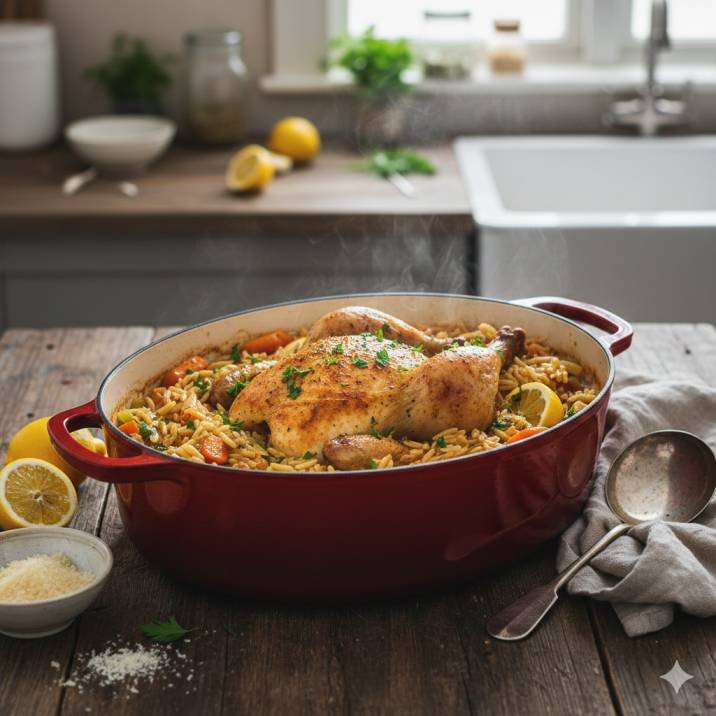

This chicken in a pot with lemon and orzo is a classic one-pot comfort meal where tender chicken, delicate pasta and bright citrus cook slowly together to create deep flavour with minimal effort.
Rooted in Nigella Lawson’s relaxed cooking philosophy, this recipe focuses on gentle heat, layered flavour and uncomplicated technique to deliver a deeply comforting meal. In true Nigella fashion, the method is relaxed and unfussy, relying on gentle cooking to create a soft, comforting and deeply satisfying dish.
The Heart of Nigella’s Approach

Image source: pinterest.com
Nigella Lawson is known for creating food that feels both luxurious and approachable, and this lemon chicken orzo perfectly reflects that balance. It borrows the gentle spirit of her much-loved “Praised Chicken,” while introducing a brighter, citrus-led character that lifts the broth and lightens the richness of the chicken. The recipe is intentionally flexible, allowing home cooks to adjust herbs, lemon and seasoning without compromising flavour. The vegetables are meant to soften into sweetness, the chicken should scarcely need carving, and the orzo slips into the broth to create a tender, soothing texture. It is the kind of food Nigella often describes as “quiet comfort” — simple, soothing and satisfying without being complicated.
This is a dish that embraces imperfection. It encourages flexibility, allowing home cooks to adjust lemon levels, herb choices and seasoning without ever compromising the final result.
If you enjoy gentle, family-friendly comfort food, this recipe follows the same relaxed, nourishing approach found in my chicken cannelloni recipe, where simple ingredients are allowed to develop warmth and depth through slow cooking.
The broth is both bright and soothing, offering the kind of gentle restoration that feels especially welcome after long days or cold, quiet evenings. Nigella often refers to dishes like these as “homecoming meals,” and this lemon chicken orzo is a perfect example: food that tastes like comfort, memory and quiet pleasure.
Ingredients for Chicken in a Pot With Lemon and Orzo

Image source: pinterest.com
1 whole chicken (approx. 3½ pounds)
3 fat garlic cloves, peeled
2 medium carrots (about 10 ounces)
2 medium leeks, white parts only, about 5 cups sliced
1 tablespoon olive oil
2 lemons, for zest and juice
2 teaspoons dried tarragon or dried thyme
2 teaspoons flaky sea salt or kosher salt (or 1 teaspoon fine sea salt)
½ teaspoon crushed red pepper flakes
6 cups cold water
1½ cups orzo pasta
⅓ cup finely chopped Italian parsley, plus extra for serving
Freshly grated Parmesan, optional
Preparing the Chicken and Vegetables

Image source: pinterest.com
Let the chicken sit at room temperature for 30–40 minutes before cooking to promote even heat distribution and juicier meat. Allowing the chill to leave the chicken ensures more even cooking and a better final texture. While the chicken rests, prepare your vegetables. Peel the garlic cloves, slice the leeks into rounds and cut the carrots into thick, even sticks. These vegetables form the base of the broth and slowly soften as they cook, adding natural sweetness and flavour.
A heavy Dutch oven is essential here. An enameled cast-iron oval Dutch oven around twelve inches long is ideal, fitting the chicken neatly while leaving space for vegetables and liquid to circulate. Because pots vary, the recipe is flexible and does not require exact measurements.
Browning the Chicken for Flavour

Image source: pinterest.com
Heat the olive oil over a high flame until it begins to shimmer. Carefully lower the chicken breast-side down into the pot. Allow the skin to brown deeply, which may take three to five minutes. Browning triggers the Maillard reaction, creating deeper savoury notes that enrich the broth. Not only does browning add flavour, but it also enhances the appearance of the finished dish, shining through the broth with soft golden tones.
Once the skin is richly browned, turn the chicken breast-side up. Remove the pot from the heat to prevent the aromatics from scorching. This is where the flavours begin to build. Grate the zest from the lemons directly into the pot, followed by the minced garlic. The residual heat releases their fragrance, creating a bright, aromatic base.
Layering in Vegetables, Herbs and Lemon

Image source: pinterest.com
Scatter the sliced leeks and carrots around the chicken, filling the small spaces between the sides of the pot. Sprinkle over the sea salt, dried tarragon or thyme and the crushed red pepper flakes if you choose to use them. Nigella often leaves this optional, especially if cooking for families or those who prefer milder flavours.
Squeeze the lemon juice directly into the pot. Using both lemon zest and juice adds a fresh citrus flavour that brightens the dish without overpowering it. The lemons lift the richness of the chicken and balance the sweetness of the vegetables.
Pour in six cups of cold water. The liquid should come up around the chicken but leave the top of the breast visible. This ensures the chicken cooks evenly while preserving the browned colour on the upper surface. Bring the pot to a lively simmer over high heat before clamping on the lid and transferring the pot to the oven.
Slow Cooking in the Oven

Image source: pinterest.com
Once sealed inside the oven, the chicken cooks gently at 350°F (180°C or 160°C Fan). During this hour and fifteen minutes, the vegetables soften to a tender sweetness, the broth becomes aromatic and the chicken cooks through without harsh heat. Slow oven cooking allows the collagen in the chicken to break down gradually, producing tender meat and a naturally flavourful broth. The result should be a golden broth filled with soft vegetables and a chicken that is nearly falling off the bone.
The smell at this stage is deeply inviting — citrus, herbs, soft leeks and tender chicken blending into a broth that feels restorative just by aroma alone.
Adding the Orzo

Image source: pinterest.com
After the initial cook, remove the pot from the oven. The broth will be rich, golden and fragrant. Stir the orzo gently into the liquid around the chicken. Even if the space feels tight, push the pasta down so it sits beneath the broth. The orzo will absorb the flavours as it cooks.
Return the pot to the oven for another fifteen minutes. As the orzo cooks, it absorbs the broth and thickens it slightly, creating a creamy texture similar to a simple risotto. Some prefer the orzo firmer, others enjoy it softer; this recipe allows for both. You can extend the cooking time slightly if you prefer a thicker, heartier result.
Resting the Dish for the Perfect Texture

Image source: pinterest.com
When the cooking time finishes, remove the pot and let it rest uncovered for fifteen minutes. Allow the dish to rest for 10–15 minutes so the orzo can fully absorb the broth and the flavours can settle. During this rest, the orzo finishes absorbing the broth, allowing the dish to settle into a cohesive, gently thickened texture. The vegetables soften further and the flavours meld into something homely and soothing.
This resting step improves the texture and allows the flavours to come together.
Shredding and Serving the Chicken

Image source: pinterest.com
Stir in a handful of chopped parsley for freshness. You can shred the chicken directly in the pot or carefully remove it to a board. The meat will be exceptionally tender, falling away from the bone with minimal effort. Remove skin and bones as you go, returning the shredded meat to the broth and orzo.
Stir everything together, ensuring the chicken is evenly distributed. Serve directly from the pot, letting each bowl capture a generous balance of tender chicken, lemon-scented broth, herbs and softly swollen orzo. Extra parsley adds brightness, and a light dusting of Parmesan is optional for those who enjoy additional savouriness.
A Comforting Stovetop Version for One

Image source: pinterest.com
Nigella also suggests a scaled-down stovetop version designed specifically for one—a quietly comforting option for solo dinners or slower evenings. Instead of a whole chicken, this version uses one bone-in, skin-on chicken thigh.
Begin by heating a teaspoon of olive oil in a small saucepan and browning the thigh skin-side down for ten minutes. Prepare a small carrot, a small leek and a clove of garlic during this time. Once browned, turn the chicken skin-side up and grate in the zest of half a lemon. Add the garlic and dried herbs, then scatter in the vegetables.
Pour in two cups of chicken broth and season lightly. Bring everything to a boil before covering and simmering for forty minutes. Add a quarter cup of orzo, cook for ten to twelve minutes, then leave the pan to rest. Shred the chicken thigh and finish the dish with fresh parsley, dill or thyme. The result is a small but deeply satisfying bowl of comfort.
Flexible and Forgiving Variations

Image source: pinterest.com
This recipe is well-suited to variation. You can reduce the lemon for a milder flavour or increase it for extra brightness. The herbs can be swapped according to preference or availability. Thyme, tarragon, dill, chervil, chives and fresh oregano all work beautifully.
Orzo can be replaced with barley, which requires a longer cook, or with small pasta shapes such as ditalini. Rice is another option, though it will create a softer, pudding-like consistency. Each variation maintains the dish’s comforting character while allowing you to adapt it to dietary needs or pantry availability.
What to Serve With This Dish

Image source: pinterest.com
While complete on its own, this chicken in a pot with lemon and orzo pairs well with simple sides. A fresh green salad provides contrast and lightness. Cooked vegetables such as asparagus, green beans or broccoli rabe add freshness. Stewy greens complement the broth and balance the lemon beautifully.
Storage and Reheating

Image source: pinterest.com
Leftovers store easily in the refrigerator for up to three days. Orzo continues to absorb liquid, thickening the dish as it sits. When reheating, add a splash of water or broth to loosen the consistency. This dish also freezes well for up to three months. Thaw in the refrigerator overnight before reheating gently.
Conclusion
This Nigella-inspired chicken in a pot with lemon and orzo proves that simple ingredients, when cooked gently in one pot, can deliver restaurant-quality comfort with very little effort. Built on simple ingredients and slow, gentle cooking, it offers warmth, nourishment and a depth of flavour that only one-pot meals can deliver. Its flexibility makes it suitable for family dinners, relaxed weekends or quiet meals alone. Every spoonful reflects the brightness of lemon, the tenderness of chicken and the soft richness of orzo. It is a soothing, comforting dish that proves simple ingredients and gentle cooking can create deeply satisfying meals.
Frequently Asked Question (FAQs)
1. What is Chicken in a Pot With Lemon and Orzo?
It is a one-pot dish made with whole chicken, soft vegetables and orzo simmered in a lemon-scented broth. The chicken cooks slowly until tender, and the orzo absorbs the broth, turning it into a silky, comforting meal inspired by Nigella Lawson’s cooking style.
2. Can I use chicken pieces instead of a whole chicken?
Yes. Bone-in thighs or drumsticks work well and still provide good flavour. The cooking time may be slightly shorter than with a whole chicken, but the method remains the same. Check that the chicken pieces are fully cooked before adding the orzo.
3. What does orzo add to this dish?
Orzo acts like a small pasta that absorbs broth and becomes creamy as it cooks. It thickens the dish naturally and creates a risotto-like texture without requiring constant stirring. It blends perfectly with chicken and lemon.
4. Can I make this recipe without orzo?
Yes. You can substitute barley, ditalini, basmati rice or another small pasta. Barley needs more cooking time, while rice will create a softer, more pudding-like consistency. The flavour remains excellent with all variations.
5. Is this recipe suitable for meal prep?
Yes. It reheats well, though the orzo will continue to absorb liquid. When reheating, add a splash of water or broth to loosen the texture. It stays fresh in the refrigerator for up to three days.
6. Can I freeze chicken in a pot with lemon and orzo?
You can freeze the chicken and broth mixture for up to three months. Orzo softens further after freezing, but the flavour remains excellent. For best results, freeze the chicken and broth, then cook fresh orzo when serving.
7. What herbs work best with lemon and chicken?
Tarragon and thyme are traditional choices, but parsley, dill, chervil, mint and oregano also complement lemon chicken beautifully. The dish is flexible, so you can use whichever herbs you prefer or already have.
8. How do I prevent the orzo from sticking or clumping?
Stir the orzo well when adding it, and make sure it is pushed under the broth. Letting the dish rest after cooking helps the orzo loosen naturally. If needed, stir in a small amount of hot water just before serving.
9. What can I serve with this dish?
Light vegetable sides work best. Green salads, asparagus, green beans, broccoli rabe or sautéed spinach complement the richness of the chicken and the brightness of the lemon. The dish is hearty enough to serve as a complete meal.
10. Can I make a single-serving version?
Yes. Use one chicken thigh and cook the entire dish on the stovetop. Brown the thigh, add diced vegetables, herbs, lemon zest and chicken broth, simmer until tender and finish with a small amount of orzo. It delivers the same comfort in a smaller portion.