
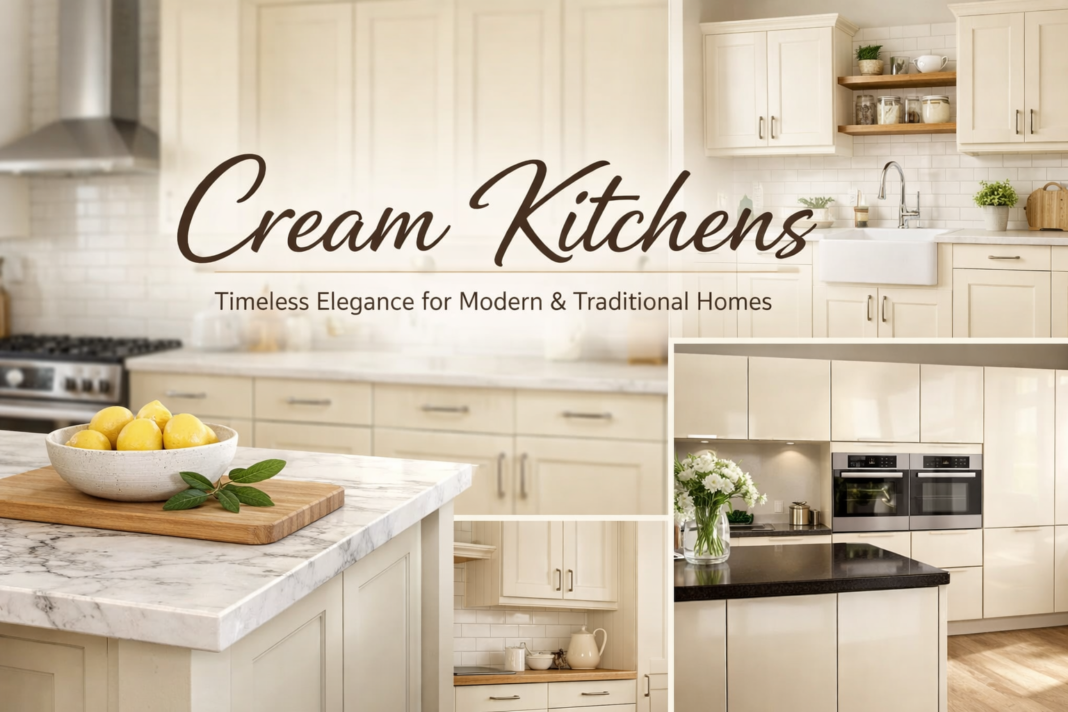

Cream kitchens combine warmth, light and timeless design, making them one of the most adaptable choices for modern and traditional homes. From cream kitchen unit doors to porcelain and high-gloss finishes, this neutral palette offers long-term style, practical performance and flexibility across layouts, finishes and décor choices.
Cream kitchens continue to be a favourite choice for homeowners who want a light, elegant space without the starkness of pure white. Softer, warmer and more forgiving, cream creates kitchens that feel welcoming while still appearing bright and spacious. Whether you are replacing kitchen unit doors, choosing between cream and porcelain finishes, or planning a complete redesign, cream offers a level of flexibility that few colours can match. It works beautifully in both modern and traditional homes, adapts easily to changing trends, and provides a timeless foundation for everyday living. This guide explores how cream kitchens work, why they remain so popular, and how to design one that suits your home.
What Defines a Cream Kitchen?

Image source: pinterest.com
A cream kitchen is built around soft neutral tones that sit between white and beige. These shades range from pale ivory and porcelain-inspired hues to deeper linen and warm cream finishes. The defining feature of a cream kitchen is balance: it reflects light effectively while adding warmth that makes the space feel comfortable rather than clinical.
Cream kitchens are often chosen by homeowners who want a bright interior but feel that white can appear too harsh, especially in family homes or open-plan spaces. Because cream sits comfortably alongside both warm and cool materials, it acts as a versatile base rather than a dominating design choice.
Why Cream Kitchens Remain So Popular
The long-term popularity of cream kitchens is not driven by trends alone. Cream performs well both visually and practically, which is why it continues to be used across new builds, renovations and kitchen restorations.
One of the main reasons homeowners choose cream is its ability to create an airy feel without sacrificing warmth. Unlike darker colours, cream keeps a kitchen feeling open, even in smaller rooms. At the same time, it avoids the sterile appearance that some white kitchens can develop, particularly under artificial lighting.
Cream also works well with a wide range of materials, including wood, stone, metal and ceramic finishes. This means the kitchen can be updated over time simply by changing accessories, worktops or wall colours rather than replacing the units themselves.
Cream Kitchens Compared to White Kitchens
White kitchens are often associated with cleanliness and simplicity, but they are not always the most practical choice. In many homes, large areas of white cabinetry can feel cold or overly minimal, especially when paired with cool lighting or hard surfaces.
Cream kitchens offer a softer alternative. They still reflect light efficiently, helping kitchens appear brighter and more spacious, but they do so in a way that feels more natural and inviting. Cream also tends to hide everyday marks slightly better than white, while still making it easy to spot areas that need cleaning.
For homeowners who want a light kitchen that feels lived-in rather than showroom-like, cream often proves to be the more comfortable choice.
Cream Kitchens vs Porcelain Kitchens
Porcelain kitchens have become increasingly popular as a modern neutral option. While similar to cream, porcelain sits slightly closer to white and carries a cooler undertone.
Cream kitchens are warmer and richer, making them ideal for homes that favour natural materials, wood accents or traditional detailing. Porcelain kitchens, by contrast, suit contemporary interiors where a clean, understated finish is preferred.
Both colours offer excellent light-reflective qualities, and the choice often depends on the atmosphere you want to create. Cream leans towards warmth and comfort, while porcelain offers quiet sophistication with a modern edge.
The Importance of Cream Kitchen Unit Doors
Kitchen unit doors and drawer fronts make up the largest visible surfaces in the kitchen. Because of this, they are usually the first elements to show signs of wear such as scratches, dents or fading. When these surfaces begin to look tired, the entire kitchen can feel outdated, even if the cabinets themselves are still in good condition.
Replacing kitchen unit doors in a cream finish is one of the most effective ways to refresh a kitchen. It allows homeowners to transform the look of the space without the cost, disruption or waste associated with a full refit. In many cases, door replacement can be completed quickly and with minimal interruption to daily life.
Cream doors are particularly popular for replacements because they instantly brighten the room while remaining neutral enough to suit a wide range of interiors.
Cream Kitchen Door Styles

Image source: pinterest.com
Shaker-style cream kitchen doors remain the most widely chosen option. Their framed design adds subtle detail without overwhelming the space, making them suitable for both classic and contemporary kitchens.
Slab doors, with their flat and simple appearance, are often used in modern kitchens. In cream, slab doors retain their clean lines while feeling softer and more welcoming than darker or pure white finishes.
Traditional cream kitchen doors feature decorative panels and detailing, making them ideal for period homes or country-style kitchens. These doors add depth and character while maintaining a light, elegant appearance.
Handleless cream kitchens suit open-plan and modern homes where a seamless, streamlined look is preferred. The cream finish helps prevent the space from feeling too sharp or industrial.
Finishes for Cream Kitchen Doors
The finish of cream kitchen doors has a significant impact on both appearance and maintenance.
High-gloss cream kitchens are popular in modern homes because they reflect light strongly and create a sleek, polished look. They are easy to clean but can show fingerprints more readily.
Matt cream finishes offer a softer, more understated look. They reduce glare and are often chosen for contemporary or minimalist interiors. Many modern matt finishes are designed to resist fingerprints and marks.
Satin and soft-touch finishes sit between gloss and matt, offering durability with a subtle sheen. These finishes are often associated with higher-end kitchens due to their refined appearance and practical performance.
Using Colour and Contrast in Cream Kitchens
Cream kitchens work best when paired thoughtfully with other colours and materials. Because cream acts as a neutral base, it allows both subtle and bold design choices elsewhere in the room.
Warm tones such as wood, terracotta and honey-coloured finishes enhance the cosy quality of cream kitchens. Cooler tones like soft grey, sage green or muted blue create contrast while maintaining balance.
The key is moderation. Cream kitchens benefit from contrast, but too many competing colours can dilute their elegance. Using one or two accent shades is usually enough to define the space.
Cream Kitchens Across Different Layouts
Cream kitchens adapt well to all kitchen layouts. In linear kitchens, cream prevents the space from feeling narrow or enclosed. In L-shaped and U-shaped kitchens, it keeps the room open and cohesive despite the larger amount of cabinetry.
In open-plan layouts, cream kitchens transition smoothly into living and dining areas. They create a sense of continuity without dominating the wider space, which is particularly important in modern homes.
High ceilings and large windows also suit cream kitchens well. The colour softens natural light and avoids glare, creating a comfortable atmosphere throughout the day.
Accessories and Finishing Touches
Cream cabinets provide the foundation of the kitchen, but accessories bring personality and depth. Handles, lighting, worktops and décor choices all influence the final look.
Metal finishes such as brass, chrome or black can change the character of a cream kitchen dramatically. Worktops in wood, quartz or stone add texture and contrast, while lighting choices influence how warm or cool the cream appears.
It is important not to over-accessorise. Cream kitchens benefit from restraint, allowing the colour and materials to speak for themselves.
Practical Performance of Cream Kitchens
Modern cream kitchen doors are designed for real-life use. High-quality laminate, vinyl-wrapped and lacquered finishes are resistant to moisture, temperature changes and everyday wear.
With regular cleaning using mild products, cream kitchens remain bright and fresh for many years. When manufactured properly, modern cream finishes are also resistant to yellowing, making them suitable for long-term installation.
This combination of durability and aesthetics makes cream kitchens a practical choice for busy households.
Cream Kitchens in Modern and Traditional Homes

Image source: pinterest.com
One of the strongest advantages of cream kitchens is their ability to work across architectural styles. In traditional homes, cream enhances character features and complements natural materials. In modern homes, it softens clean lines and adds warmth to minimalist designs.
Because cream is not tied to a single trend, it remains relevant as interior styles evolve. This makes it a reliable investment for homeowners who want a kitchen that will age gracefully.
Conclusion
Cream kitchens continue to stand the test of time because they balance beauty with practicality. They brighten spaces without feeling cold, adapt easily to different layouts and styles, and provide a flexible base for changing tastes. Whether you are replacing kitchen unit doors or designing a complete kitchen, cream offers warmth, elegance and long-term appeal. For homeowners seeking a kitchen that feels welcoming, functional and future-proof, a cream kitchen remains one of the most dependable and rewarding choices.
Frequently Asked Questions (FAQs)
Are cream kitchens still in style?
Yes, cream kitchens remain very much in style. They are considered a timeless choice because they balance brightness with warmth. Unlike trend-led colours, cream adapts easily to both modern and traditional interiors and does not date quickly.
Do cream kitchens make a room look bigger?
Cream kitchens help a space appear brighter and more open by reflecting light softly. This makes them particularly suitable for small kitchens, narrow layouts, and rooms with limited natural light.
What is the difference between cream and porcelain kitchens?
Cream kitchens have warmer undertones, creating a cosy and inviting feel. Porcelain kitchens are slightly cooler in tone, sitting between cream and white, and tend to suit more contemporary or minimalist designs. Both offer excellent light-reflective qualities.
Are cream kitchen cabinets better than white?
Cream cabinets are often preferred over white because they feel less harsh and more welcoming. They also hide minor marks and fingerprints slightly better than pure white while still maintaining a clean appearance.
Do cream kitchen unit doors go yellow over time?
High-quality cream kitchen doors are designed to resist yellowing. Modern finishes such as laminate, vinyl wrap, and lacquer remain colour-stable when properly manufactured and maintained with regular, gentle cleaning.
Can I replace my kitchen doors with cream ones?
Yes, replacing kitchen unit doors with cream doors is a popular and cost-effective way to update a kitchen. It allows you to refresh the look of the space without the expense or disruption of a full kitchen refit.
Are cream kitchens practical for family homes?
Cream kitchens are practical for family homes because they are durable, easy to clean, and more forgiving than white. Modern finishes are designed to withstand daily wear, moisture, and temperature changes.
What worktops go best with cream kitchens?
Cream kitchens pair well with a wide range of worktops, including wood, quartz, granite, and laminate. Dark worktops create contrast, while lighter stone surfaces produce a soft, cohesive look.
Do cream kitchens suit modern homes?
Yes, cream kitchens work very well in modern homes. When paired with slab or handleless cabinets, integrated appliances, and clean lines, cream adds warmth without compromising a contemporary aesthetic.
Are cream kitchens suitable for open-plan spaces?
Cream kitchens are ideal for open-plan layouts because they transition smoothly into living and dining areas. The neutral tone prevents the kitchen from dominating the space while still keeping it light and visually connected.
What colours go well with cream kitchen cabinets?
Cream cabinets work with both warm and cool colours. Wood tones, terracotta and beige enhance warmth, while soft grey, sage green and muted blue provide contrast without overpowering the space.
Are cream kitchens a good investment?
Cream kitchens are considered a safe long-term investment because they appeal to a wide range of tastes. Their neutral, timeless appearance makes them attractive to future buyers and suitable for long-term living.
Can cream kitchens look modern and not traditional?
Yes. The overall style depends on door design, finishes, handles and accessories. High-gloss or matt slab doors, minimal hardware and modern lighting can give cream kitchens a very contemporary look.
Are cream kitchens hard to keep clean?
Cream kitchens are easy to maintain with regular cleaning using mild products. While lighter colours show dirt more clearly, this also helps maintain good kitchen hygiene and keeps the space looking fresh.