
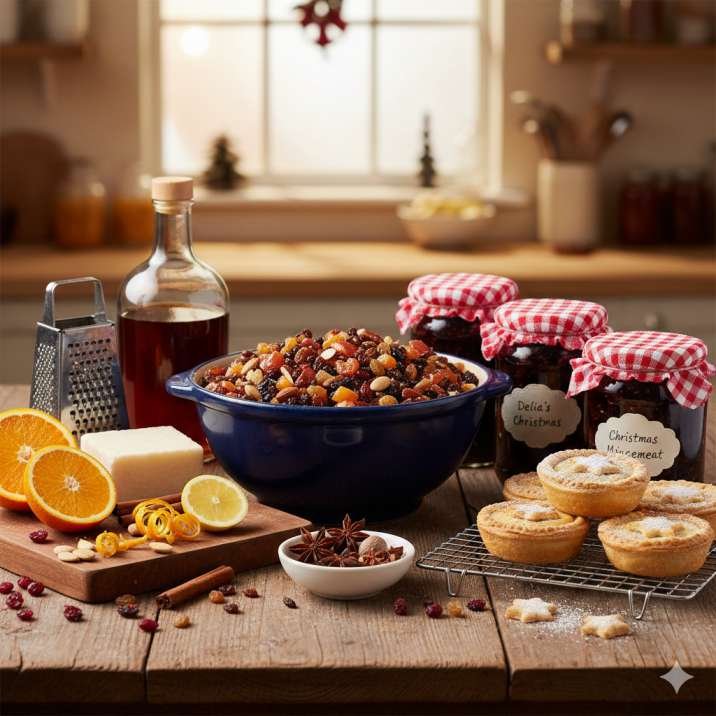

Traditional Christmas mincemeat is a British festive preserve made from dried fruits, apples, citrus zest, spices and alcohol. It is usually prepared weeks or even months ahead so the flavours can slowly develop and become rich and balanced. This guide brings together Delia Smith’s trusted slow-cooked method with modern variations, family traditions, storage advice and baking tips, giving you everything you need to make, mature and use homemade mincemeat with confidence throughout the Christmas season.
In Britain, mincemeat is closely linked to Christmas baking and often marks the moment when the festive season truly begins in the kitchen. The gentle warmth of citrus zest, spice and dried fruit slowly filling the kitchen signals a shift toward winter traditions and anticipation. For generations, British households have relied on traditional recipes to prepare mincemeat weeks or even months in advance, allowing the flavours to mature into something deeply rich and comforting. Delia Smith’s approach has become one of the most trusted versions, valued for its balance and reliability. This article brings together that classic method with practical modern variations, family traditions and clear storage guidance, offering a complete, dependable guide for Christmas baking.
Why Mincemeat Still Matters at Christmas

Image source: pinterest.com
Despite the convenience of shop-bought jars, homemade mincemeat continues to hold a special place in British Christmas baking. Part of the appeal is control — knowing exactly what goes into the mixture — but there is also something deeply seasonal about preparing it as autumn turns to winter. Mincemeat is not meant to be rushed. It is made slowly, stored carefully and used with purpose, reflecting a traditional style of seasonal cooking where patience was an important part of the process.
Beyond practicality, mincemeat has emotional weight. It is often prepared as part of family traditions, with children helping to stir bowls, fill jars and later shape pastry lids. These moments turn a simple preserve into a family ritual that carries memories, comfort and familiarity from one Christmas to the next.
What Traditional British Mincemeat Really Is

Image source: pinterest.com
Despite its name, modern British Christmas mincemeat contains no meat and has been entirely fruit-based since the Victorian era, when preservation methods and tastes began to change. Historically, mincemeat began as a mixture of meat, fruit and spices, but by the Victorian era it had become the fruit-based recipe that is common in British baking today. Today, mincemeat is a sweet preserve made from dried fruits, apples, sugar, fat, citrus and spice, bound together with alcohol for flavour and preservation.
Delia Smith’s mincemeat follows this traditional structure closely. It relies on time, gentle heat and balanced flavours instead of quick shortcuts. This is why it performs so consistently in mince pies and other festive bakes.
What Makes Delia Smith’s Mincemeat Recipe Traditional

Image source: pinterest.com
Delia Smith’s mincemeat recipe is widely regarded as traditional because it respects classic proportions, slow preparation and careful flavour balance, rather than relying on modern shortcuts or convenience ingredients. No single ingredient dominates. The fruit remains central, the spices support rather than overwhelm, and the alcohol enhances rather than sharpens.
A key element is the slow oven method. By gently heating the mixture for several hours, the suet melts and coats the fruit, sealing in moisture and preventing fermentation during storage. This method was developed to fix common problems found in older recipes and is one reason her mincemeat stores so well.
Ingredients Explained and Why They Matter

Image source: pinterest.com
The quality of a good mincemeat depends on understanding how each ingredient contributes to flavour, texture and preservation.
Dried fruits such as raisins, currants and sultanas provide sweetness and structure. Apples introduce freshness and natural pectin, preventing the mixture from becoming heavy. Candied peel adds concentrated citrus aroma, while dark sugar contributes depth and warmth.
Suet plays an important role in traditional mincemeat. It coats the fruit, adds richness and helps improve the texture as the mixture matures over time. Vegetarian suet works equally well and is widely used today. Citrus zest and juice brighten the mixture, while spices such as mixed spice, cinnamon and nutmeg provide warmth. Alcohol — usually brandy, rum or whiskey — preserves the mixture and deepens flavour over time.
Traditional Delia Smith–Style Mincemeat Recipe

Image source: pinterest.com
This traditional method is ideal if you want mincemeat that stores safely, matures over time and delivers consistent results in mince pies.
Method overview:
The ingredients are mixed and left overnight so the dried fruit can soften, release its natural juices and fully absorb the spices before cooking. The mixture is then gently heated in a low oven for several hours, allowing the suet to melt and coat the fruit. Alcohol is added once the mixture has cooled, preserving its aroma and strength. The mincemeat is stored in sterilised jars and left to mature.
As the mixture cools, it may appear dull as the fat sets. This is completely normal and has no negative impact on flavour, texture or keeping quality. Stirring during cooling ensures even texture throughout.
A Quicker Butter and Whiskey Variation

Image source: pinterest.com
Not every baker has weeks to spare. A modern alternative uses butter instead of suet and a short stovetop simmer. Butter produces a softer, more dessert-like texture, while whiskey adds depth and warmth.
This version is cooked briefly, just until slightly thickened, and is designed to remain saucy rather than firm. It can be used almost immediately, making it ideal for last-minute mince pies. While it can still be stored, it is best enjoyed sooner than the traditional version.
Storage, Safety and Shelf Life

Image source: pinterest.com
Correct storage is essential for both food safety and flavour development when making homemade mincemeat. Jars must be sterilised thoroughly and kept dry. Traditional mincemeat made with suet and alcohol can be safely stored in a cool, dark cupboard and is best used within one year for the best flavour and texture, although it may last longer. Even though it may keep longer.
Once opened, jars should be refrigerated. Butter-based versions should be treated as shorter-term preserves and refrigerated after opening. Freezing is also possible for both versions and works well if you want to prepare ahead.
Making Mincemeat a Family Tradition

Image source: pinterest.com
For many households, making mincemeat is more than a baking task — it is a gentle ritual that quietly signals the beginning of Christmas long before decorations appear. As autumn fades into winter, families gather in the kitchen to weigh fruit, stir bowls and fill jars, turning preparation into shared time rather than a chore. Children often take part by mixing ingredients or spooning mincemeat into jars, learning through scent, texture and taste while building memories that return year after year.
The slow cooking process fills the home with the unmistakable aroma of citrus and spice, creating a festive atmosphere long before decorations go up. These moments are often accompanied by small seasonal touches such as handwritten jar labels, Christmas music in the background and simple décor like balon merry christmas displays that quietly mark the season’s arrival. Over time, these details become just as important as the recipe itself.
Many families also double their batch, setting aside jars to gift to friends or relatives. A jar of homemade mincemeat, prepared with care and tradition, becomes a meaningful Christmas gesture — one that carries both flavour and memory well beyond the festive season.
Pastry Pairings and Baking Tips

Image source: pinterest.com
Mincemeat is most commonly used for mince pies, and pastry choice matters. Sweet shortcrust pastry is light, easy to handle and complements the rich filling. Baking times vary depending on pie depth and pastry thickness, making visual cues — such as evenly golden pastry and gently bubbling filling — more reliable than fixed timings alone.
Changing the pastry lid — stars, lattices or festive shapes — allows you to personalise the pies and makes baking more creative, especially with children.
Vegetarian and Inclusive Options

Image source: pinterest.com
Traditional mincemeat uses suet, which is animal-based, but vegetarian suet is a direct substitute and produces excellent results. Many families now use vegetarian suet exclusively to ensure everyone can enjoy the pies without compromise.
This small adjustment keeps the recipe inclusive without compromising its traditional character, flavour or performance in baking.
Why Homemade Mincemeat Is Still Worth It

Image source: pinterest.com
In a world of convenience foods, homemade mincemeat endures because it offers something more. It connects cooking with tradition, patience and care. Whether you choose the slow Delia Smith–style method or a quicker modern version, the result is deeply personal and far richer than anything shop-bought.
The act of making, storing and finally baking with your own mincemeat turns Christmas baking into something meaningful — not just delicious.
Conclusion
Traditional mincemeat remains a cornerstone of British Christmas baking for good reason. Delia Smith’s method shows how patience, balance and understanding of ingredients create a preserve that matures beautifully and performs reliably. At the same time, modern variations offer flexibility for busy households without sacrificing flavour. Whether made as a quiet autumn ritual or a lively family activity, homemade mincemeat brings warmth, memory and meaning to festive food. It is not just a filling for mince pies, but a Christmas tradition worth preserving, sharing and passing on through generations.
Frequently Asked Questions (FAQs)
Is Delia Smith’s mincemeat recipe traditional?
Yes. Delia Smith’s mincemeat recipe follows a traditional British method using dried fruits, apples, suet, sugar, citrus, spices and alcohol. It relies on slow preparation and maturation rather than shortcuts, which is why it is considered a classic and trusted Christmas recipe.
Does Delia Smith’s mincemeat contain meat?
No. Despite the name, modern British mincemeat does not contain meat. Delia Smith’s recipe is fruit-based, using dried fruits, apples, fat and spices. The term “mincemeat” comes from historical recipes that once included meat, but this is no longer the case.
How long does homemade mincemeat last?
When made using a traditional method with suet and alcohol, homemade mincemeat can be stored in a cool, dark cupboard and is best used within one year. While it may keep longer, flavour and quality are at their best during the first year.
Can Delia Smith’s mincemeat be frozen?
Yes. Homemade mincemeat can be frozen in airtight, freezer-safe containers. Allow space for expansion, and thaw in the refrigerator before use. Stir well once thawed to redistribute the mixture evenly.
Can I make Delia Smith’s mincemeat without alcohol?
You can make mincemeat without alcohol, but it will not keep as long. Alcohol acts as a preservative and flavour enhancer. Alcohol-free mincemeat should be stored in the fridge or freezer and used within a shorter time.
Is Delia Smith’s mincemeat recipe vegetarian?
The traditional recipe uses suet, which is animal-based. However, Delia Smith recommends substituting vegetarian suet in the same quantity, which makes the mincemeat fully vegetarian without affecting flavour or texture.
Why is mincemeat cooked slowly in the oven?
The slow oven method gently melts the suet so it coats the fruit evenly. This seals in moisture, improves flavour development and reduces the risk of fermentation during storage. It is a key reason Delia Smith’s method stores so reliably.
Why does mincemeat look dull after cooling?
This is normal. As the mixture cools, the fat solidifies and gives the mincemeat a dull appearance. This does not affect flavour or quality. Stirring while cooling helps ensure an even texture throughout.
Can I use butter instead of suet?
Butter can be used for a quicker, modern variation, producing a softer and more dessert-like texture. However, traditional suet is better for long-term storage and classic mince pie consistency.
What is the best alcohol to use in mincemeat?
Brandy is the most traditional choice, but rum or whiskey can also be used. Each gives a slightly different flavour: brandy is smooth, rum adds warmth, and whiskey provides deeper, richer notes.
When should I make mincemeat for Christmas?
Autumn is the ideal time to make mincemeat. Preparing it several weeks before Christmas allows the flavours to mature fully, resulting in a richer and more balanced filling for mince pies and festive baking.
What is the best way to use homemade mincemeat?
Homemade mincemeat is most commonly used in mince pies, but it also works well in tarts, turnovers, festive slices and baked desserts. Always stir the jar before using to redistribute the fruit and liquid.