
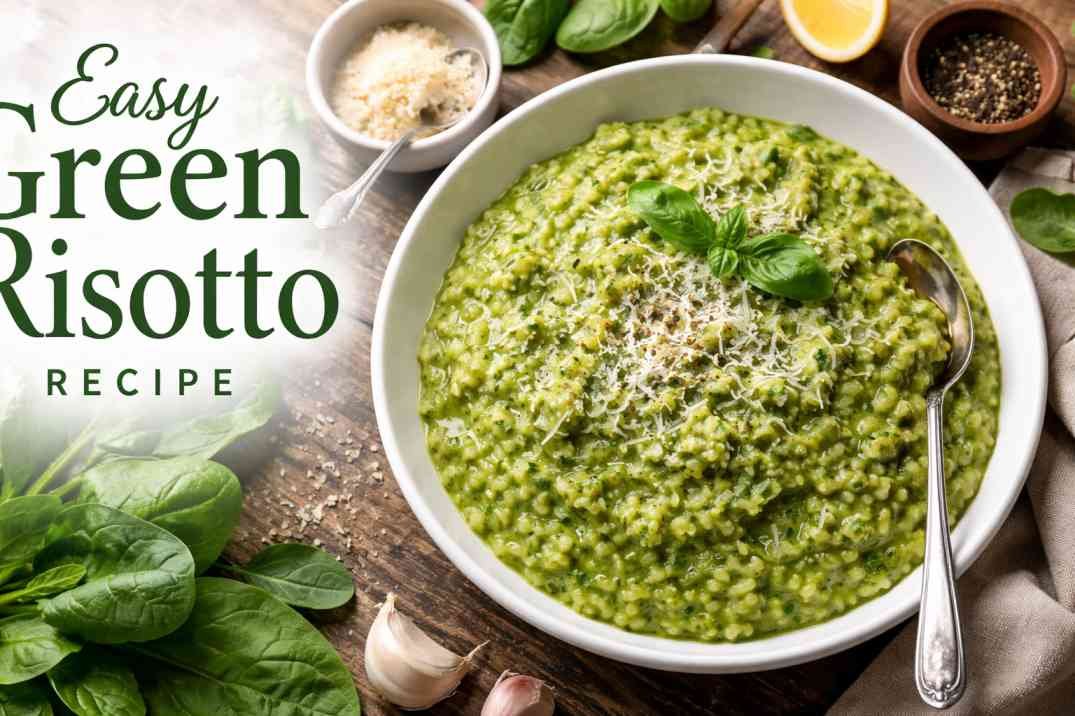

This green risotto recipe is a creamy Italian green risotto made with Arborio rice, spinach, fresh herbs and Parmesan, making it an ideal vegetarian risotto recipe for both everyday meals and special occasions. Slowly cooked with warm stock, it delivers a vibrant colour, rich texture and fresh flavour. Perfect as a vegetarian main or elegant side dish.
Green risotto is a dish that feels comforting while still looking and tasting elegant. It comes from traditional Italian cooking and turns simple ingredients like rice, stock and leafy greens into a very satisfying meal. What makes green risotto special is its balance—it is creamy but fresh, rich but not heavy, and simple yet colourful. Spinach, herbs and gentle aromatics infuse the rice with colour and flavour while slow stirring releases the starches that give risotto its signature silkiness. Whether served as a vegetarian centrepiece or alongside grilled meats or seafood, green risotto brings elegance and warmth to the table without unnecessary complexity.
What Makes a Green Risotto Different?

Image source: pinterest.com
Unlike classic white risotto, green risotto gets its flavour and colour from fresh vegetables and herbs added during cooking. Spinach is most commonly used for colour, supported by herbs such as basil, parsley or mint for fragrance and brightness. In some versions, peas, asparagus or courgette are added for texture and seasonal variation.
The green colour is not just for appearance. The blended greens add freshness and mild bitterness, which balance the richness of butter and cheese. The result is a risotto that feels lighter on the palate while remaining satisfyingly creamy.
Choosing the Right Rice

Image source: pinterest.com
A good green risotto depends greatly on using the right type of rice. Arborio rice is the most widely available and reliable choice, prized for its ability to absorb liquid while releasing starch. Carnaroli rice is another good choice and is often used by chefs because it keeps its shape well and creates a creamy texture.
Long-grain rice, basmati or jasmine should never be used, as they lack the starch content needed for risotto’s signature texture.
The Role of Stock and Temperature

Image source: pinterest.com
One of the most important technical details in risotto cooking is the temperature of the stock. The stock must be warm before it is added to the rice. Cold stock interrupts cooking, stops the starch from releasing properly and can cause uneven texture.neven texture.
Vegetable stock works best for green risotto as it allows the herb and spinach flavours to shine. Chicken stock can be used if you are not cooking vegetarian, but it should remain mild and well balanced.
Fresh Greens and Herbs for a Spinach Risotto Recipe

Image source: pinterest.com
Spinach is the foundation of most green risotto recipes and is what gives a spinach risotto recipe its vibrant colour without overpowering the overall flavour. Triple-washed baby spinach is especially convenient and consistent.
Herbs such as basil and parsley add fragrance and lift, while mint provides a subtle cooling note that works beautifully in spring and summer versions. These greens are typically blended with stock into a smooth purée before being stirred into the risotto, ensuring even colour and flavour throughout the dish.
Cooking Technique: Why Stirring Matters

Image source: pinterest.com
Risotto requires attention, not difficulty. Stirring helps the rice grains release starch into the liquid, which creates a creamy texture. This is what creates the creamy, cohesive texture without the need for cream.
The cooking process should be slow and steady. Stock is added a ladle at a time, allowed to absorb almost fully before the next addition. If this step is rushed, the rice may cook but the texture will be watery instead of creamy.
Flavour Building from the Start

Image source: pinterest.com
A well-built risotto begins with aromatics. Onion, garlic or scallions are gently sautéed in olive oil or a mix of oil and butter until soft and translucent. The onion should not brown, as this can add a bitter taste.ld be avoided, as it introduces bitterness.
Lightly toasting the rice in oil or butter improves flavour and helps it absorb liquid evenly. A splash of white wine adds acidity and complexity, balancing the richness that develops later.
Achieving the Perfect Texture

Image source: pinterest.com
The goal of a green risotto recipe is rice that is tender but still retains a slight bite at the centre, known as al dente. Total cooking time typically falls between 20 and 25 minutes.
When ready, risotto should slowly spread when placed on a plate. If it holds its shape firmly, it is too dry. If it becomes too loose, it may need a short extra cook or one final stir.
Cheese, Seasoning and Balance

Image source: pinterest.com
Parmesan cheese is usually added at the end after the heat is turned off. This preserves its nutty flavour and ensures smooth incorporation. A small amount goes a long way.
Seasoning should be adjusted at the very end, as stock and cheese both contribute saltiness. Freshly ground black pepper and a pinch of nutmeg enhance the greens without overpowering them. A small squeeze of lemon juice can make the flavour fresher if needed.
Variations and Add-Ins

Image source: pinterest.com
Green risotto is highly adaptable. Spring vegetables such as asparagus, peas and leeks work particularly well, adding texture and seasonal character. Courgette provides softness and sweetness, while mushrooms add earthiness.
For a vegan version, replace butter with olive oil and Parmesan with a vegetarian hard cheese or nutritional yeast. Oven-baked versions reduce stirring and offer convenience, though stovetop methods provide greater control over texture.
Serving Suggestions

Image source: pinterest.com
Green risotto works beautifully as both a main dish and an elegant side, depending on how it is served. On its own, it makes a satisfying vegetarian centrepiece when paired with a crisp green salad or lightly dressed seasonal vegetables. For a more substantial meal, it complements grilled chicken, pan-seared salmon or garlic prawns exceptionally well, as the freshness of the herbs balances richer proteins.
If you enjoy introducing bold flavours, green risotto can also act as a neutral, creamy base for more expressive sauces. For example, serving it alongside grilled vegetables or skewers finished with a spoonful of jimmys-sate-sauce-recipe adds a nutty, savoury contrast that works particularly well for fusion-style meals. This pairing allows the risotto to remain subtle while the sauce provides depth and warmth, creating a balanced and modern plate.
Storage and Reheating

Image source: pinterest.com
Risotto is best enjoyed fresh, but leftovers can be stored in the refrigerator for up to two days. As it cools, the risotto becomes much thicker.
Reheat gently on the stovetop with a splash of water or stock, stirring continuously until creamy again. Try not to reheat risotto in the microwave, as it can dry out unevenly.
Common Mistakes to Avoid
Using cold stock, rushing the cooking process or neglecting stirring are the most common causes of disappointing risotto. Overcooking the greens can dull both colour and flavour, while adding cheese too early can result in grainy texture.
Turning off the heat as soon as the last stock is incorporated helps preserve the vibrant green colour and fresh herb notes.
Easy Green Risotto Recipe Card

Image source: pinterest.com
Prep Time: 10 minutes
Cook Time: 25 minutes
Total Time: 35 minutes
Serves: 4
Ingredients
2 tablespoons olive oil
1 tablespoon butter
1 medium onion, finely chopped
2 cloves garlic, minced
1½ cups Arborio rice
½ cup dry white wine
1 litre vegetable stock, kept warm
2 cups fresh spinach leaves
½ cup fresh basil leaves
¼ cup fresh parsley
½ teaspoon grated nutmeg (optional)
¾ cup grated Parmesan cheese
Salt and freshly ground black pepper
Optional: lemon juice, asparagus or peas
Instructions
Heat the vegetable stock in a saucepan and keep it warm over low heat. In a blender, purée the spinach, basil and parsley with one cup of warm stock until completely smooth, then set aside.
In a wide pan, heat olive oil and butter over medium heat. Add the onion and cook gently until soft and translucent. Stir in the garlic and cook for 30 seconds.
Add the Arborio rice and stir for two minutes until lightly toasted. Pour in the white wine and allow it to absorb completely.
Begin adding the warm stock one ladle at a time, stirring constantly. Allow each addition to absorb before adding the next. After about 15 minutes, stir in the green herb purée.
Continue cooking and stirring until the rice is tender but still slightly firm in the centre. Remove from heat, stir in Parmesan cheese, nutmeg, salt and pepper. Adjust consistency with a little extra stock if needed.
Rest for one minute, then serve immediately with extra cheese if desired.
Conclusion
This creamy green risotto recipe is a celebration of simplicity, traditional Italian technique and fresh seasonal ingredients. By combining creamy rice with vibrant greens and fresh herbs, it delivers comfort without heaviness and elegance without excess. This dish shows how traditional Italian cooking turns simple ingredients into something special with time and care. Whether prepared as a vegetarian centrepiece or a refined side dish, green risotto remains versatile, nourishing and timeless. Mastering this recipe not only adds a seen-and-felt classic to your repertoire but also deepens appreciation for the beauty of slow, intentional cooking.
Frequently Asked Questions (FAQs)
1. What gives green risotto its colour?
Green risotto gets its colour from puréed spinach, herbs such as basil and parsley, and sometimes peas or asparagus blended into the stock or added near the end of cooking.
2. Why is my green risotto dull instead of bright?
Overcooking the greens can dull their colour. Add the green purée near the end and avoid prolonged simmering after it’s incorporated.
3. Can green risotto be made vegetarian?
Yes. Use vegetable stock and vegetarian hard cheese instead of Parmigiano-Reggiano made with animal rennet.
4. Is green risotto gluten-free?
Yes. Risotto made with pure rice and gluten-free stock is naturally gluten-free.
5. Can risotto be reheated?
Yes. Reheat gently on the stovetop with added stock or water to restore its creamy texture.
6. Which rice is best for green risotto?
Arborio and Carnaroli rice are best due to their high starch content.
7. Can I freeze green risotto?
Freezing is not recommended, as the texture becomes grainy when thawed.
8. Do I need to stir risotto constantly?
Frequent stirring is important to prevent sticking and encourage starch release.
9. Can I make green risotto without wine?
Yes. Wine adds acidity but can be omitted without compromising the dish.
10. Why does risotto need warm stock?
Warm stock maintains cooking temperature and ensures smooth starch release.
11. Can I use frozen spinach?
Yes, but it should be thawed and drained thoroughly before blending.
12. How do I know when risotto is done?
The rice should be tender with a slight bite, and the texture should be creamy and flowing.
13. Is green risotto healthy?
It can be, especially when made with plenty of greens and moderate cheese.
14. Can I add other vegetables?
Yes. Courgettes, leeks and peas work well when added at appropriate stages.
15. Why does risotto thicken as it cools?
Starches continue to set as temperature drops, which is why risotto should be served immediately.