
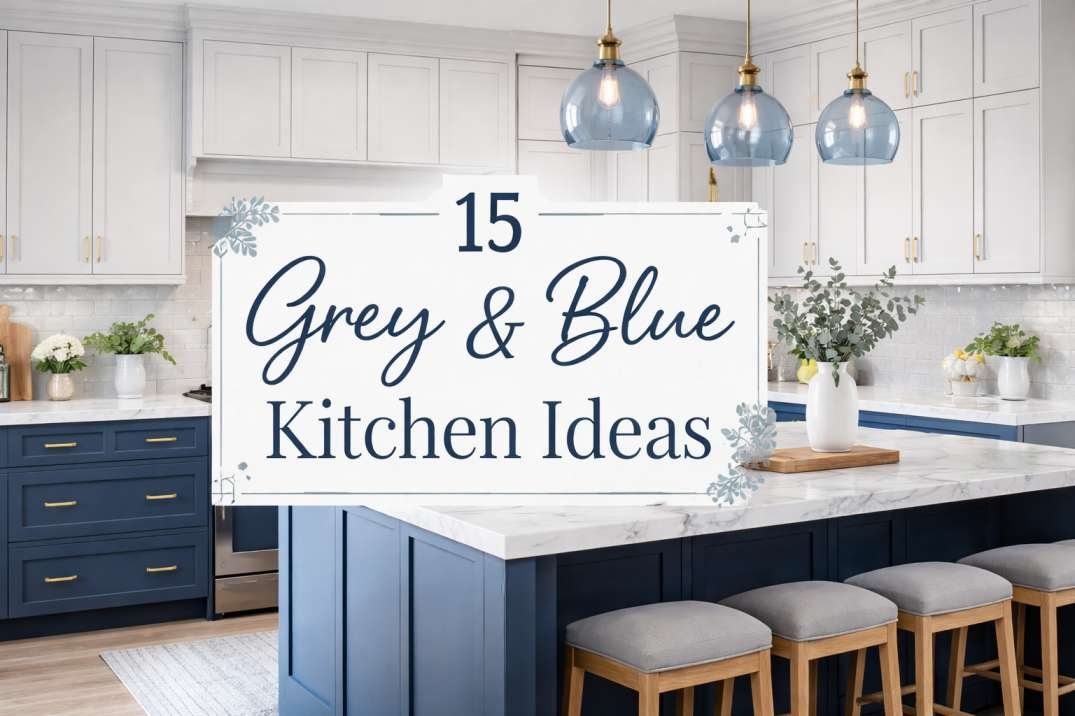

Grey blue kitchen ideas combine the calm character of blue with the balance of grey to create a timeless and stylish kitchen. This colour pairing works across modern, farmhouse, and classic designs, offering flexibility through cabinets, tiles, lighting, textures, and finishes while keeping the space elegant and easy to live with.
Grey blue kitchen ideas are popular because they create a kitchen that feels calm, stylish, and long-lasting. This colour combination mixes the softness of blue with the stability of grey, making kitchens look elegant without feeling cold or dull. Suitable for modern apartments, family homes, and classic interiors alike, grey and blue adapt beautifully to different layouts, lighting conditions, and personal styles. From cabinetry and tiles to lighting, textures, and finishes, this guide brings together carefully considered grey blue kitchen ideas to help you design a kitchen that feels welcoming, balanced, and visually confident for years to come.
Grey and Blue as a Timeless Kitchen Colour Pair

Image source: pinterest.com
Grey and blue balance warm and cool tones, which is why they work so well together. Grey brings structure and neutrality, while blue introduces depth and personality. When combined, they create kitchens that feel composed rather than overpowering.
Unlike short-lived colour trends, grey blue kitchens age well. Blue with grey undertones acts like a neutral colour, so it pairs easily with wood, stone, metal, and white surfaces. This makes the colour scheme highly adaptable, whether your kitchen is updated gradually or redesigned all at once.
Light and Airy Grey Blue Kitchen Designs
Grey blue kitchens are not limited to dark or moody spaces. Lighter shades such as sky blue, periwinkle, and soft dove grey create an open, uplifting atmosphere. These tones reflect natural light well and help smaller kitchens feel less confined.
In galley or one-wall kitchens, pale grey blue cabinets paired with warm-toned grey walls add depth without closing in the space. Using greys with soft yellow or pink undertones helps stop the kitchen from feeling too cold. Glossy backsplashes and light-reflective tiles further enhance brightness and visual openness.
Dark and Dramatic Grey Blue Kitchens
For those drawn to bolder interiors, darker grey blue kitchen ideas bring depth, confidence, and a sense of luxury to the space. Deep blue combined with charcoal or dark grey creates a strong, well-balanced look without feeling too heavy. This approach works especially well in larger kitchens or spaces with good natural light, where darker colours can fully shine.
For homeowners who love richer blue shades but want a brighter, more defined contrast, a navy blue and white kitchen offers a timeless alternative, blending strong visual contrast with a clean, classic finish. Lighter countertops, white accents, and warm metallic details help balance darker tones, ensuring the kitchen remains inviting and visually refined rather than heavy.
Grey and Blue Kitchen Cabinet Styling

Image source: pinterest.com
Cabinetry forms the backbone of the kitchen’s colour story. Grey cabinets provide a calm, adaptable base, while blue cabinets add visual interest and character.
Two-tone cabinets work especially well in grey blue kitchens. Lighter upper cabinets paired with darker blue or charcoal lower cabinets visually lift the room, making ceilings appear higher. This technique works equally well in contemporary and traditional kitchens.
Matte finishes offer a soft, understated feel, while satin or gloss finishes add a more modern edge. Keeping hardware consistent across both colours helps the design feel cohesive and well considered.
Backsplashes and Tile Choices in Grey Blue Kitchens
Tiles provide an ideal opportunity to add personality without overwhelming the kitchen. Blue subway tiles remain a popular choice, especially in glossy finishes that reflect light and brighten compact spaces.
Patterned blue and grey tiles add texture and visual interest. Portuguese-inspired designs work beautifully on floors, while herringbone or checkerboard layouts add interest to backsplashes. Swapping traditional black for blue in checkerboard flooring creates a softer, more playful variation that still feels classic.
Using Kitchen Islands as a Colour Feature
A blue kitchen island is a striking yet controlled way to introduce colour. When paired with grey countertops, the island becomes a focal point without overpowering the room.
Grey surfaces ground stronger blue tones and keep the overall palette balanced. This approach suits both modern kitchens and relaxed farmhouse layouts. Repeating the island’s blue shade subtly elsewhere—through lighting, seating, or décor—helps create a sense of flow across the space.
Lighting Choices for Grey Blue Kitchens

Image source: pinterest.com
Lighting greatly affects how grey and blue colours look in a kitchen. Warm lighting softens blue shades and creates a welcoming atmosphere, while cooler lighting enhances crispness and clarity.
Pendant lights add drama and structure. When an island or dining table isn’t present, placing pendants over the main preparation area or centrally in the room still creates impact. Navy, steel grey, or black pendant finishes complement grey blue palettes without competing with them.
Dimmable spotlights are especially effective in the evenings, allowing the kitchen to shift from functional to atmospheric with ease.
Metallic Accents in Grey and Blue Kitchens
Grey and blue kitchens benefit from thoughtful accent choices. Metallics often provide the final layer that brings the design together.
Brass, gold, or silver hardware introduces warmth and contrast, preventing the space from feeling too cool. These finishes work best when used sparingly—on cabinet handles, taps, or lighting fixtures—rather than large surfaces.
Using metallic accents carefully keeps the kitchen elegant and stops them from overpowering the colours.
Adding Warmth with Wood Elements
Wood introduces warmth and texture to grey blue kitchens, creating a more lived-in and welcoming feel. Wooden countertops, butcher’s blocks, and open shelving soften cool tones and add natural contrast.
Lighter woods such as oak or ash suit airy kitchens, while walnut adds richness to darker palettes. Painted wood panelling in blue or grey can also serve as a feature wall, combining colour and texture in a single element.
Using wood as an alternative to metallic accents works particularly well in farmhouse or transitional kitchens.
Contemporary Grey Blue Kitchen Styling
Modern grey blue kitchens focus on clean lines and visual restraint. Flat-panel cabinetry, marble or quartz countertops, and minimal décor keep the space uncluttered and calm.
Open shelving should be styled carefully, displaying only a few selected items to maintain balance. Integrated lighting and spotlights enhance functionality while preserving the kitchen’s streamlined appearance.
This approach creates a kitchen that feels fresh, refined, and effortless rather than overly styled.
Farmhouse-Inspired Grey and Blue Kitchens

Image source: pinterest.com
Grey blue kitchens lend themselves naturally to farmhouse interiors. Soft shades such as duck egg or cornflower blue add charm, while grey shaker cabinets provide structure.
Natural wood countertops, ceramic sinks, and butcher’s blocks reinforce the farmhouse aesthetic. Unlike modern kitchens, farmhouse designs embrace visible items. Open shelving, hooks, and displayed cookware contribute warmth and personality.
The combination of grey, blue, and wood prevents farmhouse kitchens from feeling outdated while preserving their cosy appeal.
Texture and Finish Combinations
Colour alone does not shape a kitchen’s look; texture is just as important. Combining matte grey surfaces with glossy blue details adds depth without introducing extra colours.
Textured wallpaper in adjoining dining areas, velvet-backed chairs, or fabric runners add subtle layers of interest. Accessories provide a low-commitment way to experiment with finishes and materials, making future updates simple.
This layered approach keeps grey blue kitchens visually engaging while remaining cohesive.
Introducing Blue Through Appliances and Décor
Blue does not need to dominate walls or cabinets to make an impact. Blue appliances create bold focal points, particularly in retro or industrial-style kitchens.
Smaller décor elements such as stools, lighting fixtures, dishware, and glassware allow blue to appear in flexible, easily changeable ways. Open shelving becomes an opportunity to showcase these accents, turning everyday items into part of the design.
This method keeps the kitchen adaptable and easy to refresh over time.
Flooring Options for Grey Blue Kitchens
Grey flooring provides a stable base that anchors blue elements throughout the kitchen. Stone, tile, or wood-effect grey floors allow blue cabinetry or walls to stand out without visual overload.
Painted or patterned blue floorboards offer a more character-driven approach, adding personality without altering major surfaces. This works particularly well in traditional or cottage-style kitchens where individuality is encouraged.
Durability should always be balanced with aesthetics, especially in busy family kitchens.
Design Mistakes to Avoid
Choosing colours without testing them in different lighting conditions can lead to unexpected results. Grey blue colours can look different in daylight and artificial light, so testing samples is important.
Overusing blue across too many surfaces can flatten the design. Balance is key—grey, white, or wood elements should always break up colour blocks. Ignoring undertones can also cause clashes, especially with materials like stone or metal.
Thoughtful planning ensures the kitchen remains cohesive rather than visually heavy.
Grey Blue Kitchens as a Long-Term Choice

Image source: pinterest.com
Grey blue kitchens continue to appeal because they prioritise balance over trends. They can be easily updated with new lighting, hardware, or décor as styles change.
Rather than committing to bold colours that may feel dated, grey and blue offer longevity. Their versatility allows the kitchen to evolve while maintaining a calm and polished foundation.
Conclusion
Grey blue kitchen ideas offer a refined blend of style, comfort, and adaptability. This colour pairing works effortlessly across modern, contemporary, and farmhouse interiors, adjusting to different layouts, lighting conditions, and personal preferences. By balancing colours, textures, and finishes, grey blue kitchens stay calm, stylish, and never feel too plain or too bold. Whether introduced through cabinetry, tiles, lighting, or décor, grey and blue create a kitchen that feels welcoming, practical, and timeless—designed to be enjoyed every day and valued for years to come.
Frequently Asked Questions (FAQs)
Is grey and blue a good colour combination for kitchens?
Yes, grey and blue work very well together in kitchens. Grey adds balance and neutrality, while blue brings calm and character. This combination suits modern, classic, and farmhouse kitchens and stays stylish for years.
Are grey blue kitchens still in style?
Grey blue kitchens are still very much in style. They are considered timeless rather than trendy because the colours adapt easily to changing décor, lighting, and materials without looking outdated.
What shade of blue works best with grey cabinets?
Soft blues like sky blue, duck egg, and muted navy work best with grey cabinets. Lighter blues keep the kitchen airy, while deeper blues create a bold, elegant look when balanced with light countertops or good lighting.
Do grey blue kitchens work in small spaces?
Yes, grey blue kitchens work well in small spaces when lighter shades are used. Pale blue cabinets, light grey walls, and glossy tiles help reflect light and make the kitchen feel more open.
Should grey or blue be the main colour in a kitchen?
Either can work as the main colour. Grey is often used as the base for cabinets or walls, while blue is added through islands, backsplashes, or accents. The best choice depends on kitchen size and natural light.
What countertops look best in grey blue kitchens?
White quartz, marble, light grey stone, and wood countertops pair beautifully with grey blue kitchens. These materials keep the space balanced and prevent darker blues from feeling heavy.
Can I mix light grey and dark blue in one kitchen?
Yes, mixing light grey with dark blue creates depth and contrast. A common approach is using light grey on walls or upper cabinets and dark blue on lower cabinets or islands.
What backsplash suits a grey blue kitchen?
Blue subway tiles, white tiles, grey patterned tiles, and marble backsplashes all suit grey blue kitchens. Glossy finishes work especially well in small or low-light kitchens.
Are blue kitchen cabinets a safe long-term choice?
Blue kitchen cabinets softened with grey undertones are a safe long-term choice. They are versatile, timeless, and easy to update with different hardware or décor.
Do grey blue kitchens work with wood elements?
Yes, wood works extremely well with grey blue kitchens. Wooden countertops, shelves, or flooring add warmth and balance cool tones, making the space feel more welcoming.
What lighting is best for grey blue kitchens?
Warm lighting works best for grey blue kitchens as it softens blue tones and creates a cosy atmosphere. Pendant lights and under-cabinet lighting enhance both function and style.
Is grey blue better than all-white kitchens?
Grey blue kitchens have more depth and character than all-white kitchens but still feel clean and bright. They also hide wear and marks better than pure white.