
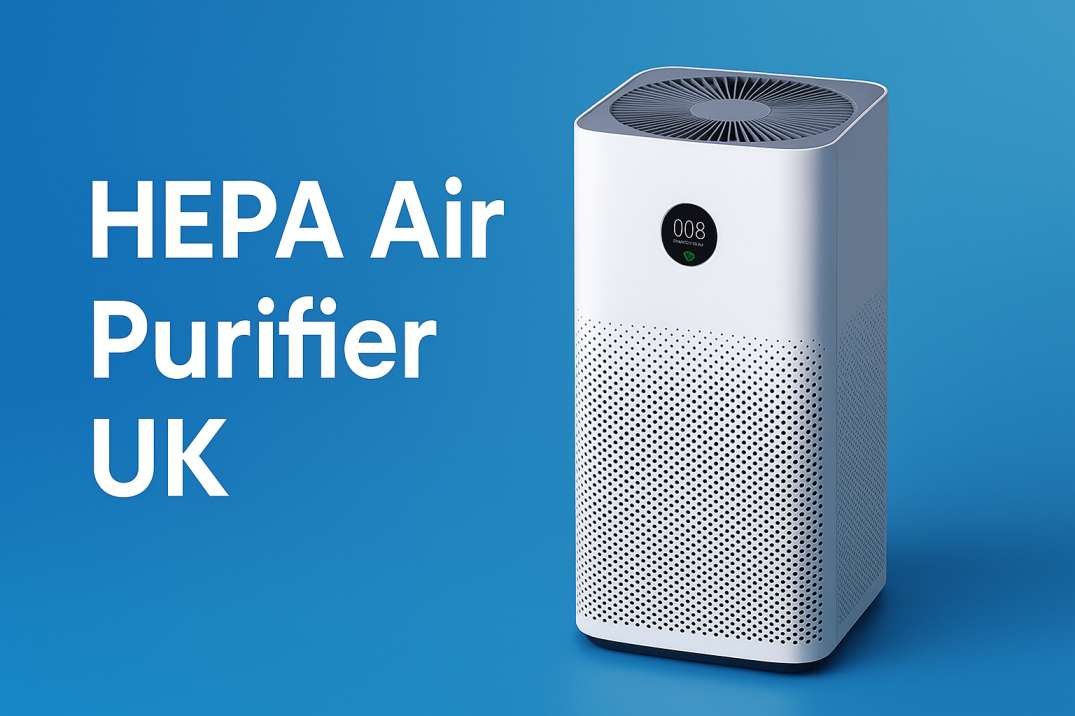

Choosing the right HEPA air purifier in the UK can greatly improve indoor air quality by trapping tiny pollutants like dust, pollen, smoke, pet dander and mould spores before they spread around your home. This updated 2025 guide explains how HEPA filters work, which features really matter in UK homes, and which air purifiers are worth buying this year.
Indoor air quality plays a vital role in comfort and wellbeing, especially in UK homes where windows are often kept closed for warmth or to reduce noise and pollution. Many people do not realise that indoor air can often be more polluted than outdoor air, with higher levels of dust, pollen, mould spores and pet dander. A well-designed HEPA air purifier can reduce these airborne particles and help create a cleaner and healthier home for families. Whether you are dealing with allergies, asthma, sensitivities or simply want fresher air, choosing the right purifier can make a noticeable difference. This guide explains exactly how HEPA air purifiers work, what to look for when buying one, and how to choose the right model for your home.
Why HEPA Air Purifiers Matter in UK Homes
HEPA air purifiers have changed from being optional wellness products to essential appliances in many UK homes. One major reason is the growing awareness that indoor air often contains a higher concentration of invisible contaminants than outdoor air. Daily activities such as cooking, cleaning, drying clothes indoors and using sprays release tiny particles and chemicals into the air, which makes air filtration important. Homes in urban areas face an additional challenge, as fine particulate pollution from traffic easily enters through open windows or doors.
Health concerns have also influenced the growing demand for air purification. Conditions such as hay fever, asthma, dust sensitivity and pet-related allergies are extremely common in the UK. When windows are kept closed during colder months, airborne pollutants remain trapped indoors, often worsening symptoms. Recent years have increased awareness of indoor air quality, pushing more UK households to invest in long-term filtration solutions such as HEPA purifiers.
Understanding Indoor Air Quality in the UK
Most UK homes are built to retain heat and prevent drafts. While this helps keep homes warm, it also allows airborne pollutants to build up more easily indoors. Dust particles, pollen brought in on clothing, mould spores from damp areas, pet dander, and fumes from cleaning materials all remain floating in the air for long periods.
Many pollutants originate from outside as well. Homes near roads or public transport routes are regularly exposed to particulate matter (PM2.5 and PM10), nitrogen dioxide and soot. Rural and coastal homes face higher seasonal pollen levels. Even freshly renovated interiors release volatile organic compounds from adhesives, paints and new furnishings. These invisible pollutants can cause coughing, eye irritation, headaches and worse allergy symptoms, especially in homes with poor ventilation. HEPA air purifiers are designed to capture these particles and help maintain cleaner, more breathable indoor air.
What a HEPA Air Purifier Actually Does
A HEPA air purifier works by drawing air through a multi-stage filtration system and releasing significantly cleaner, particle-reduced air back into the room. The most important part is the True HEPA filter, which removes at least 99.97% of very small particles from the air. This includes mould spores, fine dust, pollen, smoke particles and pet dander.
It is important to distinguish between certified True HEPA filters and marketing terms such as “HEPA-type” or “HEPA-like”. These alternatives are often not properly tested and may fail to remove the smallest particles that irritate the lungs. A reliable purifier should include a pre-filter, a thick activated carbon filter and a certified H13/H14 True HEPA filter to tackle both particles and odours. A pre-filter catches larger debris such as dust and pet hair, an activated carbon layer absorbs gases and odours, and the True HEPA filter traps fine particles.
Each stage plays a distinct role and contributes to the purifier’s overall performance. When combined, these layers achieve a balance between good airflow and strong filtration.
Why Airflow and CADR Matter More Than Marketing
Many people assume that the strength of the filter alone determines how well an air purifier works.Filter quality alone isn’t enough—an air purifier must also move a high volume of air to clean the room effectively. If the purifier cannot move enough air through the filter, it will clean the room slowly, no matter how good the filter is.
CADR (Clean Air Delivery Rate) is the most practical and reliable measure of an air purifier’s real-world performance. It indicates how quickly a device can reduce particle concentrations in a specified room size. A higher CADR rating means the purifier can clean the air faster and handle larger rooms without losing effectiveness. Understanding CADR helps buyers avoid air purifiers that look good in adverts but perform poorly in real homes.
Choosing the Right HEPA Air Purifier for Your Home
There are several important factors to consider before purchasing a HEPA air purifier for your home.
Room Size and Air Changes Per Hour
Manufacturers often claim large room coverage based on one air change per hour, which is not enough for allergy relief. A more realistic standard is around four to five air changes per hour. This ensures the purifier circulates and filters the entire room multiple times per hour. Buying a purifier that is too small for your room will have very little effect, even if the filter is high quality.
Filtration System Quality
Look for a purifier with a well-constructed pre-filter, a substantial activated carbon filter and a certified True HEPA filter. High-quality carbon is essential for removing smoke, chemical fumes and persistent odours. Carbon filters that are thin or lightly coated have limited impact.
Noise Levels
Air purifiers only improve air quality when they are running, so noise is a key factor. For bedrooms, choose a model that runs below 30 dB on sleep mode so it can purify the air without disturbing your sleep. Larger models may be quieter on low settings because they can circulate more air without increasing fan speed.
Energy Consumption
Running a purifier daily has a cost, although many modern units are surprisingly energy efficient. Some use less than a penny per hour, especially on low or auto settings.
Smart Features
Many newer purifiers include Wi-Fi connectivity, air quality indicators, automatic modes and mobile app control. While these features do not directly improve filtration, they make the purifier easier to manage and more likely to be used consistently.
Best HEPA Air Purifiers in the UK (2025)
The following models offer excellent performance, practical features and strong filtration suitable for UK homes.
Blueair Blue Max 3250i – Best Overall
The Blueair Blue Max 3250i combines elegant design with impressive air cleaning efficiency. It requires no initial filter installation, making setup quick and simple. The device includes several modes such as auto, night and child lock. It can connect to the Blueair app, which provides additional functionality including a location-based “Welcome Home” feature that activates the purifier when you are approaching.
In real-world testing, it improved indoor air quality by 97 per cent within one hour, even in rooms affected by smoke and candle fumes. Despite its power, it uses very little energy, making it economical to run daily. Its strong CADR and reliable HEPA filtration make it an excellent all-round choice.
Philips 900 Series – Best Value
The Philips 900 Series is compact yet powerful, delivering impressive performance at an accessible price point. It improved air quality by 96 per cent during testing and performed well in rooms exposed to aerosols. It includes child lock, an air quality indicator and filter cleaning reminders, which extend the filter’s lifespan.
Although it lacks Wi-Fi, its intuitive controls and responsive interface make daily use simple. The controls are responsive and clearly designed, but the device emits a noticeable beep that cannot be disabled.
Freshia Air Purifier – Additional UK Option
Alongside established brands, newer models are also gaining attention among UK households. One example is the Freshia Air Purifier, which is designed for everyday indoor use with a focus on True HEPA filtration and energy-efficient airflow. It is suitable for bedrooms, living rooms and home offices where quiet operation matters. A full performance overview and suitability for UK homes can be found in this detailed Freshia Air Purifier review
Shark NeverChange5 – Best Low-Maintenance Option
This model is perfect for users who want powerful purification with minimal maintenance, thanks to its long-life filter system. The filter lasts up to five years, significantly reducing ongoing costs and maintenance. It automatically detects air quality and adjusts its operation accordingly. Although it lacks app support, the controls are straightforward. The optional anti-odour cartridge may be too strong for sensitive users, but the purifier itself is highly effective.
MeacoClean 76×5 – Best for VOC Removal
The MeacoClean 76×5 stands out for its ability to remove chemical pollutants and VOCs. It was one of the most effective models tested in this regard, reducing VOC levels by 82 per cent within an hour. The app allows users to monitor real-time air quality and adjust settings remotely. The main drawback is the tightly fitted filter compartment, which can make replacements slightly more time-consuming. making replacement less convenient.
Dyson Cool PC1 – Best Purifier with Fan
Dyson’s PC1 combines purification with a powerful cooling fan. It offers detailed air quality data and broad oscillation options. Once connected to the app, users can view long-term air quality trends and link the device with voice assistants. However, the fan cannot be fully turned off, which limits winter use. Despite the higher upfront cost, its annual filter replacements make it cost-effective long-term.
Benefits of Using a HEPA Air Purifier in UK Homes
A HEPA air purifier can noticeably improve daily comfort at home. It reduces airborne allergens that trigger hay fever, asthma and respiratory discomfort. Homes with pets benefit from reduced dander and odours. Rooms affected by damp or mould smell fresher because the purifier removes airborne mould spores. Many users also report better sleep due to fewer nighttime irritants.
Cleaner air reduces the accumulation of fine dust on surfaces, leading to a tidier home environment. For families living in cities, air purifiers help reduce exposure to traffic-related pollution. In homes undergoing renovation, activated carbon filters absorb chemical fumes more quickly, improving comfort and safety.
Placement and Everyday Use Tips
Correct placement maximises a purifier’s performance. Position the device where air can circulate freely, rather than behind furniture or in a tight corner. Bedrooms and living rooms are ideal, as these are the spaces where people spend the most time. Closing the door helps the unit clean the room more effectively. During periods of high outdoor pollution, opening windows may bring in additional contaminants, so a combination of controlled ventilation and consistent purification works best.
Running the purifier at a low or moderate speed throughout the day provides the most stable improvement. For faster results after cooking, cleaning or high-pollen days, a short period on the highest setting can quickly refresh the air.
Common Misunderstandings About Air Purifiers
There are several misconceptions that often cause disappointment. One air purifier cannot clean an entire home unless the house has a central ventilation system. Most units are intended for individual rooms. Filter grade is not the only factor that determines real performance. A high-quality filter paired with poor airflow will still deliver slow results. Removing odours depends on how much activated carbon the purifier has, not just whether a carbon filter is included. Finally, while smart features improve convenience, they do not enhance the actual filtration process. For UK households dealing with allergies, pollution or poor ventilation, investing in a high-quality HEPA air purifier is a practical, long-term step towards healthier indoor living.
Conclusion
Improving indoor air quality is one of the most effective and effortless ways to enhance comfort, respiratory health and overall wellbeing. HEPA air purifiers have become essential tools in many households because they effectively reduce airborne particles that contribute to allergies, asthma and general irritation. The key to choosing the right model is understanding how the filter, airflow and CADR work together. By prioritising True HEPA filters, sufficient CADR, high-quality activated carbon and noise levels that suit your living space, you can select a purifier that genuinely improves your home environment. With the right choice, cleaner and fresher indoor air is easy to achieve.
This guide is based on independent testing data, manufacturer specifications and real-world UK home usage, with a focus on allergy relief, pollution reduction and energy efficiency.
Frequently Asked Questions (FAQs)
1. What is the best HEPA air purifier to buy in the UK?
The best HEPA air purifier depends on your room size and needs. Blueair, Philips, Dyson and Meaco are popular in the UK due to strong CADR, True HEPA filtration and reliable long-term performance. Look for an H13/H14 HEPA filter and a CADR suited to your room size.
2. Do HEPA air purifiers really work for allergies?
Yes. True HEPA air purifiers trap tiny particles such as pollen, dust mites, mould spores and pet dander, which commonly trigger hay fever and asthma. Many allergy sufferers in the UK notice reduced congestion and fewer flare-ups when using a purifier consistently.
3. Can a HEPA air purifier remove dust from the air?
A HEPA purifier can significantly reduce airborne dust by capturing fine particles before they settle on surfaces. It will not replace cleaning, but it can noticeably reduce how quickly dust accumulates in your home.
4. Does a HEPA air purifier help with pet hair and pet odours?
HEPA filters capture pet hair and dander, while an activated carbon filter helps absorb pet smells. Together, they improve comfort for people sensitive to cats, dogs or small animals.
5. Which HEPA air purifier is best for smoke and cooking smells?
For smoke, choose a purifier that includes both True HEPA and a substantial activated carbon filter. Blueair, Philips and Meaco models are particularly effective for reducing cooking fumes, smoke particles and lingering odours.
6. How many air purifiers do I need for my home?
One HEPA purifier effectively cleans one room. Most UK homes benefit from purifiers in the bedroom, living room or home office. A separate unit is needed for each key space unless the property has a central ventilation system.
7. What size air purifier do I need for my room?
Select a model capable of achieving at least four to five air changes per hour (ACH). Higher CADR ratings clean larger rooms more efficiently. Always check the manufacturer’s recommended room size.
8. Where should I place my air purifier for best results?
Position the purifier where air can move freely, ideally in the centre of the room or slightly away from walls. Avoid corners or enclosed areas. In bedrooms, place it near the bed on a low or night mode.
9. How often should I replace HEPA filters?
Most True HEPA filters last six to twelve months, depending on use and indoor pollution levels. Carbon filters may need more frequent replacement in homes with pets, smoke or strong odours.
10. Do HEPA air purifiers remove mould spores?
Yes. True HEPA filters trap airborne mould spores, helping reduce musty smells and preventing spores from circulating. However, an air purifier cannot remove mould growing on surfaces; that requires cleaning and moisture control.
11. Are HEPA air purifiers expensive to run?
Most HEPA air purifiers are energy-efficient and cost less than 1p per hour to operate on lower settings. Larger or multifunction units with fans or heaters may use more energy, especially at high power.
12. What is the difference between HEPA and HEPA-type filters?
True HEPA filters meet strict particle-capture standards, removing 99.97% of particles at 0.3 microns. HEPA-type or HEPA-like filters do not meet these standards and are less effective at removing microscopic allergens.
13. Can a HEPA air purifier remove VOCs or chemical fumes?
HEPA filtration alone cannot capture gases or VOCs. To address chemical fumes, you need a purifier with a high-quality activated carbon filter that absorbs smoke, paint fumes, traffic pollution and other odours.
14. Should I run my air purifier all day?
For consistent purification, it is best to run your purifier for extended periods, particularly during high-pollen seasons or when cooking, cleaning or drying clothes indoors. Many households leave their purifier on low or auto mode throughout the day.
15. What is CADR and why is it important?
CADR (Clean Air Delivery Rate) measures how quickly an air purifier removes airborne particles. A higher CADR means faster air cleaning, which is especially important for larger rooms and allergy-sensitive households.
16. Do HEPA air purifiers really work?
Yes. True HEPA air purifiers remove up to 99.97% of airborne particles such as pollen, dust and pet dander, helping reduce allergy symptoms and improve indoor air quality when used consistently.