
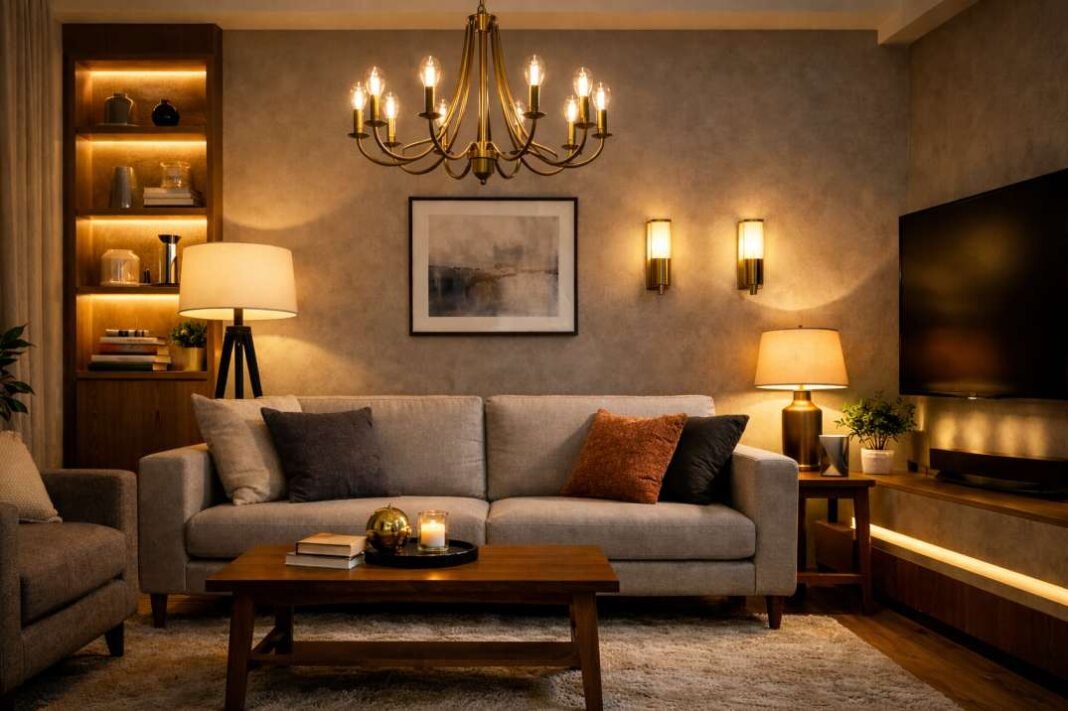

Living room decorating lights help create comfort, balance, and style in a space used every day. By combining layered lighting, thoughtful placement, and the right brightness, you can improve both the look and functionality of your living room while making it feel warm and inviting at all times.
Lighting can completely change how a living room looks and feels. A well-lit space feels welcoming, comfortable, and easy to use, while poor lighting can make even a beautiful room feel dull or uncomfortable. Living room decorating lights are not just about adding brightness; they are about shaping the mood of the space. Whether you are hosting guests, watching television, or relaxing with a book, the right lighting makes everyday moments more enjoyable. With thoughtful choices and simple adjustments, lighting can enhance décor, highlight key areas, and bring balance to the entire room.
How the Right Lighting Transforms a Living Room
Lighting affects how we experience a living room more than most people realise. Soft, balanced lighting creates a calm and inviting environment, while harsh or uneven light can feel tiring and unpleasant. Light also changes how colours, textures, and furniture appear, especially during the evening.
A living room is rarely used in just one way. During the day, it may need brighter light for activity, while evenings call for softer, more relaxed lighting. When lighting is flexible, the room feels comfortable at any hour. Often, adjusting lighting is enough to refresh a space without changing furniture or décor.
Essential Types of Living Room Decorating Lights

Image source: pinterest.com
Most living rooms look and function best when more than one type of light is used. Each lighting type plays a different role in the space.
Chandeliers and pendant lights are often used as decorative centrepieces. They draw attention upward and help define the main seating area, especially in rooms with higher ceilings.
Ceiling and flush-mount lights provide general lighting and help brighten the room evenly. These are especially useful in smaller living rooms where space needs to stay open.
Floor lamps add height and warmth. They work well in corners or beside sofas and chairs, offering focused light without permanent installation.
Table lamps create a cosy and personal feel. Placed on side tables or consoles, they soften the room and are ideal for evening use.
Wall lights and sconces add depth by lighting walls rather than the floor or ceiling. They are great for highlighting artwork or shelves and for saving floor space.
LED strip lighting adds subtle ambience. When hidden behind shelves or TV units, it creates a gentle glow that enhances the room without drawing attention to the light source itself.
How to Layer Lighting for a Balanced Living Room

Image source: pinterest.com
Layered lighting is key to creating a comfortable living room. Using only one light source often results in flat or overly bright lighting. Layering allows the space to feel more natural and flexible.
Ambient lighting provides overall brightness so the room can function easily. Task lighting focuses on specific activities like reading or playing games. Accent lighting highlights decorative features and adds atmosphere. When these layers work together, the living room feels balanced and adaptable throughout the day.
Lighting Ideas for Different Living Room Activities
Different activities need different lighting. For social gatherings or game nights, focused lighting above the coffee table or seating area keeps the space functional without being harsh.
Reading areas benefit from adjustable floor or table lamps that direct light where it’s needed. For movie nights, dimmable wall lights or lamps with individual switches allow everyone to control their own comfort. Soft, warm lighting works best for relaxing evenings, helping the room feel calm and inviting.
Choosing the Right Light Colour and Brightness
Light colour has a big impact on the atmosphere of a living room. Warm white light creates a cosy and welcoming feel, making it ideal for most living spaces. Cooler light can feel brighter and fresher but may be too harsh if used everywhere.
Using different light tones in different areas works well. Seating areas often feel better with warm light, while functional zones can use slightly cooler tones. Brightness should also be adjustable. Dimmers allow the lighting to change naturally from daytime use to evening relaxation.
Living Room Lighting Ideas Based on Room Size
Small Living Rooms
In small living rooms, lighting should make the space feel open rather than crowded. Ceiling lights and wall sconces save floor space, while mirrors help reflect light and improve brightness. One or two well-placed lamps can still add warmth without clutter.
Large Living Rooms
Larger rooms need multiple light sources to avoid dark corners. Using different lights to define seating areas helps the room feel organised and comfortable rather than empty.
High Ceilings
Rooms with high ceilings benefit from lighting that fills vertical space. Chandeliers or staggered pendant lights bring light closer to eye level, making the room feel more connected and inviting.
Smart and Modern Lighting for Today’s Living Rooms
Smart lighting offers convenience and flexibility. With app or voice control, brightness and colour can be adjusted easily to suit different moods or activities. This is especially useful in living rooms that serve multiple purposes.
Smart lighting also reduces the need to change fixtures often. Instead of replacing lamps, settings can be adjusted over time as preferences change, making smart lighting both practical and modern.
Decorative Details That Make Lighting Look Better

Image source: pinterest.com
Lighting design is not only about fixtures. Lampshades, textures, and finishes all influence how light feels in a room. Fabric or textured shades soften light, while woven or sculptural designs add visual interest.
Repeating colours from lampshades in cushions or artwork helps the lighting feel connected to the décor. Even small details like cords and fittings matter—when managed well, they enhance the overall look instead of distracting from it.
Using Lighting to Create Balance, Symmetry, and Zones
Symmetrical lighting arrangements bring a sense of calm to a living room. Matching wall lights on either side of a sofa or fireplace help balance the space visually.
In open-plan homes, lighting can define zones without walls. Floor lamps placed around seating areas help separate the living room from nearby spaces while keeping the layout open and fluid.
Common Living Room Lighting Mistakes to Avoid
One common mistake is relying on a single ceiling light. This often creates harsh lighting and unflattering shadows. Another is skipping dimmers, which limits flexibility.
Over-lighting can also be a problem. Too much brightness makes a living room feel cold and uncomfortable. Lighting should support the décor, not compete with it.
Tips to Make Living Room Lighting Look Expensive
A stylish lighting setup doesn’t need to be costly. Using several light sources instead of one creates depth and a more refined look. Mixing finishes thoughtfully adds character, while textured materials soften the space.
In rooms with bold décor, simple lighting often works best. Subtle, well-placed light always looks more elegant than overly bright fixtures.
Conclusion
Living room decorating lights play an important role in both comfort and design. By combining layered lighting, choosing the right brightness, and paying attention to placement and detail, a living room can feel welcoming at any time of day. Thoughtful lighting helps the space adapt to everyday life while enhancing its overall style, making it more enjoyable for both daily use and special moments.
Frequently Asked Questions
1. What type of lighting is best for a living room?
The best lighting for a living room is a mix of ambient, task, and accent lighting. Ceiling lights provide general brightness, while floor lamps, table lamps, and wall lights add comfort, functionality, and decorative balance.
2. How many lights should a living room have?
There is no fixed number, but most living rooms work best with multiple light sources. Instead of one central light, using three to five lights spread across the room creates better balance and avoids harsh shadows.
3. Are warm lights better for living rooms?
Yes, warm white lights are generally better for living rooms because they create a cosy and welcoming atmosphere. Cooler lights can be used in small amounts for functional areas but should not dominate the space.
4. How do I decorate my living room using lights?
To decorate a living room with lights, start with ceiling lighting for overall brightness, then add floor or table lamps for comfort, and finish with accent lights like wall sconces or LED strips to highlight features and create ambience.
5. What lighting makes a living room look expensive?
Layered lighting makes a living room look more expensive. Using multiple light sources, soft light tones, textured lampshades, and simple ceiling fixtures creates depth and a more refined appearance.
6. Which lights are best for a small living room?
For small living rooms, ceiling lights and wall sconces work best as they save floor space. Adding mirrors and one well-placed table or floor lamp can improve brightness without making the room feel crowded.
7. Can I use LED strip lights in the living room?
Yes, LED strip lights are a popular choice for living rooms. They work well behind TV units, shelves, or ceiling coves, adding soft ambient light without drawing attention to the light source itself.
8. Is smart lighting good for living rooms?
Smart lighting is a good option for living rooms because it allows you to adjust brightness and colour easily. It helps create different moods for relaxing, entertaining, or watching movies without changing fixtures.
9. Should living room lights all match?
Living room lights do not need to match exactly. Mixing styles and finishes can add character, as long as the overall look feels balanced and suits the room’s décor.
10. How can I make my living room lighting more energy-efficient?
To make living room lighting more energy-efficient, use LED bulbs, install dimmers, and consider smart lighting controls. These options reduce energy use while maintaining good brightness and ambience.