
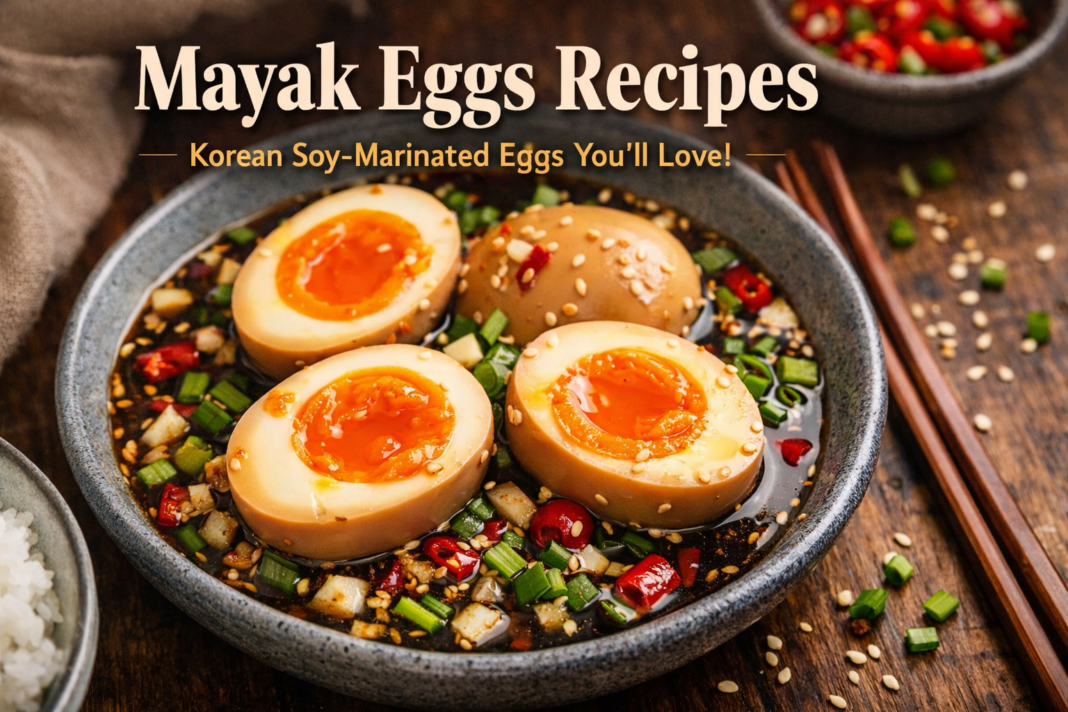

Mayak eggs are Korean soy-marinated eggs known for their jammy yolks and deeply savoury flavour. Soft-boiled eggs are soaked in a fragrant soy, garlic, chilli, and sesame marinade, making them addictive, easy to prepare, perfect for meal prep, and delicious with rice, noodles, or as a quick protein-rich snack.
Mayak eggs are one of those recipes that quietly take over your kitchen routine. They look simple, but the first bite explains everything. Soft-boiled eggs with creamy yolks are soaked in a savoury soy-based marinade until they absorb layers of flavour, becoming rich, comforting, and incredibly moreish. Originally served as a Korean side dish, mayak eggs have become popular worldwide because they are easy to make, versatile, and ideal for preparing ahead of time. In this complete guide to mayak eggs recipes, you’ll learn how to make them properly at home, how to adjust flavours, store them safely, and serve them in ways that never get boring.
What Are Mayak Eggs?
Mayak eggs, also called mayak gyeran, are Korean-style marinated eggs. The word “mayak” translates to “drug,” a nickname that reflects how addictive the eggs are rather than anything unusual in the ingredients. They are traditionally served as banchan, a small side dish eaten with rice, but many people now enjoy them in larger portions as part of everyday meals.
What makes mayak eggs special is the balance between texture and flavour. The eggs are cooked just long enough for the whites to set while keeping the yolks soft and jammy. When soaked in a soy sauce marinade filled with garlic, spring onions, chilli, and sesame oil, the eggs slowly absorb flavour, becoming richer the longer they sit.
Why Mayak Eggs Are So Popular
Mayak eggs have gained popularity not because they are complicated, but because they fit easily into modern home cooking. They use pantry ingredients, require very little active cooking time, and can be eaten over several days. For busy households, this combination is hard to beat.
Another reason for their popularity is flexibility. The marinade can be adjusted to be sweeter, saltier, or spicier, and the eggs can be served hot, cold, or at room temperature. Whether eaten with rice, noodles, or on their own, mayak eggs feel satisfying without being heavy.
The Ingredients That Matter Most
At their core, mayak eggs rely on a few essential ingredients. Soy sauce provides the salty base, while sugar or honey balances it with sweetness. Garlic and spring onions add aroma, and sesame oil brings warmth and depth. Fresh chilli is often included, but it is optional and easily adjusted depending on spice preference.
Some versions include extra flavour boosters such as mirin, onion, ginger, or dried kelp soaked in water. These additions are not essential, but they create a deeper umami flavour for those who enjoy a more complex marinade.
How to Make Mayak Eggs Properly
The key to good mayak eggs is cooking the eggs correctly. Letting the eggs come to room temperature before boiling helps prevent cracking. Once the water is gently boiling, the eggs should be lowered in carefully and cooked for around six to seven minutes. This timing creates the soft, jammy yolk that defines the dish.
As soon as the eggs are done, they should be transferred straight into an ice bath. This step stops the cooking process and makes peeling easier. Adding a little salt and vinegar to the boiling water also helps loosen the shells, which is especially useful for soft-boiled eggs.
Peeling should be done gently, starting from the wider end of the egg. Many cooks find that using a spoon rather than fingers alone helps keep the delicate egg whites intact.
Making the Marinade
While the eggs cool, the marinade can be prepared. Soy sauce is mixed with water to control saltiness, then sweetened with sugar or honey. Garlic, spring onions, sesame oil, and chilli are added, followed by sesame seeds. If using mirin, onion, ginger, or kelp water, these should be mixed in at this stage.
Once peeled, the eggs are placed into the marinade. If the eggs are not fully submerged, rotating them halfway through marinating ensures even colour and flavour. Although the eggs can be eaten after a few hours, leaving them overnight allows the flavours to fully develop.
Small Tips That Improve the Final Result
Several small details can make a noticeable difference. Using slightly older garlic makes peeling much easier and saves preparation time. Turning the eggs during marination prevents uneven seasoning. Choosing low-sodium soy sauce allows the eggs to marinate longer without becoming overpowering.
Many people find that mayak eggs taste even better on the second day, once the marinade has fully soaked into the egg whites.
Variations on Mayak Eggs Recipes
One of the reasons mayak eggs recipes are so widely shared is how easy they are to customise. Some people prefer a spicier version with extra chilli or chilli flakes, while others reduce the saltiness by increasing the water in the marinade.
Honey garlic versions replace sugar with honey for a deeper sweetness. For a more traditional, umami-rich profile, adding dried kelp water and mirin creates a richer base. Quail eggs can also be used for smaller, bite-sized portions, though marination time should be slightly reduced.
How to Serve Mayak Eggs
Traditionally, mayak eggs are served with plain steamed rice, often with a little extra marinade spooned over the top. This simple pairing highlights the flavour of the eggs without overpowering them.
They are also excellent with ramen or other noodle dishes, especially cold Korean noodles. Some people enjoy slicing them into rice bowls or using them in sandwiches. Because they taste good cold, they work well as a quick snack straight from the fridge.
Related Easy Savoury Recipes
If you enjoy recipes that focus on bold flavours without complicated preparation, it’s worth exploring other simple savoury dishes alongside mayak eggs. One great option is this baked halloumi recipe, which, like mayak eggs, relies on minimal ingredients and delivers rich, satisfying flavour. Both dishes work well as part of a flexible home-cooking routine and can be paired with grains, salads, or vegetables for easy everyday meals.
Meal Prep, Storage, and Shelf Life
Mayak eggs are ideal for meal prep. Once marinated and stored in an airtight container in the refrigerator, they can be eaten over several days. Most cooks find they taste best within three to five days, though fully submerged eggs may last slightly longer.
Always use clean utensils when serving to avoid contamination. If the marinade becomes cloudy or develops an unusual smell, the eggs should be discarded. Freezing is not recommended, as the egg whites become rubbery once thawed.
Reusing the Marinade
The marinade can be reused to make additional batches of eggs if it has been handled cleanly and kept refrigerated. For safety, it should be brought to a boil before reuse and discarded if it shows any signs of spoilage. Reusing the marinade is a practical option for batch cooking and reducing food waste.
Nutritional Considerations
Mayak eggs are high in protein and contain healthy fats, making them filling and satisfying. However, because soy sauce is a major ingredient, they are also high in sodium. Using low-sodium soy sauce and enjoying the eggs in moderation helps keep the dish balanced.
Pairing mayak eggs with plain rice or vegetables can also help offset the saltiness.
Easy Mayak Eggs Recipe – Recipe Card
Prep Time: 15 minutes
Cook Time: 7 minutes
Marinating Time: 4 hours (overnight recommended)
Total Time: 4 hours 22 minutes
Serves: 4–6
Ingredients
For the Eggs
6 large eggs, at room temperature
For the Soy Marinade
½ cup soy sauce (low sodium preferred)
½ cup water
1 tablespoon sugar or honey
1 tablespoon sesame oil
4–5 garlic cloves, finely chopped
2 spring onions, finely sliced
1 fresh red chilli, finely chopped (optional)
1 teaspoon sesame seeds
Optional flavour boosters: mirin, finely chopped onion, ginger, or dried kelp water
Instructions
Bring a pot of water to a gentle boil. Carefully lower the eggs into the water and cook for 6–7 minutes. Transfer immediately to an ice bath and cool for 5 minutes, then peel gently.
Mix all marinade ingredients in a bowl or container. Add the peeled eggs, ensuring they are well coated. Rotate halfway through marinating if not fully submerged. Refrigerate for at least 4 hours, preferably overnight, before serving.
Notes
For easier peeling, add salt and vinegar to the boiling water and use slightly older eggs. These mayak eggs taste better the next day as the marinade deepens in flavour. Store refrigerated in an airtight container and consume within 3–5 days.
Conclusion
Mayak eggs show how a few simple ingredients and careful timing can create something truly memorable. With their jammy yolks, savoury marinade, and flexible serving options, they fit easily into everyday cooking. Whether prepared for a quick meal, a week of lunches, or a comforting side dish, mayak eggs deliver bold flavour with very little effort. Once you start making them at home, it’s easy to understand why they’ve earned their reputation for being so addictive.
Frequently Asked Questions (FAQs)
What are mayak eggs?
Mayak eggs are Korean soy-marinated eggs made by soaking soft-boiled eggs in a savoury mixture of soy sauce, garlic, spring onions, chilli, and sesame oil. They are known for their jammy yolks and addictive flavour.
Why are mayak eggs called “drug eggs”?
The word mayak means “drug” in Korean, but this name refers to how addictive the eggs taste, not to any harmful ingredients.
How long should mayak eggs marinate?
Mayak eggs should marinate for at least 4 hours, but overnight is recommended for deeper flavour. The taste continues to improve over 24–48 hours.
How long do mayak eggs last in the fridge?
When stored in an airtight container and fully submerged in marinade, mayak eggs typically last 3–5 days, and sometimes up to 7 days if handled cleanly.
Can I make mayak eggs without mirin?
Yes. Mirin adds sweetness and depth, but it is optional. You can still make delicious mayak eggs using soy sauce, water, sugar or honey, garlic, and sesame oil.
Are mayak eggs spicy?
They can be, but spice is optional. You can reduce or remove chilli if you prefer a mild version, or increase it if you like more heat.
How do I get the perfect jammy yolk?
Boil eggs for 6–7 minutes, then immediately transfer them to an ice bath to stop cooking. This creates a creamy, jammy centre instead of a fully firm yolk.
Can I reuse the marinade for another batch?
Yes, many cooks reuse the marinade 2–3 times. For safety, boil the marinade before reusing and discard it if it becomes cloudy or smells unusual.
Can I make mayak eggs with quail eggs?
Yes. Quail eggs work well and make bite-sized portions. Reduce boiling time slightly, and allow enough marinating time for full flavour.
Are mayak eggs healthy?
Mayak eggs are high in protein and healthy fats, but they can also be high in sodium due to soy sauce. Using low-sodium soy sauce and eating them in moderation is recommended.
Can I freeze mayak eggs?
Freezing is not recommended, as egg whites become rubbery and lose their texture once thawed.
What do you serve with mayak eggs?
Mayak eggs pair well with steamed rice, ramen, cold Korean noodles, rice bowls, sandwiches, or as a protein-rich snack on their own.
Can vegetarians eat mayak eggs?
Yes. Mayak eggs contain eggs but no meat or fish, making them suitable for vegetarians.
Why do my mayak eggs taste too salty?
This usually happens when using regular soy sauce without dilution. Try low-sodium soy sauce or increase the water ratio in the marinade.
Do mayak eggs taste better the next day?
Yes. Many people find the flavour becomes richer and more balanced after 24 hours, as the marinade fully absorbs into the egg whites.