
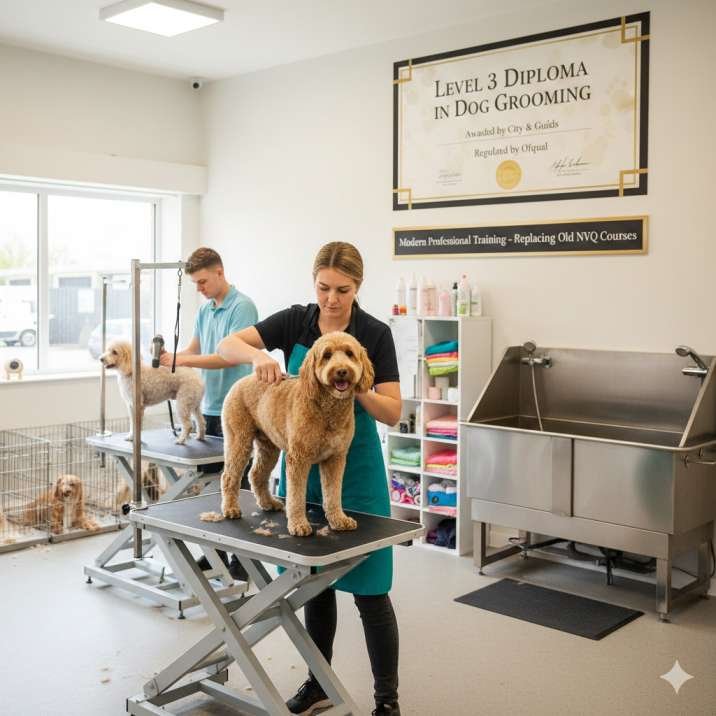

NVQ dog grooming courses are no longer available in the UK, following nationwide qualification reforms that replaced the NVQ framework. Aspiring dog groomers now train through Ofqual-regulated qualifications, such as the Level 3 Diploma in Dog Grooming, which provide recognised skills, hands-on training and a clear pathway into the grooming profession.
Although NVQ dog grooming courses have been discontinued, the phrase remains widely searched by new learners who are often unaware that modern, Ofqual-regulated qualifications have replaced the former NVQ system. The UK’s vocational education system has been restructured, and grooming qualifications are now delivered through the Ofqual-regulated RQF framework. Understanding these changes is important for anyone entering the grooming profession, as modern qualifications focus on safety, clear training routes and better professional skills. This article explains what NVQs were, what replaced them, how today’s qualifications work and what new groomers can expect from accredited training programmes.
The End of NVQ Dog Grooming Courses and the Shift to Modern Qualifications
For many years, NVQs (National Vocational Qualifications) were a recognised route into vocational careers, including dog grooming. They focused on assessing practical skills in real working environments, making them popular in hands-on industries. Over time, however, the UK’s qualification system changed, and NVQs were phased out in favour of a clearer and more consistent vocational framework.
They were replaced by the Regulated Qualifications Framework (RQF), which standardises vocational education, ensures consistent assessment across awarding bodies and provides clearer progression routes for learners. Modern dog grooming qualifications under the RQF cover the same practical skills as NVQs but follow stricter regulatory, welfare and safety standards.
Although NVQs are no longer available, today’s Ofqual-regulated grooming qualifications continue the same competency-based approach and often exceed the standards set by the former NVQ system.
Why People Still Search for “NVQ Dog Grooming Courses”
Even though NVQs are no longer available, the term remains in frequent use across the grooming industry. Many newcomers search for it simply because it was widely known and referenced for decades, appearing in job descriptions, training advertisements and grooming discussions. Older groomers who originally trained under the NVQ framework often still refer to their former qualifications by name, as this was the standard terminology at the time.
Training providers sometimes mention NVQs to help learners understand that today’s regulated qualifications are the modern equivalent, offering the same purpose but with higher industry standards. As a result, the term survives in the industry narrative, even though the qualification itself no longer exists. Today, when learners refer to an “NVQ dog grooming course,” they are almost always describing modern RQF-regulated qualifications delivered by recognised awarding bodies such as City & Guilds, iPET Network or AIM Qualifications. such as City & Guilds, iPET Network or AIM Qualifications.
How Dog Grooming Qualifications Are Regulated Today
All nationally recognised dog grooming qualifications now sit within the RQF and are regulated by Ofqual, the official qualifications regulator for England. Ofqual ensures that all regulated qualifications meet strict national standards for quality, accuracy, assessment and clear learning outcomes. This regulatory oversight allows learners and employers to trust that the qualification reflects correct, current standards in grooming practice.
The main awarding bodies responsible for delivering regulated dog grooming qualifications include:
- City & Guilds
- iPET Network
- AIM Qualifications
- Open College Network West Midlands (OCNWM)
Each organisation develops qualification specifications, learning outcomes and assessment criteria that meet Ofqual’s regulatory expectations. While course structures may differ slightly, all qualifications meet the same professional standards. This means learners can choose an awarding body based on teaching style, flexibility or training centre availability without compromising on the credibility of their qualification.
Because these qualifications are regulated, employers across the UK recognise them when hiring groomers. For learners, this provides reassurance that their training is both authoritative and transferable within the industry.
Do You Need a Qualification to Become a Dog Groomer in the UK?
There is no legal requirement in the UK to hold a formal dog grooming qualification. However, leading industry bodies such as the RSPCA and the British Dog Groomers Association strongly recommend completing accredited training to ensure safe practice and high welfare standards.
Grooming is a skilled, hands-on profession that involves working with dogs of different sizes, temperaments and coat types. Without proper training, there is a risk of causing stress or injury. Qualified groomers are better equipped to handle dogs safely, recognise health concerns and use grooming tools correctly.
Holding a recognised qualification also builds trust with clients. Many salons prefer or require formal training—particularly at Level 3—and dog owners increasingly expect groomers to demonstrate professional standards. While grooming is not legally regulated, accredited training is widely regarded as best practice within the industry.
The Level 3 Diploma: The Recognised Professional Standard
The Level 3 Diploma in Dog Grooming is widely recognised as the professional standard for dog groomers in the UK. It combines theory with practical training and prepares learners to work independently, manage full grooming appointments and handle a wide range of breeds and coat types.
Learners study canine anatomy, coat and skin health, welfare requirements and health and safety, alongside advanced techniques such as clipping, scissoring, hand-stripping and breed-specific styling. Many courses also include basic canine first aid awareness.
A strong focus is placed on hands-on experience, with students grooming real dogs under supervision. On completion, graduates are considered ready to work in professional salons or run their own grooming businesses.
The Standard Training Pathway: Level 2 to Level 3
Most beginners follow a structured training pathway that allows skills to develop gradually and safely within a professional grooming environment. The typical pathway begins with the Level 2 Certificate for Dog Grooming Assistants, which introduces essential foundational skills. At Level 2, learners focus on bathing, drying, brushing, preparing coats and supporting general salon operations.This stage helps students learn safe handling techniques and build confidence before moving on to advanced grooming tasks.
After completing Level 2, learners progress to the Level 3 Diploma. At this stage, they move from assisting to performing full grooms independently. The combined Level 2 and Level 3 training provides a complete learning journey that mirrors how skills develop naturally in grooming workplaces. This helps groomers develop their skills gradually and safely.
What Accredited Dog Grooming Courses Include
Accredited, regulated dog grooming courses combine theoretical learning with extensive practical experience. This approach helps learners understand not only how to groom a dog, but also why certain techniques are used.
Core topics typically include:
- Canine anatomy, skin and coat health
- Behaviour and handling
- Salon hygiene and infection control
- Equipment selection, maintenance and safe use
- Welfare legislation and professional responsibilities
- Risk assessment and safe working practices
Practical learning includes bathing, drying, coat preparation, clipping, scissoring, nail trimming, ear cleaning, and full grooming on a variety of breeds. Students learn how to identify coat types, work with different textures and manage dogs with behavioural sensitivities.
Many accredited courses also include training on customer communication, pricing, booking systems and basic business skills. These elements are especially valuable for learners planning to run their own grooming salons, as success in grooming requires both technical skill and professional client management.
Why Proper Training Matters in Today’s Grooming Industry
Dog grooming may look simple, but it requires technical skill, attention to detail and a good understanding of animal behaviour. A trained groomer must adapt techniques for different coat types, use tools safely and keep dogs calm and comfortable throughout the grooming process.
Proper training also supports animal wellbeing. Groomers are often the first to notice skin issues, ear problems or coat concerns, helping owners seek veterinary advice early. Good grooming prevents matting, improves hygiene and supports a dog’s overall comfort.
As pet ownership grows, so do expectations. Dog owners increasingly prefer groomers with recognised qualifications, making accredited training essential for professional credibility and high welfare standards.
Choosing the Right Dog Grooming Course
Choosing the right dog grooming course requires careful thought. Learners should ensure the course is regulated by Ofqual and awarded by a recognised national awarding body so the qualification is professionally recognised.
Training centres vary in class size, teaching style and the amount of hands-on experience offered. It is important to check how much practical grooming is included, tutor support and whether any additional training is available.
Flexible study options, payment plans and post-course support can also make a difference. A good training provider will always prioritise animal welfare, student safety and strong practical experience.
Conclusion
Although NVQ dog grooming courses no longer exist in the UK, today’s regulated qualifications offer a clearer, more reliable and professionally recognised route into the grooming industry. Modern training programmes, particularly the Level 3 Diploma in Dog Grooming, provide the technical skills, behavioural understanding and practical competence needed for professional practice. Completing a regulated qualification enhances client trust, improves employability and ensures groomers work to high welfare standards. Whether you intend to join an established salon or open your own grooming service, accredited training offers the foundation required for a successful and responsible career in dog grooming.
Frequently Asked Questions (FAQs)
1. Do NVQ dog grooming courses still exist in the UK?
No. NVQ dog grooming courses are no longer offered because the NVQ framework was phased out. Dog grooming qualifications are now regulated under the RQF and delivered by awarding bodies such as City & Guilds, iPET Network, AIM Qualifications and OCN.
2. What qualification replaces the NVQ in dog grooming?
The recognised replacement for NVQ dog grooming courses is the RQF Level 3 Diploma in Dog Grooming, offered by approved awarding bodies. This qualification provides the skills needed for professional grooming roles and independent practice.
3. Is a qualification required to work as a dog groomer in the UK?
No formal qualification is legally required. However, industry organisations such as the RSPCA strongly recommend completing a regulated grooming qualification to ensure high welfare standards, safe handling and professional competence. Most employers prefer groomers with Level 3 training.
4. What is the best qualification for becoming a professional dog groomer?
The widely recognised professional standard is the Level 3 Diploma in Dog Grooming. It covers practical grooming, breed styling, health and safety, canine behaviour, welfare legislation and working independently in a salon environment.
5. What does the Level 2 dog grooming qualification allow me to do?
The Level 2 Certificate prepares learners for assistant roles. It teaches skills such as bathing, drying, brushing, coat preparation, safe handling and salon hygiene. It is the recommended starting point for complete beginners before progressing to Level 3.
6. Can I become a dog groomer without doing Level 2 first?
Some experienced dog handlers may progress directly to Level 3, but most awarding bodies recommend completing Level 2 first. This ensures beginners develop safe handling skills and basic grooming competence before attempting advanced styling.
7. Who regulates dog grooming qualifications in the UK?
Dog grooming qualifications are regulated by Ofqual under the Regulated Qualifications Framework (RQF). Awarding bodies such as City & Guilds, iPET Network, AIM and OCN create and assess approved qualifications that follow Ofqual’s standards.
8. Are City & Guilds dog grooming qualifications recognised?
Yes. City & Guilds dog grooming qualifications are widely recognised by employers, training centres and grooming salons. Their Level 3 Diploma is one of the most established qualifications in the industry.
9. What will I learn in a regulated dog grooming course?
Regulated qualifications include both theory and practical training. Learners study canine anatomy, coat and skin health, behaviour, equipment use, hygiene, safety, welfare legislation and business basics. Practical units cover bathing, drying, clipping, scissoring, hand-stripping and full grooms across different breeds.
10. How long does it take to complete a dog grooming qualification?
Training duration varies by provider. Level 2 programmes typically take several weeks, while Level 3 Diplomas may take a few months depending on course structure, delivery method and practical requirements.
11. How much does a professional dog grooming course cost?
Costs vary by provider and awarding body. Level 2 courses can range from entry-level pricing, while Level 3 Diplomas are more advanced and priced accordingly. Learners should check with individual training centres for up-to-date fees, payment plans and funding options.
12. Can I study dog grooming online?
You can complete some theory modules online, but practical training must take place in person to meet regulated assessment requirements. Hands-on grooming of real dogs is essential for building safe, professional-level skills.
13. What jobs can I do after completing a Level 3 dog grooming qualification?
Graduates can work in grooming salons, mobile grooming businesses, dog spas, pet-care facilities or veterinary practices. Many qualified groomers also choose to open their own grooming studios once confident in their skills.
14. Why is regulated training recommended for dog groomers?
Regulated training ensures groomers follow high standards in safety, animal welfare, hygiene and technical grooming. It also provides credibility with clients and employers and reduces the risk of stress or injury to dogs during grooming.
15. What awarding bodies offer recognised dog grooming qualifications?
The main awarding bodies in the UK are City & Guilds, iPET Network, AIM Qualifications, and OCN West Midlands. All offer Ofqual-regulated Level 2 and Level 3 dog grooming courses.