
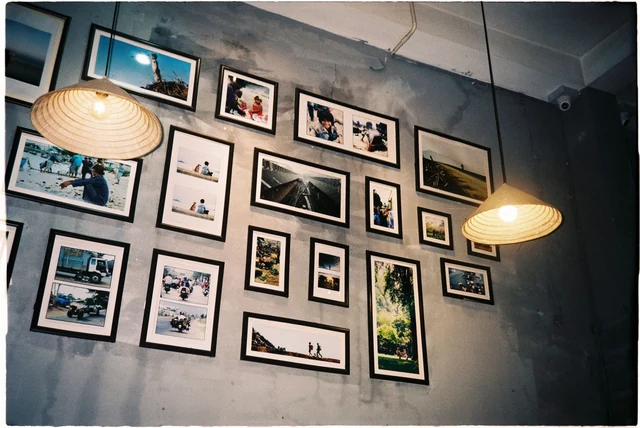

The wall running alongside a staircase is usually the biggest uninterrupted wall in a British house, and in most homes it is completely bare. Not because people do not want something there, but because hanging on a slope feels like a problem nobody has explained how to solve.
It has one rule, and once you know it the rest is straightforward. This is how to plan, hang and light a gallery wall that climbs the stairs instead of fighting them.
The One Rule That Makes It Work
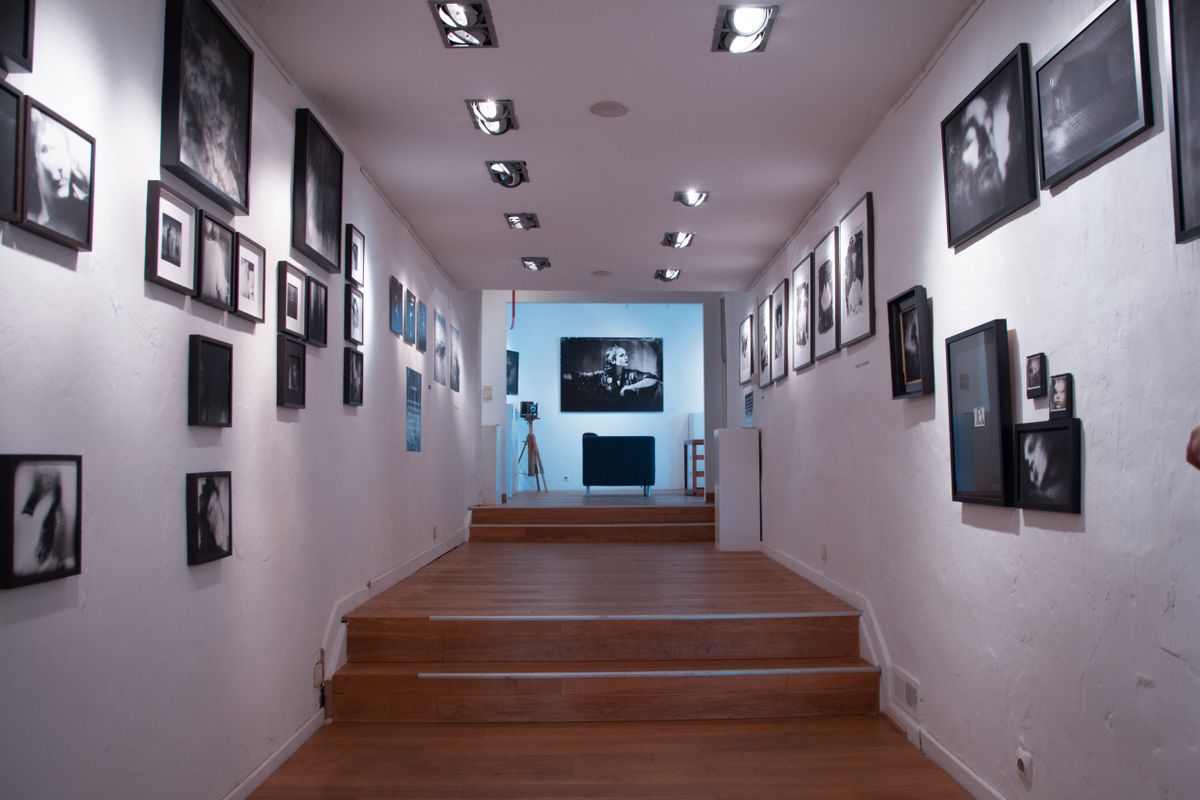
Do not keep the frames level with the floor. That is the mistake behind almost every stair gallery that looks slightly wrong without anyone being able to say why.
Instead, imagine a line running parallel to the handrail, at roughly the height you would hang a picture on a flat wall. Hang the centre of every frame on that line. The arrangement then climbs at the same angle as the stairs and reads as deliberate.
Everything else in this article is decoration on top of that one decision. It is also covered briefly in our staircase ideas guide.
Plan It on the Floor First
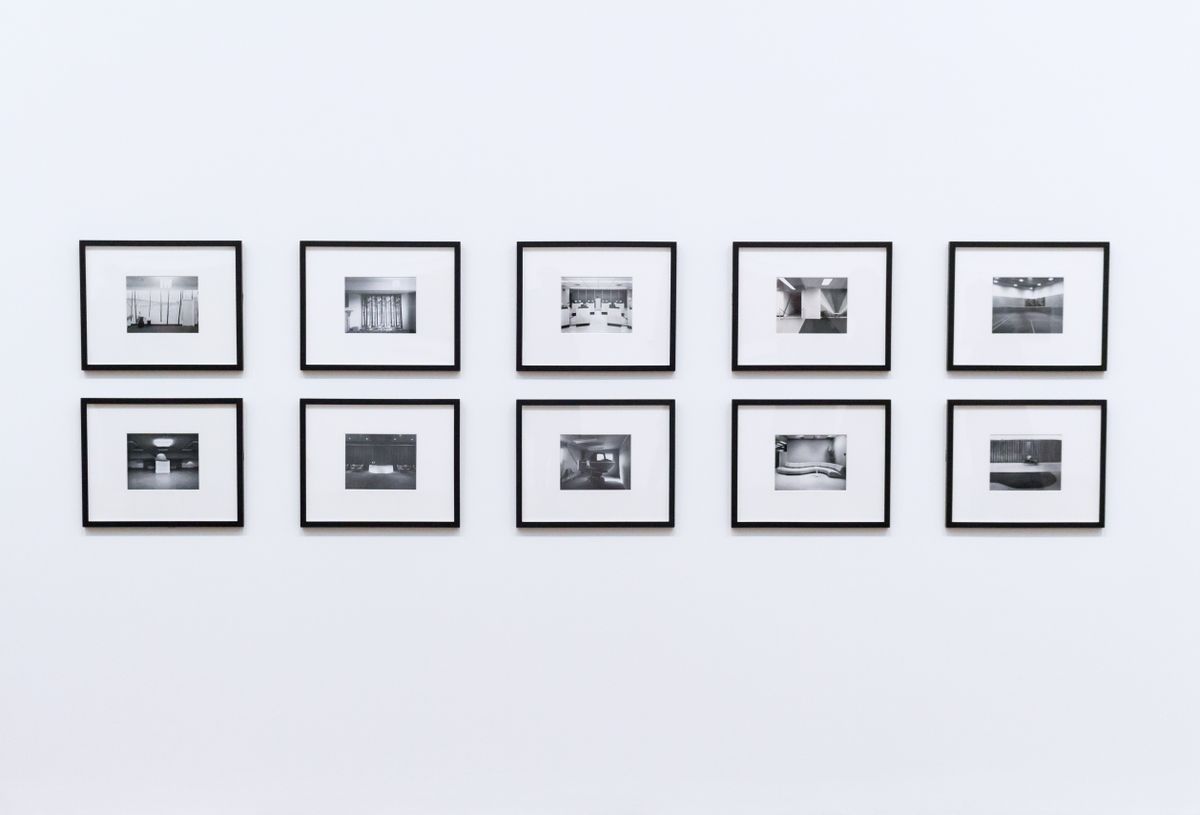
Never start by putting a nail in the wall. Lay the whole arrangement out on the floor of the landing or a spare room and move it around until it looks right.
Then cut paper templates the size of each frame, mark where the hook sits on each one, and tape them to the wall along your imaginary line. Live with them for a day or two and walk up and down the stairs a few times. Stair galleries are seen at an angle and in motion, which is very different from looking at a flat wall straight on.
This step takes an hour and saves a wall full of filled holes.
Layouts That Suit a Staircase
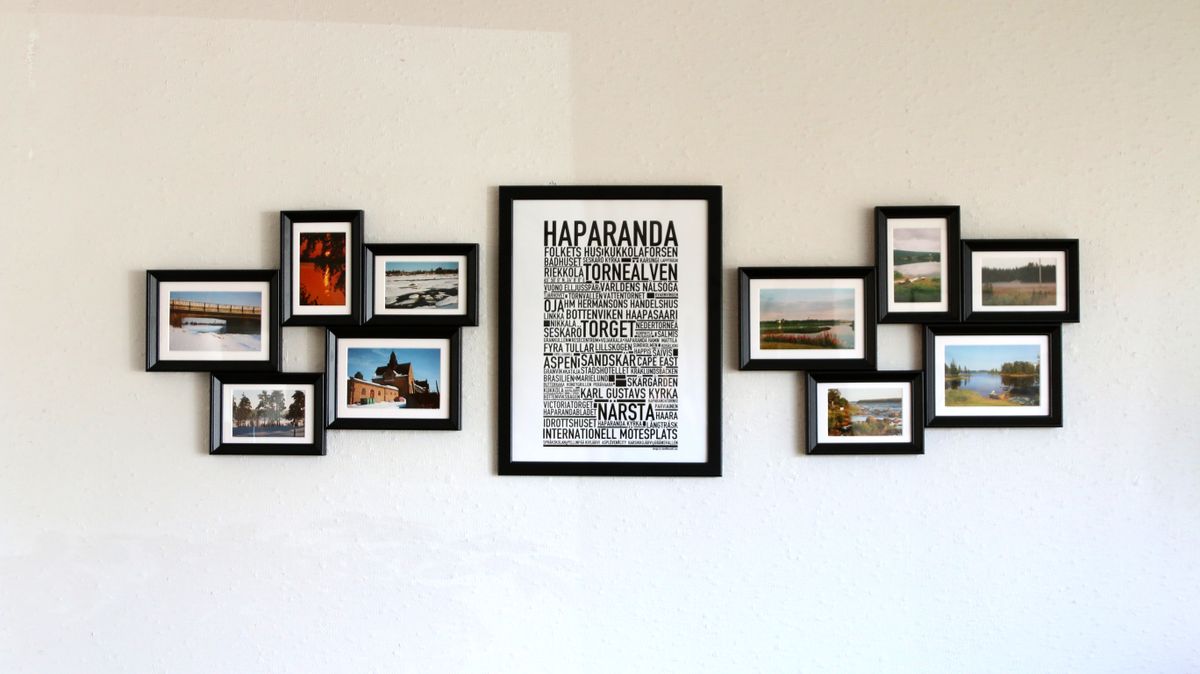
- A single climbing line of evenly spaced frames is the calmest option and the hardest to get wrong. Good for narrow hallways.
- A double row, with frames above and below the imaginary line, fills a tall wall without looking crowded.
- A loose cluster climbing the slope suits period homes and mixed frames, but needs consistent gaps or it reads as clutter.
- A salon hang, packed edge to edge, is dramatic on a large double-height stairwell and overwhelming in a terrace.
- One very large piece is the option people forget. On a big blank stair wall, a single oversized picture is often stronger than twelve small ones.
Spacing and the Angle Itself
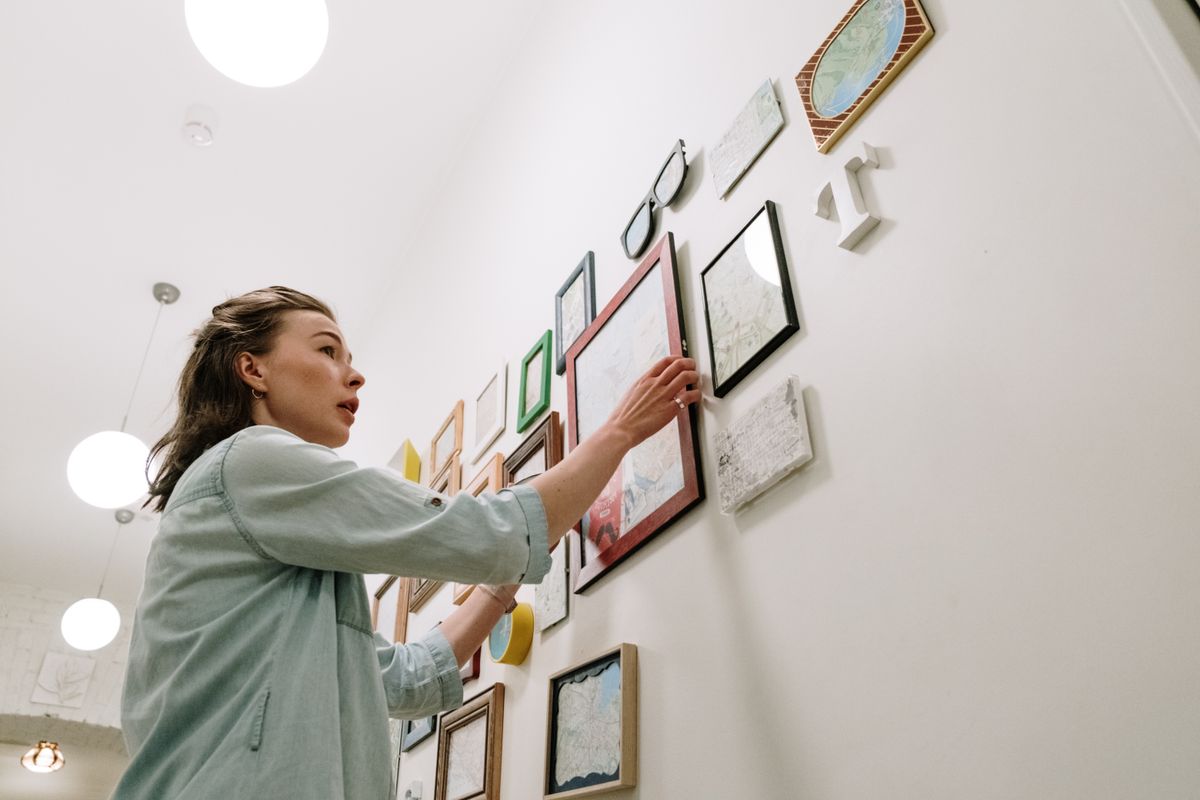
Consistent spacing is what separates a gallery wall from a collection of pictures. Aim for the same gap between every frame, usually somewhere between 50mm and 100mm depending on frame size. Smaller frames want smaller gaps.
On the slope, measure the gap along the line rather than horizontally. This sounds fussy and it is the difference between an arrangement that flows and one that appears to drift apart as it climbs.
Keep the bottom of the lowest frame clear of the handrail by a comfortable margin so nothing gets knocked by a shoulder or a bag.
Mixing Frames Without Making a Mess
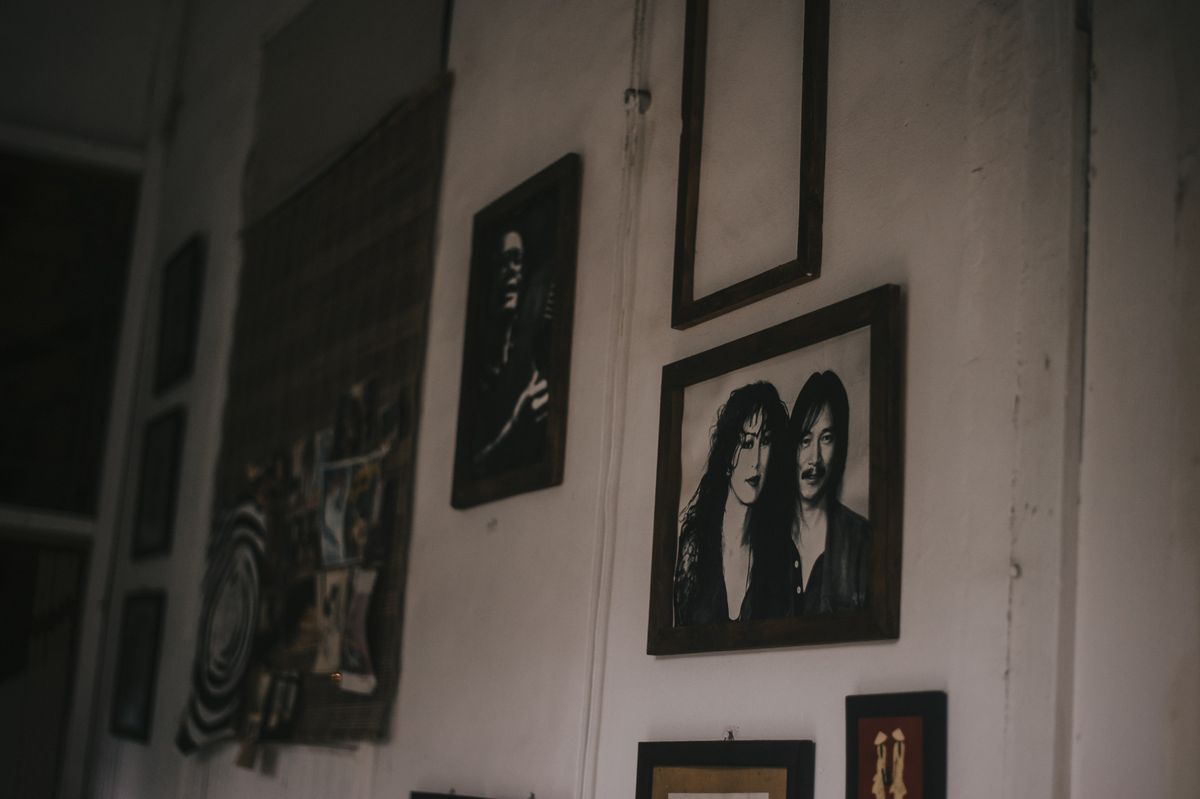
Mixed frames look relaxed and are much easier to add to over time. The trick is to hold one thing constant while everything else varies.
Either keep every frame the same colour and let the sizes vary, or keep every frame the same size and let the finishes vary. Doing both at once produces chaos. The most forgiving version in a UK hallway is black or natural oak frames in assorted sizes with generous white mounts, because the mounts create visual breathing room even when the wall is busy.
If you inherit a mix you dislike, spray painting them all one colour costs very little and unifies the whole wall instantly.
What to Actually Put in Them
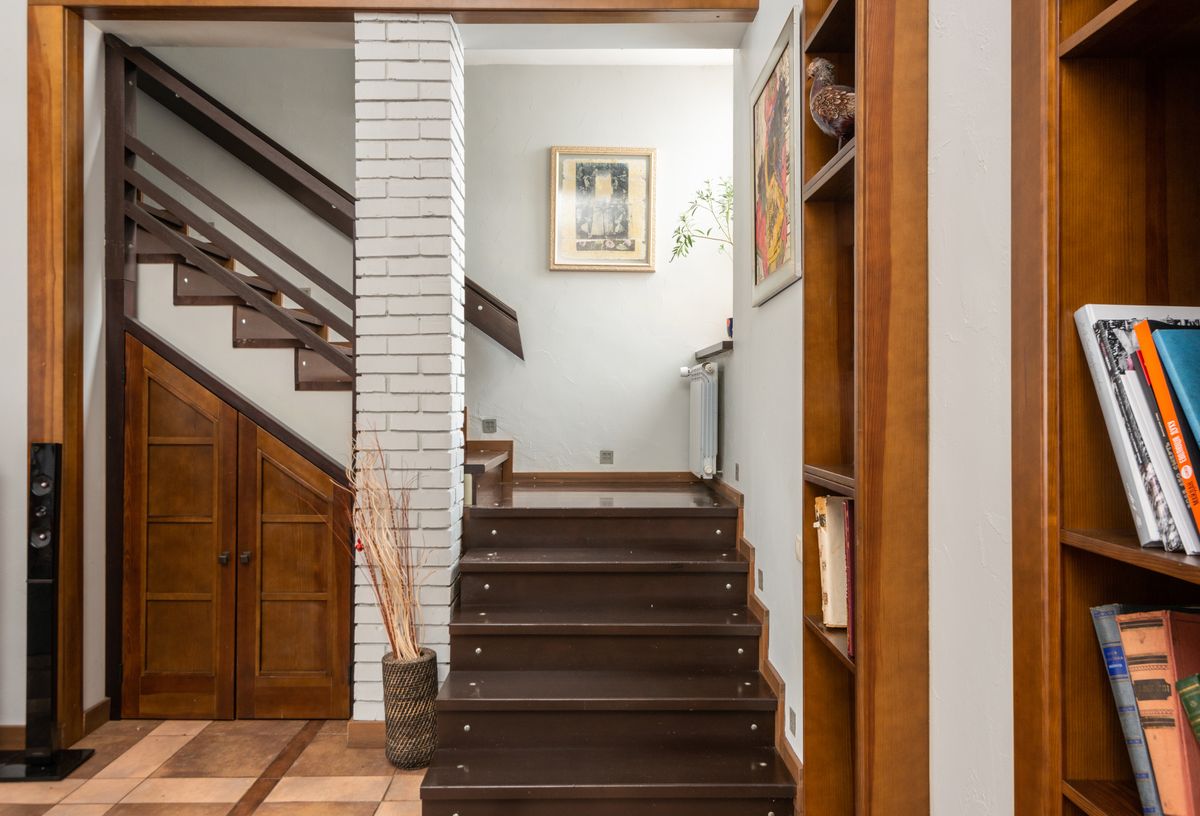
Family photographs are the obvious answer and the reason most stair galleries exist, but a wall of only faces can feel busy at close range on a narrow flight.
Mixing in something else gives the eye a rest: a print, a piece of textile, an old map of the town you live in, a child’s drawing framed properly. Black and white photographs are the traditional solution because they unify wildly different images, and they still work.
Leave one or two frames for things you have not bought yet. A gallery wall that grows is more interesting than one hung in a single afternoon and never touched.
Fixings, Because Stairwells Are Awkward
You will be working at height on a sloping surface, which makes this the least forgiving hanging job in the house.
- Use a stepladder rated for the job, or a proper stair-safe platform. Do not balance a ladder on the treads.
- Check what the wall is made of. Plasterboard needs proper anchors; a solid wall in an older terrace needs a masonry bit and plugs.
- Use two hooks per frame for anything larger than about A4. It stops pictures tilting, which happens constantly on a staircase because of the vibration from people walking up and down.
- Adhesive strips are fine for very small, light frames and unreliable on a stairwell wall that gets knocked.
Lighting the Gallery
A gallery wall on a dark staircase is a gallery wall nobody sees. If you are hanging pictures, plan the light at the same time.
Wall lights positioned along the flight do double duty: they light the treads for safety and wash the pictures at the same time. Individual picture lights suit one large piece rather than a cluster. Avoid a single bright downlight, which puts glare on any glazed frame at exactly the angle you climb.
If the frames are glazed, matt or non-reflective glass is worth the extra on a stair wall where you cannot control the viewing angle.
Alternatives to Frames
Frames are not the only answer, and on some staircases they are the wrong one.
A run of small mirrors climbing the slope brings light into a dark hallway and makes it feel wider. A set of decorative plates suits a period property. Woven baskets or hats hung as a group work in a cottage. Floating shelves following the slope let you change what is displayed without touching the wall again.
In a very narrow stairwell, wallpaper or a bold paint colour on that wall may do more than any hung objects, simply because nothing projects into the space.
Common Mistakes
- Hanging level with the floor instead of parallel to the handrail.
- Frames too small for the wall. Stair walls are big; three postcards floating in the middle look lost.
- Uneven gaps, which turn a gallery into a jumble.
- Starting too high. Remember people see this wall while climbing, not standing back from it.
- Forgetting the light, so the whole thing disappears after four in the afternoon.
Final Thoughts
Hang parallel to the handrail, plan it on the floor, keep the gaps even, and put a light on it. Those four things turn the largest blank wall in the house into the reason people slow down on the way upstairs.
Start with paper templates this weekend. You will know within an hour whether the layout you have in mind actually works on your staircase.
Frequently Asked Questions
How do you hang pictures on a staircase wall?
Follow a line parallel to the handrail and hang the centre of every frame on that line. Keeping frames level with the floor is what looks wrong.
How much space should there be between frames?
Aim for a consistent 50mm to 100mm depending on frame size, and measure the gap along the slope rather than horizontally.
Should stair gallery frames match?
Hold one thing constant. Either the same frame colour with varied sizes, or the same size with varied finishes. Varying both at once looks chaotic.
How high should a staircase gallery wall start?
At normal picture height above the lowest step, then climb with the handrail. Starting too high makes the arrangement hard to see while walking up.
What fixings should I use on a stair wall?
Two hooks per frame for anything above A4, since foot traffic vibration tilts pictures. Use proper anchors in plasterboard and plugs in masonry.
What if I do not want photographs?
Small mirrors, plates, framed textiles, maps or floating shelves following the slope all work, and mirrors also brighten a dark hallway.
Disclaimer
This article is for general information only. Take care when working at height on a staircase and use fixings appropriate to your wall construction.