
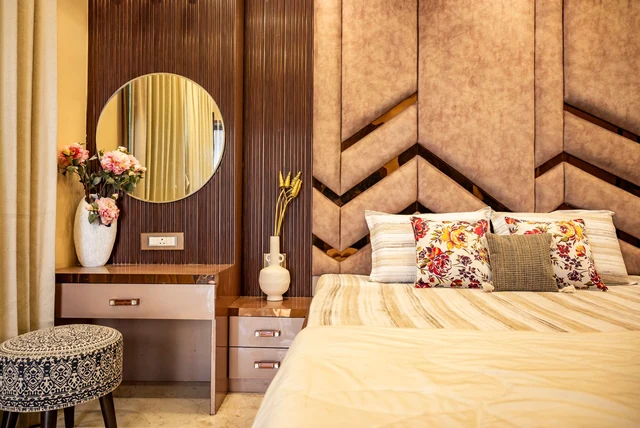

The best place for a bedroom feature wall is the wall behind the bed. For most UK homes, three ideas do the job well. A painted wall is the cheapest. Wallpaper behind the headboard brings pattern. MDF panelling gives the biggest change for the money. If you rent, choose removable wallpaper, art, mirrors or lights, and ask your landlord first.
This guide gives you 24 ideas, UK costs, colours for 2026, and clear steps to do it safely. It draws on UK brand pages, cost guides and official safety advice, all checked in October 2026.
What’s in this guide
- Quick answer: the best feature wall for your situation
- What is a bedroom feature wall?
- Which wall should be the feature wall?
- Paint and colour ideas
- Wallpaper and mural ideas
- Panelling and slat ideas
- Texture and plaster ideas
- Display ideas
- Use what you already have
- Best feature wall for your room
- Colour guide for 2026
- How much does a feature wall cost?
- Rental-friendly feature walls
- How to create a feature wall
- How to light a feature wall
- Safety and damp checks
- Common mistakes
- 2026 trends
- FAQs
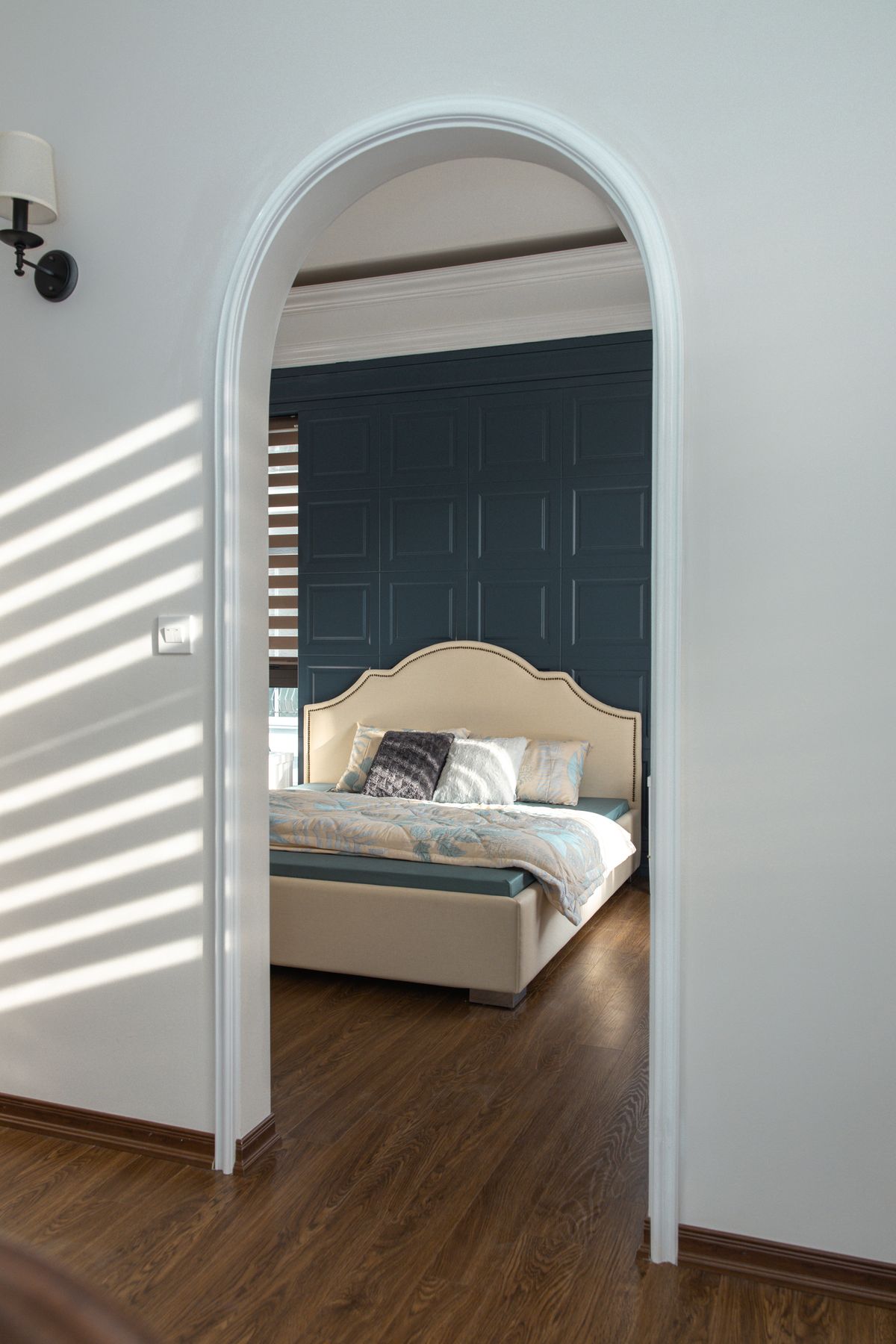
Quick Answer: The Best Feature Wall for Your Situation
Use this table to pick fast. Costs are UK figures from 2026 guides, explained in the cost section. Difficulty is our rating, based on the work involved.
| Your situation | Best idea | Typical cost | Difficulty |
|---|---|---|---|
| Smallest budget | Painted wall or a gallery wall | Cost of paint or frames (a single-wall paint price is not published in the guides we checked) | Easy |
| Renting | Removable wallpaper, art, mirrors or lights | Varies by product | Easy |
| Small bedroom | Light or mid-tone colour on the end wall, or vertical panelling | Paint, or panelling from under £100 in DIY materials | Easy to moderate |
| Biggest impact for the money | MDF moulding panelling | £80–£150 DIY materials; £250–£450 fitted | Moderate |
| You love pattern | Wallpaper behind the bed | Paper £5–£60 a roll; £150–£350 to have one wall hung | Moderate |
| Luxury finish | Venetian plaster | £90–£150 per m² | Professional |
What Is a Bedroom Feature Wall?
A feature wall is one wall that stands out from the others in the room. Ideal Home describes it as a wall with a different design, such as a block of colour or a statement wallpaper. “Accent wall” means the same thing. It is the usual US term.
You can make one with paint, wallpaper, panelling, texture, or things you hang on the wall such as art and mirrors.
Which Wall Should Be the Feature Wall?
Behind the bed is the default
Most feature walls sit behind the bed. It makes the bed the focal point and acts like a large headboard. Keep the feature wider than the headboard. Ideal Home suggests making wallpaper slightly wider than the headboard so it frames the bed. Bedstar suggests a shelf about 5 cm wider than the bed on each side. A standard UK double bed is 1,350 mm wide, so plan around that.
Other walls that work
The bed wall is not a rule. Ideal Home notes you can feature a chimney breast, the wall behind a dressing table, or the entrance to an en suite. In a small room, it suggests using the wall at the far end or at the side of the bed to add depth.
What if the wall has a window or door?
That is fine. Ideal Home says a window or doorframe can be built into the design, and it can stop those features standing out for the wrong reasons.
Paint and Colour Feature Wall Ideas
Paint is the simplest way to start. It is also easy to change later. Dulux names many of the shades below, so you can match them in store.
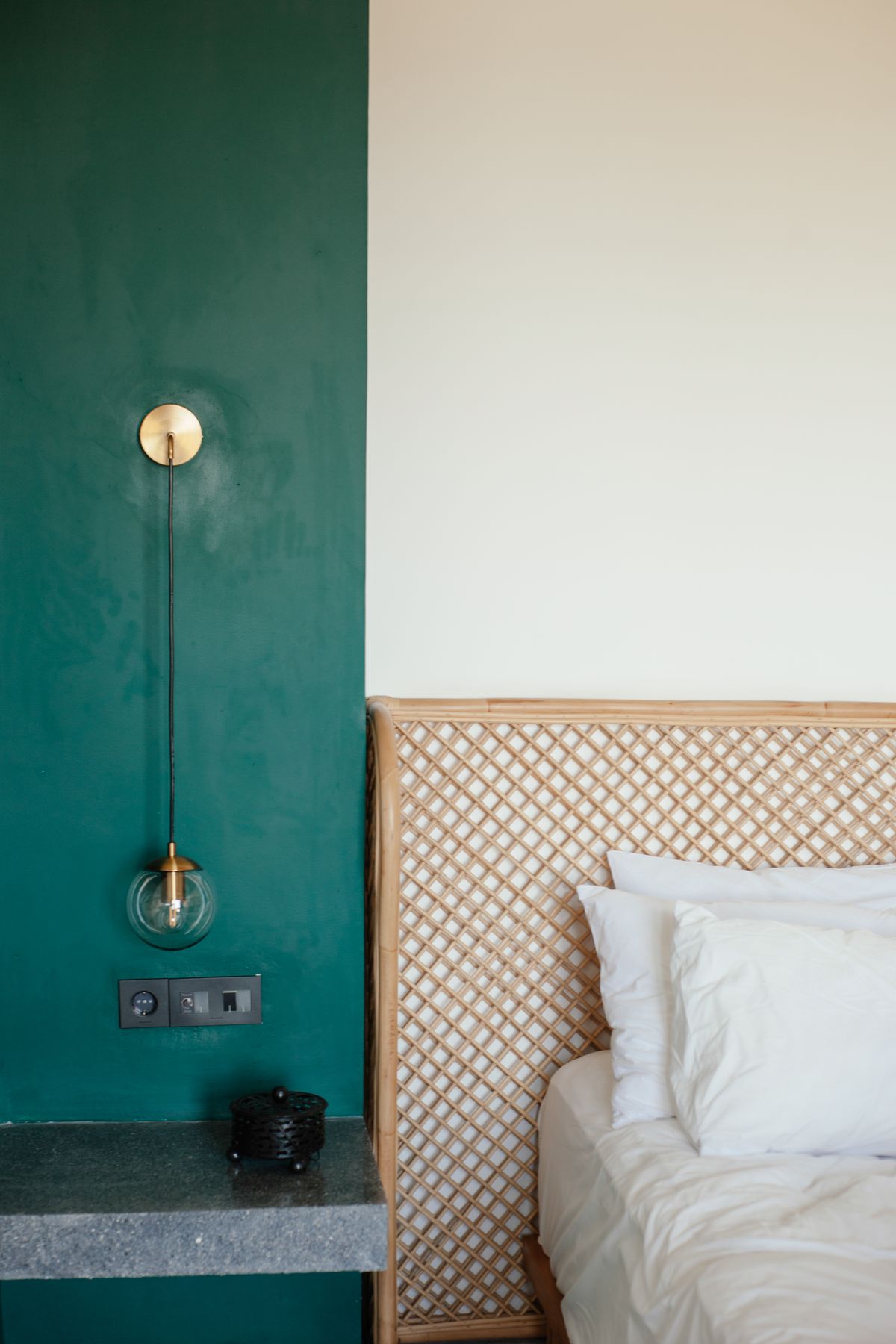
1. One painted wall behind the bed
Paint one wall in a stronger colour and keep the others calm. It suits almost any room and any budget. Prepare the wall well and sand lumps first, because a flat, dark finish shows every flaw.
2. A deep, cosy colour
Dulux says darker shades with cool undertones, such as Vast Lake and Storm Clearing, can make a cocooning bedroom. For warmth, it suggests a dark caramel such as Spiced Honey. If you like dark rooms, see our black bedroom ideas and dark grey bedroom ideas.
3. A split or two-tone wall
Paint the wall in two shades, or add a bold stripe between two calm ones. Dulux pairs Frosted Lake and Blueberry White with a Muted Gold stripe for a smaller room.
4. Colour blocks, arches and shapes
Big squares, circles or an arch behind the bed give a feature without paper or panels. Dulux suggests an arch or sunbeam shape in two close neutrals, with Tuscan Terracotta for the sunbeam.
5. Stripes
Stripes add character. Dulux suggests two contrasting shades, such as Sapphire Salute and Buckingham, with a thin white line between. It says this works well behind a teenager’s bed.
6. A painted headboard panel
Use two colours above and below a height line to fake panelling. Ideal Home says this frames the bed and can add height in a room with low ceilings.
7. Colour drenching and the fifth wall
Colour drenching means one shade across walls, ceiling and trim. You can try a lighter version by painting just the bed wall and the ceiling above it. A UK retailer says evening light can make colours look heavier, so lean a little lighter than you first think.
Wallpaper and Mural Feature Wall Ideas
Wallpaper brings pattern and texture that paint cannot. For more patterns and colours, see our bedroom wallpaper ideas.
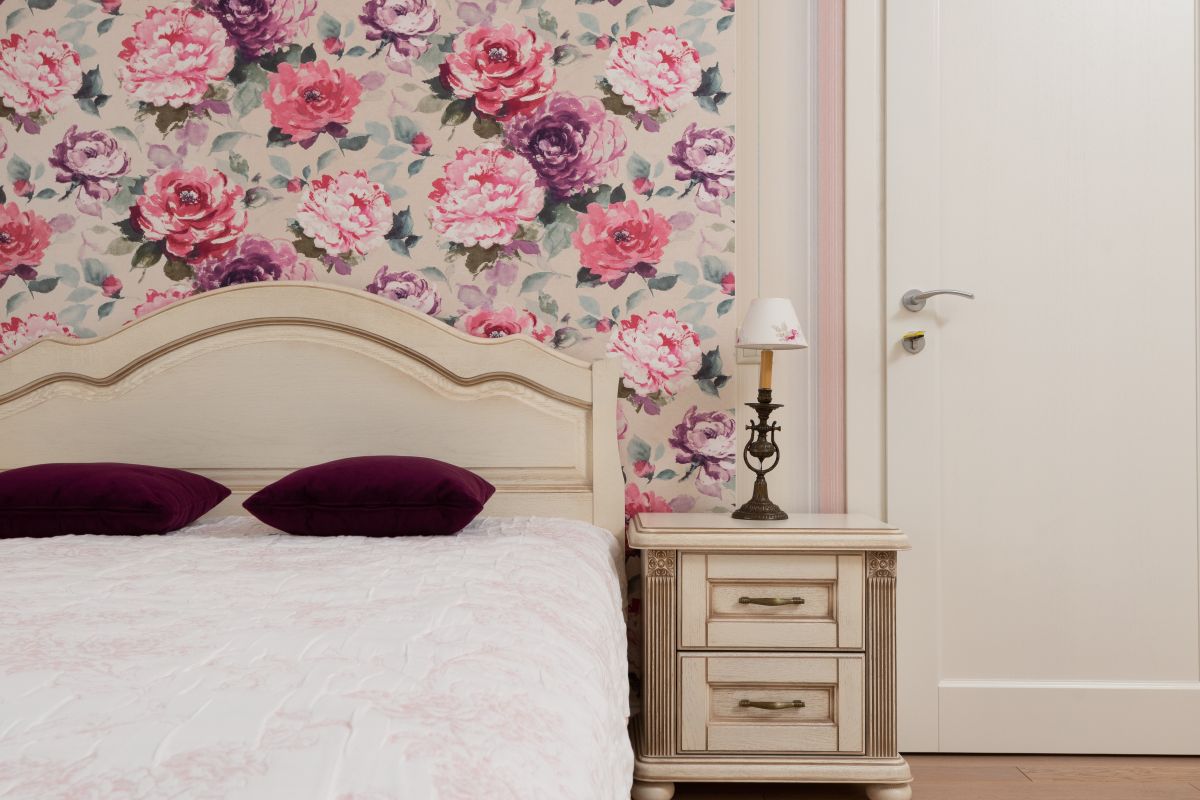
8. Wallpaper behind the bed
Hang a few drops of statement paper behind the headboard. Keep it a little wider than the bed. Pick one colour from the pattern and use it in the bedding or curtains so the room feels planned.
9. A mural
A mural fills the wall with one large image. Little Greene’s head of design told Homes & Gardens that three drops of paper can make a whole panel. Paint the other walls in a colour taken from the mural.
10. Textured or concrete-effect wallpaper
Concrete or plaster-effect paper adds depth in a calm way. Bedstar says paste-the-wall paper usually gives a better finish than self-adhesive and lets you adjust the strips while the paste is wet.
11. Removable wallpaper
Peel-and-stick paper is the usual choice for renters. Read the rental section before you buy, because some tenancies ban it and fresh paint needs time to cure first.
Panelling and Slat Feature Wall Ideas
Panelling adds depth and shadow. Homes & Gardens quotes a designer saying it can add insulation, cover uneven walls and hide radiators. The cost figures below come from UK suppliers and cost guides, so treat them as estimates.
12. MDF moulding or Shaker panelling
Thin MDF strips make square or rectangular frames on the wall. Coving.Online puts moulding strips at about £2–£5 per linear metre and says a basic feature wall can cost under £100 in materials. It calls one wall a realistic weekend job, or one to two days for a fitter. Paint it in the same colour as the wall for a calm look.
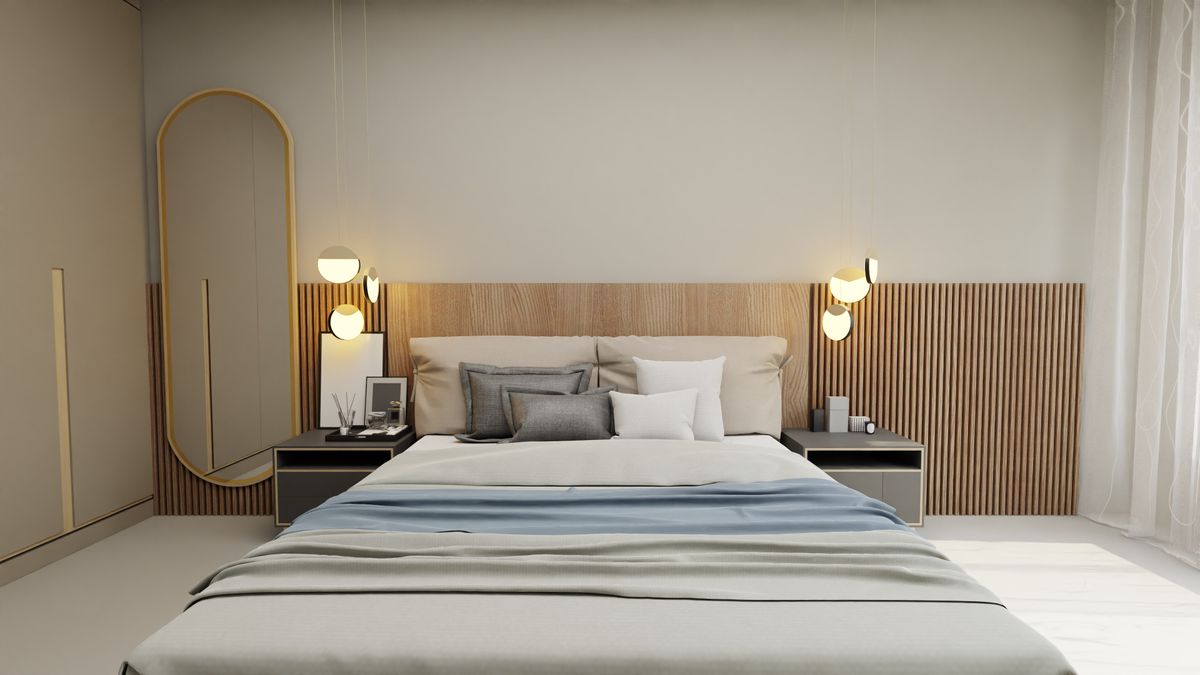
13. Slatted or fluted panels
Vertical slats suit modern rooms and double as a headboard wall. A builder’s guide from BookABuilder puts materials for one wall at about £120–£250.
14. 3D wall panels
These have raised patterns. Coving.Online gives £30–£160 per m², or about £250–£1,350 for an 8.5 m² wall including fitting, and estimates 2–4 hours of fitting per m².
15. Half-height panelling
Panelling to dado height keeps the room open and protects the lower wall. Ideal Home’s experts say horizontal panels can make a room feel longer, and half-height panelling can break up solid, closed-in walls.
16. Upholstered or fabric panels
A fabric panel behind the bed feels soft and hotel-like. It is the dearest panelling option, and UK price guides for it are thin, so ask for quotes.
Texture and Plaster Feature Wall Ideas
17. Venetian plaster
This gives a soft, polished, stone-like finish. MyJobQuote (July 2026) puts it at £90–£150 per m² including supply and fitting. It uses a 10–12 m² wall as its example, which costs £900–£1,800. It is the dearest idea here, and a specialist job.
18. Textured paint or a marbled paint effect
You can fake texture with paint. La Redoute describes painting a darker colour first and, while it is still wet, swirling a lighter shade through it with a thin brush. Practise on a board first.
Display Feature Wall Ideas
19. A statement piece of art or a gallery wall
One large piece above the bed works well on a plain white wall. For a gallery wall, plan the layout on the floor first. Bedstar advises heavy-duty screws and wall plugs for anything over a bed, so nothing comes loose at night.
20. A mirror wall
Several mirrors in different shapes reflect light and add interest. Real Homes suggests this for a bigger feel. See our bedroom mirror ideas for styles.
21. A bed-width niche shelf with LED lights
A recessed shelf above the bed holds a display and gives soft light. Bedstar suggests dimmable LED downlights. A builder can make it in plasterboard or solid walls, and an electrician should do the wiring. Wall-light wiring costs about £150–£400 per fitting, according to BookABuilder.
22. A fairy-light wall
Bedstar suggests a 30 m string of lights and wall hooks. Warm white looks better all year than multicolour.
23. A wall hanging or tapestry
Homes & Gardens suggests pairing a plain bed with a tapestry on the wall in place of a large headboard. It is easy to move and easy to take with you.
Use What You Already Have
24. Chimney breast, alcoves or brick
A chimney breast or alcoves already stand out, so a bold colour or pattern there makes them stronger. Exposed brick adds warmth, but check for damp and old coatings before stripping anything. See the safety section.
The 24 Ideas at a Glance
Here is how the 24 ideas above split by type. Paint gives the most choice, while panelling and display ideas offer the most texture.
- Paint and colour: 7
- Wallpaper and murals: 4
- Panelling and slats: 5
- Texture and plaster: 2
- Display: 5
- Existing features: 1
Best Feature Wall for Your Room
| Room | Best ideas | Watch out for |
|---|---|---|
| Small or box room | Paint on the end wall, vertical slats, half-height panelling, a mirror | Too many patterns, very dark colour with little daylight |
| Large bedroom | Bold colour or full-width panelling behind the bed, mural | A wall that looks lost without lighting |
| Loft or attic | Paint or wallpaper on the straight wall behind the bed | Sloping walls make panelling harder to fit |
| Kids’ room | Colour blocks, stripes, shapes, removable wallpaper | Styles they will outgrow, so keep it easy to repaint |
| Rental | Removable wallpaper, art, mirrors, lights | Fixings and paint without written permission |
Small bedrooms and box rooms
Dulux says you can use the wall opposite or next to the bed to add width in a smaller room. Ideal Home’s experts say horizontal panels can make a room feel longer and half-height panelling can feel more spacious. A dark finish makes a room feel cosy but smaller, so limit it to one wall. For more layout and storage ideas, see our small bedroom ideas for UK homes.
Large bedrooms
Dulux says that in larger rooms the pop of colour behind the bed makes the most impact. A wide panelled wall or a mural suits a big room well.
Loft and attic rooms
Choose the straightest, widest wall for the feature. Paint and wallpaper cope with angles better than fitted panels. Our attic bedroom ideas cover the layout side.
Kids’ and teen rooms
Painted blocks, stripes and shapes are easy to change as tastes grow. Dulux suggests stripes behind a teenager’s bed and bright blocks for a child’s room. You will find more ideas in our kids bedroom ideas.
Men’s bedrooms
Deep greens, charcoal, navy and slatted wood all work well behind the bed. For more on this look, see our guide to men’s bedroom wall decor.
Colour Guide: What Works in 2026
Colours in the news this year
For 2026, Dulux named a family of blues for the first time: Rhythm of Blues. It has a light blue (Mellow Flow), a dark blue (Slow Swing) and a vibrant blue (Free Groove). Woman & Home also lists Graham & Brown’s deep crimson Divine Damson and Farrow & Ball’s pinky-neutral Scallop, which it calls good for colour drenching. Dulux’s bedroom page also suggests warm browns such as Caramel Cream and Muddy Puddle for cosy rooms. For earthy schemes, see our earthy bedroom decor ideas, and for softer shades try our lavender bedroom ideas.
Choose by light and room size
Paint brands give each colour a light reflectance value, or LRV. It tells you how much light a colour reflects, from 0 for black to 100 for white. A higher number looks lighter on the wall. Always test a sample, because your room’s light changes the result.
| Your room | What the sources suggest |
|---|---|
| Small, with little light | Homebuilding’s experts say a small room does not have to be white, and a deep colour can feel atmospheric if the light supports it. Dulux says bold hues can work in small rooms. |
| North-facing | Light is cooler and flatter, so warm colours can look lovely, and you can often be braver with deeper shades (Homebuilding). |
| Low ceiling | Dulux pairs Caramel Cream or Muddy Puddle with Absolute White to add depth and height. |
| Larger room | Dulux puts the colour behind the bed for impact. |
| Used mostly in the evening | A UK retailer says colours read heavier under artificial light, so lean a little lighter. |
How Much Does a Bedroom Feature Wall Cost in the UK?
Costs vary by region and by who does the work. The figures below are 2026 UK estimates from cost guides and suppliers. Some come from companies that sell the product, so treat them as a guide and ask for quotes.
| Idea | Typical cost | Time | Difficulty | Rental-friendly? |
|---|---|---|---|---|
| Paint one wall | Paint only (a single-wall price is not published in the guides we checked) | Half to 1 day | Easy | Needs permission |
| Wallpaper one wall | Paper £5–£60 a roll; £150–£350 to have one wall hung | Half to 1 day | Moderate | No |
| MDF moulding panelling | £80–£150 DIY materials; £250–£450 fitted (outside London) | Weekend DIY, 1–2 days fitted | Moderate | No |
| Slatted or fluted panels | £120–£250 materials | 1–2 days | Moderate | No |
| 3D wall panels | About £250–£1,350 for 8.5 m² | About 1 day | Moderate | Some types |
| Venetian plaster | £90–£150 per m² (£900–£1,800 for 10–12 m²) | Several days | Professional | No |
| Art, mirrors, fairy lights | Depends on what you buy | Hours | Easy | Usually |
Quoted day rates for decorators in 2026 range from about £160 to £355, depending on the source and where you live. Ask for a fixed price for the wall instead, because it is easier to compare.
Rental-Friendly Feature Walls
Shelter England says that in a private tenancy you often need your landlord’s permission to paint the walls. Rules differ by tenancy type, so check your agreement and get written consent before you start.
If you cannot change the walls, these options leave no trace:
- Removable wallpaper on a smooth, painted wall
- A large piece of art, a gallery wall or mirrors, with fixings agreed first
- A fairy-light wall on small hooks
- A wall hanging or tapestry in place of a headboard
- A freestanding board or slatted panel you can take with you
Wallsneedlove, a UK wallpaper brand, says paint should cure for at least 30 days before you apply removable wallpaper, and that some tenancies ban any wall changes. More ideas are in our rental home decor ideas.
How to Create a Feature Wall
How to paint a feature wall
- Move the bed and cover the floor.
- Fill holes and sand lumps so the finish is smooth.
- Tape the edges of the ceiling, skirting and neighbouring walls.
- Test a sample in your room’s light, both day and evening.
- Paint two coats, letting the first dry fully.
- Peel the tape back while the paint is slightly tacky.
How much paint? Dulux says to multiply the wall area by the number of coats, then divide by the coverage on the tin. Example: a 3 m wide, 2.4 m high wall is 7.2 m². Two coats means 14.4 m². If your tin says 12 m² per litre, you need about 1.2 litres. Use the figure on your own tin, as it varies by paint.
How to hang wallpaper on one wall
- Measure the wall width and height from skirting to ceiling.
- Work out the rolls using the table below, then add one spare.
- Check every roll has the same batch number.
- Start from the centre of the bed wall so the pattern is balanced.
- Smooth each drop from the middle outwards and trim the top and bottom.
A standard UK roll is about 10.05 m long and 52–53 cm wide, according to Dunelm. On a 2.4 m wall, plain paper gives about 4 drops per roll. A pattern repeat of up to 64 cm gives about 3.
| Wall width | Drops needed (53 cm) | Rolls, plain paper | Rolls, pattern repeat up to 64 cm |
|---|---|---|---|
| 2.5 m | 5 | 2 | 2 |
| 3 m | 6 | 2 | 2 |
| 3.5 m | 7 | 2 | 3 |
| 4 m | 8 | 2 | 3 |
| 4.5 m | 9 | 3 | 3 |
How to fit MDF panelling
- Measure the wall and sketch a grid, centred on the bed.
- Cut the strips and fix them to the wall with adhesive.
- Fill gaps and nail holes, then seal the edges with decorator’s caulk.
- Paint the panelling and wall in one colour for a calm result.
BookABuilder’s example: on a 3 m wall, leave 50 mm margins at each side. That leaves 2,900 mm, which divides into five panels of 580 mm. Its guide says a painted headboard panel should extend beyond the bed width.
How to Light a Feature Wall
Good lighting makes a feature wall look finished. Warm white light is the safest choice for a bedroom. Wall lights beside the bed, a picture light over a piece of art and dimmable LED lights in a niche all work well. Bedstar suggests dimmable LED downlights in a niche shelf, so you can change the mood from day to evening.
Leave wiring to an electrician. Electrical Safety First says any electrical work should be left to competent professionals, and that new circuits must be done or checked by a registered electrician under Part P. BookABuilder puts the electrical work for wall lights at about £150–£400 per fitting. For ideas, see our guides to warm bedroom lighting and LED lighting for bedrooms.
Safety and Damp Checks Before You Start
Older textured coatings and asbestos
The Health and Safety Executive says asbestos can be found in any building built before the year 2000. If your walls or ceiling have a textured coating such as Artex, do not sand, scrape or drill it until it has been tested. Commercial surveyors advise using a professional to sample it, and the HSE has task sheets and guidance for non-licensed work.
Cables and pipes
Electrical Safety First says people commonly drill, nail or screw into cables hidden in walls. It advises using a quality cable detector, switching off the power at the fuseboard and using an RCD. It also notes that cables buried in walls should run horizontally or vertically from sockets and switches, so take extra care in those lines.
Condensation on outside walls
Council advice says beds against an outside wall are prone to condensation and mould, and it recommends leaving a gap behind furniture so air can move. Treat any damp or mould first, before covering the wall with panels or wallpaper. Our guide on how to stop mould in a bedroom explains the steps.
Common Feature Wall Mistakes
- Skipping a sample. Colours change with daylight and bulbs. Test first.
- Too many patterns. Ideal Home advises sticking to a limited scheme and repeating the key colours in the bedding and decor.
- Poor preparation. A flat dark finish shows lumps, so sand and fill first.
- Weak fixings over the bed. Use heavy-duty screws and wall plugs for art and mirrors.
- Covering damp. Fix the cause before you decorate.
- Making it too narrow. Keep the feature wider than the headboard.
2026 Trends: What Is In and What Is Fading
Colour drenching, panelling and painted shapes are the ideas to watch. Blues from Dulux’s 2026 range and deep, warm tones are popular. Opinions differ on wallpaper. A US designer quoted by Hunker says wallpaper accent walls are fading, with colour drenching, pattern drenching and panelling taking over. An Australian trade site says bold wallpaper will be big. Both are non-UK views, so choose what suits your room.
A Furniture123 survey of 1,000 UK homeowners found people redecorate a bedroom about every 29 months, more often than a dining room or bathroom. The survey date was not stated in the coverage we found, so treat it as a rough guide. It also explains why easy-to-change ideas, such as paint and removable paper, remain popular.
Frequently Asked Questions
Which wall should be the feature wall in a bedroom?
Usually the wall behind the bed, because it frames the main piece of furniture. Other good choices are a chimney breast, a dressing-table wall or the end wall in a small room. A window or door on the wall can still be part of the design.
Should a bedroom feature wall be darker or lighter?
Either can work. A darker wall feels cosy and a lighter one feels airy. Dulux says bold colours can work in small rooms. Test a sample in day and evening light, and keep the other walls calmer so the feature stands out.
Can a small bedroom have a feature wall?
Yes. Use the end wall or the wall at the side of the bed, as Ideal Home and Dulux suggest. Horizontal panelling can make the room feel longer, and vertical slats add height. Avoid several patterns together.
How much does a bedroom feature wall cost?
It depends on the idea. MDF moulding panelling can cost under £100 to £150 in DIY materials, or £250–£450 fitted. Wallpaper costs £5–£60 a roll plus about £150–£350 to hang one wall. Venetian plaster costs £90–£150 per m². See the cost table above.
How many rolls of wallpaper do I need for one wall?
For a 3 m wide, 2.4 m high wall you need about 6 drops. That is 2 rolls for plain paper, or 2 rolls with a repeat up to 64 cm. Wider walls need more with a repeat. Add one spare roll from the same batch.
Can renters have a feature wall?
Yes, with permission or removable options. Shelter says private renters often need consent to paint. Check your agreement and get written permission. Removable wallpaper, art, mirrors and lights are the lowest-risk choices.
Are feature walls still in style in 2026?
Yes, though the style has moved on. Panelling, colour drenching and painted shapes are popular now. Opinions on wallpaper accent walls differ, so pick what suits your room and keep it easy to change.
How wide should a feature wall be compared with the bed?
Wider than the headboard. Ideal Home says to make wallpaper slightly wider than the headboard, and Bedstar suggests a shelf about 5 cm wider than the bed on each side. A UK double bed is 1,350 mm wide.
Does panelling make a small room look smaller?
Not always. Ideal Home’s experts say horizontal panels can lengthen a room, and half-height panelling can feel more spacious. They also say a dark finish makes a room feel small but cosy, so limit dark panelling to one wall.
Should I do it myself or hire a decorator?
Painting and MDF moulding suit a confident DIYer over a weekend. Venetian plaster and any wiring are best left to professionals. Quoted decorator day rates range from about £160 to £355, so get a fixed price.
Conclusion
Start with the wall behind the bed, then choose the idea that fits your budget, room and tenancy. Test your colour or pattern, check for damp and old coatings, and keep the feature wider than the headboard. If you want more ways to finish the room, browse our aesthetic bedroom ideas and cosy winter bedroom ideas.
Disclaimer
This article is based on research of published UK sources and official brand pages, checked in October 2026. Prices are estimates and vary by region, supplier and condition of the wall. It is general information, not professional advice. For asbestos, wiring, damp or structural questions, speak to a qualified professional.