
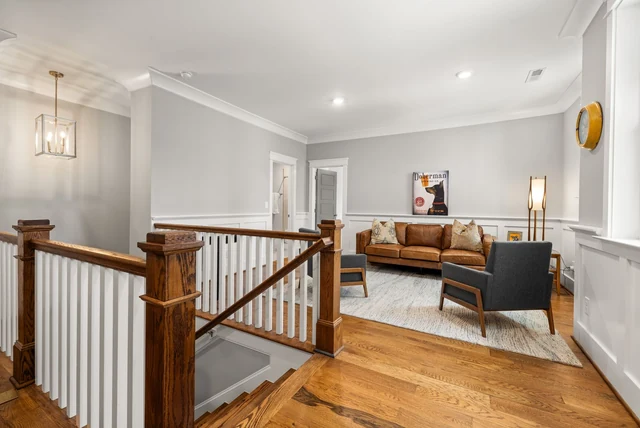

The landing is the most-used room in the house that nobody thinks of as a room. In a typical UK semi it is a square of carpet with four doors off it, the darkest space upstairs, and the place everything gets dumped on the way to somewhere else.
It is also the first thing you see every morning and the last thing every night, which makes it worth more than the ten minutes of thought it usually gets. Here is what actually fits, and what to do when the landing is barely wide enough to pass on.
Treat It as a Room, Not a Corridor
The single change that improves most landings is deciding it is a place rather than a route. Once you accept that, the decisions get easier: it wants a light source of its own, something on the walls, and one piece of furniture if there is space.
It also wants to feel connected to the staircase below rather than separate from it. Carrying the same wall colour from the hall, up the stairs and across the landing without a break makes the whole vertical space read as one, which is particularly valuable in a narrow house.
The staircase itself is covered in our staircase ideas guide.
Lighting a Landing That Has No Window
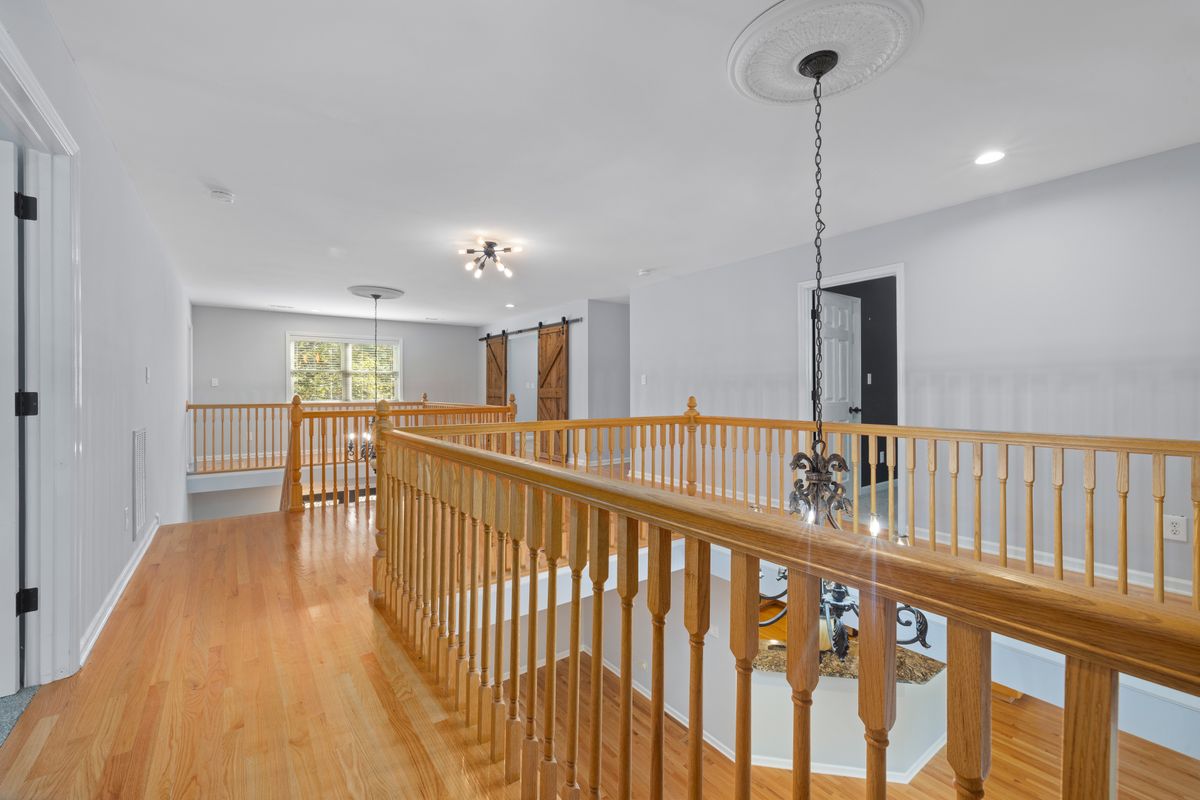
Plenty of UK landings have no natural light at all, and the standard single ceiling bulb makes them feel like a hotel corridor.
A wall light or two at head height does far more than a brighter ceiling fitting, because it puts light at the level people actually occupy and creates shadow rather than flattening everything. A small lamp on a console, if there is room for one, turns the landing from a passage into somewhere with warmth.
Keep the bulbs warm, around 2700K, and match them to the staircase lighting below so the two spaces feel continuous. A dimmer is worth fitting here more than almost anywhere else in the house, because a landing at three in the morning wants very different light from a landing at eight.
Furniture That Actually Fits
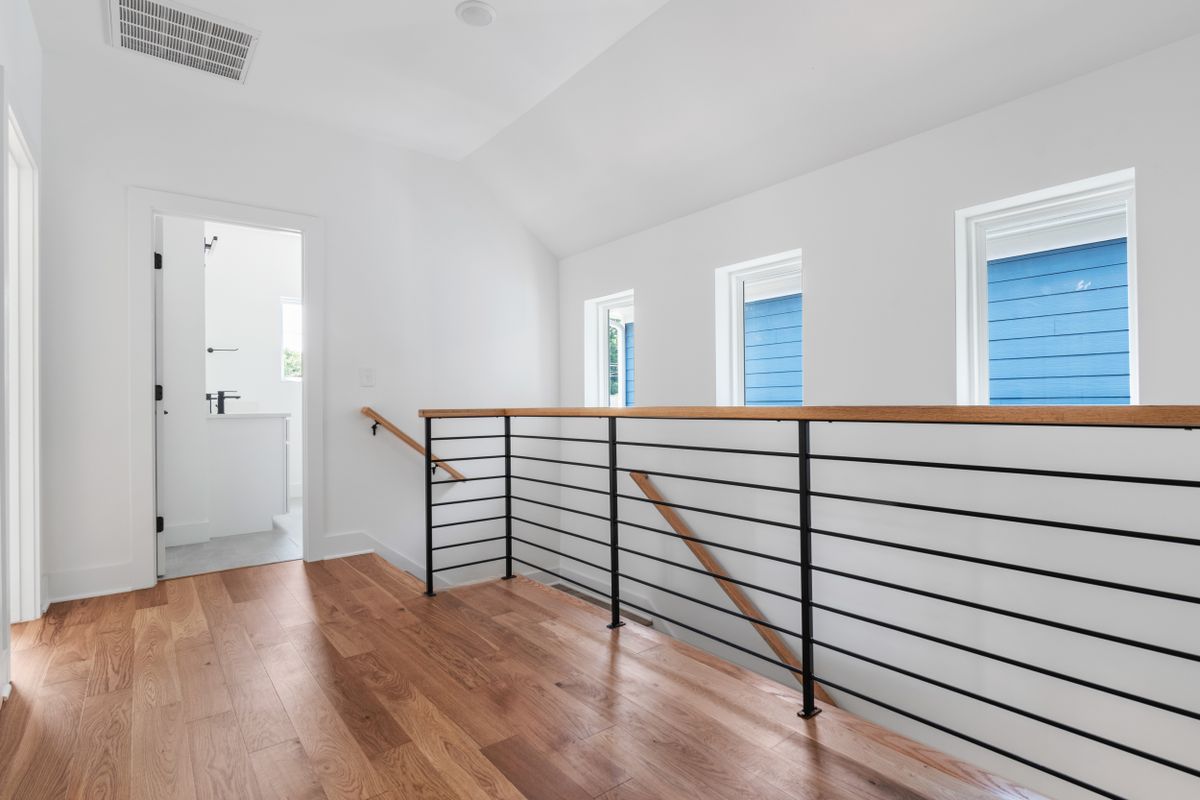
Landings defeat normal furniture. Depth is the constraint, not length.
- A narrow console, ideally under 30cm deep, gives you a surface and a place for a lamp without blocking the walkway.
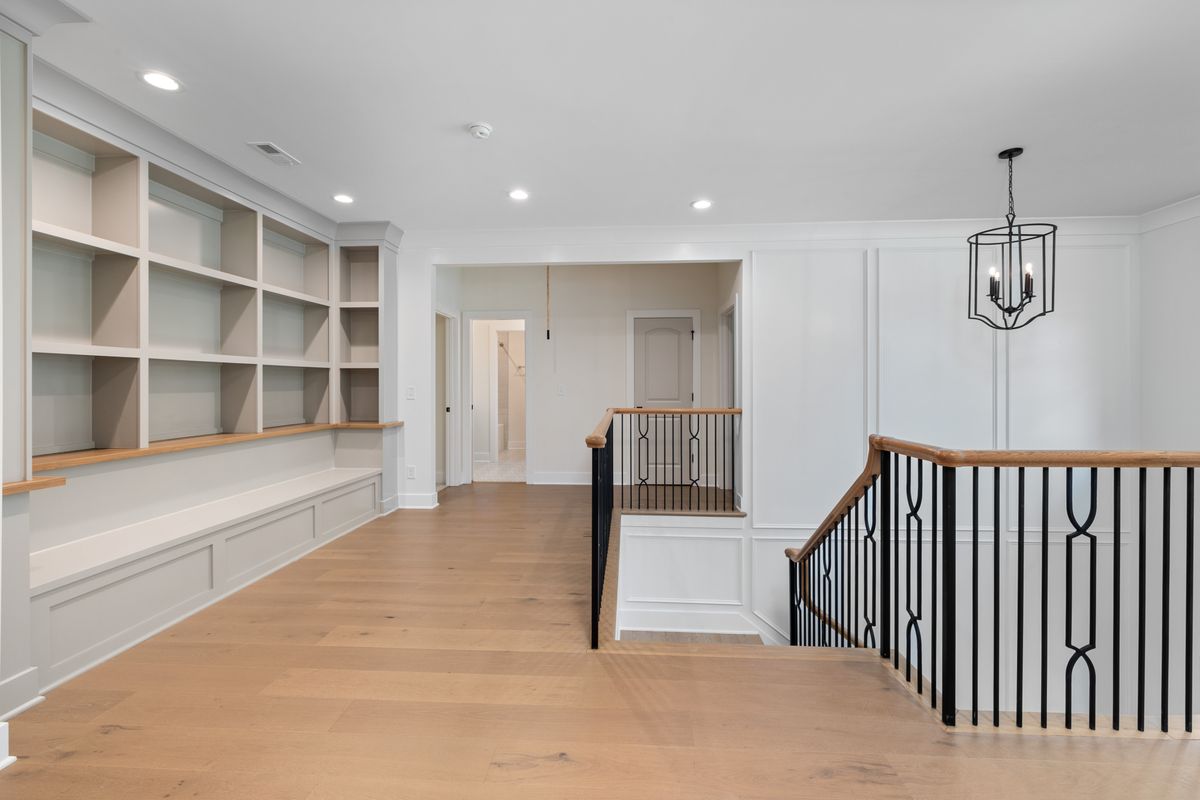
- A slim bookcase against the one long wall turns dead space into storage and gives the landing a reason to exist.
- A single chair in a corner sounds pointless and is surprisingly lovely if the landing has any daylight.
- A blanket box or ottoman under a window doubles as seating and linen storage.
- Avoid anything with doors that swing into the walking space, and measure the clearance to every bedroom door before buying.
The Window Seat, If You Are Lucky Enough
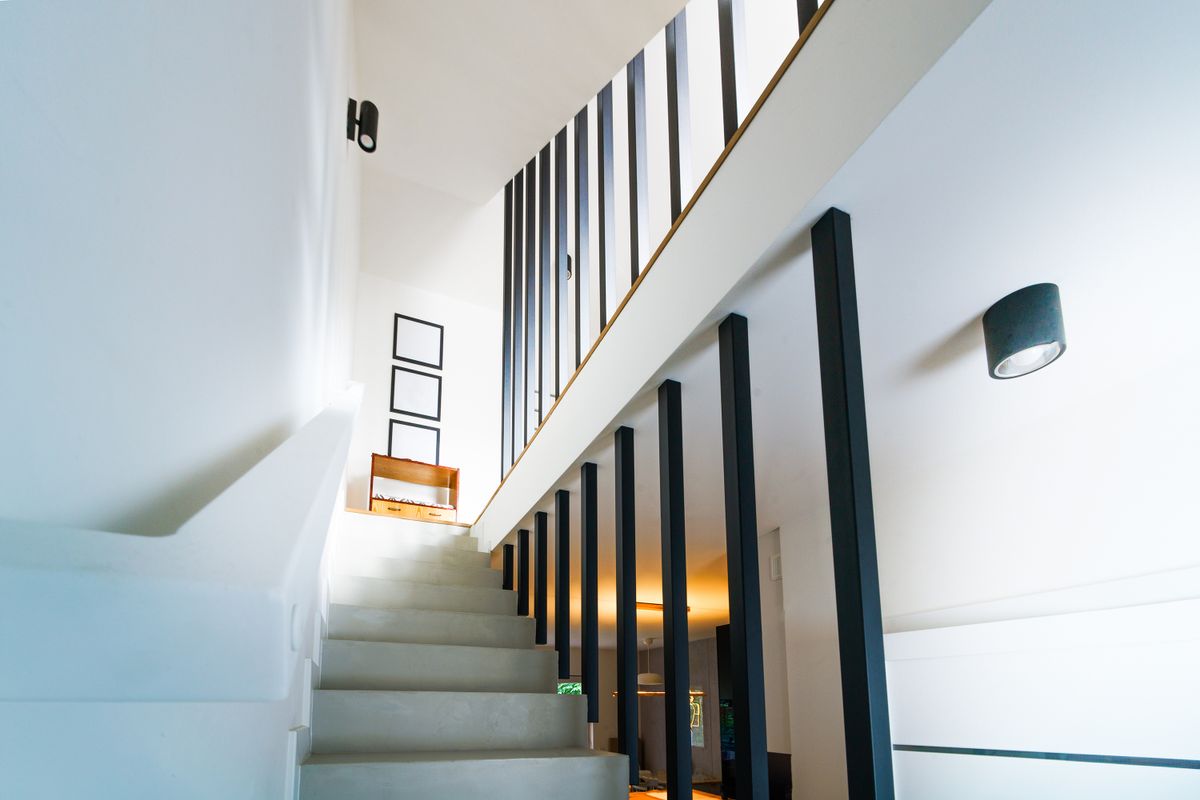
Where a landing has a window, particularly a half-landing window over the stairs, a built-in seat with storage underneath is one of the best-value joinery jobs in a house.
It costs relatively little because it is a simple box, it uses space that is otherwise completely wasted, and it swallows the bedding, spare towels and suitcases that clog airing cupboards. It also gives an upstairs landing somewhere to sit, which changes how the space feels entirely.
Hinged lids are cheaper; drawers are far easier to live with, because you do not have to move the cushions and whoever is sitting there to get anything out.
Narrow Landings and Awkward Shapes
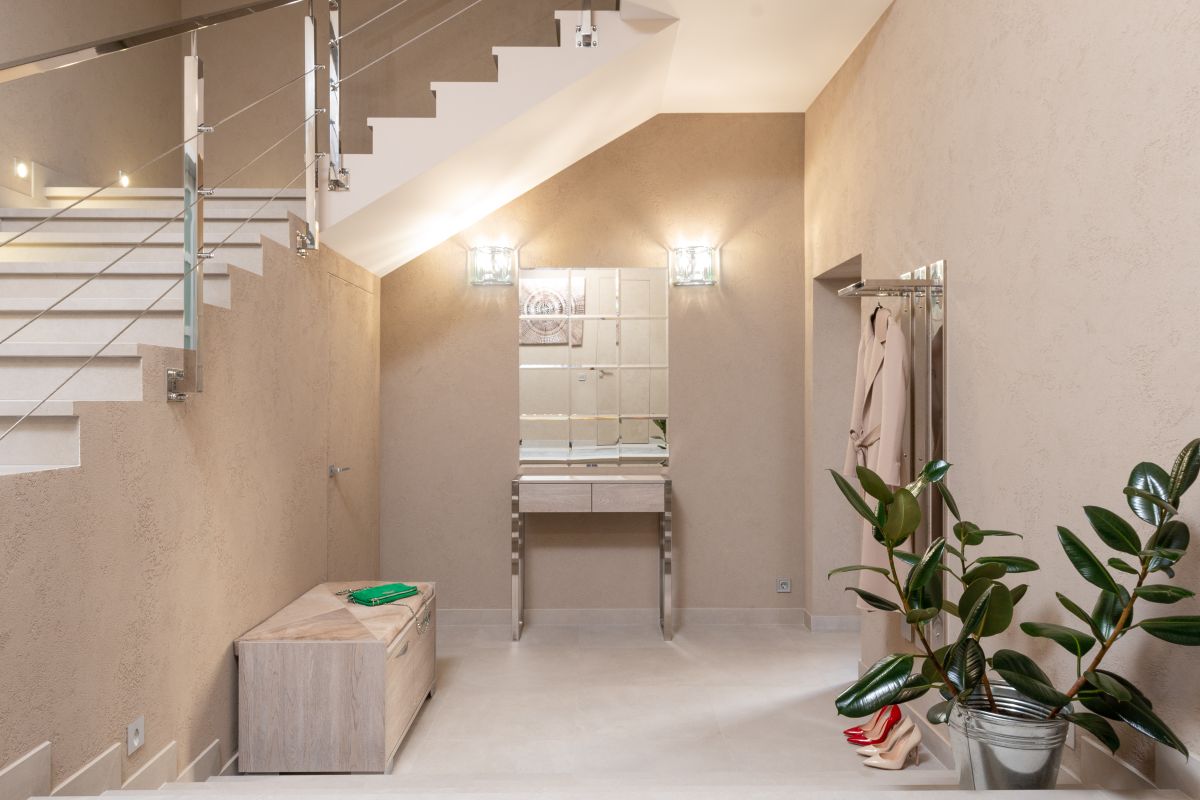
Many landings are barely wider than a doorway. The instinct is to leave them completely empty, which keeps them passable and also keeps them bleak.
The compromise is shallow. Picture ledges rather than shelves. A mirror rather than a cabinet. Hooks rather than a coat rack. Anything that projects less than about 100mm from the wall will not affect how the landing works but will change how it looks.
Long-and-low also helps. A single long runner down the landing draws the eye along and makes the space read as longer rather than tighter, in the same way a stair runner lengthens a flight.
The Airing Cupboard Nobody Has Sorted
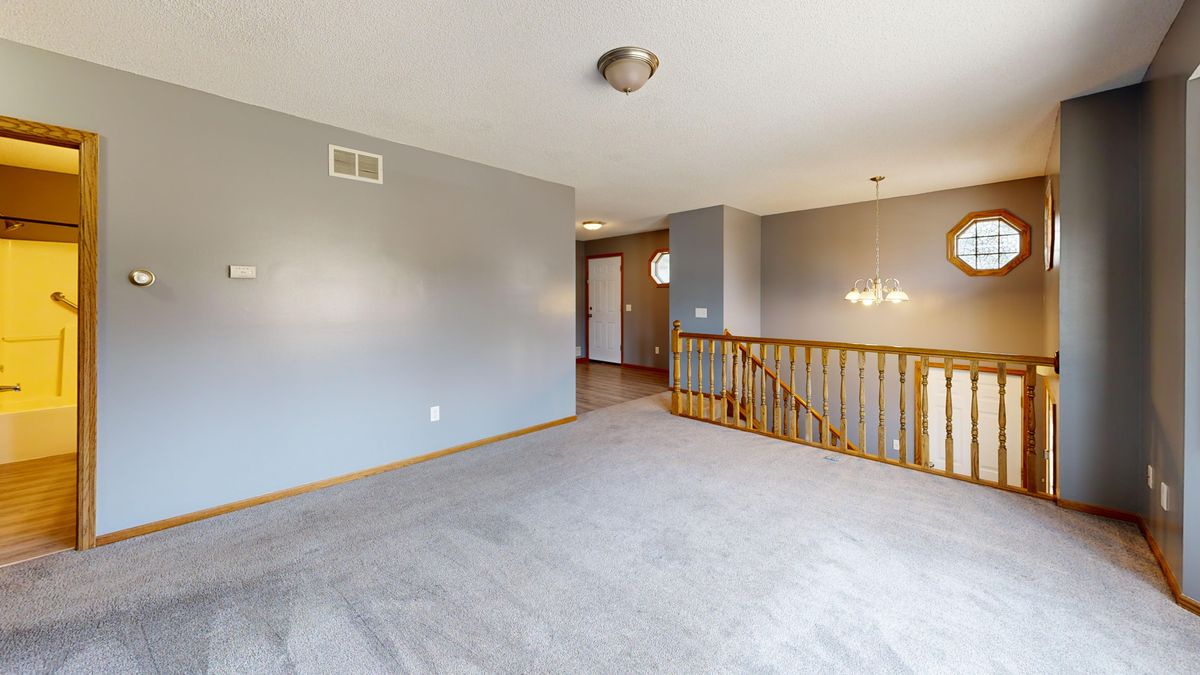
Most UK landings have one, and most are a disaster of half-folded towels and things that have no other home.
It is worth an afternoon, because it is usually the only storage the landing has. Add a second rail or a set of shallow shelves, put everything into labelled baskets rather than stacks, and keep the space around the cylinder clear for airflow.
If the cupboard has been left over from a removed hot water cylinder, it is often deep enough to become genuinely useful storage or even a very small study nook with a door on it.
Colour on a Landing

Landings are usually short of light and surrounded by doors, which makes colour choices behave differently than in a bedroom.
Continuing the hall and stairs colour is the safest and usually the best option. Where you want the landing to feel distinct, change the ceiling rather than the walls, or paint the doors and architraves rather than the walls between them. Painted doors in a slightly deeper shade than the walls is a quiet trick that makes a plain landing look considered.
Very dark colours can work beautifully on a landing with a window and are punishing on one without. Test on the wall opposite the bedroom doors and look at it after dark under your own lighting.
What to Put on the Walls
Landing walls are broken up by doors, so large single pieces rarely fit. This is a space for small things, hung well.
A row of small frames at a consistent height along the one clear wall works, as does a single mirror opposite the stairs, which bounces whatever light exists back down the flight. Picture ledges let you change what is displayed without putting more holes in the wall.
If the staircase below already has a gallery, carry two or three frames onto the landing so the arrangement resolves rather than stopping abruptly at the top step.
Flooring and Sound
Landings sit directly above living space in most UK houses, so what you put down affects the room below as much as the landing itself.
Carpet with decent underlay is still the quietest option and the reason most landings have it. Where you want hard flooring for looks, a good acoustic underlay is not optional, and a long runner down the centre will absorb most of the footfall.
Whatever you choose, make the transition at the top step deliberate. A neat nosing where stair covering meets landing floor is a small detail that makes an amateur job look professional.
Quick Wins for a Tired Landing
- Replace the ceiling bulb with a warm dimmable one and add a single wall light.
- Hang one mirror opposite the top of the stairs.
- Put a runner down the length of it.
- Paint the doors and architraves one shade deeper than the walls.
- Sort the airing cupboard and put everything into baskets.
- Clear the floor entirely. A landing with nothing on the floor already looks twice as considered.
For the floor below, see our hallway decorating guide.
Final Thoughts
A landing does not need much. One good light, one mirror, a runner and a sorted cupboard will transform the space most people walk through without seeing.
If there is a window, put a seat under it. It is the best money you will spend upstairs, and it will still be earning its keep in twenty years.
Frequently Asked Questions
How do you decorate a small landing?
Keep everything shallow. Picture ledges, a mirror and hooks project little into the walkway. A long runner makes the space read as longer.
What furniture fits on a landing?
A console under 30cm deep, a slim bookcase, a blanket box under a window or a single chair. Avoid anything whose doors swing into the walkway.
How do you light a landing with no window?
Wall lights at head height rather than a brighter ceiling bulb, in warm white around 2700K, ideally on a dimmer and matched to the staircase lighting.
Should the landing be the same colour as the hallway?
Usually yes. Carrying one colour from hall to stairs to landing makes the whole vertical space feel larger and more deliberate.
What can I do with the airing cupboard?
Add a second rail or shallow shelves and use labelled baskets. Keep airflow around any cylinder. If the cylinder has gone, it may suit a small study nook.
Is carpet better than hard flooring on a landing?
Carpet with good underlay is quieter, which matters because a landing sits above living space. With hard flooring, use acoustic underlay and a runner.
Disclaimer
This article is for general information only. Check clearances and fire safety requirements for your property before altering circulation spaces or storage on a landing.