
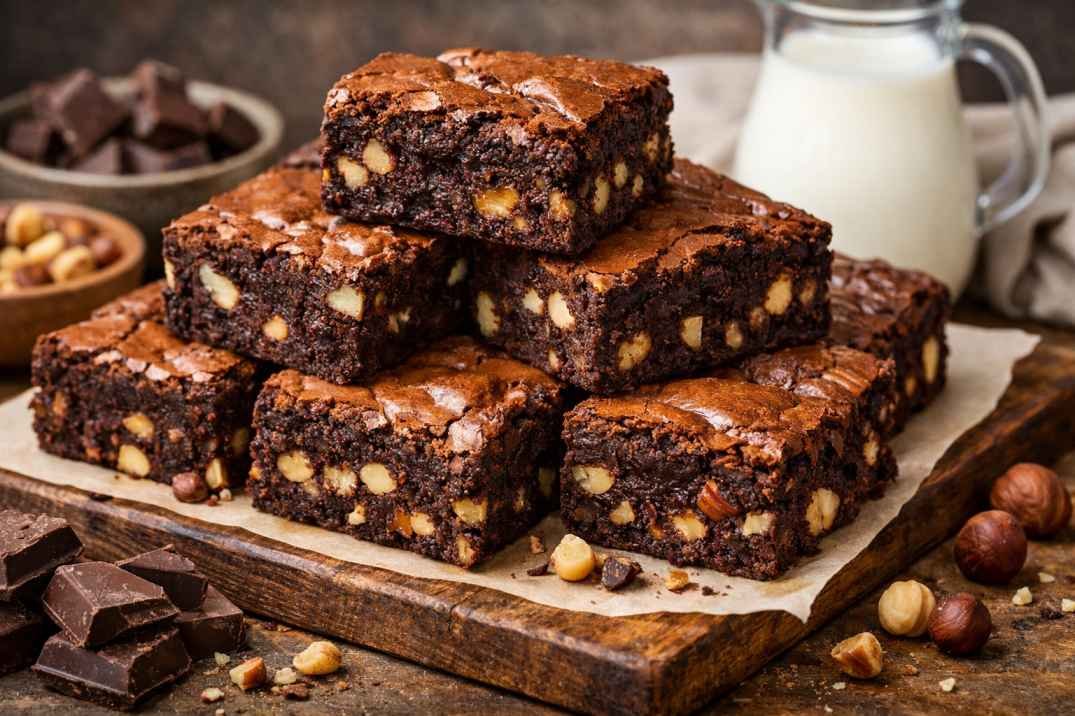

A classic homemade chocolate brownie recipe inspired by traditional baking principles, delivering rich flavour, a delicate crust and perfectly fudgy texture with reliable results.
This classic chocolate brownie recipe uses quality dark chocolate, balanced ingredients and careful technique to create rich, fudgy brownies with consistent, reliable results. Designed for home bakers who value precision over trends, it focuses on flavour depth, structural balance and timeless baking methods.
Key Techniques for Making the Best Chocolate Brownies
A successful brownie depends on control rather than complexity, where small technical choices have a direct impact on texture, moisture and structure. It should sit between cake and confection, offering structure without dryness and richness without heaviness. This balance comes from minimal aeration, careful heat application and respect for ingredient ratios. Brownies do not benefit from aggressive mixing or extended baking; instead, they reward patience and precision.
Traditional baking emphasises understanding how each step affects texture. When applied to brownies, this approach produces a soft interior that sets naturally as it cools, rather than being forced firm in the oven.
Chocolate Selection and Melting Technique
Chocolate provides both flavour and structure. Dark chocolate with around 70–75% cocoa solids offers depth without excessive bitterness or sweetness. Lower cocoa percentages dilute chocolate intensity, while very high cocoa levels can introduce bitterness that overwhelms the sweetness and fat balance of the brownie.
Gentle melting is essential. Using a bain-marie prevents overheating and fat separation, which can lead to greasy or grainy brownies. Chocolate and butter should melt slowly until smooth, then be allowed to cool slightly before other ingredients are added.
Butter, Fat Balance and Texture

Image source: pinterest.com
Butter contributes richness, moisture and flavour while supporting a cohesive crumb. When combined properly with chocolate, it creates a glossy batter that sets evenly during baking.Unlike oil, butter firms as it cools, which helps brownies hold their shape, produce clean slices and develop a structured yet fudgy bite.
This characteristic improves with resting and even more so after chilling, reinforcing butter as the preferred fat for classic brownies.
Sugar Choice and Its Effect on Crumb
Sugar influences texture as much as sweetness. Golden caster sugar dissolves easily and contributes subtle caramel notes, producing a smoother interior. Granulated sugar creates a slightly coarser crumb and increased chew, which works particularly well in nut-based brownies.
Selecting sugar intentionally allows the baker to fine-tune texture and mouthfeel without changing ingredient ratios or compromising the structure of the brownies.
Eggs and Controlled Mixing
Eggs bind the batter and give structure, but must be handled carefully.Over-whisking introduces excess air into the batter, which causes brownies to rise too much and develop a light, cake-like crumb instead of a dense, fudgy texture. Light mixing keeps the crumb dense and fudgy.
Adding eggs gradually and at room temperature helps them incorporate smoothly, maintaining a stable emulsion without curdling.
Flour, Raising Agents and Structural Restraint

Image source: pinterest.com
Flour plays a supporting role and should be kept to a minimum. Its job is to hold the brownie together, not to create lift. A very small amount of baking powder can soften the texture slightly, preventing heaviness without introducing a cakey crumb. Precision matters here, as even a small excess of flour or raising agent can quickly compromise density and turn brownies dry or cakey.
Nuts as a Functional Ingredient
When included, nuts should enhance structure rather than distract from it. A four-nut combination — such as macadamia, Brazil nut, pecan and hazelnut — introduces contrasting textures and fat profiles. Rough chopping preserves bite variation, while toasting intensifies aroma and removes raw flavours.
Exact toasting time matters. Under-toasted nuts taste flat; over-toasted nuts become bitter and dominate the chocolate.
Equipment, Tin Size and Preparation

Image source: pinterest.com
Brownies require minimal equipment. A saucepan or heatproof bowl, spatula, whisk and lined tin are sufficient. Electric mixers are unnecessary and often counterproductive.
Tin dimensions affect thickness, heat distribution and setting time. Wider tins produce thinner brownies with even cooking, while deeper tins retain moisture but require careful timing to avoid underdone centres.
Method Overview for Fudgy Chocolate Brownies

Image source: pinterest.com
Chocolate and butter are melted gently until smooth, then combined with sugar while warm. Eggs are added slowly with light mixing to maintain density. Dry ingredients are folded in just until combined, avoiding overworking. The batter is baked until the edges are set and the centre remains slightly springy.
This restrained method reflects classic baking principles and produces consistent results.
Baking Time and Texture Judgement

Image source: pinterest.com
Brownies are not tested with a clean skewer, as this usually indicates overbaking rather than doneness. Instead, doneness is judged by touch and appearance. A set surface, firm edges and a soft, responsive centre indicate the correct moment to remove them from the oven.
Residual heat completes the setting process during cooling, ensuring a fudgy interior rather than dryness.
Cooling, Cutting and Setting
Cooling is a critical structural stage, during which starches set and fats redistribute to stabilise the brownie. As brownies rest, starches set and fats redistribute, creating stability. Cutting too early causes crumbling and collapse. Allowing brownies to cool fully results in clean slices and a cohesive crumb.
Some methods allow slicing after a short rest for softer edges, but full cooling provides the most consistent texture.
Texture Adjustments Without Changing the Recipe
Minor adjustments refine results without altering ratios. Slightly shorter baking produces a softer centre, while longer resting or chilling firms the crumb. Freezing and slow thawing can further stabilise texture, often improving slice quality.
Common Errors and Practical Corrections
Dry brownies usually result from overbaking or excess flour. Greasy results often come from overheated chocolate or fat separation. Cakey brownies are caused by over-whisking eggs or extended baking time. Each of these issues can be corrected through improved technique and timing, without changing the ingredient list or recipe ratios.
Serving and Storage

Image source: pinterest.com
Chocolate brownies are best served simply, allowing their rich flavour and fudgy texture to take centre stage. They pair particularly well with coffee, tea or a glass of cold milk, and can be turned into a more indulgent dessert when served warm with vanilla ice cream or fresh berries. For birthdays and special occasions, brownies also work well alongside larger celebration bakes. If you’re planning a party spread, this crunchie birthday cake offers a contrasting option, combining chocolate sponge with honeycomb pieces for a lighter, crowd-friendly alternative.
Once cooled, brownies can be stored in an airtight container at room temperature for several days. Refrigeration extends their shelf life but firms the texture slightly, while freezing individual portions preserves quality for longer storage.
Chocolate Brownie Recipe Card

Image source: pinterest.com
Time & Yield
| Detail | Information |
|---|---|
| Prep Time | 15 minutes |
| Cook Time | 25–30 minutes |
| Total Time | 45 minutes |
| Yield | 12–15 brownies |
Ingredients
For the Brownie Batter
- 125g dark chocolate (70–75% cocoa solids), broken into pieces
- 175g unsalted block butter
- 3 large eggs, at room temperature
- 250–275g sugar (golden caster or granulated)
- 75g plain flour
- 1 level teaspoon baking powder
- ¼ teaspoon salt
- 1 teaspoon vanilla extract
Optional Add-ins
- 100–150g mixed nuts (walnuts, pecans, hazelnuts or four-nut mix), roughly chopped and lightly toasted
Instructions
- Preheat the oven to 170°C (160°C fan). Grease and line a 20cm square or similar-sized rectangular tin, leaving parchment overhang.
- Melt the chocolate and butter gently over barely simmering water, ensuring the bowl does not touch the water. Stir until smooth and remove from heat.
- Stir the sugar and vanilla into the warm chocolate mixture.
- Add the eggs one at a time, mixing lightly after each addition.
- Sift in the flour, baking powder and salt. Fold gently until just combined. Add nuts if using.
- Pour into the prepared tin and level the surface.
- Bake for 25–30 minutes, until set on top with a slightly springy centre.
- Cool completely in the tin before lifting out and slicing.
Storage & Serving
- Room Temperature: Airtight container, up to 3 days
- Refrigeration: Up to 5 days (bring to room temperature before serving)
- Freezing: Individually wrapped, up to 2 months
- Serving: Plain, or with vanilla ice cream or fresh berries
Conclusion
This Delia Smith–inspired chocolate brownie recipe shows how classic baking principles continue to deliver the most reliable results. By focusing on quality ingredients, gentle handling and precise baking judgement, it produces brownies that are rich, fudgy and well balanced. Free from unnecessary trends or shortcuts, this approach rewards patience and technique, resulting in a timeless bake that suits both everyday treats and confident sharing. For home bakers who value consistency, depth of flavour and structural balance, this recipe delivers a dependable result that rewards careful technique and thoughtful baking.
Frequently Asked Questions
Is this the original Delia Smith chocolate brownie recipe?
This is an original recipe inspired by the classic baking principles associated with Delia Smith. It is independently written and does not reproduce or adapt any official recipe.
What makes Delia Smith–style brownies different from other brownies?
Delia Smith–style brownies focus on clarity, balance and technique rather than shortcuts or trends. They rely on quality dark chocolate, gentle mixing and careful baking to achieve a fudgy texture without becoming greasy or cakey.
Why are my brownies turning out cakey instead of fudgy?
This usually happens if the eggs and sugar are over-whisked, introducing too much air, or if the brownies are overbaked. Brownies should be removed while the centre is still slightly springy, as they continue to set while cooling.
What type of chocolate is best for chocolate brownies?
Dark chocolate with 70–75% cocoa solids works best. It provides depth of flavour without excessive sweetness. Milk chocolate is not recommended, as it can make brownies overly sweet and reduce chocolate intensity.
Should I use caster sugar or granulated sugar for brownies?
Both work, but they give slightly different results. Golden caster sugar creates a smoother, fudgier texture, while granulated sugar adds a little more chew and a rustic crumb. Choose based on your texture preference.
How do I know when brownies are perfectly baked?
The surface should look set, the edges should be firm, and the centre should feel slightly springy when gently pressed. A clean skewer means they are overbaked; moist crumbs are ideal.
Can I add nuts to this brownie recipe?
Yes. Nuts are optional but work well when roughly chopped and lightly toasted. Walnuts, pecans, hazelnuts or a mixed nut combination add texture without overpowering the chocolate.
Should brownies cool completely before cutting?
Yes. Cooling allows the brownies to set properly and develop structure. Cutting too early can cause crumbling or collapse. For clean slices, allow them to cool fully before slicing.
Can chocolate brownies be frozen?
Yes. Brownies freeze very well. Wrap individual portions and freeze for up to 2 months. Thaw at room temperature for best texture.
Are these brownies suitable for beginners?
Yes. The method is straightforward and does not require special equipment. The focus on technique rather than speed makes this recipe reliable even for less experienced bakers.