
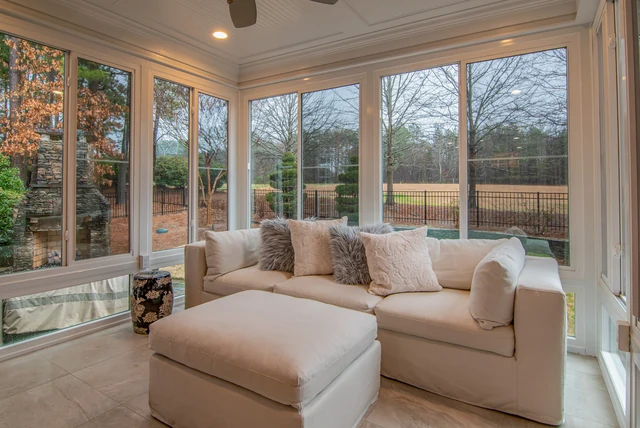

Britain has more conservatories than almost anywhere in Europe and uses them less than almost anywhere in Europe. Most spend July too hot to sit in and January too cold to bother with, which leaves roughly six usable weeks in spring and another six in autumn.
That is a lot of floor area doing nothing. The good news is that the things which fix it are mostly furnishing decisions rather than building work: what is on the roof, what is at the windows, what is underfoot and where the heat comes from. This guide covers all of it.
Be Honest About What the Room Is For
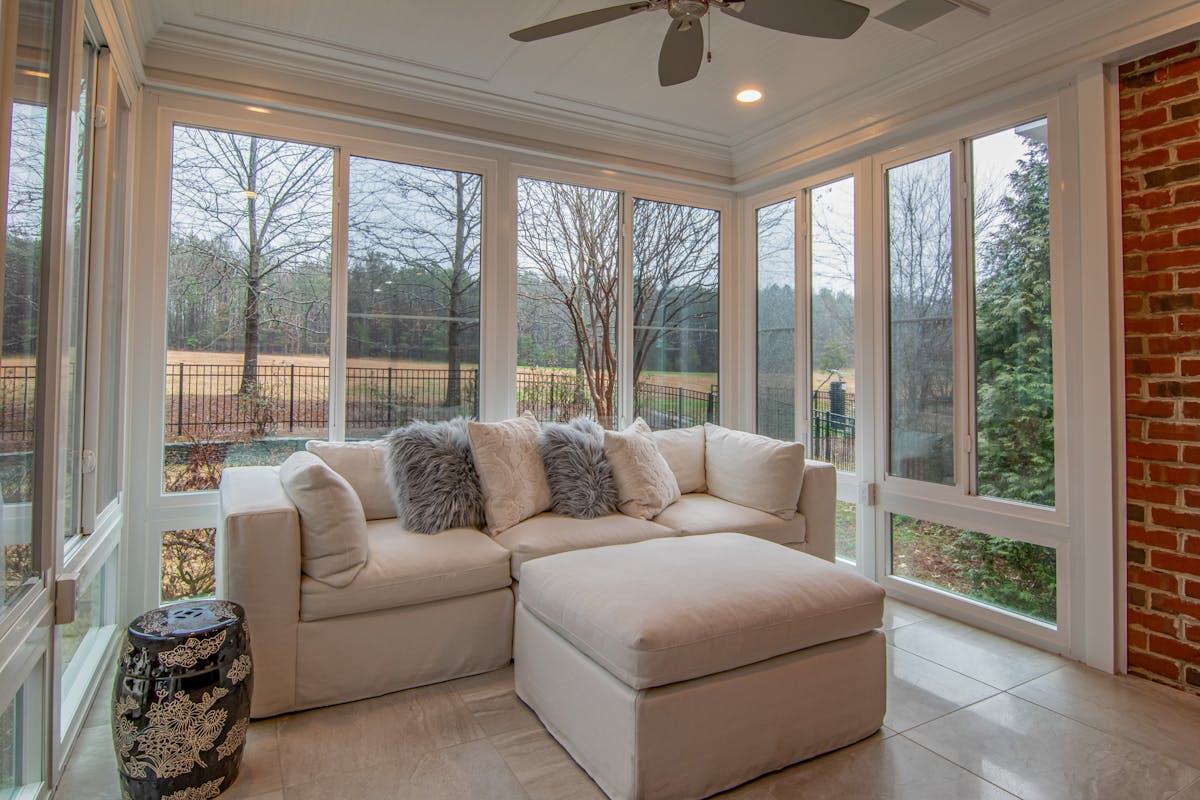
The most useful thing you can do before spending anything is decide what the conservatory is actually going to be, because the answer changes every decision afterwards.
- A second sitting room needs proper heating, comfortable seating and a floor you can walk on barefoot.
- A dining room needs a hard floor, a light over the table and less worry about winter warmth if meals are short.
- A home office needs glare control above everything else, and a power supply that was probably not designed for a desk.
- A plant room or garden room can tolerate the temperature swings that make other uses miserable, and is the one use conservatories are naturally good at.
- A playroom needs a forgiving floor and safety glass checked.
Rooms that are meant to be everything usually end up being a corridor with a sofa in it.
Temperature Is the Whole Problem
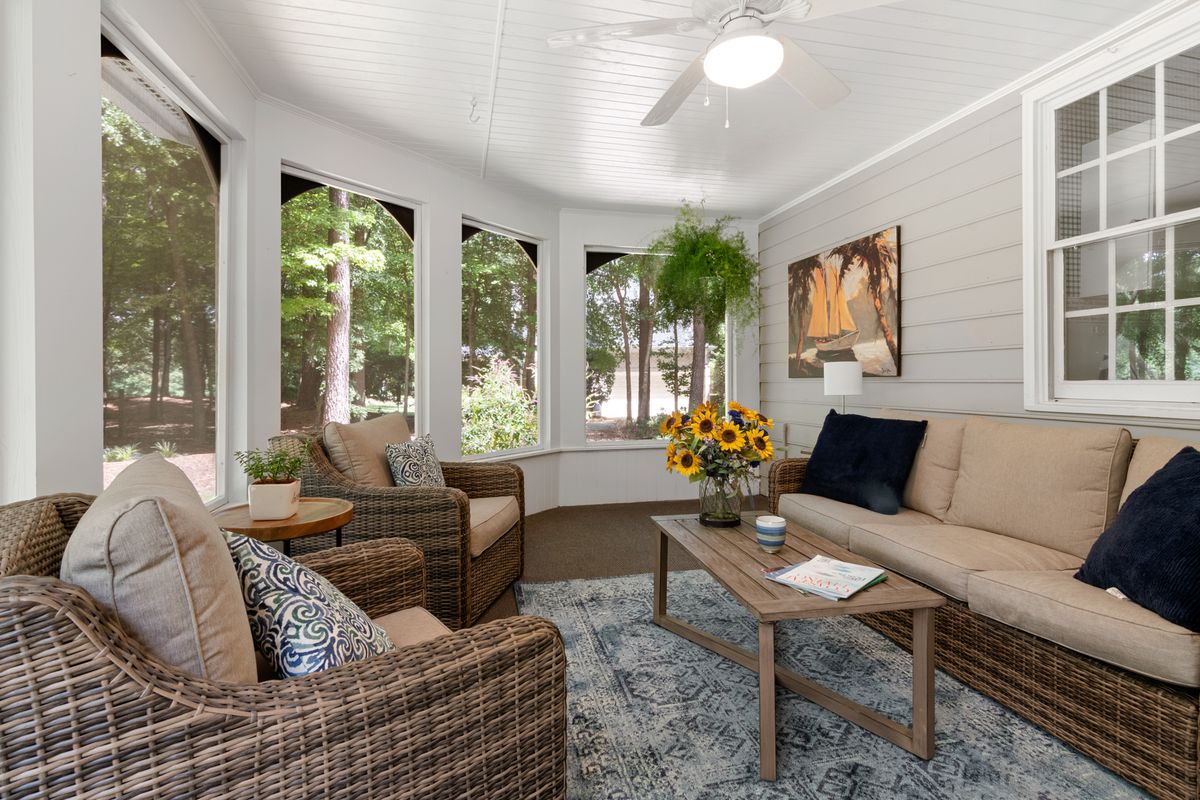
Nearly every complaint about a conservatory comes down to one thing: it is a glass box, and glass is very good at letting heat in and very bad at keeping it.
In summer, sun through a glass or polycarbonate roof heats the room far faster than the walls can lose it. In winter the same surfaces radiate heat straight out into the night. Everything else in this article, the blinds, the roof, the flooring and the heating, is a different angle on that single problem.
Solve the roof first, then the glazing, then the heating. Doing it the other way round means paying to heat a room that is still losing warmth through the ceiling.
Furniture That Survives a Conservatory
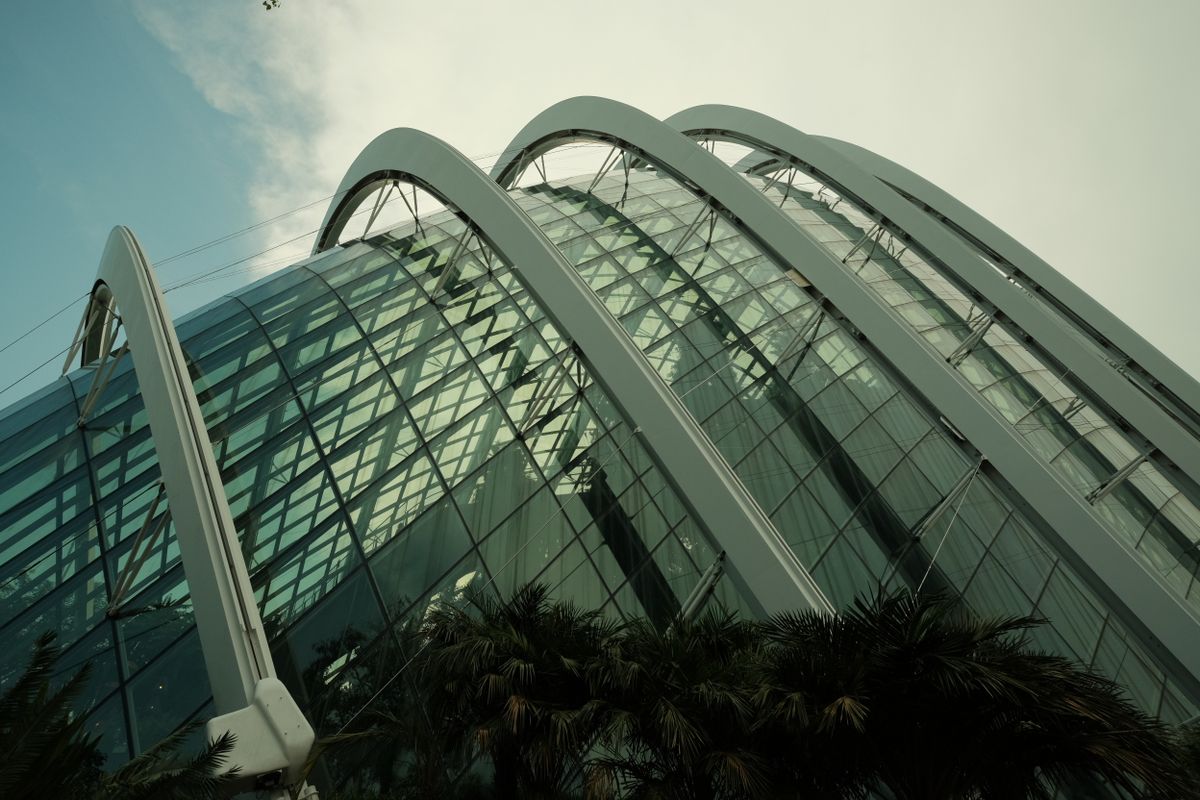
A conservatory is a harsher environment than the rest of the house. Direct sunlight fades fabric quickly, and the humidity swings are hard on solid timber.
Rattan, cane and powder-coated aluminium all cope well. Solid oak can crack as it dries and swells through the seasons. Whatever the frame, choose fade-resistant or solution-dyed fabric for cushions, and keep anything precious, particularly antique timber or leather, out of direct sun.
Scale matters too. Conservatories are usually long and narrow, which tempts people into pushing everything against the glass. Pulling seating slightly away from the walls makes the room feel like a room rather than a waiting area.
More in conservatory furniture ideas.
Blinds Do More Than Any Other Single Change
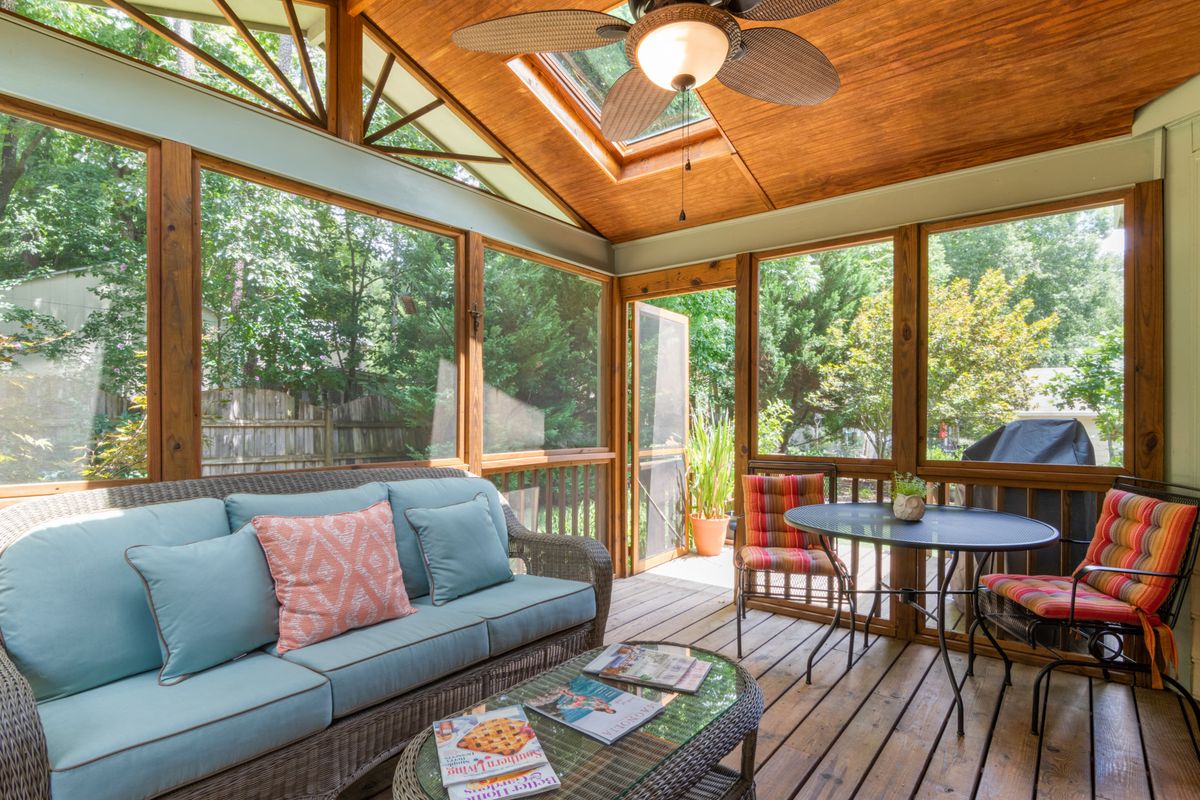
If you can only afford one intervention, make it blinds, and make it roof blinds rather than side blinds.
Most of the heat gain and most of the glare comes through the roof, which is also the part people leave bare because it costs more. Side blinds alone give you privacy and very little temperature control.
Pleated or cellular blinds are the usual choice because the trapped air in the cells insulates in both directions, keeping summer heat out and winter warmth in. They are not cheap, and they change how usable the room is more than anything else on this list.
See conservatory blinds ideas.
The Roof Decides Everything Above It
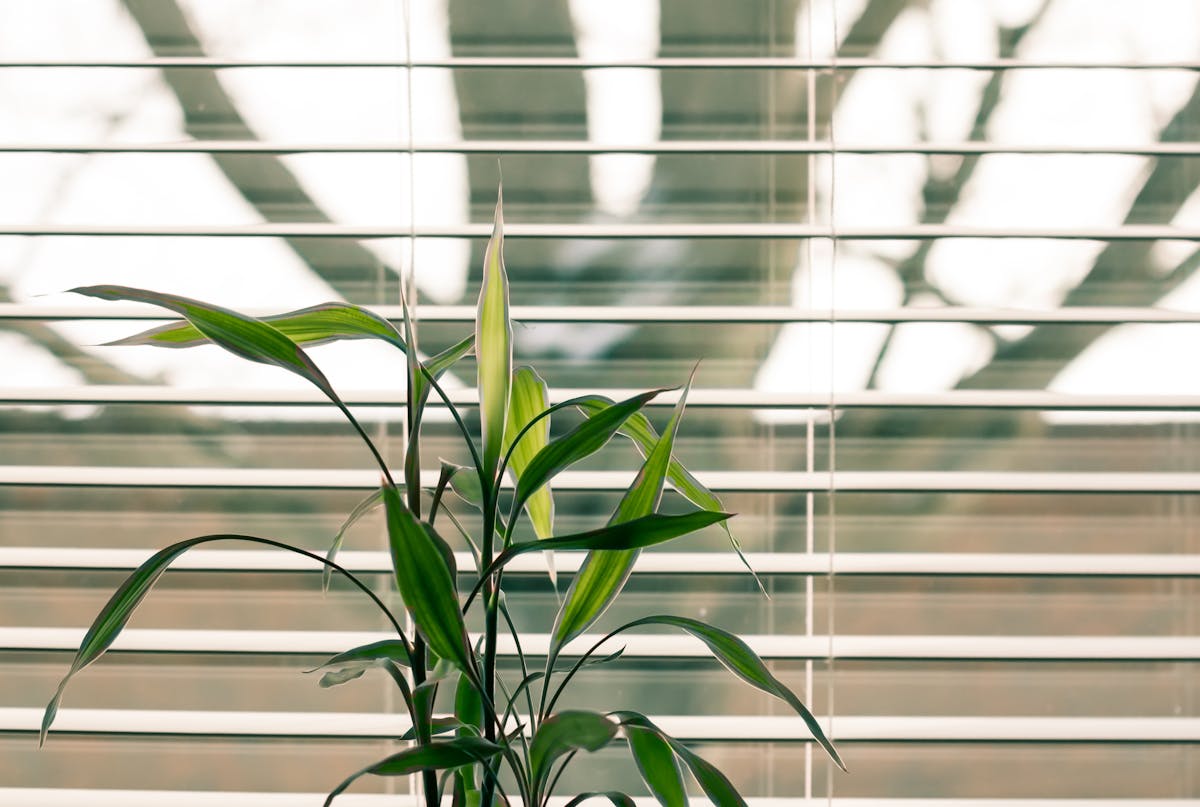
Older conservatories almost all have polycarbonate roofs, which are cheap, light, noisy in rain and poor at insulating. If yours is original and the room is unusable, the roof is usually the reason.
Modern glass roofs with a solar-control coating are a significant improvement, cutting glare and heat gain while keeping the light. Solid or tiled roofs turn the space into something much closer to a normal extension, warm in winter and cool in summer, at the cost of the overhead daylight that made you want a conservatory in the first place.
There is a middle option that suits most homes: a solid roof with roof lights, which keeps a good amount of daylight while behaving thermally like a proper ceiling.
More in conservatory roof ideas.
Flooring for a Room With Big Temperature Swings
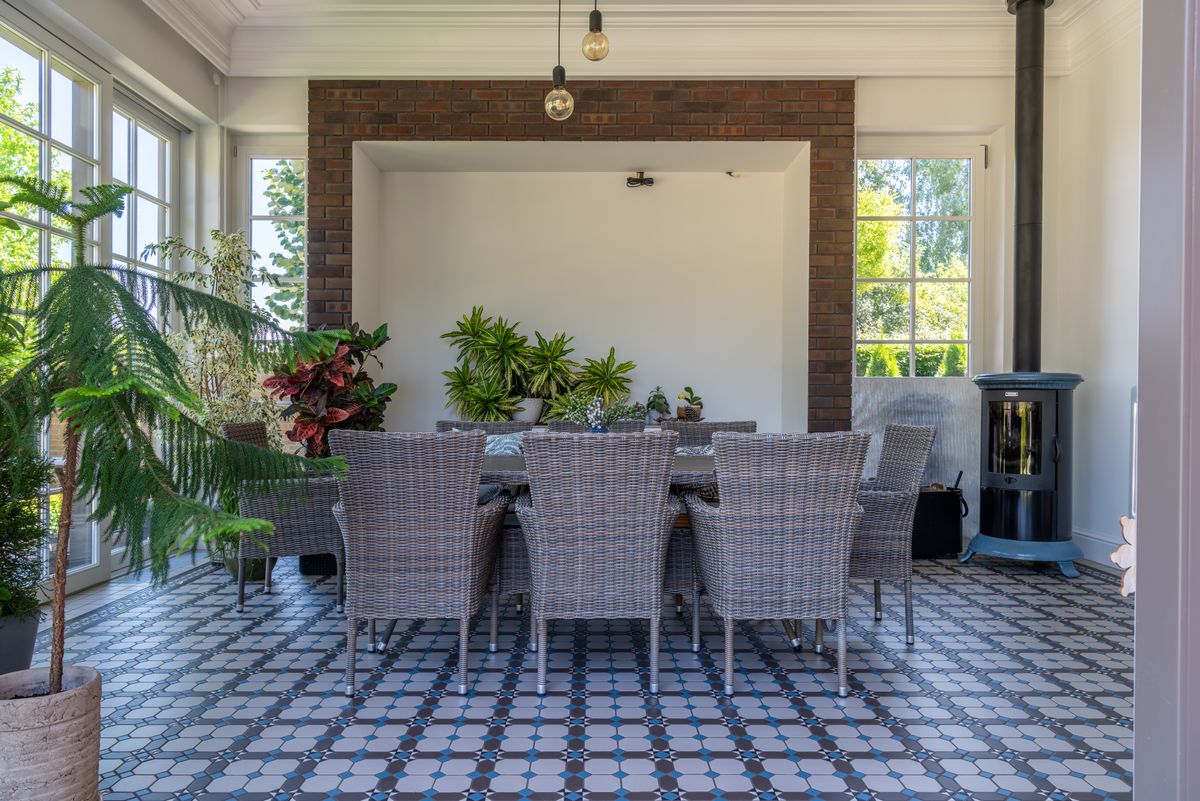
The floor in a conservatory takes sun, damp boots from the garden and a temperature range no other room in the house experiences.
Tile and stone are the traditional answers and pair well with underfloor heating, which is the single best heat source in a glass room. Luxury vinyl tile is warmer underfoot, cheaper and dimensionally stable. Engineered timber handles the humidity swings far better than solid boards, which can gap in summer and cup in winter.
Whatever you choose, check it is rated for direct sunlight. Some vinyls and laminates discolour or soften where the sun tracks across the same strip of floor every afternoon.
See conservatory flooring ideas.
Heating It Without Heating the Garden
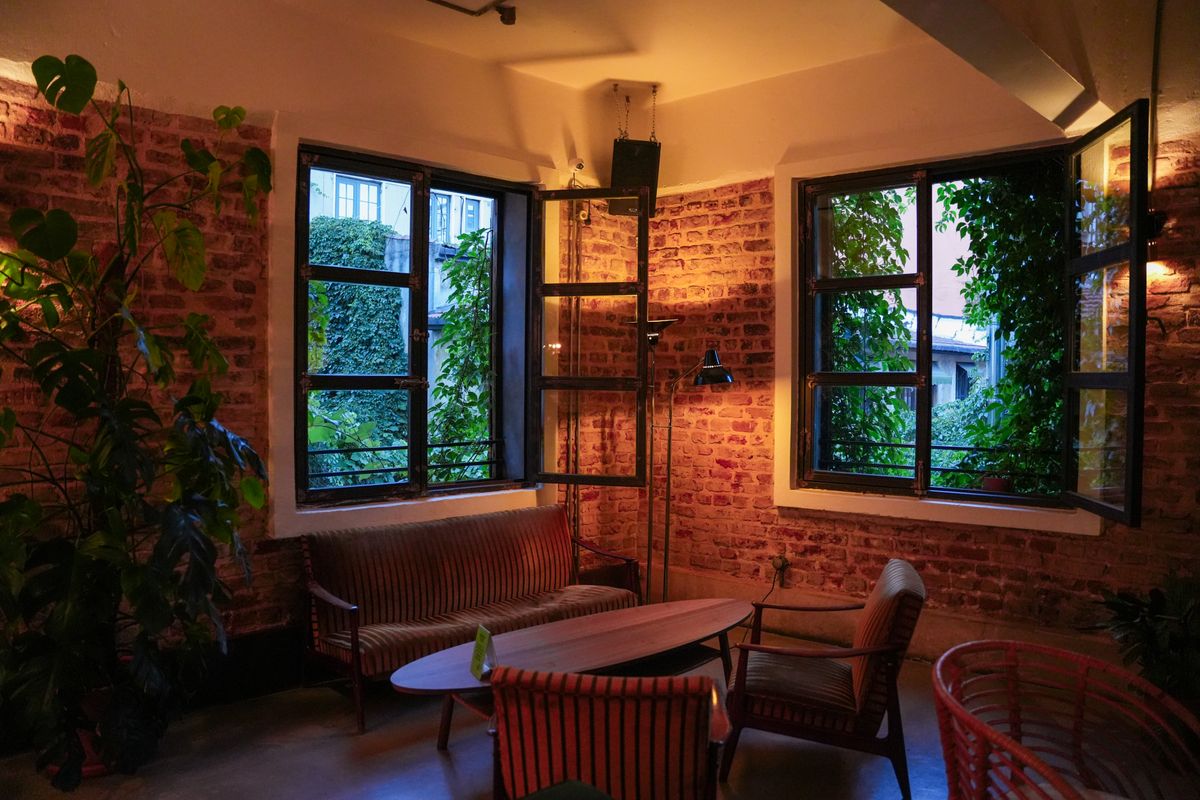
Conservatories are often left off the main heating system, sometimes for good reason: many were built under the building regulations exemption that requires them to be separately heated and separated from the house by external-quality doors.
That leaves electric underfloor heating, a dedicated electric radiator, or an air-source heat pump unit, which is increasingly the sensible choice because it also cools in summer.
Before spending on heat, stop it escaping. Roof blinds, thermal side blinds, draught-proofing around the frames and closing the doors to the house will do more for comfort per pound than a bigger heater.
More in how to keep a conservatory warm in winter.
Small Conservatories and Narrow Spaces
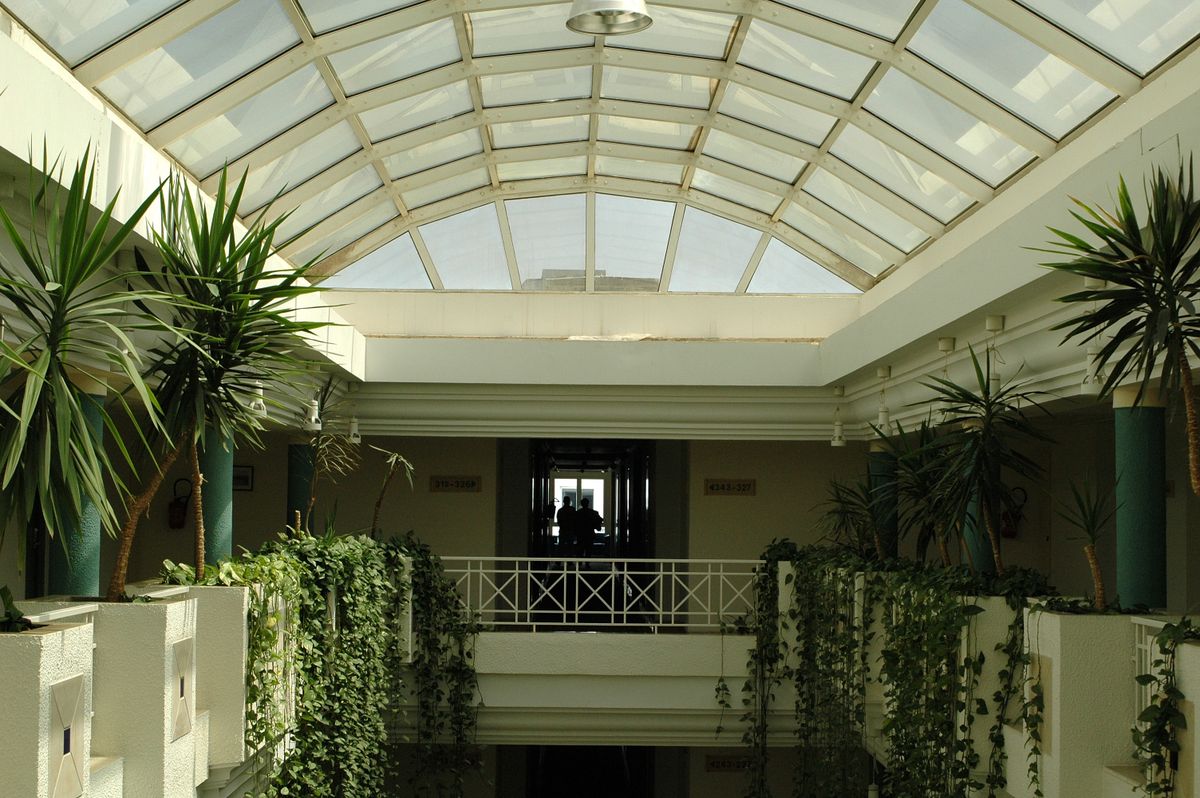
A lot of UK conservatories are small, and small glass rooms are easy to fill badly. Two large sofas facing each other will make a four-metre conservatory feel like a corridor.
The usual answer is one proper piece of seating rather than a set, plus something light like a bistro table or a pair of chairs that can be moved. Keeping furniture legs visible, rather than skirted to the floor, makes a small glass room feel considerably more open.
See small conservatory ideas for the full approach.
Plants, Because This Is the One Room That Suits Them
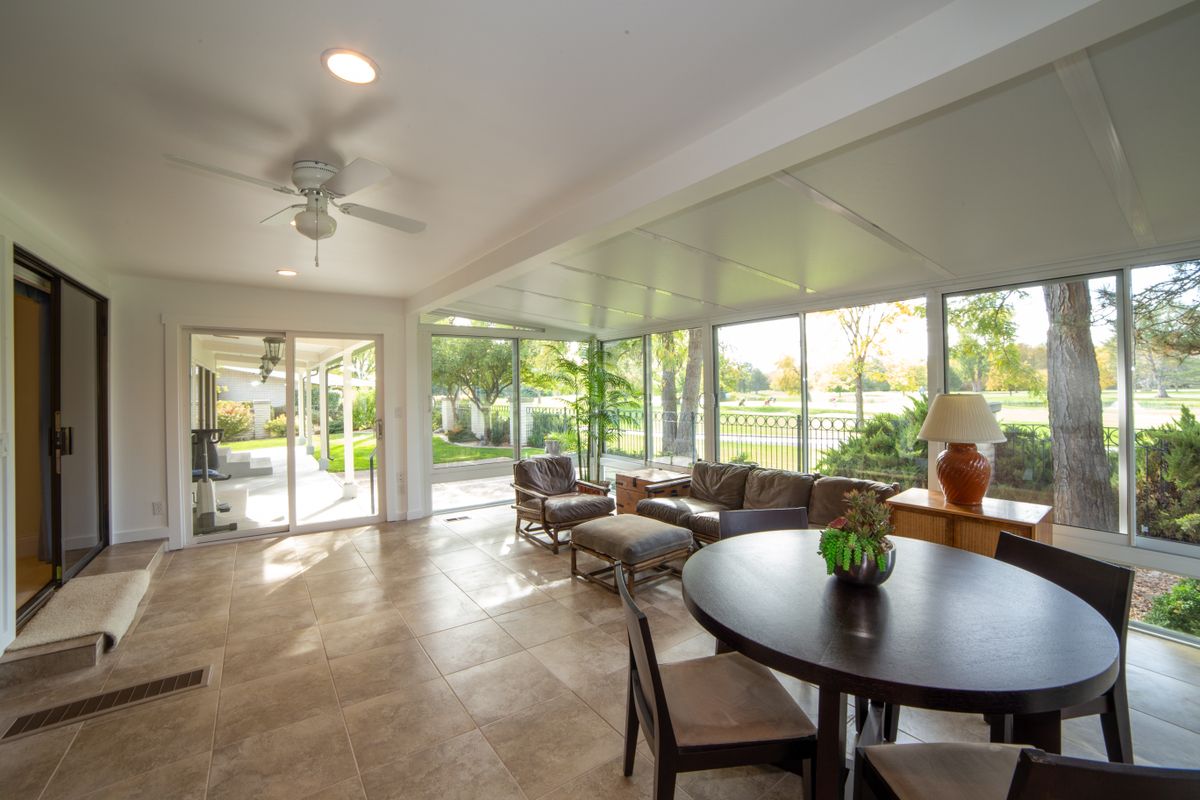
Whatever else a conservatory struggles with, it is the best place in a British house to grow things, and plants soften all that glass and hard framing.
Choose for the conditions rather than the look. A south-facing conservatory suits succulents, citrus and pelargoniums that enjoy heat and bright light. A north or east-facing one suits ferns and foliage plants that would scorch elsewhere. Almost nothing enjoys sitting in a cold draught by the door in January.
Group plants at different heights rather than lining them along the windowsill. It looks better and, in a room dominated by straight frames, the irregularity does a lot of work.
Planning Permission and Building Regulations
Most conservatories in England are built under permitted development and under a building regulations exemption, but both come with conditions, and the conditions are where people come unstuck.
- The exemption generally applies to a conservatory at ground level and under 30 square metres.
- It must be separated from the house by external-quality walls, doors or windows.
- It needs independent heating controls rather than being run off the house system.
- Glazing in critical locations must meet safety requirements.
- Different rules apply in listed buildings, conservation areas, flats and designated land, and the rules differ across England, Wales, Scotland and Northern Ireland.
Removing the doors between the house and the conservatory, or plumbing it into the central heating, can take it outside the exemption. If you are altering an existing conservatory rather than just furnishing it, check with your local authority before starting.
Making It Feel Like Part of the House
The most common reason a conservatory goes unused is not temperature at all. It is that it feels bolted on, like a porch with sofas.
The fixes are simple. Carry the flooring, or at least the flooring tone, through from the adjoining room. Use the same wall colour on whatever solid walls there are. Hang proper curtains rather than only blinds where the layout allows, and put a rug down, because a rug does more than anything else to say that a space is a room rather than a passage.
Add a lamp. Overhead light in a glass room at night reflects off every pane and makes the space feel like a fish tank; a low lamp in the corner makes it somewhere you would actually sit in December.
Final Thoughts
A conservatory becomes a year-round room when you deal with the roof and the blinds first, put in a heat source that is designed for a glass box, and choose a floor and furniture that can take the swings.
If the budget only stretches to one thing this year, fit roof blinds. It is the cheapest route to a room that works in July as well as May.
Frequently Asked Questions
Why is my conservatory too hot in summer?
Most heat comes through the roof. Side blinds barely help. Roof blinds or a solar-control glass roof are what actually reduce summer heat gain.
How do I make a conservatory usable in winter?
Stop the heat escaping first with roof and thermal blinds and draught-proofing, then add a heat source designed for the space such as electric underfloor heating.
Do I need planning permission for a conservatory?
Many fall under permitted development, but conditions apply and the rules differ for listed buildings, conservation areas and across the UK nations. Check locally.
What is the best flooring for a conservatory?
Tile or stone with underfloor heating, luxury vinyl tile for warmth and cost, or engineered timber. Check the product is rated for direct sunlight.
Should I replace a polycarbonate conservatory roof?
If the room is unusable, the roof is usually why. Solar-control glass keeps the light; a solid roof with roof lights behaves more like a normal ceiling.
What furniture suits a conservatory?
Rattan, cane or powder-coated aluminium with fade-resistant fabric. Solid timber can crack with the humidity swings, and unprotected fabrics fade quickly.
Disclaimer
This article is for general information only. Planning and building regulations vary by property and by UK nation and change over time. Confirm current requirements with your local authority before building or altering a conservatory.