
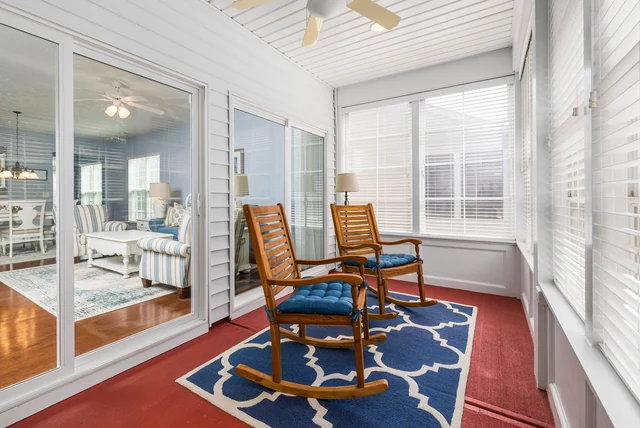

Most UK conservatories are small. They were added to the back of a terrace or semi to gain a bit of light, and they are usually long, narrow and dominated by glass on three sides.
That shape is genuinely awkward to furnish, which is why so many small conservatories end up as a corridor with a sofa in it or a room that only houses the tumble dryer. Here is what actually works when the floor area is tight.
Decide on One Use, Not Three
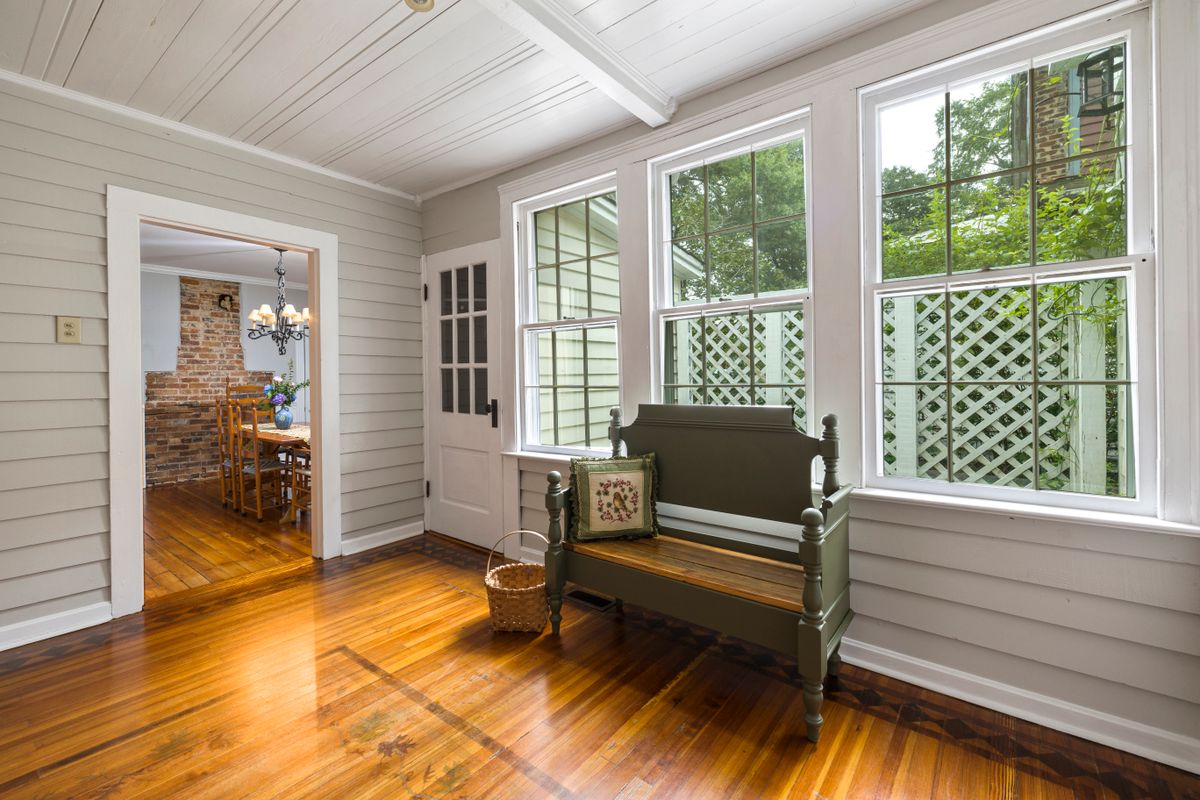
Small rooms punish indecision. A four-metre conservatory that is meant to be a sitting room, a dining room and a home office will fail at all three, because each needs different furniture in the same square metres.
Pick the use that would happen most often and furnish for that. A pair of armchairs and a side table make a lovely reading room. A bistro table for two makes a genuinely usable breakfast spot. Trying to fit both leaves room for neither.
The wider guide is our conservatory ideas for UK homes.
Furniture Scaled for the Space
The instinct is to buy small furniture. The better instinct is to buy less furniture, at a normal scale.
- One proper sofa or two good armchairs, not a three-piece set. A single well-sized piece reads as generous; four small ones read as cramped.
- Visible legs on everything. Furniture that sits on the floor blocks sightlines; furniture on legs lets the eye travel underneath and the room feels bigger.
- A round table rather than rectangular. Round tables have no corners to walk into and seat more people in a narrow room.
- Nesting or folding pieces that can be put away when the room is used differently.
- Nothing deeper than it has to be. A 60cm-deep bench beats an 85cm-deep sofa in a two-metre-wide space.
Hanging and Wall-Mounted Seating
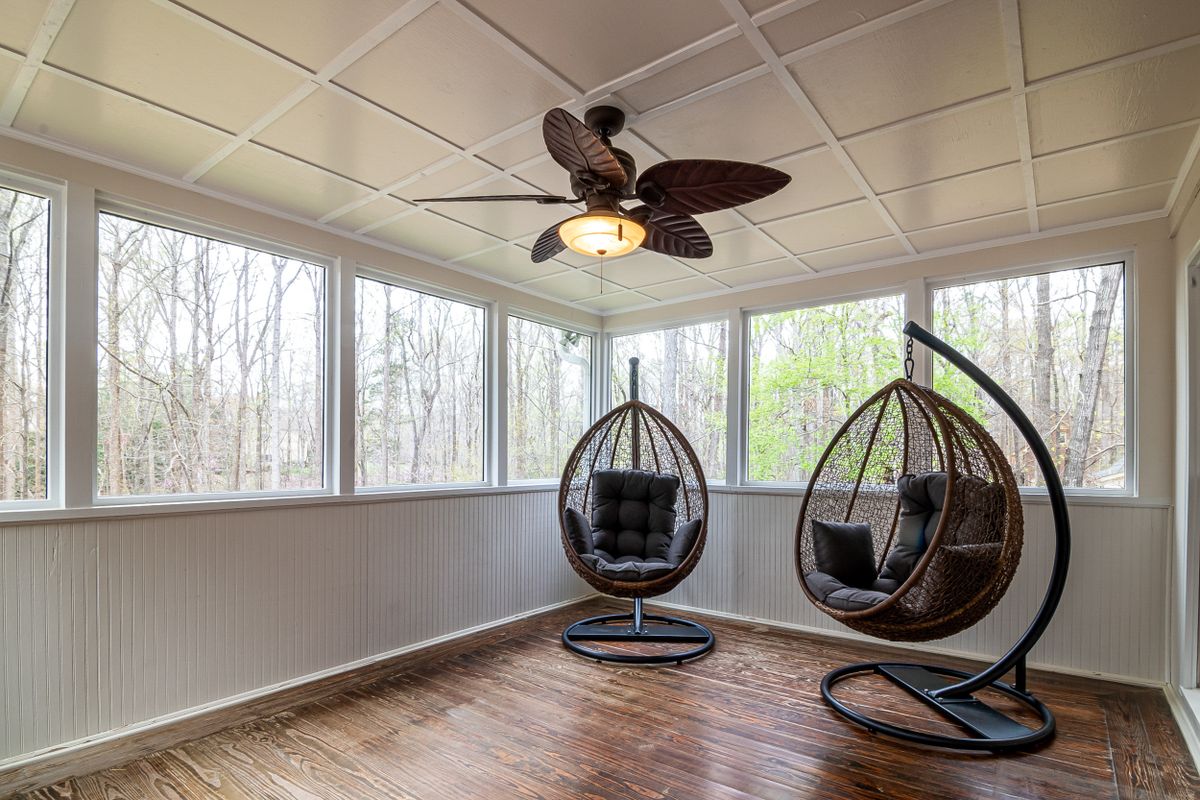
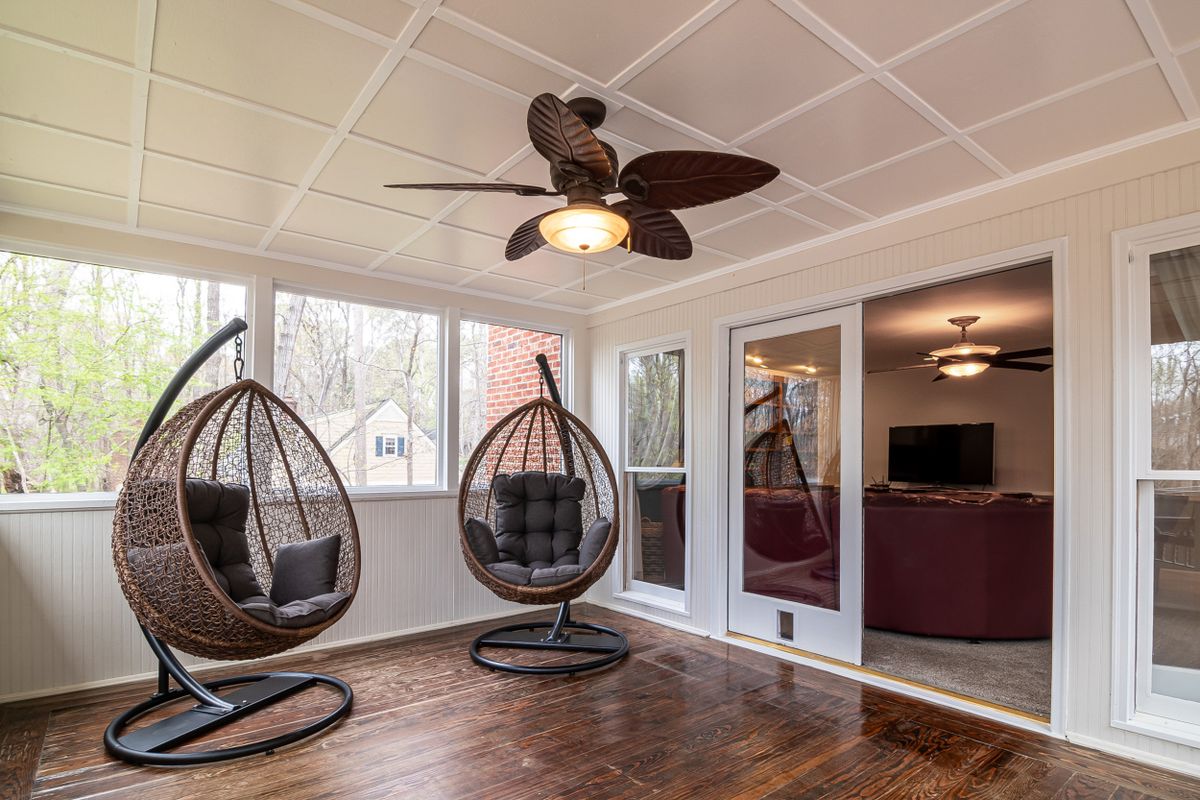
Where floor area is the constraint, the answer is often to get off the floor.
A hanging egg chair takes almost no visual space because the light travels under and around it, and it becomes a feature rather than a compromise. A built-in bench along the one solid wall seats more people per metre than chairs and gives you storage underneath.
Both need checking against the structure. A hanging chair on a frame needs floor space for the base; hung from a beam it needs a beam that can genuinely take a dynamic load, which is a question for a builder rather than a guess.
Colour in a Glass Room

There is not much wall in a small conservatory, which makes the little there is worth thinking about.
Painting the solid wall the same colour as the adjoining room makes the conservatory read as part of the house rather than as an addition, and that single change does more for how big it feels than any pale paint trick.
Where the frames are white uPVC and look tired, they can be painted with a proper uPVC primer and paint. Frames in a soft grey or green recede far more than yellowing white, and the room immediately feels less like a 1990s add-on.
Storage Without Bulk
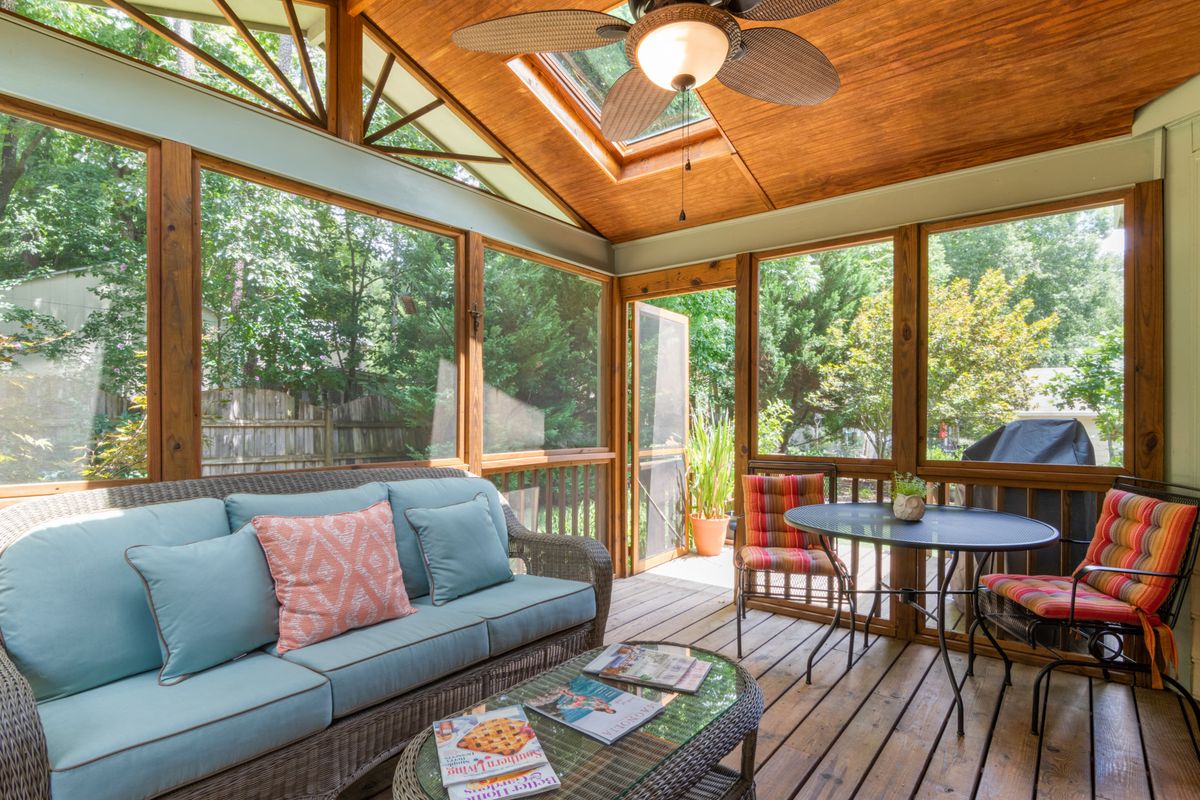
Small conservatories collect things, mostly garden shoes, plant pots and whatever has no home elsewhere.
- A bench with a lift-up seat or drawers along the solid wall.
- Narrow shelving in the corner where no seating will fit anyway.
- Hooks on the solid wall, which take no floor space at all.
- A console under 30cm deep if there is a run of wall between the door and the glass.
- Avoid tall freestanding units against glass. They block light from the one direction the room gets it.
Keeping a Small Glass Room Comfortable
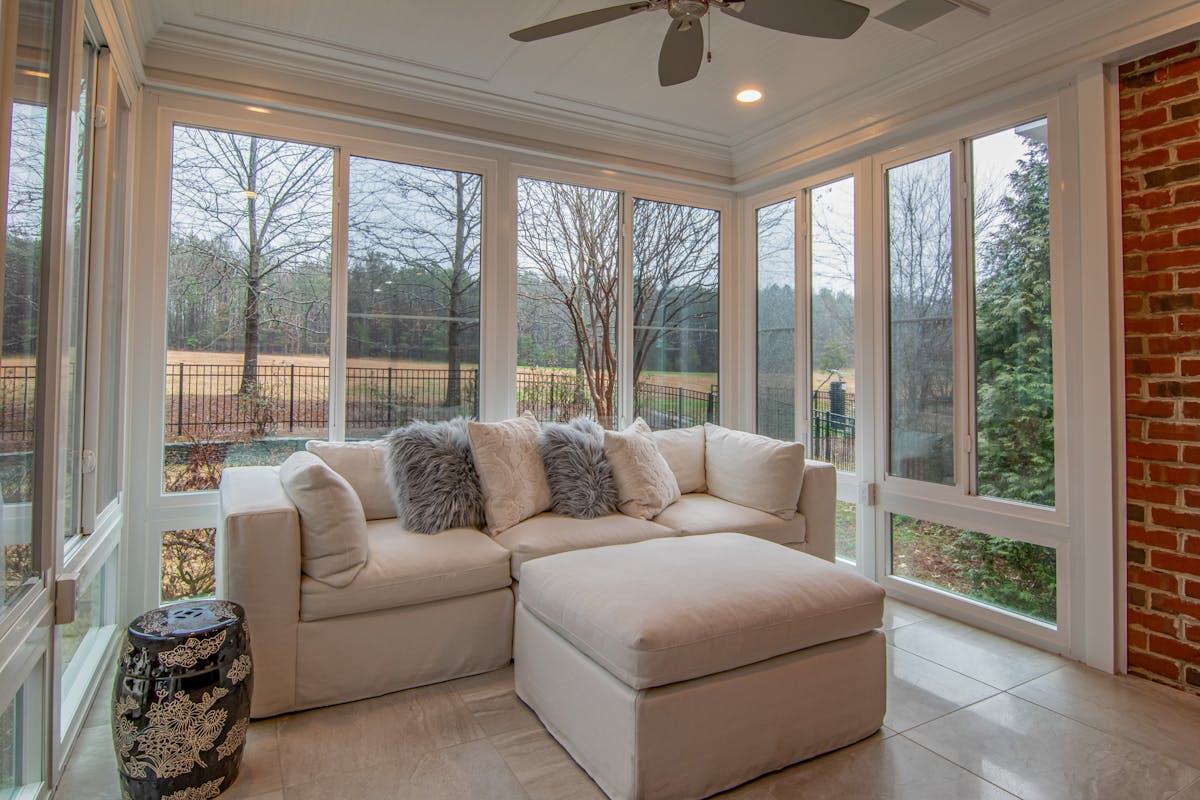
Small conservatories heat and cool faster than large ones, which cuts both ways. They become unbearable more quickly in July and lose warmth faster in January, but they also respond much faster to whatever you do about it.
Roof blinds make a bigger difference here than in a big conservatory, and they cost less because there is less roof. A single electric radiator or a small run of underfloor heating will actually heat the space rather than fighting a losing battle.
Ventilation matters more too. A roof vent or an opening window at high level lets hot air out; opening a door at floor level alone just moves warm air around.
Making It Feel Like a Room
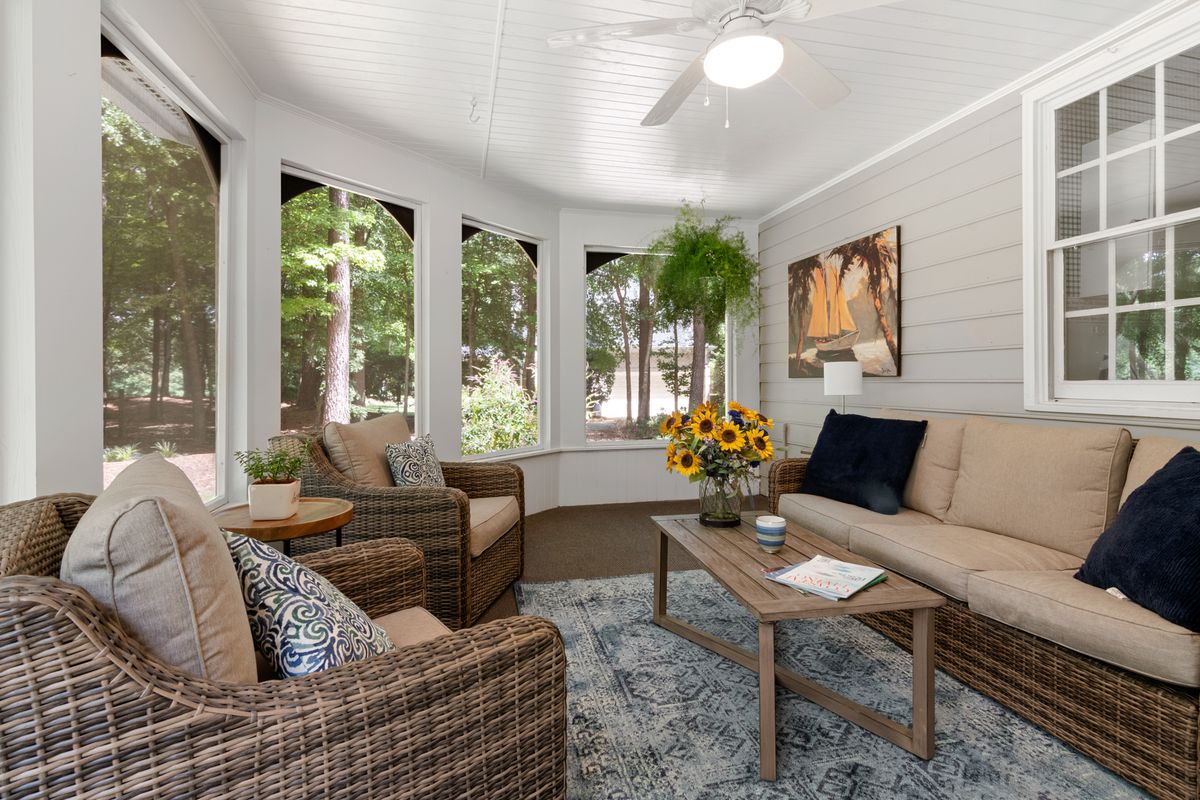
The single most effective thing in a small conservatory is a rug. It defines the space as somewhere to be rather than somewhere to pass through, and it softens what is otherwise a hard-surfaced glass box.
After that: a lamp rather than an overhead light after dark, one decent plant at height rather than six on the windowsill, and the floor colour carried through from the room it opens off.
Keep the floor as clear as possible. In a small room, visible floor is the cheapest space you own.
Light: The One Thing a Small Conservatory Has Plenty Of
A small conservatory has a problem most small rooms would love: too much light at some times of day and none at all at others. Managing that swing is what makes the room usable rather than just bright.
In the middle of the day the glare can be strong enough that you cannot read or look at a screen, and the answer is control rather than blocking. Venetian slats angled upward bounce daylight onto the ceiling and keep the view; a partial-opening pleated blind lets you cover only the pane the sun is crossing.
After dark the same glass turns into a wall of black mirrors, and an overhead light makes it worse by reflecting off every pane. One low lamp in a corner changes the room completely at night, because the eye reads the pool of light rather than its own reflection.
Connecting It to the Room It Opens Off
Small conservatories feel smaller when they read as a separate box tacked onto the back of the house. The fastest way to gain apparent space is to make the two rooms look like one.
- Carry the flooring through, or at least match the tone. A change of floor at the threshold cuts the space in half visually.
- Use the same wall colour on whatever solid wall the conservatory has.
- Repeat one material or colour from the adjoining room in the conservatory, whether that is a cushion fabric, a timber tone or a metal finish.
- Keep the doorway clear. Furniture immediately inside the opening makes both rooms feel tighter than they are.
Where budget allows, replacing a narrow door with wider glazed doors does more for a small conservatory than anything you can put inside it.
Seasonal Swaps for a Room That Changes
A small conservatory changes character more dramatically across the year than any other room, and the easiest way to live with that is to let the furnishing change with it.
In summer it wants light textiles, the doors open and as little as possible in the way. In winter it wants a rug, a throw over the chair, heavier cushions and a lamp on by four o’clock. None of that costs much beyond somewhere to store the off-season half.
Plants can move with the seasons too. Bringing tender plants in for winter is the traditional purpose of a conservatory, and a small one filled with greenery in January is far more appealing than a small one sitting empty and cold.
Final Thoughts
Small conservatories work when they do one job properly. Choose the use, buy fewer and better pieces, get everything up on legs, and put a rug down.
Then fit roof blinds, because a small glass room is the one that becomes unusable fastest without them.
Frequently Asked Questions
How do you furnish a small conservatory?
One proper piece of seating rather than a set, everything on visible legs, and a round table if you need one. Fewer, better-scaled pieces beat lots of small ones.
What colour should a small conservatory be?
Paint the solid wall the same colour as the adjoining room so the space reads as part of the house. Tired white uPVC frames can be repainted in a soft grey or green.
Are hanging chairs good for small conservatories?
Yes, because light travels around them so they take little visual space. Check any ceiling fixing with a builder, as it is a dynamic load.
How do I stop a small conservatory overheating?
Roof blinds first, since most heat comes through the roof, plus high-level ventilation so hot air can escape rather than just circulate.
Can you use a small conservatory as a dining room?
Yes, with a round table and a hard floor. Pick one use and furnish for it rather than trying to make the room work as three things.
What flooring suits a small conservatory?
Carrying the adjoining room’s flooring through makes the space feel larger. Whatever you choose, check it is rated for direct sunlight.
Disclaimer
This article is for general information only. Product specifications and building regulations vary by property and change over time. Check current guidance and manufacturer instructions before making changes.