
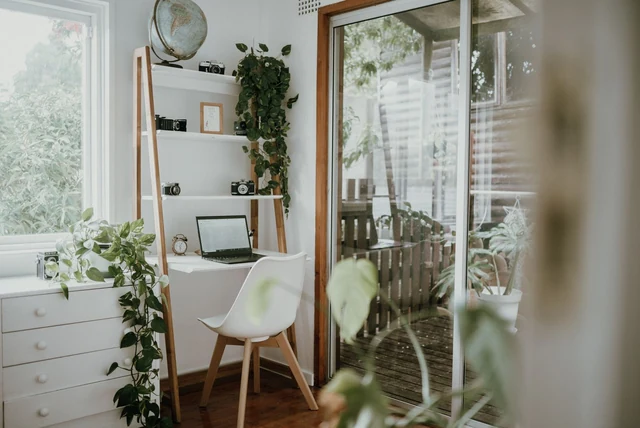

The garden office is the reason most garden rooms get built, and it is the use with the most specific requirements. A room you sit in for seven hours a day needs things a summer sitting room does not: usable light, heat on a February morning, a connection that does not drop, and somewhere to put things.
Get those right and the separation between work and home is genuinely better than a spare bedroom. Get them wrong and you have built a shed you check email in until October.
Put the Desk Where the Light Works
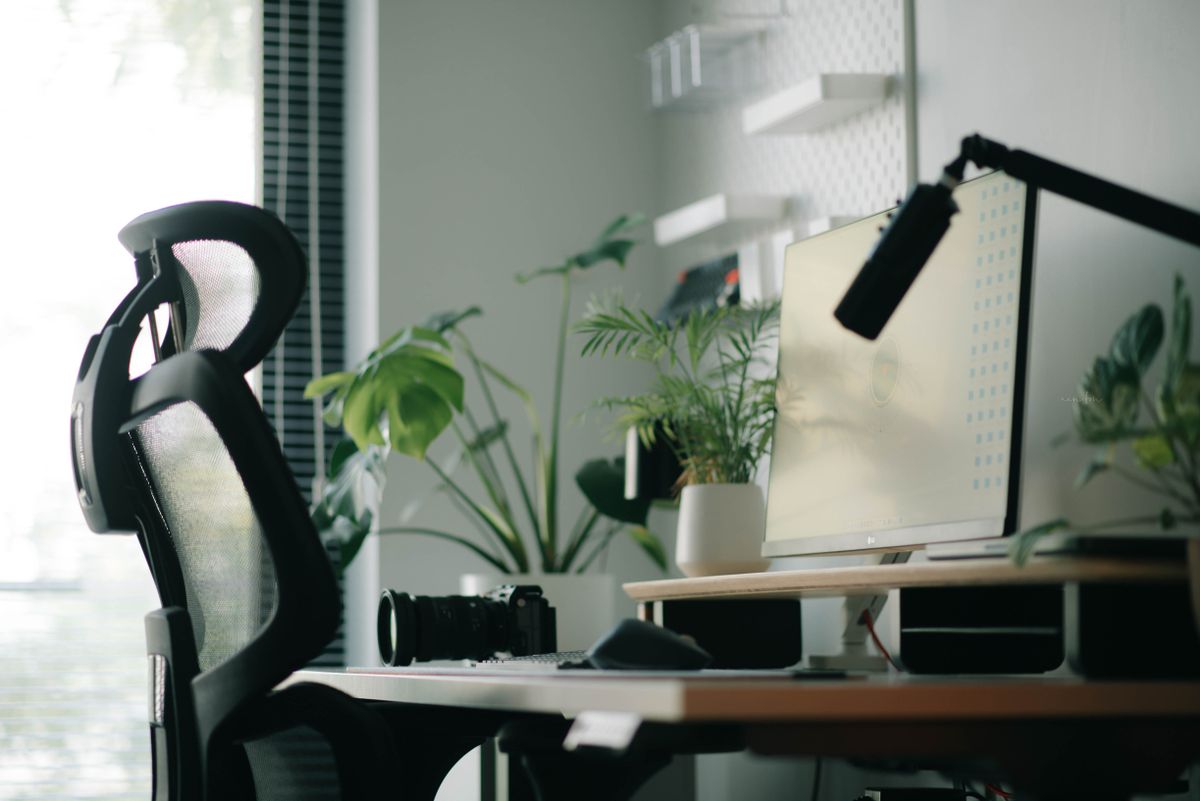
The single most common mistake is putting the desk facing the biggest window because it has the best view.
Facing a large window means looking into glare for most of the day, and having your back to it means the screen reflects everything behind you. The reliable position is with the window to one side, so daylight crosses the desk rather than hitting it head on.
The whole building is covered in our garden room ideas guide.
Which Way Should It Face
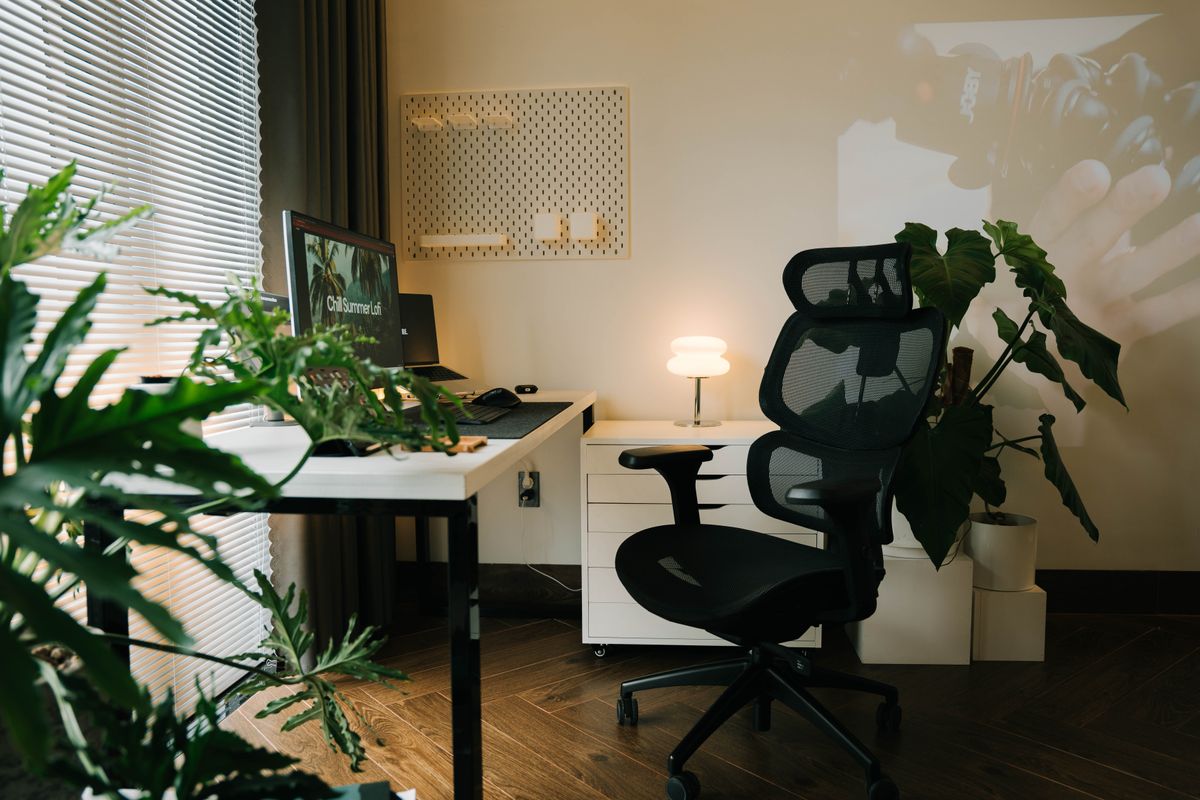
North-facing glazing gives even, cool, glare-free light all day, which is why artists have wanted it for centuries and why it suits screen work.
South-facing glazing gives warmth and brightness and a serious overheating problem from about April, which then needs shading, ventilation or both. East gives bright mornings and flat afternoons; west gives low sun straight into your eyes at exactly the end of the working day.
You rarely get to choose freely, so shade whatever you end up with. External shading, a brise soleil or even a well-placed tree works better than blinds, because it stops the heat before it reaches the glass.
Heating a Room You Use Every Morning

An office is used at eight in the morning in January, which is the hardest moment of the year for a small building at the end of a garden.
The practical requirement is not just heat but speed: something that brings the room up to temperature in fifteen minutes rather than an hour. Infrared panels and modern electric radiators both do this well; underfloor heating is more comfortable but slower to respond.
Whatever you choose, put it on a thermostat and a timer or a smart plug, so it warms the room before you walk down rather than after you sit down cold.
Broadband That Actually Holds
Wifi from the house router to the bottom of the garden, through two external walls, is the most common complaint about garden offices.
A buried data cable is the answer and costs very little if it goes in while the power trench is open. It gives a full-speed, stable connection and lets you put a separate access point inside the building.
If the trench is already closed, powerline adapters sometimes work and often do not, because the garden room is usually on a separate circuit. A dedicated outdoor mesh node is the more reliable retrofit.
Power, Sockets and Where They Go

Plan sockets around the furniture rather than spacing them evenly, because you will not move a desk to reach a plug.
- Two doubles at desk height behind the desk position, which saves crawling under it.
- One double for heating, on its own if the heater is fixed.
- One near the door for a vacuum, a lamp or a fan.
- A data point at the desk.
- Outdoor-rated sockets outside if you will ever use tools or lights in the garden.
Ask the electrician for a small consumer unit in the building rather than spurring off a single circuit. It makes future changes far simpler.
Storage, Because Small Rooms Fill Fast

A garden office looks enormous when it is empty and fills within a month.
Give one wall over to full-height storage and keep the rest clear. Closed storage is worth more than open shelving here, because a small room with visible clutter on every shelf feels chaotic on a video call and in general.
Build in where you can. Fitted storage in a small building uses corners and awkward heights that freestanding furniture wastes, and it does not eat floor area you cannot spare.
Acoustics and Video Calls
Small hard-surfaced rooms sound harsh, and it is very noticeable on calls. Bare plasterboard walls, a hard floor and a large glazed wall produce exactly the echo people apologise for.
A rug, a curtain and something soft on one wall fix most of it. Bookshelves with actual books on them are excellent acoustic diffusers and nobody has to know that is why they are there.
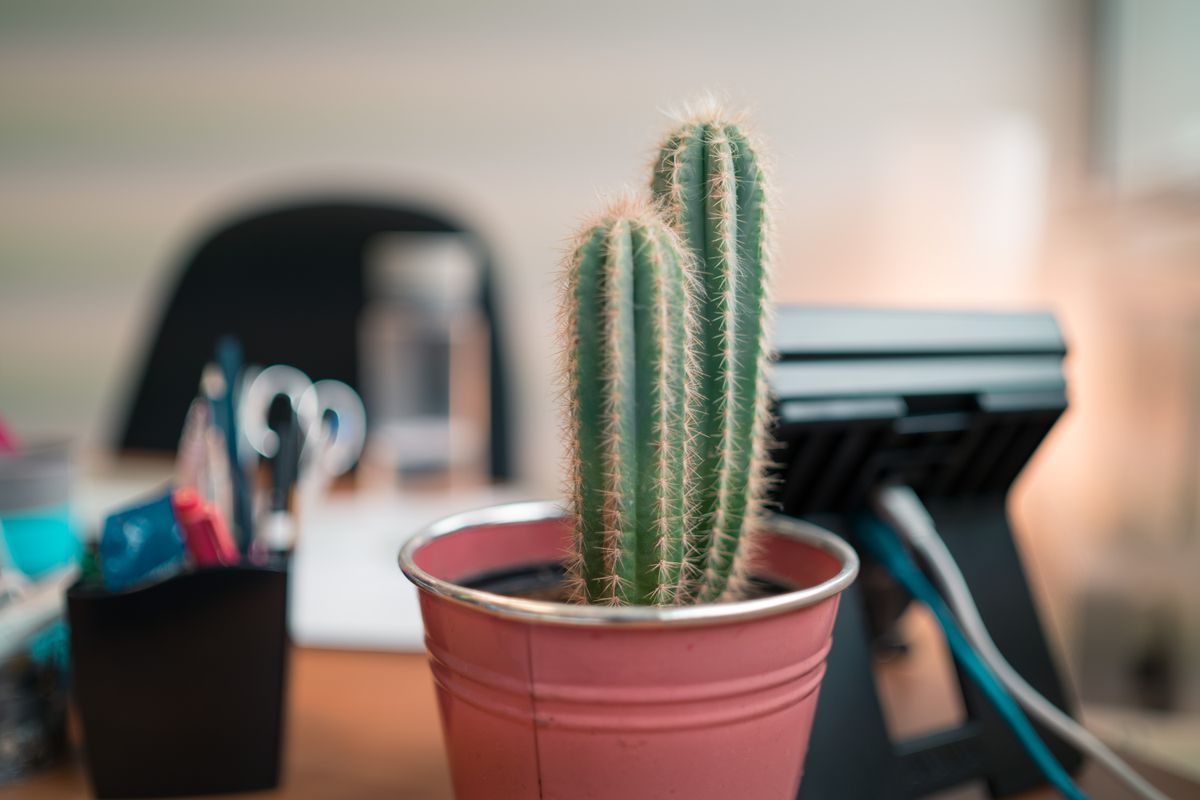
Think about what is behind you on camera too. A blank wall reads as a cupboard; a shelf, a plant and a lamp read as a room.
Ventilation, Which People Forget
A well-insulated, well-sealed building with a person and a computer in it gets stuffy quickly, and stuffy is where afternoon concentration goes to die.
An opening window on each of two walls gives cross ventilation, which is far more effective than one large opening. A trickle vent or a small mechanical extract keeps air moving in winter when you do not want the window open.
This also matters for condensation. Warm moist air from a person, sealed into a cold building overnight, ends up on the glass and eventually in the structure.
Keeping Work in the Building
The strongest argument for a garden office is the separation, and the separation only works if it is enforced.
That means the office does not become general storage, the bikes do not move in, and work does not migrate back to the kitchen table. The walk down the garden is the commute, and it functions surprisingly well as one.
Practical things help: a coat hook inside the door, a solid path so you can go down in shoes, and a light on the route so December evenings are not a deterrent.
Insurance, Tax and the Boring Bits
- Tell your insurer. Standard home policies often exclude or limit contents in outbuildings, and business equipment is frequently excluded entirely.
- Check whether working from a dedicated garden office affects business rates or capital gains treatment if you sell. For most people it does not, but it depends on exclusive business use.
- Keep the electrical certificate from the installation. It will be asked for when you sell the house.
- If you are employed, ask whether your employer contributes. Some do.
None of this is exciting and all of it is easier to sort before the building goes up than afterwards.
Final Thoughts
Put the window to one side of the desk, get heat that responds quickly, bury a data cable while the trench is open, and give one wall to storage.
Then treat it as an office rather than a spare room. The separation is the whole point, and it is the first thing lost if the building becomes somewhere to put things.
Frequently Asked Questions
Where should the desk go in a garden office?
With the window to one side so daylight crosses the desk. Facing a window gives glare; backing onto one puts reflections on the screen.
How do I get broadband to a garden office?
A buried data cable laid while the power trench is open is the reliable answer. Powerline adapters often fail because the building is on a separate circuit.
What heating suits a garden office?
Something that heats fast, such as infrared panels or an electric radiator, on a timer or smart plug so the room is warm before you walk down.
Do I need planning permission for a garden office?
Usually it falls under permitted development, subject to height, boundary and coverage limits, with stricter rules in conservation areas. Check locally.
How do I stop a garden office overheating?
External shading stops heat before it reaches the glass, which works better than blinds. Add cross ventilation with opening windows on two walls.
Does a garden office affect my home insurance?
Often yes. Outbuilding contents are frequently limited or excluded, and business equipment usually needs declaring separately.
Disclaimer
This article is for general information only. Planning and building regulations vary by property and by UK nation and change over time. Confirm current requirements locally and use qualified trades for electrical and structural work.