
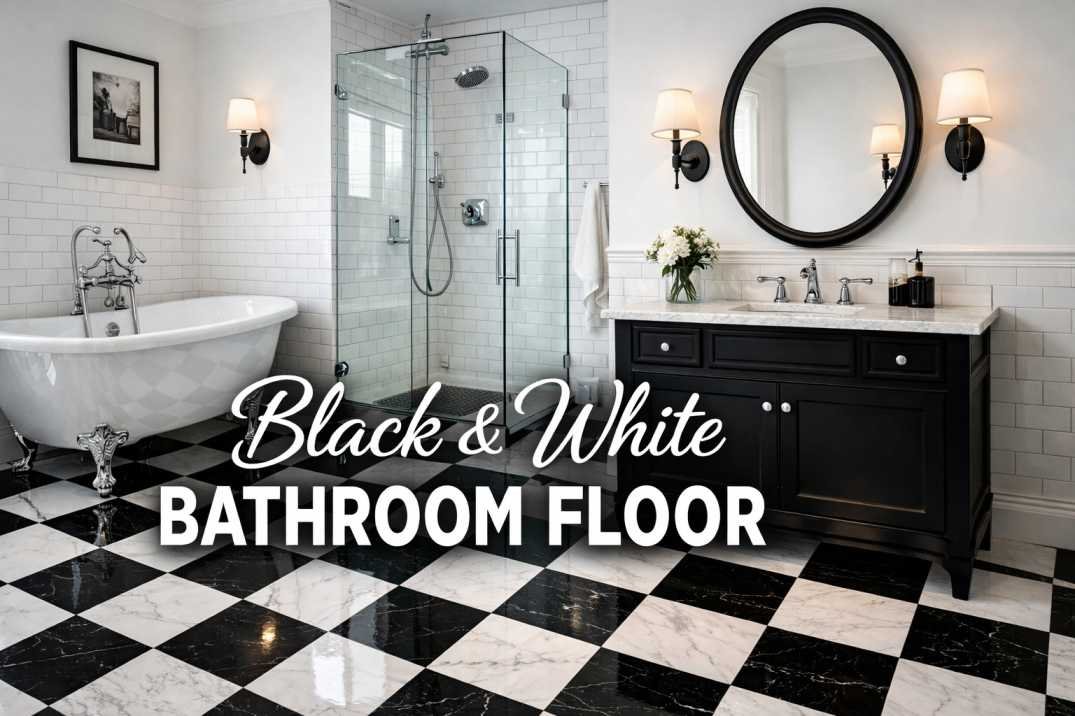

A black white bathroom floor is a timeless design choice that suits both modern and classic interiors. With the right tile pattern, material, and layout, it enhances light, adds depth, and adapts easily to changing décor, making it a practical and long-lasting option for any bathroom.
A black white bathroom floor has remained one of the most reliable and visually striking design choices for decades. While bathroom trends change over time, this colour combination continues to work because it offers contrast, balance, and flexibility. It suits modern, traditional, minimalist, and vintage interiors, making it ideal for both renovations and new bathrooms. With the right tiles, layout, and lighting, a black and white floor can completely transform the look of a bathroom while still remaining timeless and practical.
The Timeless Appeal of Black and White Bathroom Floors
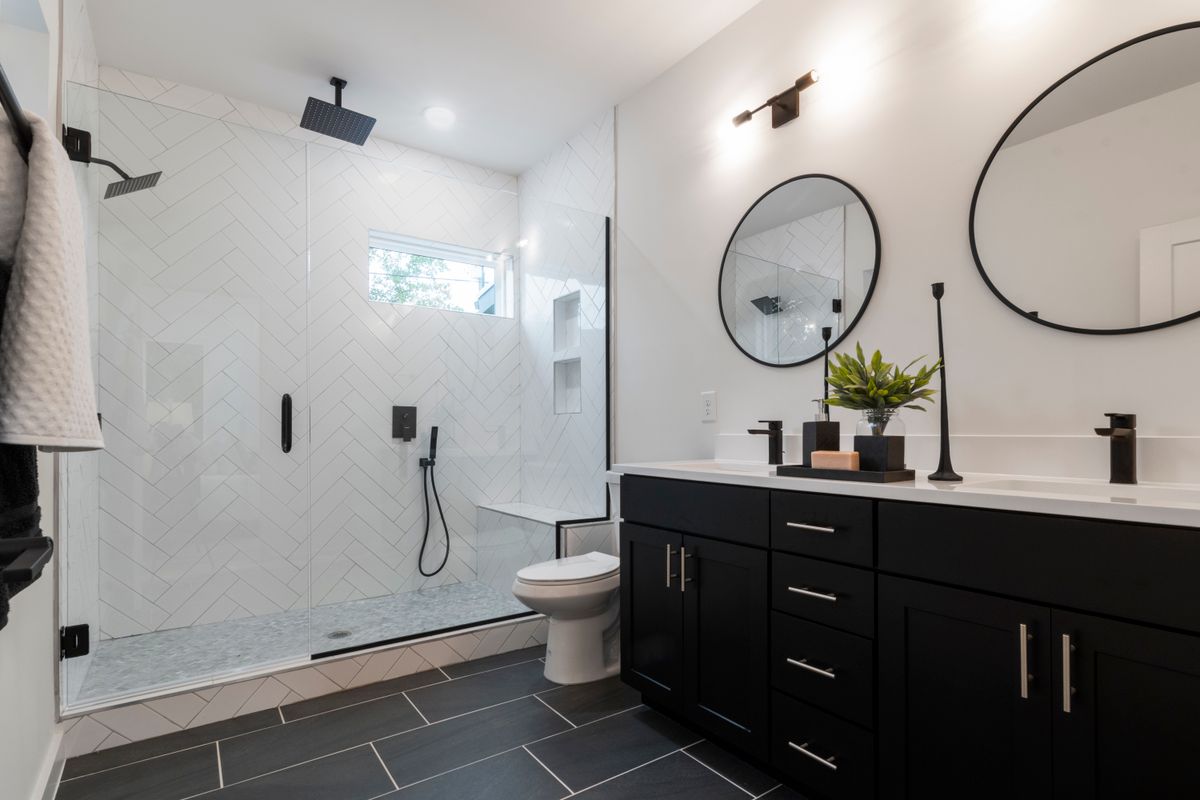
Image source: pinterest.com
Black and white bathrooms have been popular for over a century because the colour combination is simple, elegant, and easy to design around.
The reason this flooring style is timeless is because it acts as a neutral base. You can change wall colours, mirrors, lighting, or accessories without needing to replace the floor. This makes it a long-term design investment rather than a short-term trend. Many homeowners choose black and white flooring because it increases resale appeal and keeps the bathroom looking clean, structured, and stylish for many years.
If you are designing a full home interior, combining monochrome flooring with styles like Celtic wall decor can help create a unique but balanced interior design theme.
Black and White Bathroom Floor Trends for 2025
Bathroom flooring trends in 2025 are focusing more on texture, patterns, and natural finishes rather than plain tiles. As reported by Livingetc, modern bathrooms are moving away from plain flooring and towards statement floors with texture and pattern.
Some of the most popular black and white floor trends include encaustic patterned tiles, marble-effect porcelain tiles, geometric tiles, and large-format tiles. According to Better Homes & Gardens, statement floors paired with simple walls are becoming one of the most popular bathroom design approaches.
Another trend is mixing black and white floors with natural materials like wood vanities, stone sinks, and warm lighting. This prevents the bathroom from feeling too cold or clinical and instead makes it feel modern and welcoming.
Many UK homeowners are also choosing underfloor heating with tile floors because tiles conduct heat very well and improve comfort during colder months.
Understanding How Black and White Affect Bathroom Spaces
Colour has a strong impact on how large or small a bathroom feels. White reflects light, making bathrooms feel brighter and larger, while black adds depth and structure. As explained by Ideal Home, using contrast in bathrooms prevents spaces from feeling flat and adds visual interest.
The best approach is usually to use more white than black. White walls combined with a black and white floor help keep the room bright while still adding contrast and character. Black tiles work best on floors because they naturally ground the room and hide dirt better than white tiles.
In small bathrooms, using large tiles and light grout can make the room appear bigger, while strong patterns can work well in larger bathrooms where there is more space to appreciate the design.
Choosing the Right Tiles and Materials
Choosing the right tile material is very important because bathroom floors must handle water, humidity, and frequent cleaning.
Ceramic tiles are usually cheaper and easier to install, but they are slightly less durable than porcelain. Natural stone tiles such as marble look very luxurious but require sealing and more maintenance. Many homeowners now choose marble-effect porcelain tiles because they provide the same look but are easier to maintain.
You can explore different tile styles and patterns from suppliers like Hyperion Tiles or browse options such as Victorian Plumbing black and white floor tiles to see different finishes and layouts available.
When choosing tiles, also consider slip resistance. Matte or textured tiles are usually safer for bathroom floors than glossy tiles.
Popular Black White Bathroom Floor Tile Patterns
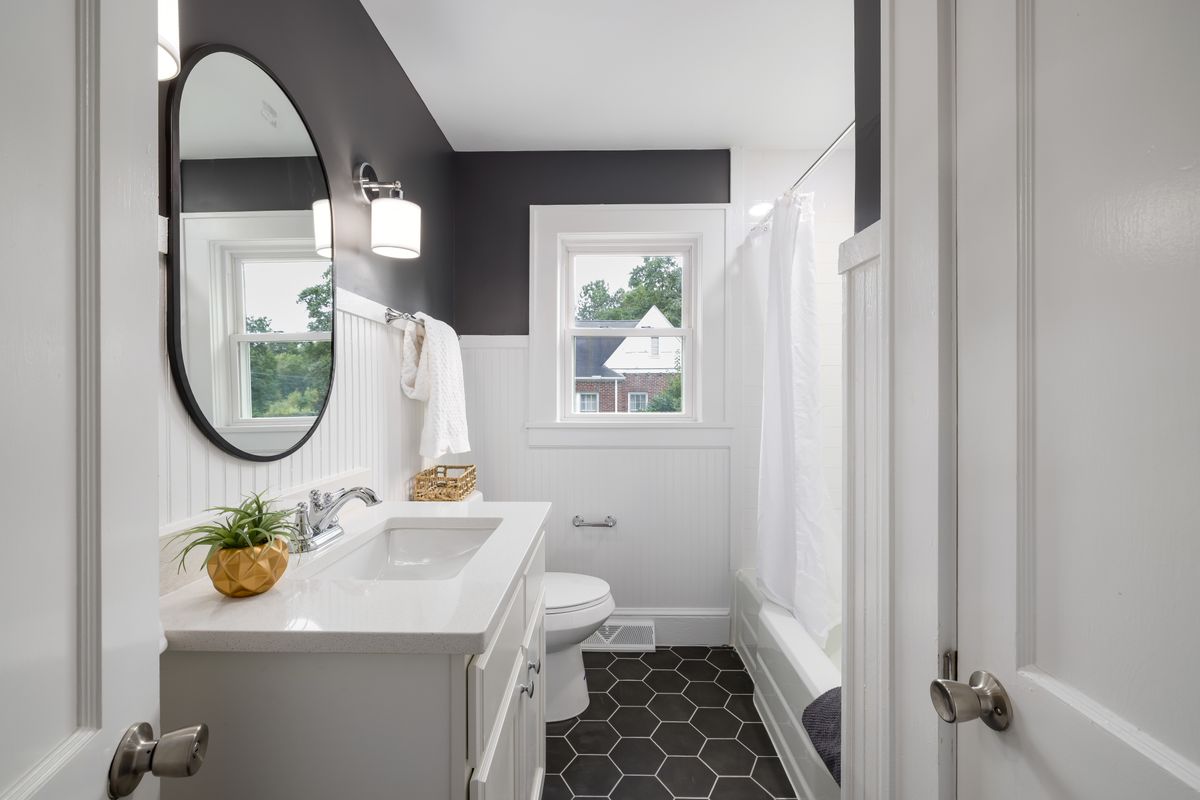
Image source: pinterest.com
Tile patterns completely change the look of a bathroom.
Other popular patterns include hexagon tiles, herringbone layouts, geometric patterns, and encaustic patterned tiles. Checkerboard floors create a classic vintage look, while geometric and encaustic patterns create a more modern design. Marble-effect tiles create a luxury spa-style bathroom.
If you want a balanced home design theme, combining your bathroom style with ideas like wall decor dining room ideas can help maintain consistency across your home.
Designing a Black White Bathroom Floor for Small Spaces
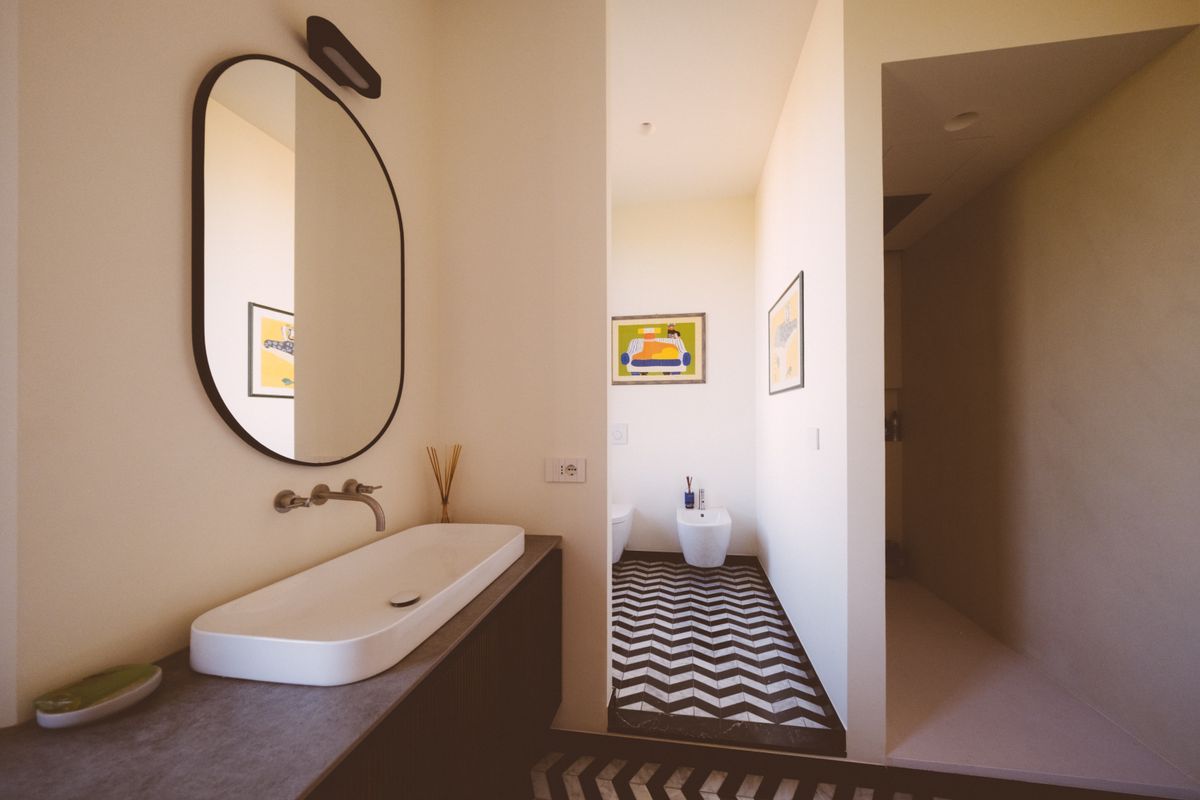
Image source: pinterest.com
Small bathrooms require careful tile selection to avoid making the space feel crowded. Using mostly white with small black accents helps keep the room bright and open. Large tiles with fewer grout lines can also make a bathroom appear larger.
Diagonal tile layouts, linear patterns, and glossy finishes help reflect light and create the illusion of more space. Avoid very busy patterns in small bathrooms because they can make the room feel smaller.
Styling a Black White Bathroom Floor with Décor
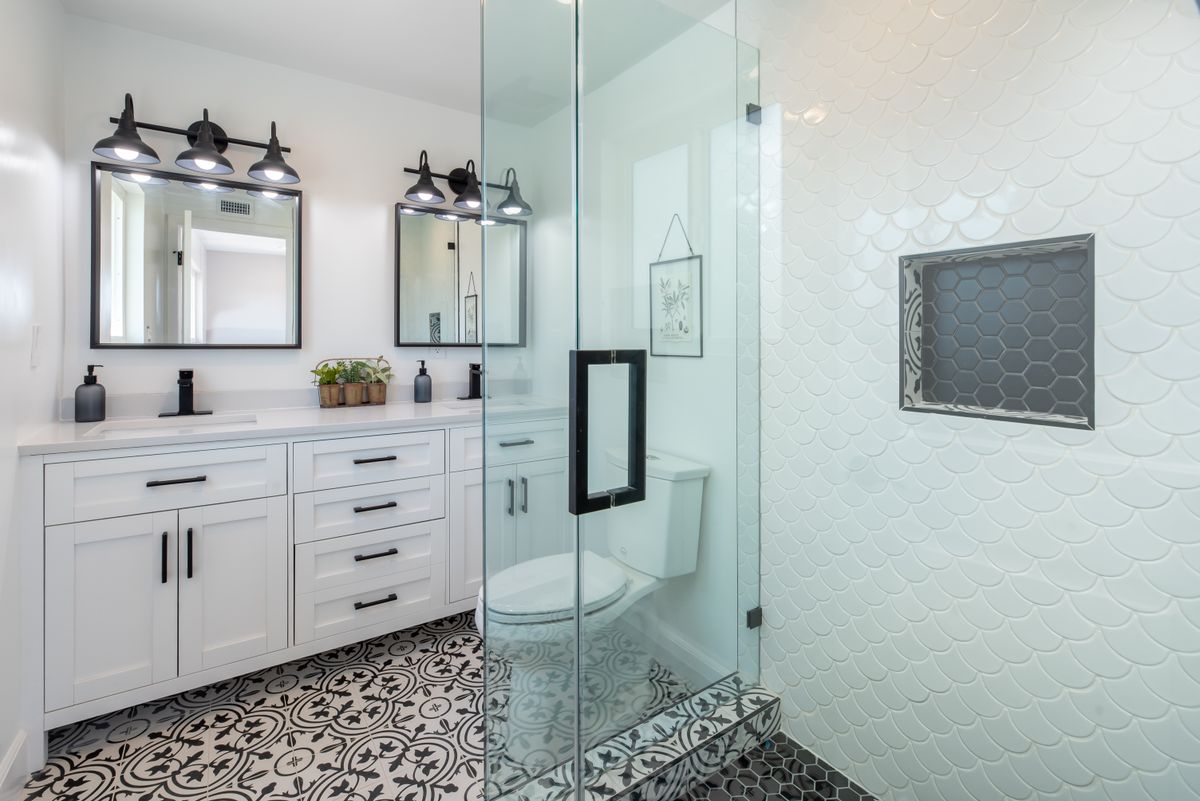
Image source: pinterest.com
Decor plays an important role in softening the strong contrast of black and white flooring. Wood furniture, woven baskets, plants, and warm lighting help make the bathroom feel more comfortable and less stark.
You can also match colours from other rooms in your home, such as a living room decor red sofa or dove grey kitchen cabinets, to create a consistent interior design theme throughout your house.
Metal finishes also make a difference. Brass adds warmth, chrome creates a classic look, and matte black fixtures create a modern style.
Maintenance and Long-Term Care
Black and white floors are relatively easy to maintain, especially if you choose patterned tiles that hide dirt and marks. Regular sweeping and mopping with mild cleaners will keep tiles looking new.
Grout should be sealed to prevent stains and mould. Grey grout is often the best choice because it hides dirt better than white grout but still looks clean with black and white tiles.
Conclusion
A black white bathroom floor is one of the most reliable and stylish flooring choices you can make. It works in small and large bathrooms, suits modern and traditional homes, and remains stylish for many years. By choosing the right tile material, pattern, and layout, you can create a bathroom that looks elegant, practical, and timeless.
Author Bio
The editorial team at dailylifestyleguide writes about home design, interior décor, and lifestyle ideas for UK homeowners. Their goal is to provide simple, practical advice that helps readers create stylish and comfortable homes.
Disclaimer
This article is for informational purposes only. The editorial team may update or revise the content if new information, trends, or corrections become available.
Frequently Asked Questions (FAQs)
1. Is a black and white bathroom floor a good idea?
Yes, a black and white bathroom floor is a great idea because it is timeless, stylish, and works with almost any bathroom design. It also allows you to change wall colours and décor in the future without replacing the floor.
2. Does a black and white bathroom floor make a bathroom look smaller?
No, a black and white bathroom floor does not make a bathroom look smaller if designed properly. Using more white than black, large tiles, and good lighting can actually make a small bathroom feel bigger and brighter.
3. What is the best tile pattern for a black and white bathroom floor?
Popular tile patterns include checkerboard, hexagon tiles, geometric patterns, and herringbone layouts. Checkerboard is classic, while geometric and herringbone patterns create a more modern look.
4. Are black and white bathroom floors hard to maintain?
Black and white floors are generally easy to maintain. Patterned tiles help hide dirt, and using grey grout instead of white grout can reduce visible stains and discoloration.
5. Which tiles are better for bathroom floors, porcelain or ceramic?
Porcelain tiles are usually better for bathroom floors because they are more durable, more water-resistant, and last longer. Ceramic tiles are cheaper and easier to install but slightly less durable.
6. What grout colour is best for black and white tiles?
Grey grout is often the best option because it hides dirt and stains better than white grout while still matching both black and white tiles. Black grout creates a bold look, while white grout creates a seamless look.
7. Are black and white bathroom floors still in style?
Yes, black and white bathroom floors are still in style and are considered timeless. Modern trends now include patterned tiles, large-format tiles, and marble-effect porcelain tiles in black and white designs.