
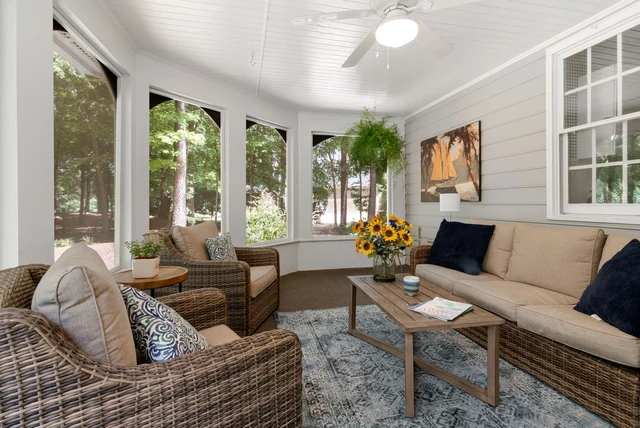

A conservatory is the harshest room in a British house for furniture. It gets more direct sun than anywhere else, the humidity swings between a damp January morning and a dry August afternoon, and the temperature range across a year is wider than any other room will see.
Furniture that would last twenty years in a living room can look tired in three out there. Choosing for the conditions rather than the catalogue photograph is most of the job.
Frames That Cope
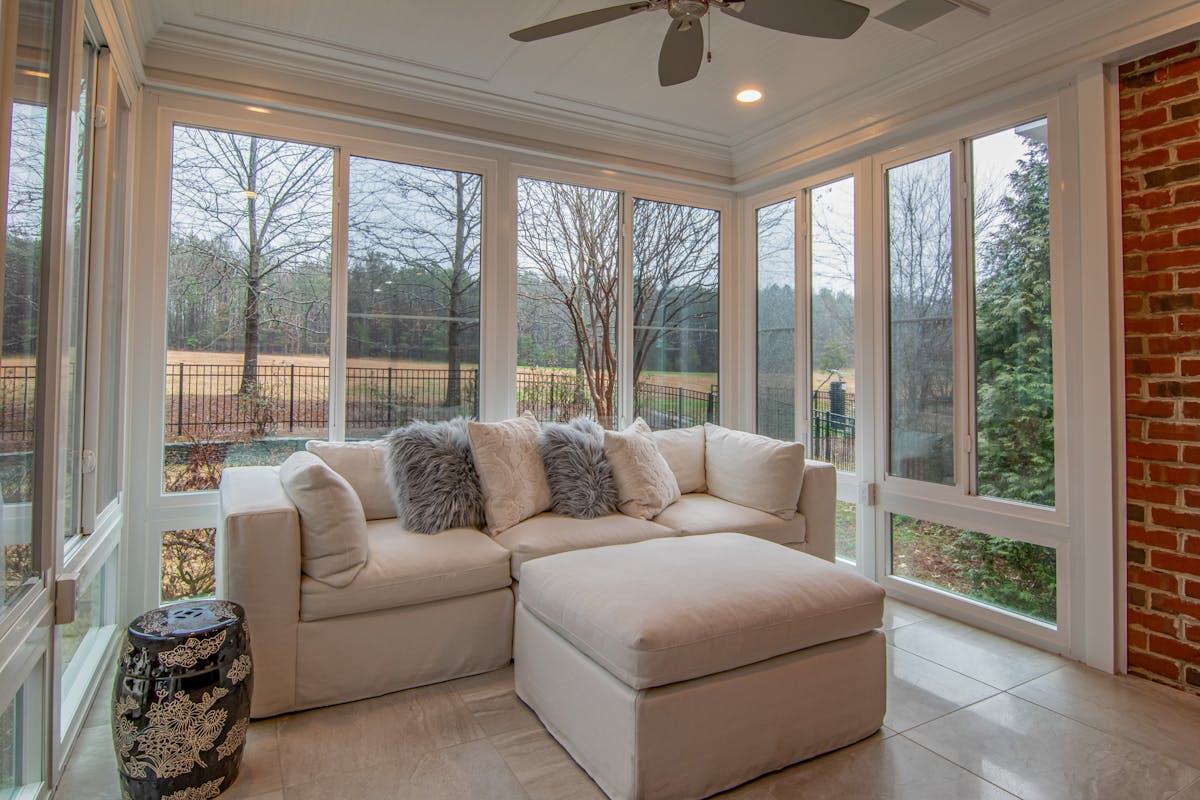
- Rattan and cane are the traditional choice for good reason. They tolerate humidity swings, are light enough to move as the seasons change, and look right in a glass room.
- Powder-coated aluminium is the most durable option and will not rust, warp or fade. It reads as more modern and is often the best choice where the room doubles as a garden room.
- Engineered or laminated timber handles moisture movement far better than solid boards.
- Solid hardwood can crack or open at the joints as it swells and dries through the year. Beautiful, but the highest-maintenance option here.
- Untreated softwood and MDF are the two to avoid outright. MDF in particular swells irreversibly if it ever gets damp.
The full room guide is our conservatory ideas for UK homes.
Fabric Is Where Money Is Wasted
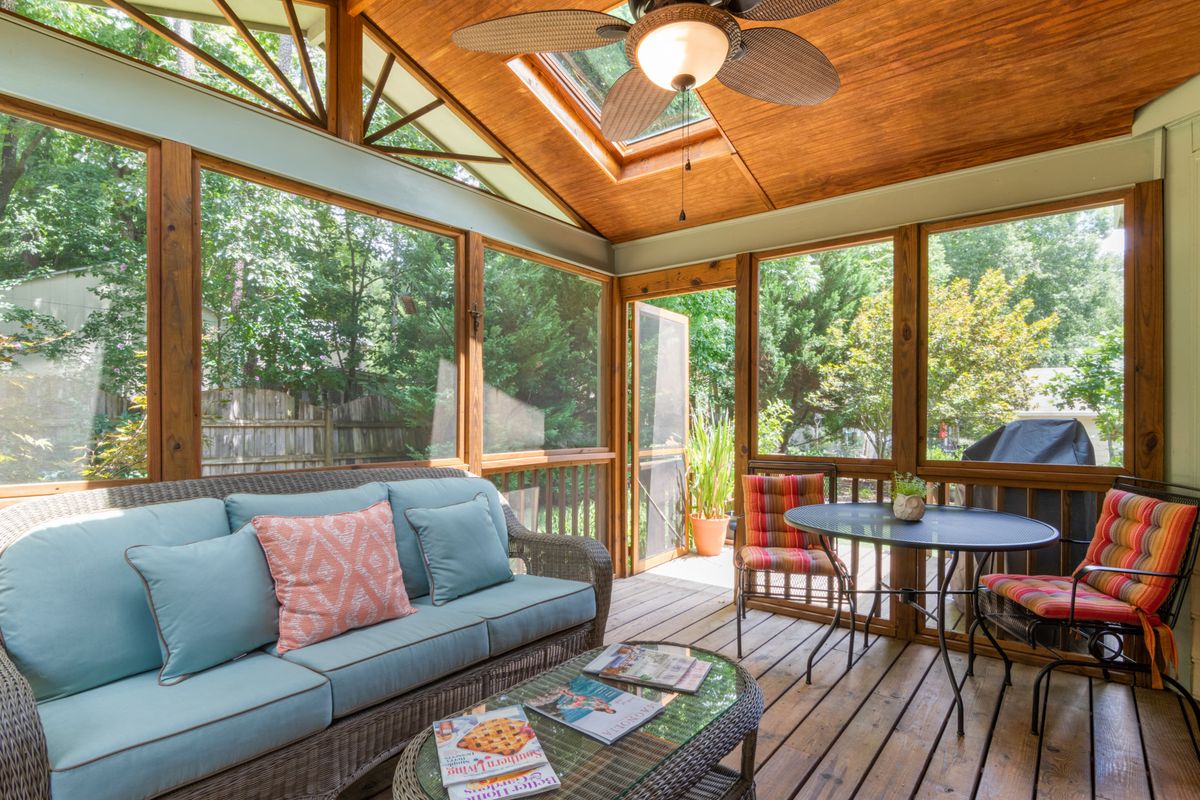
Sunlight fades textiles faster than anything else, and a conservatory delivers more of it than any other room. A cushion that faces south will visibly change colour within a couple of summers.
Solution-dyed acrylic is the answer if you want cushions that still match in five years, because the colour is locked into the fibre rather than applied to the surface. Outdoor-grade fabrics are made for exactly this and now come in finishes that look nothing like garden furniture.
Whatever you choose, buy covers you can remove and wash, and turn or swap cushions occasionally so the same face is not always in the sun.
Laying Out a Long Narrow Room
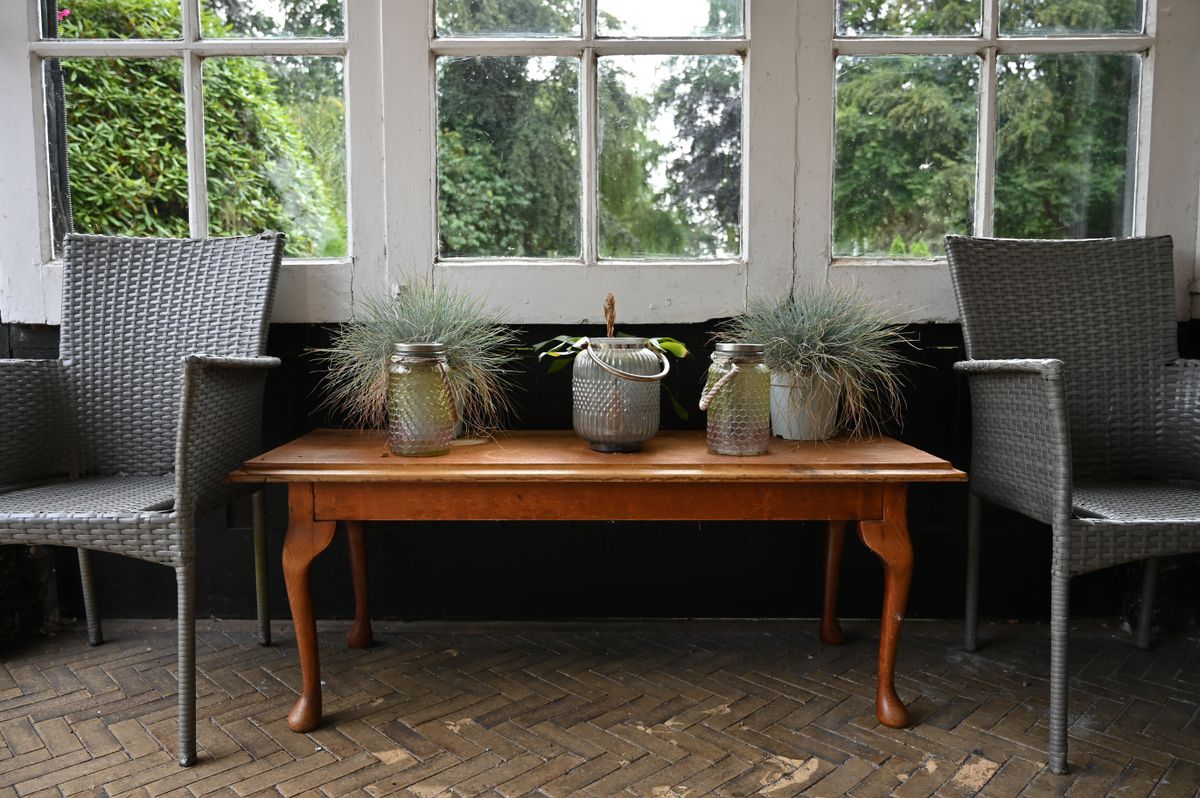
Most UK conservatories are longer than they are wide, and the instinctive layout, everything pushed against the glass, is the one that makes the room feel like a corridor.
Pulling seating even 15cm off the glass changes how the room reads, and it also stops cushions pressing against cold or condensating panes in winter.
Where the room is genuinely long, treat it as two zones rather than one: seating at one end and a small table at the other, with a rug under each. Two defined areas feel more generous than one stretched one.
Tables and Hard Surfaces
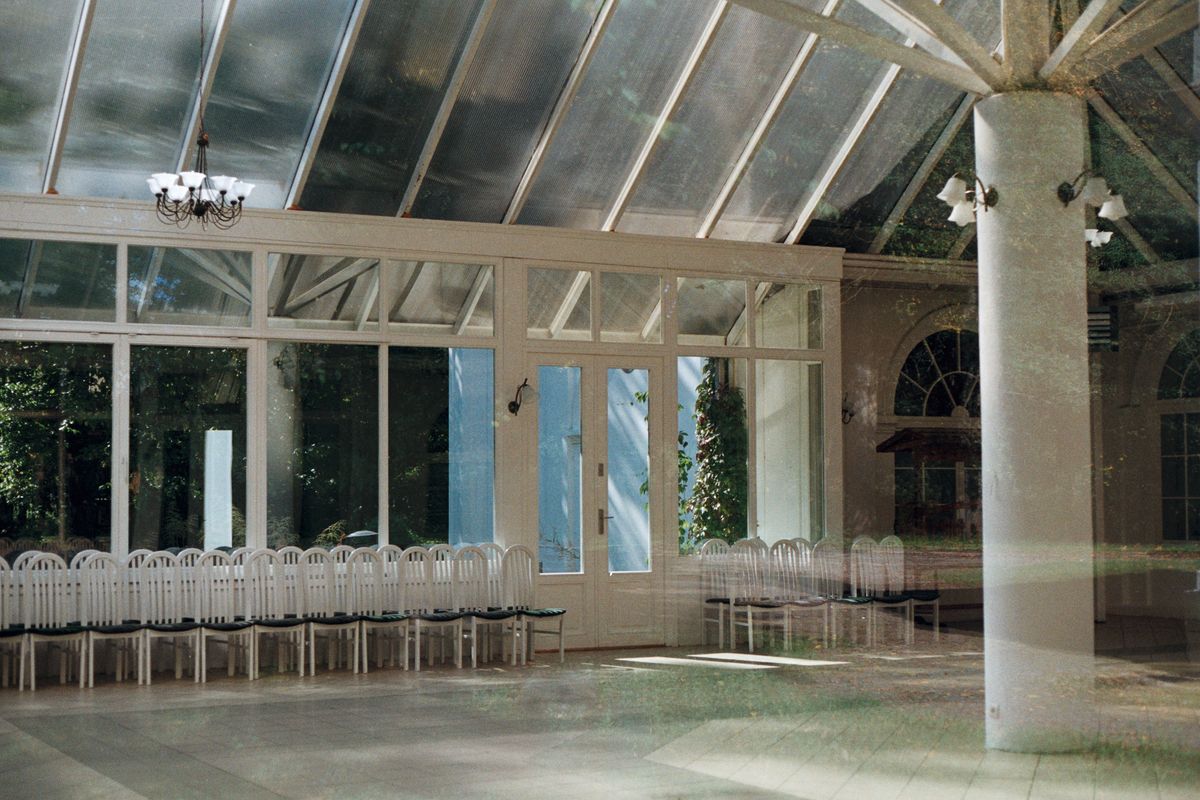
Glass tabletops are common in conservatories and are the worst choice for the room. They collect visible dust, throw glare, and get uncomfortably hot in direct sun.
A powder-coated metal or a treated timber top is easier to live with. If the conservatory is used for meals, a hard-wearing laminate or a ceramic top will shrug off heat and spills better than anything else.
Keep at least one surface at seat height near the seating. A conservatory without somewhere to put a mug is a conservatory people stop sitting in.
Storage That Does Not Block the Light
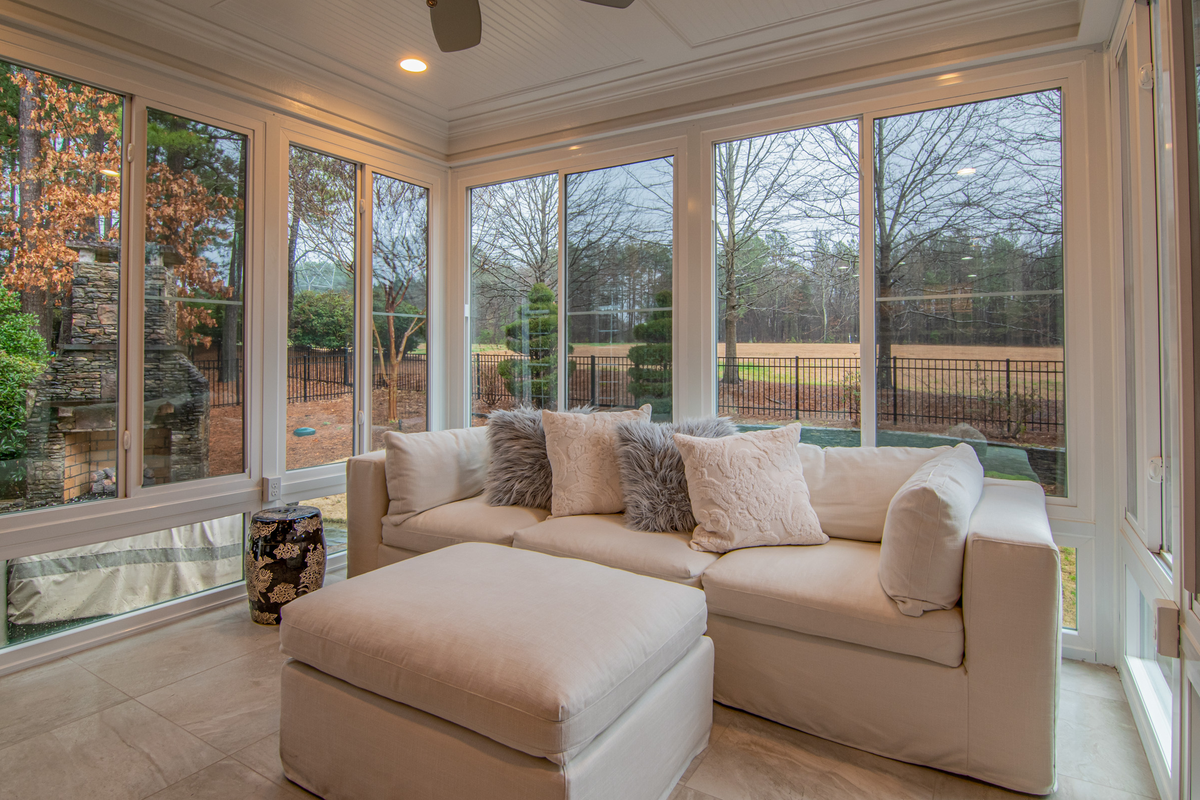
Furniture in a glass room competes with the one thing the room is for, which is daylight.
Keep tall storage on the solid wall only, and keep it below sill height anywhere near glass. A low bench with baskets underneath, or a slim console, gives you storage without turning the room dark at one end.
Baskets in general do well in conservatories: they are light enough to move, they tolerate the humidity, and they suit the informal feel of the room.
Rugs, Because the Floor Is Usually Hard
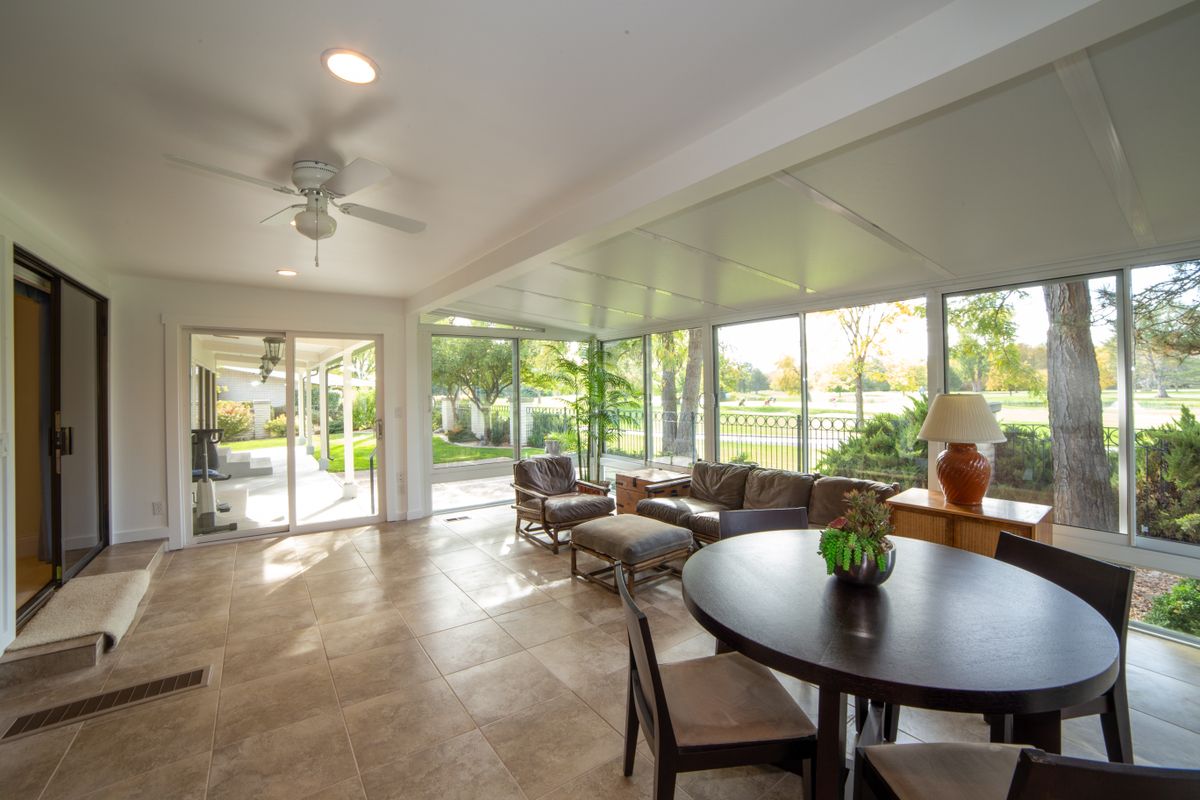
Conservatory floors are almost always tile, stone or vinyl, all of which are cold underfoot and acoustically hard.
A rug fixes both, and it is the single quickest way to make the room feel furnished rather than fitted out. Choose a flat weave rather than a deep pile: it copes better with sun, is easier to lift and shake, and dries faster if something is spilled or tracked in from the garden.
Check the rug is rated for sunlight if it sits where the sun tracks. The same fading that ruins cushions ruins rugs.
What to Keep Out of the Room
- Antique timber furniture. The humidity swings will open joints and lift veneer.
- Leather. Direct sun dries and cracks it faster than almost any other material.
- Anything upholstered in an untreated natural fabric in a south-facing conservatory.
- Paper and books on open shelves in direct sun. They yellow and cockle surprisingly quickly.
- Electronics positioned where the sun falls on them in summer.
Buying Secondhand, Which Suits This Room Well
Conservatory furniture is one of the better secondhand buys, because the frames that last, rattan, cane and powder-coated aluminium, are exactly the ones that survive being owned twice.
Cushions are the part that fails, and cushions are the part you can replace. A solid vintage cane set with tired covers is usually a better long-term purchase than a new set with a soft frame and good-looking fabric.
Check the frame joints for movement, look at the underside of any timber for splits, and press the weave on cane to see whether it is brittle. Brittle cane cracks and cannot be repaired economically; sound cane will outlive the covers several times over.
Arranging for the View
A conservatory exists because someone wanted to see the garden, and it is surprisingly easy to furnish one so that nobody can.
Sit down in the room before deciding anything and look at where your eye naturally goes. That direction is what the main seating should face. High backs, tall plants and storage units placed between the seating and the best view are the most common way a conservatory ends up feeling enclosed despite being made of glass.
Where the room is used at night as well, angle at least one chair so it faces into the house rather than at a black window. It sounds trivial and it changes how often the room gets used in winter.
Caring for It Through the Year
- Rotate cushions every few weeks so the same face is not always in the sun. It roughly doubles how long the colour lasts.
- Bring soft furnishings in if the room is unheated over winter. Damp cushions left in a cold conservatory are how mildew starts.
- Wipe metal frames occasionally. Powder coating lasts for years but any chip should be touched up before moisture gets underneath.
- Feed cane and rattan lightly with a suitable oil or wax once a year to stop it drying and becoming brittle.
- Check the floor under planters. Standing water marks tile grout, stains timber and lifts vinyl edges.
None of this takes long, and it is the difference between furniture that looks tired after three summers and furniture that still looks right after ten.
Final Thoughts
Choose the frame for the humidity, the fabric for the sunlight, and the layout for the shape of the room. Rattan or powder-coated aluminium with solution-dyed cushions will still look right in five years; solid oak with cotton cushions will not.
Then put a flat-weave rug down and give yourself somewhere to put a mug.
Frequently Asked Questions
What furniture is best for a conservatory?
Rattan, cane or powder-coated aluminium frames with solution-dyed or outdoor-grade fabric. They handle the humidity swings and direct sun.
Will conservatory furniture fade?
Ordinary upholstery fades noticeably within a couple of summers. Solution-dyed acrylic holds colour because the dye is in the fibre rather than on it.
Can I put solid wood furniture in a conservatory?
You can, but solid hardwood may crack or open at the joints as it swells and dries. Engineered timber handles the moisture movement far better.
How should I lay out a long narrow conservatory?
Pull furniture slightly off the glass and treat it as two zones with a rug under each, rather than one stretched seating area along the wall.
Are glass tables good in a conservatory?
Not really. They show dust, throw glare and get hot in direct sun. Metal, treated timber or ceramic tops are easier to live with.
What rug suits a conservatory?
A flat weave rated for sunlight. It copes with sun better than deep pile, is easy to lift and shake, and dries faster after garden traffic.
Disclaimer
This article is for general information only. Product specifications and building regulations vary by property and change over time. Check current guidance and manufacturer instructions before making changes.