
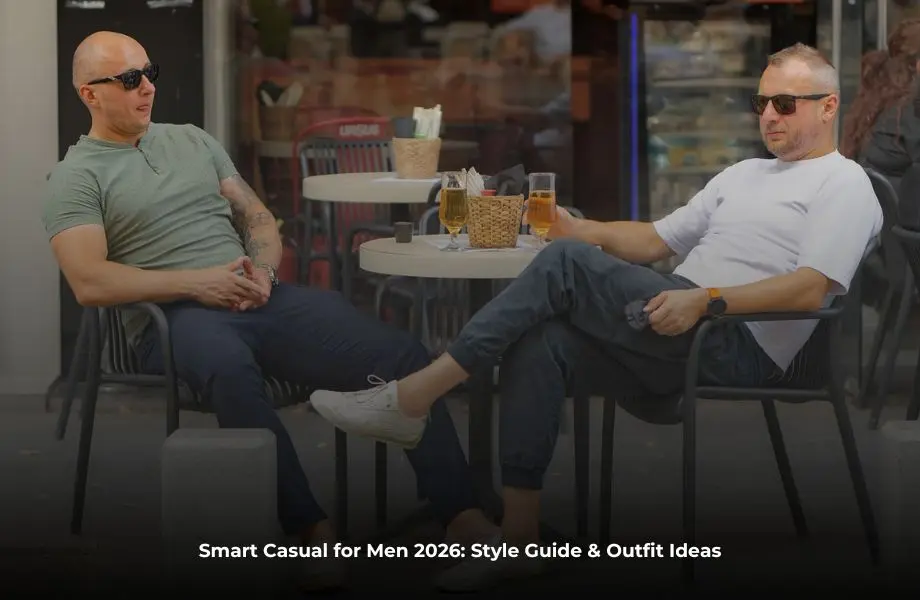

Smart casual for men means a collar or knitwear on top, tailored trousers or dark denim below, leather shoes on your feet, and no tie. It sits one step up from casual and one step down from a suit. That single sentence answers most of it; the rest of this guide covers the edge cases, what UK workplaces actually ask for, and what an employer is allowed to require of you.
Key takeaways
- Collar or knitwear on top, tailored trousers or dark denim below, leather on your feet, no tie.
- Jeans can work — dark, clean, no rips, ideally under a jacket.
- Trainers only if they are clean, plain and leather, and only in relaxed settings.
- The difference from business casual is mainly the denim and the optional jacket.
- Only 20% of UK office workers describe their code as smart-casual — casual is now the biggest group.
- A workplace code saying “dress smartly” is lawful, provided the definition of smart is reasonable.
There was a time when Alex stood in front of his wardrobe every Friday, caught between a stiff formal suit and a relaxed weekend outfit. Neither felt right. Then an invitation landed saying “smart casual”, and somehow that made it worse. Jeans? A blazer? Something in between? Almost every man has had that moment, which is exactly why the phrase causes so much quiet stress for two words that are supposed to make life easier.
The 30-Second Rule
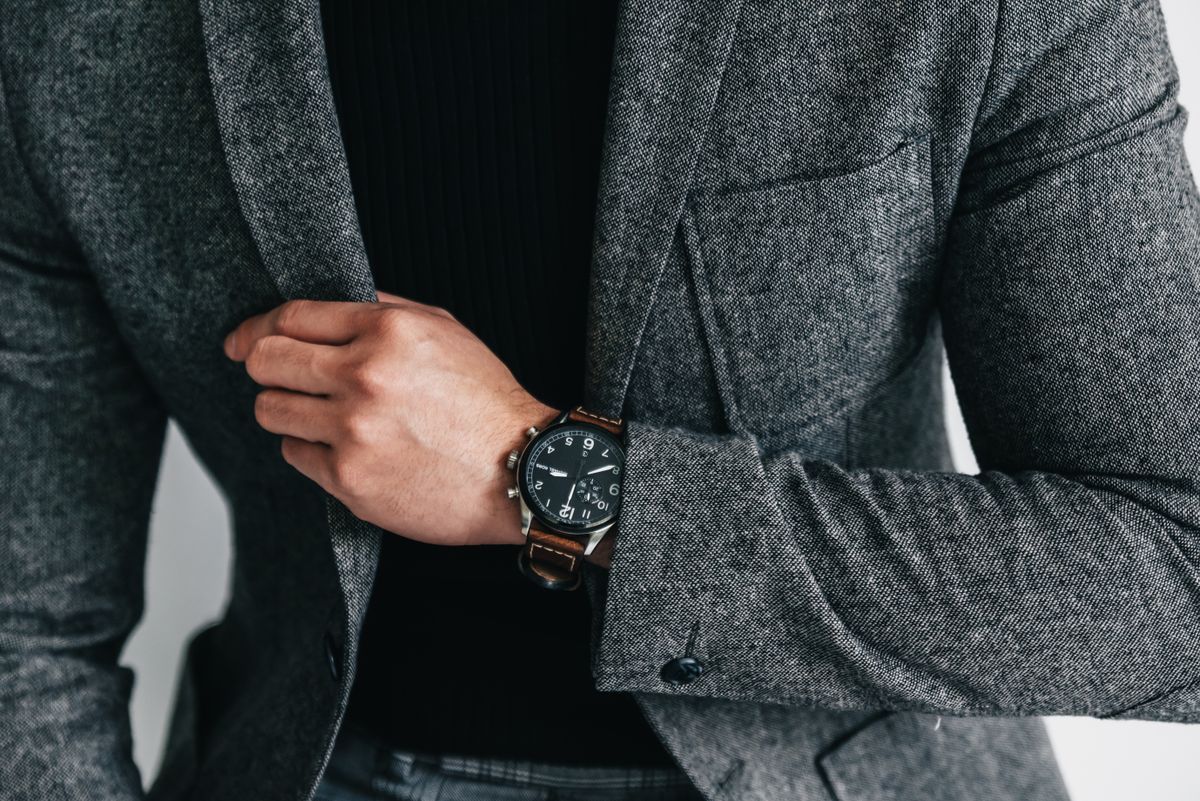
Image source: pexels.com
Here is the test you can apply standing at the wardrobe. Take a casual outfit and make two things smarter: the top half and the shoes. A T-shirt becomes a collared shirt or a fine knit. Trainers become leather. Everything else can stay where it is. That is smart casual. The second half of the rule matters just as much: do not go all the way to a suit. A matching jacket and trousers with a tie is a different dress code, and turning up in one when smart casual was asked for is just as noticeable as turning up in a hoodie. If you are hovering between two options, pick the one with a collar and clean shoes and stop thinking about it.
Smart Casual vs Business Casual vs Formal
These three phrases get used as if they are interchangeable, and they are not. The practical difference comes down to two things: whether denim is allowed, and whether a jacket is expected. Smart casual allows dark jeans and treats the jacket as optional. Business casual generally does not want denim and usually expects a jacket. Business formal is a suit. If your workplace sits at the business casual end, our guide to office wear for men covers that ground in more detail.
| Dress code | Top | Bottom | Shoes | Tie? |
|---|---|---|---|---|
| Casual | T-shirt, polo, jumper | Jeans, chinos | Trainers | No |
| Smart casual | Collared shirt, fine knit or polo | Chinos, tailored trousers, dark denim | Leather shoes or clean minimal trainers | No |
| Business casual | Collared shirt, usually with a jacket | Tailored trousers or chinos — rarely denim | Leather shoes | Optional |
| Business formal | Shirt and suit jacket | Matching suit trousers | Polished Oxfords | Yes |
What UK Workplaces Actually Ask For
It is worth knowing how common each code actually is, because the picture has shifted. In a survey of over a thousand UK office workers, the largest group described their dress code as casual rather than smart-casual, and only one in five said smart-casual. Nearly three quarters said their employer has a dress code of some kind. In other words, if you have been invited somewhere smart casual, you are probably dressing up from your normal working day rather than down from a suit.
Source: instantprint survey of over 1,000 UK office workers, published 31 May 2023. This is a company survey rather than official statistics, and the categories are as worded in that survey.
Same survey. Figures as published.
Tops: Shirts, Polos and Knitwear

Image source: pexels.com
The top half does most of the work. An Oxford or poplin shirt in white, pale blue or a quiet check is the safest thing you can own. A fine-gauge merino crew or polo neck works just as well and feels less formal. A good polo shirt is smart casual in summer, provided it has some structure in the collar rather than curling at the points. An overshirt over a plain T-shirt is the most relaxed version that still counts. What fails is anything with a visible logo, a slogan, a graphic print, or a crease down the front. Our guide to mens shirts collections covers the fits in more depth, and colour combinations explains why two neutrals and one accent is the easiest formula to follow.
Trousers, and the Jeans Question
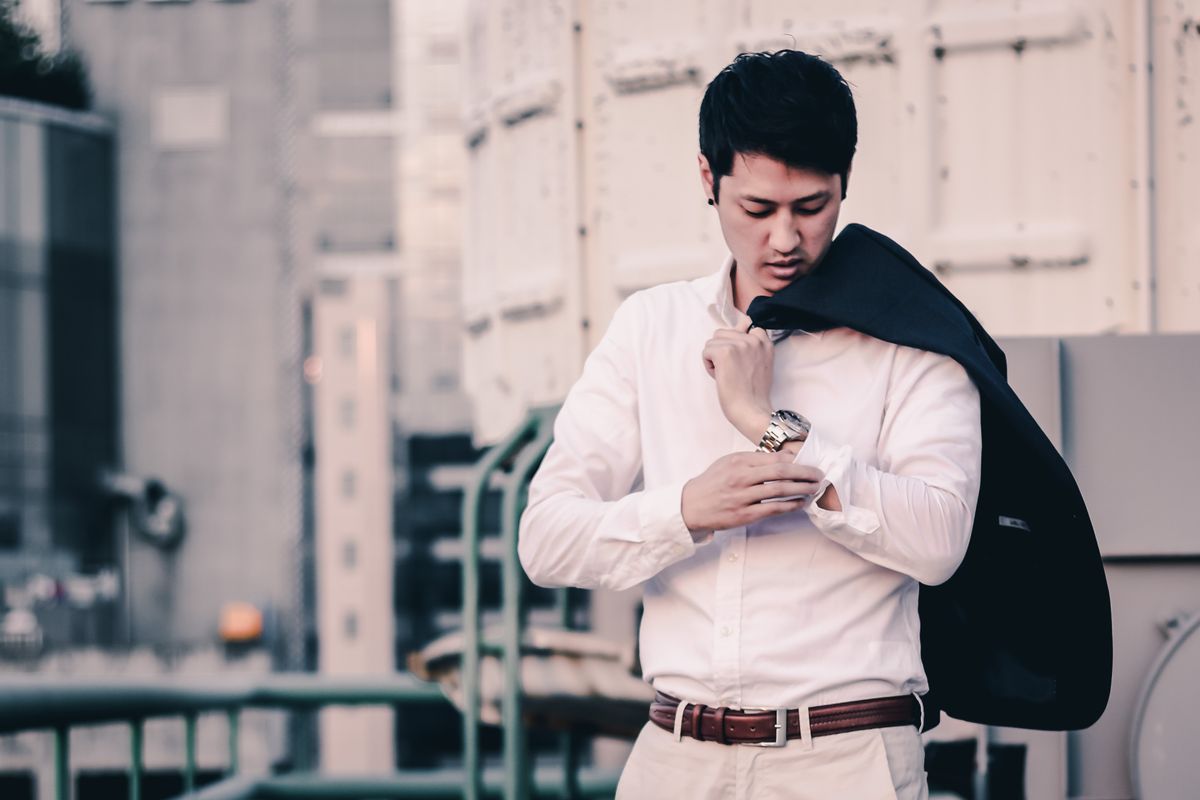
Image source: pexels.com
Chinos are the default and the easiest thing to get right: stone, navy, olive or grey, with a clean break at the shoe. Tailored trousers push the outfit smarter without tipping into suit territory. Then the question everyone actually asks, which is whether jeans are allowed. They are, with conditions. Dark indigo or black, no rips, no heavy fading, a proper fit through the leg, and ideally a jacket on top to balance them. Pale or distressed denim reads as casual whatever you put with it. If you are unsure which cut suits you, our guide to which jeans fit suits you goes through the options.
Shoes, Where It Usually Goes Wrong
Shoes are where smart casual most often falls apart, because they are the part people leave until last. Leather first: loafers, Derbies, brogues or Chelsea boots will all carry an outfit. Suede is softer and works beautifully in dry weather. Trainers are allowed, but only the plain leather kind in white or black, genuinely clean, and only where the setting is relaxed — a dinner or an interview is not the moment. Running shoes never work, however expensive. One small rule fixes more outfits than any other: match your belt to your shoes.
Layering and Outerwear

Image source: pexels.com
A jacket is the single fastest way to lift an outfit from casual to smart casual, and it does not need to be a tailored blazer. An unstructured jacket in cotton, linen or wool is more comfortable and reads as less formal. An overshirt does a similar job with less commitment. A crew-neck jumper over a collared shirt is the classic British autumn version and takes no thought at all. One thing people forget: the coat counts. Arriving in a technical waterproof over a good outfit undoes most of the effort, so a wool overcoat or a clean quilted jacket is worth having.
What Your Employer Can and Cannot Require
This is the part no style guide covers, and it is the reason most people meet the phrase at all. In the UK there is no specific law on workplace dress codes. Government guidance is explicit that the Equality Act 2010 “does not set out specific examples of practices that are unlawful” and that “it is ultimately for the courts to decide whether a practice is unlawful depending on the facts of each case”. What the Act does is set the framework. A dress code can be a legitimate part of your terms and conditions, and the guidance states plainly that a code requiring all employees to “dress smartly” is lawful provided the definition of “smart” is reasonable.
| Can an employer… | Position |
|---|---|
| Set a dress code at all | Yes. It can be a legitimate part of the terms and conditions of service |
| Require staff to “dress smartly” | Yes, provided the definition of “smart” is reasonable |
| Have different rules for men and women | Yes, but the standards imposed must be equivalent |
| Ban trousers for women | No. The guidance gives allowing both men and women to wear trousers as its example of a non-discriminatory code |
| Ignore a disabled employee’s needs | No. Reasonable adjustments can include not applying dress code requirements |
| Ban religious symbols that do not affect the work | No. Employers are told to be flexible here |
| Penalise you for raising a concern | No. That could be unlawful victimisation under the Equality Act 2010 |
Source: Dress codes and sex discrimination: what you need to know, UK government guidance, May 2018. General information only, not legal advice.
Two further points are worth knowing. Men’s and women’s dress policies “do not have to be identical”, but “the standards imposed should be equivalent” — so a code that leans much harder on one sex is on shaky ground. And if you think a code is unfair, the guidance suggests raising it with your manager first, then HR or a trade union representative, with Acas or the Equality Advisory and Support Service available after that. Being penalised for raising the concern could itself be unlawful victimisation.
Getting It Right for the Occasion
The same outfit shifts slightly with the occasion. For the office, lean smarter: shirt, tailored trousers, leather shoes. For an interview, treat smart casual as business casual and add the jacket, because nobody has ever been marked down for it. For dinner or a date, a fine knit and dark denim with Chelsea boots is hard to beat. For an evening event with a stated code, check whether it is actually cocktail attire, which asks for more. And for a day out with published rules, such as the racecourse dress codes, smart casual will not be enough in the ticketed enclosures. For everyday looks our Mens Casual Wear 2026 guide covers the step below, while mens clothing brands and luxury clothing brands are useful if you are building the wardrobe rather than one outfit.
Common Mistakes to Avoid
- Overdressing. A full matching suit with a tie is not smart casual.
- Logos and slogans. They pull an outfit straight back to casual.
- Dirty or scuffed shoes. The fastest way to undo everything above them.
- Bad fit. A cheap jacket that fits beats an expensive one that does not.
- Pale, ripped or heavily faded denim. Dark and clean, or not at all.
- Forgetting the coat. People see it before they see the outfit.
Final Thoughts
Smart casual is far less mysterious than its reputation. Make the top half and the shoes one step smarter than casual, stop short of a suit, and keep everything clean and well fitted. Buy one good jacket, one pair of leather shoes and two decent shirts, and you will be dressed correctly for most of what the phrase ever gets used for. Then stop worrying about it and enjoy the evening.
Frequently Asked Questions
What is smart casual for men in simple words?
A collar or knitwear on top, tailored trousers or dark denim below, and leather shoes. No tie, and not a full matching suit.
Can jeans be worn in smart casual outfits?
Yes, if they are dark, clean and not ripped or heavily faded. A jacket or knitwear on top keeps the whole outfit balanced.
Can you wear trainers with smart casual?
Only plain leather trainers in white or black, genuinely clean, and only in relaxed settings. Running shoes do not work.
Is a polo shirt smart casual?
Yes, provided the collar holds its shape rather than curling. A fine-knit polo is smarter than a sports one.
What is the difference between smart casual and business casual?
Mainly denim and the jacket. Smart casual allows dark jeans and makes a jacket optional; business casual usually wants neither.
Is smart casual okay for an interview?
Treat it as business casual and add a jacket. Being slightly smarter than asked is never held against you at an interview.
Can my employer tell me what to wear?
Generally yes. A dress code can form part of your terms and conditions, and requiring staff to dress smartly is lawful provided the definition of smart is reasonable.
Disclaimer
This article is for general information only and is not legal advice. The workplace section summarises published UK government guidance; how the law applies depends on the facts of each case. For advice on your own situation, contact Acas, the Equality Advisory and Support Service, or a qualified adviser. Dress codes also vary between employers, venues and events, so check with the host or organiser if an invitation is unclear.
Last updated: 30 October 2026