

The invitation arrives, and somewhere near the bottom in small italics is a phrase like lounge suit or morning dress. For a lot of men that is the moment the whole thing becomes stressful, because the dress code is written as though everyone already knows what it means. Almost nobody does. Getting a mens wedding guest outfit UK couples will be happy with is mostly a matter of decoding that one line correctly, and the rest follows on its own.
| Lounge suit | The most common UK code. A two or three-piece suit, shirt and tie |
|---|---|
| Morning dress | Most formal daytime. Morning coat, striped trousers, waistcoat |
| Black tie | Evening only. Dinner jacket, black bow tie, white dress shirt |
| Black tie optional | A dinner jacket is welcome, a dark suit is fine |
| Smart casual | A jacket with smart trousers, or a suit without a tie. No jeans |
| No code stated | A dark or mid-blue suit, collared shirt and polished shoes |
| The one rule | The dress code is an instruction, not a suggestion |
Lounge Suit Is the One You Will See Most
Lounge Suit Is the One You Will See Most
Image source: pexels.com
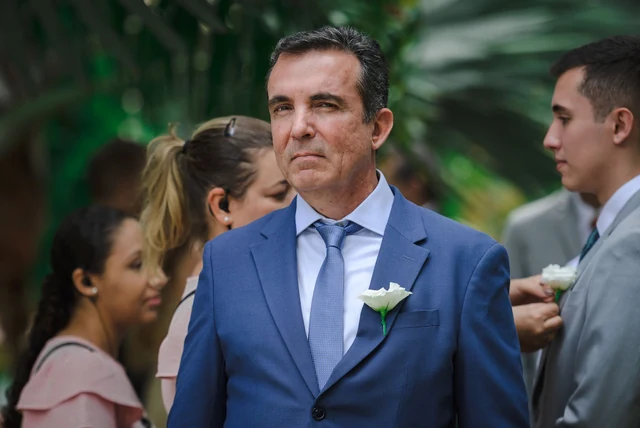
If you go to five British weddings, four of the invitations will say lounge suit, and the phrase is confusing purely because it sounds like something other than what it is. A lounge suit is simply a suit. A two-piece or three-piece in a dark or mid tone, a proper collared shirt, a tie, and polished leather shoes. That is the whole requirement. Navy is the safest colour in Britain and always has been, with charcoal a close second. The tie does not have to be sober, and this is where most men have room to look like themselves rather than like a guest at a board meeting.
Morning Dress Means Exactly What It Says
Morning Dress Means Exactly What It Says
Image source: pexels.com
Morning dress is the most formal daytime code and it is not a suit with a waistcoat added. It is a specific outfit: a black or grey morning coat with a cutaway front, striped or checked grey trousers, a waistcoat, a collared shirt and black shoes, with a top hat as an optional extra that most guests skip. You will see it at traditional church weddings and at the more formal end of the British calendar. If your invitation says morning dress, hire it rather than improvising, because this is the one code where an approximation looks obviously wrong next to the people who got it right. The same outfit is what Royal Ascot’s Royal Enclosure asks for, so our guide to what to wear to the races covers it from the other direction.
Black Tie Is an Evening Code
Black Tie Is an Evening Code
Image source: pexels.com
Black tie means a dinner jacket with satin lapels, matching trousers, a crisp white dress shirt, a black bow tie and polished black shoes. The bow tie should be tied rather than pre-tied if you can manage it, though nobody will inspect it. The important and frequently missed point is that black tie belongs to the evening. A wedding with an afternoon ceremony will not normally ask for it, and if it does, the code applies to the reception. Black tie optional is a softer version: a dinner jacket is welcome, but a dark lounge suit is completely acceptable and nobody will think less of you.
Shoes Matter More Than Men Expect
Shoes Matter More Than Men Expect
Image source: pexels.com
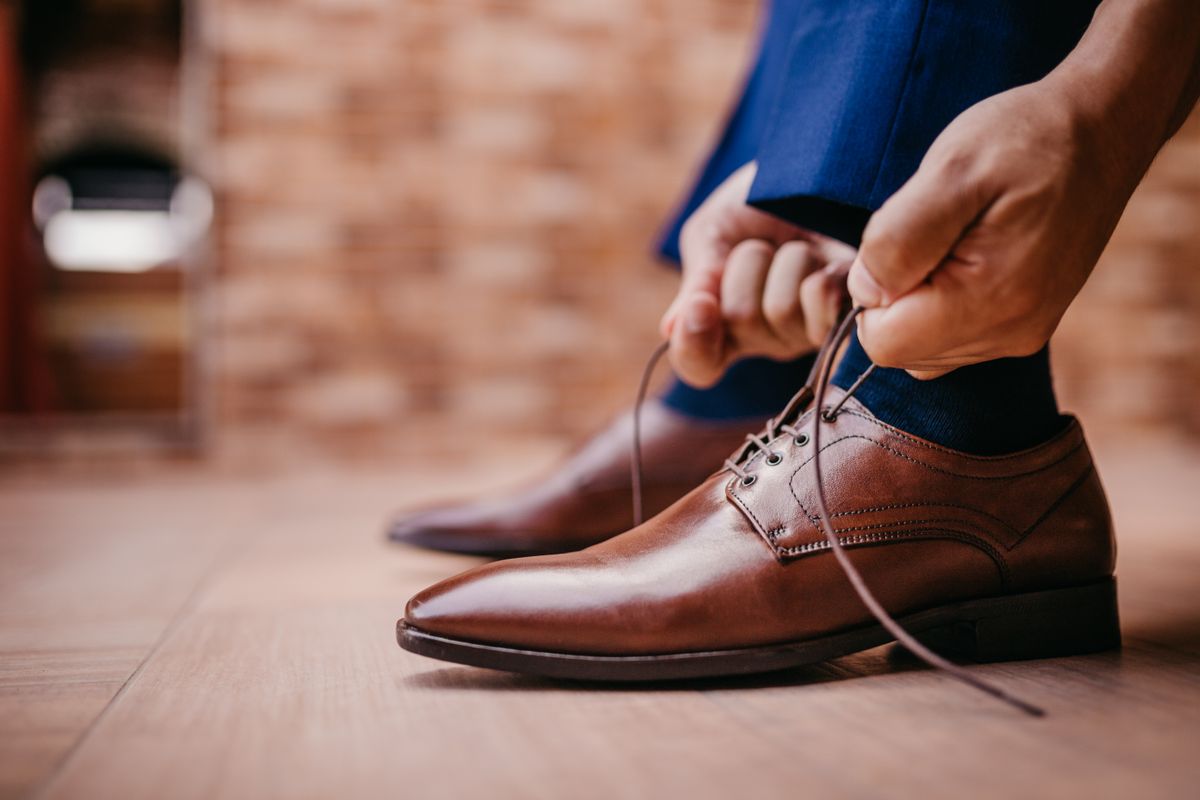
The shoes are where a good outfit quietly falls apart. Black leather is correct with black tie and morning dress, no exceptions. With a lounge suit you have room: black works with charcoal and grey, and brown leather looks genuinely better with navy, which is a pairing British men underuse. Oxfords are the dressiest, brogues sit slightly below them and suit a country wedding. Whatever you choose, it needs to be clean and polished, and your belt should match your shoes. If you take one thing from this article, make it that last sentence, because it is the most commonly broken rule at UK weddings.
Colour, and the Things You Should Not Wear

Colour, and the Things You Should Not Wear
Image source: pexels.com
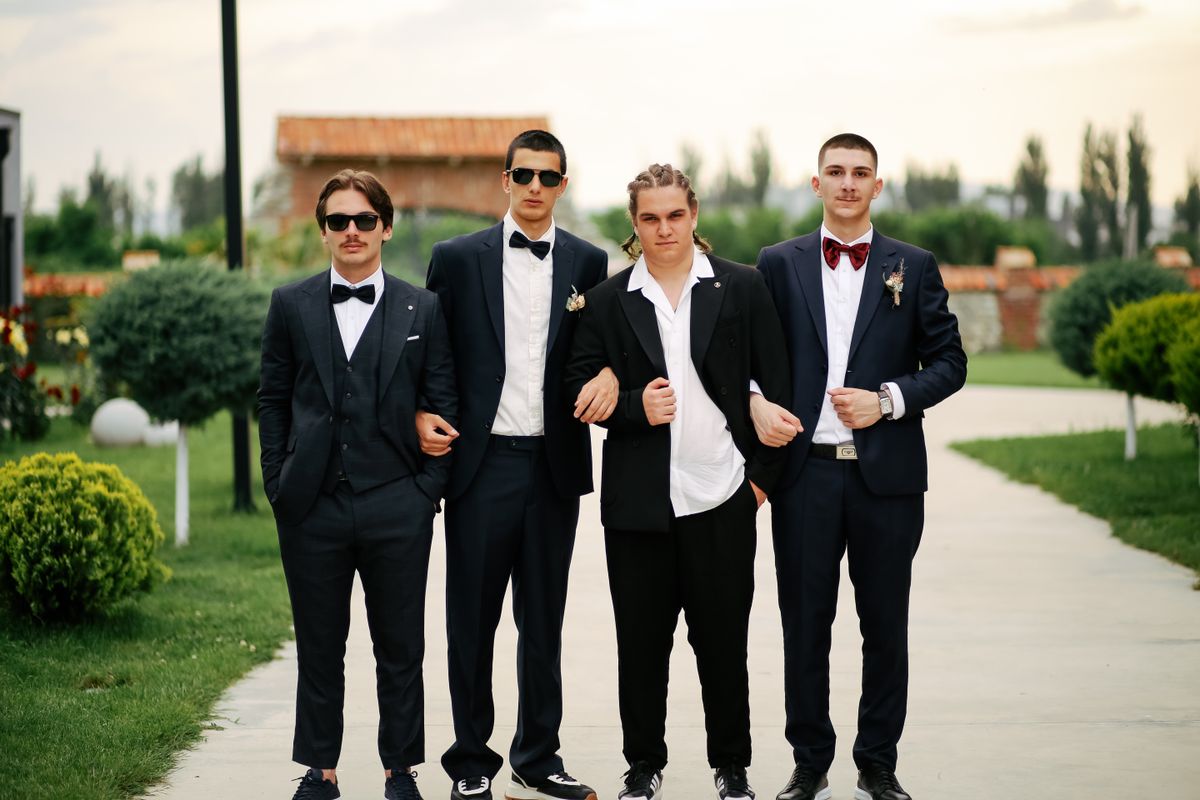
Navy and charcoal are the workhorses. Mid-grey and lighter blues suit a summer wedding and photograph well outdoors. Beyond that, a few genuine restrictions apply. Avoid white or ivory jackets and anything that could read as bridal. Avoid wearing an outfit that matches the groomsmen, since guests are not meant to look like the wedding party. All-black can read as funereal at a daytime wedding, though it is fine in the evening. And unless the invitation explicitly says casual, leave the jeans and trainers at home, however relaxed the venue sounds in the write-up.
Reading the Venue and the Season
Reading the Venue and the Season
Image source: pexels.com
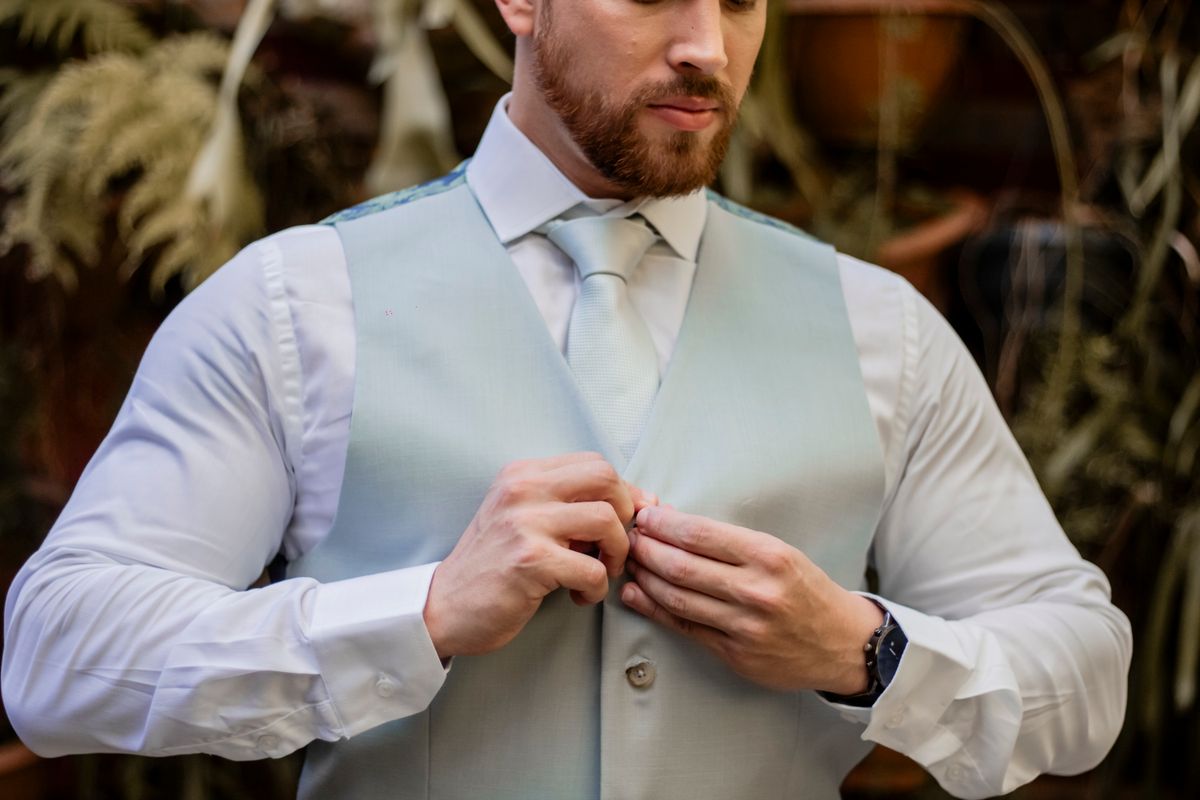
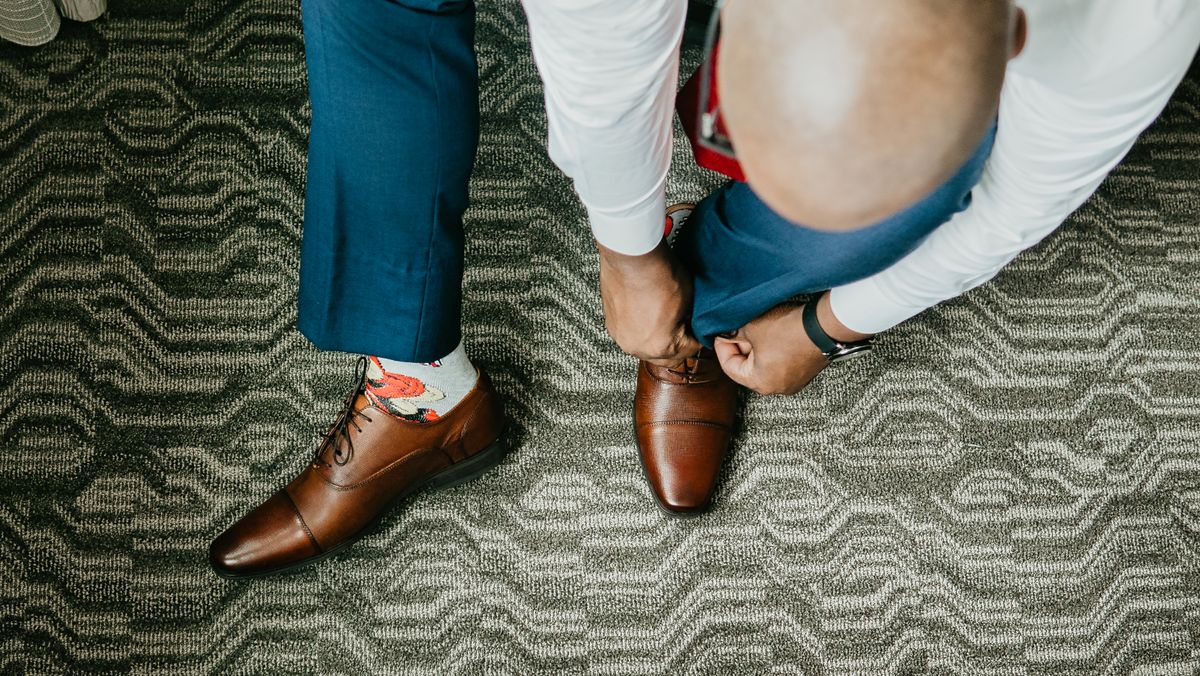
The dress code tells you the formality; the venue and the date tell you the weight and the colour. A August wedding in a marquee calls for lighter cloth and a lighter shade, and a linen-blend suit is sensible rather than lazy. A November wedding in a country house wants heavier wool and a deeper colour, and our winter clothing guide covers the fabrics that hold up. Outdoor ceremonies in Britain need a plan for rain and for standing on grass, which usually means a sturdier shoe than you first reach for. If you already have a seasonal wardrobe sorted, our summer clothes for men guide covers the warm-weather fabrics that also work here.
When the Invitation Says Nothing at All
This is more common than it used to be, and it causes more anxiety than any of the named codes. The answer is straightforward: a dark or mid-blue suit, a proper collared shirt, polished shoes and a tie you can remove if the room turns out to be more relaxed than expected. That combination is correct at roughly ninety per cent of British weddings and will never leave you the most conspicuous person in the room. If you genuinely cannot tell, ask someone in the wedding party rather than guessing. Nobody has ever been annoyed by that question. The same applies at a christening, though there the pressure is lower still, as our guide to what to wear to a christening explains.
Smart Casual Without Getting It Wrong
Smart casual at a wedding is not the same as smart casual at work, and it is the code most likely to be misread. What it means in practice is a jacket with smart trousers, or a suit worn without a tie. Chinos are acceptable if the wedding is genuinely relaxed, but they should be well-fitted and pressed rather than the pair you wear at weekends. Keep the shoes leather. The general principle is that smart casual removes the tie and loosens the formality, not the standard. Our smart casual guide for men goes into the fit details properly.
Fit Is Worth More Than Price
A moderately priced suit that fits properly will always look better than an expensive one that does not, and at a wedding you are photographed from every angle for several hours. The shoulder seam should sit where your shoulder ends, the jacket sleeve should show around a centimetre of shirt cuff, and the trousers should break lightly on the shoe rather than pooling. Most high-street suits need a small amount of alteration to hit those marks, and it is usually inexpensive. Book it a fortnight ahead rather than the week of, because tailors are busiest during wedding season for obvious reasons. If you are building a wardrobe rather than buying for one day, our men’s outfits guide is the wider starting point.
Accessories, and Knowing When to Stop
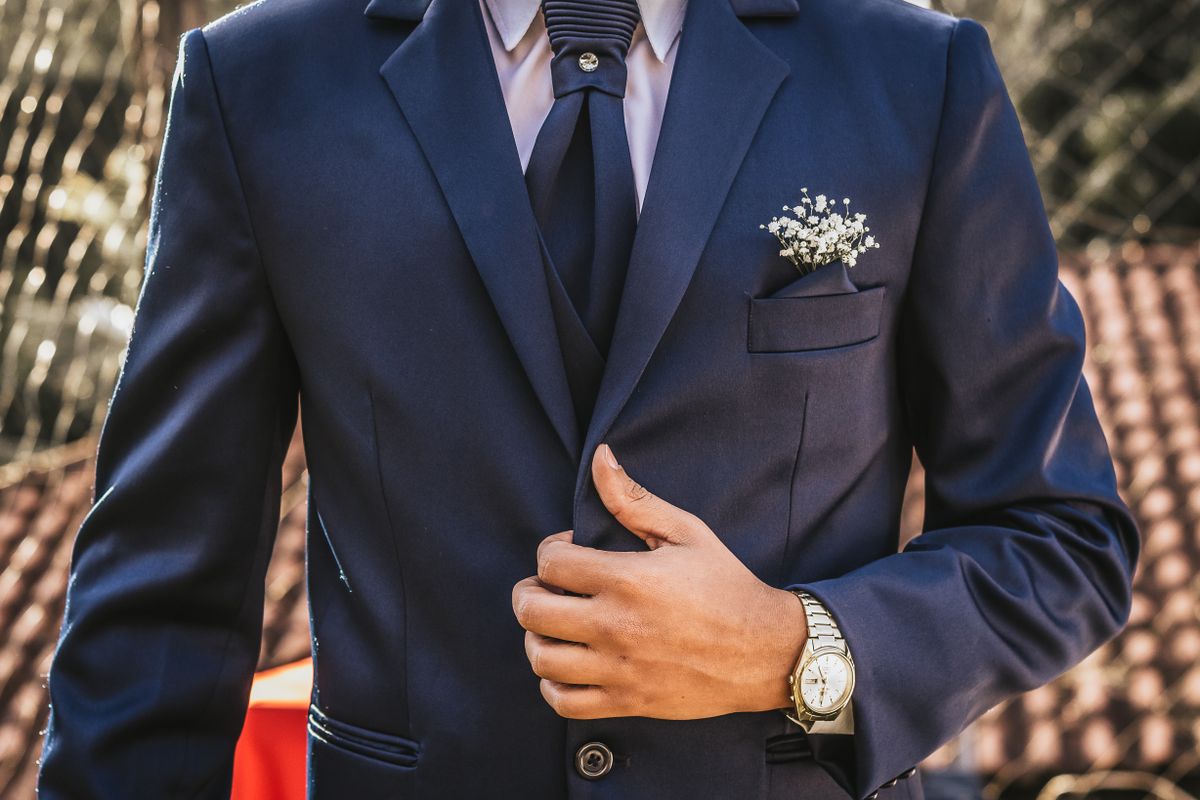
A pocket square, a decent watch and a buttonhole if one is offered are enough. The pocket square should complement the tie rather than match it exactly, which is the detail matched sets get wrong. Cufflinks belong with a double cuff shirt and nowhere else. Keep the tie bar sensible or skip it. The mistake at weddings is almost never doing too little; it is arriving in a three-piece with a pocket square, a lapel pin, a patterned tie and contrast socks all at once. Pick one thing that is interesting and let everything else be quiet.
A Simple Checklist Before You Leave
Confirm the dress code on the invitation rather than from memory. Try the whole outfit on a week ahead, including the shoes, because that is when you discover the trousers need taking up. Check the weather and the ground the ceremony is on. Polish the shoes and match the belt. Put a spare pair of socks and a small umbrella in the car, both of which have saved more British weddings than anyone admits. And if you are still unsure between two options, the more conservative one is nearly always right, because being slightly overdressed at a wedding reads as respect and being underdressed does not.
Final Thoughts
Almost all of the difficulty in dressing for a British wedding comes from one line on the invitation, and once you can read it the rest is simple. Lounge suit means a suit. Morning dress means hire it. Black tie means evening and a dinner jacket. When nothing is stated, a navy suit with polished shoes and a matching belt will carry you through almost any wedding in the country. Get the fit right and check the shoes, and the outfit will take care of itself.
Frequently Asked Questions
What does lounge suit mean on a UK wedding invitation?
It simply means a suit. A two or three-piece in a dark or mid tone, with a collared shirt, a tie and polished leather shoes.
Can I wear a navy suit to a wedding in the UK?
Yes. Navy is the safest and most common choice for a British wedding guest, and it works with both black and brown leather shoes.
What is the difference between black tie and morning dress?
Black tie is an evening code and means a dinner jacket and bow tie. Morning dress is the formal daytime code, with a morning coat and striped trousers.
What should I wear if the invitation has no dress code?
A dark or mid-blue suit, a collared shirt, polished shoes and a tie you can take off if the wedding turns out to be relaxed.
Can a male wedding guest wear brown shoes?
Yes, with a lounge suit, and brown looks particularly good with navy. Black tie and morning dress both require black leather shoes.
Is it acceptable to wear a black suit to a wedding?
In the evening, yes. At a daytime wedding an all-black outfit can read as funereal, so navy or charcoal is usually the better choice.
Disclaimer
This article is for general guidance only. Wedding dress codes vary between families, cultures and venues, and the couple’s own wishes always take priority. If an invitation is unclear, ask a member of the wedding party rather than assuming.